Inspection of aquatic products imported from Japan

     In response to the Japanese Government's plan to discharge nuclear-contaminated water at the Fukushima Nuclear Power Station, the Director of Food and Environmental Hygiene issued a Food Safety Order which prohibits all aquatic products, sea salt and seaweeds originating from the 10 metropolis/prefectures, namely Tokyo, Fukushima, Ibaraki, Miyagi, Chiba, Gunma, Tochigi, Niigata, Nagano and Saitama, from being imported into and supplied in Hong Kong.
 
     For other Japanese aquatic products, sea salt and seaweeds that are not prohibited from being imported into Hong Kong, the Centre for Food Safety (CFS) of the Food and Environmental Hygiene Department will conduct comprehensive radiological tests to verify that the radiation levels of these products do not exceed the guideline levels before they are allowed to be supplied in the market.
 
     As the discharge of nuclear-contaminated water is unprecedented and will continue for 30 years or more, the Government will closely monitor and step up the testing arrangements. Should anomalies be detected, the Government does not preclude further tightening the scope of the import ban.
 
     From noon on September 16 to noon today (September 17), the CFS conducted tests on the radiological levels of 163 food samples imported from Japan, which were of the "aquatic and related products, seaweeds and sea salt" category. No sample was found to have exceeded the safety limit. Details can be found on the CFS's thematic website titled "Control Measures on Foods Imported from Japan" (www.cfs.gov.hk/english/programme/programme_rafs/programme_rafs_fc_01_30_Nuclear_Event_and_Food_Safety.html).

     In parallel, the Agriculture, Fisheries and Conservation Department (AFCD) has also tested 50 samples of local catch for radiological levels. All the samples passed the tests. Details can be found on the AFCD's website (www.afcd.gov.hk/english/fisheries/Radiological_testing/Radiological_Test.html).
 
     The Hong Kong Observatory (HKO) has also enhanced the environmental monitoring of the local waters. No anomaly has been detected so far. For details, please refer to the HKO's website
(www.hko.gov.hk/en/radiation/monitoring/seawater.html).
 
     From August 24, 2023, to noon today, the CFS and the AFCD have conducted tests on the radiological levels of 84 745 samples of food imported from Japan (including 54 168 samples of aquatic and related products, seaweeds and sea salt) and 19 404 samples of local catch respectively. All the samples passed the tests.

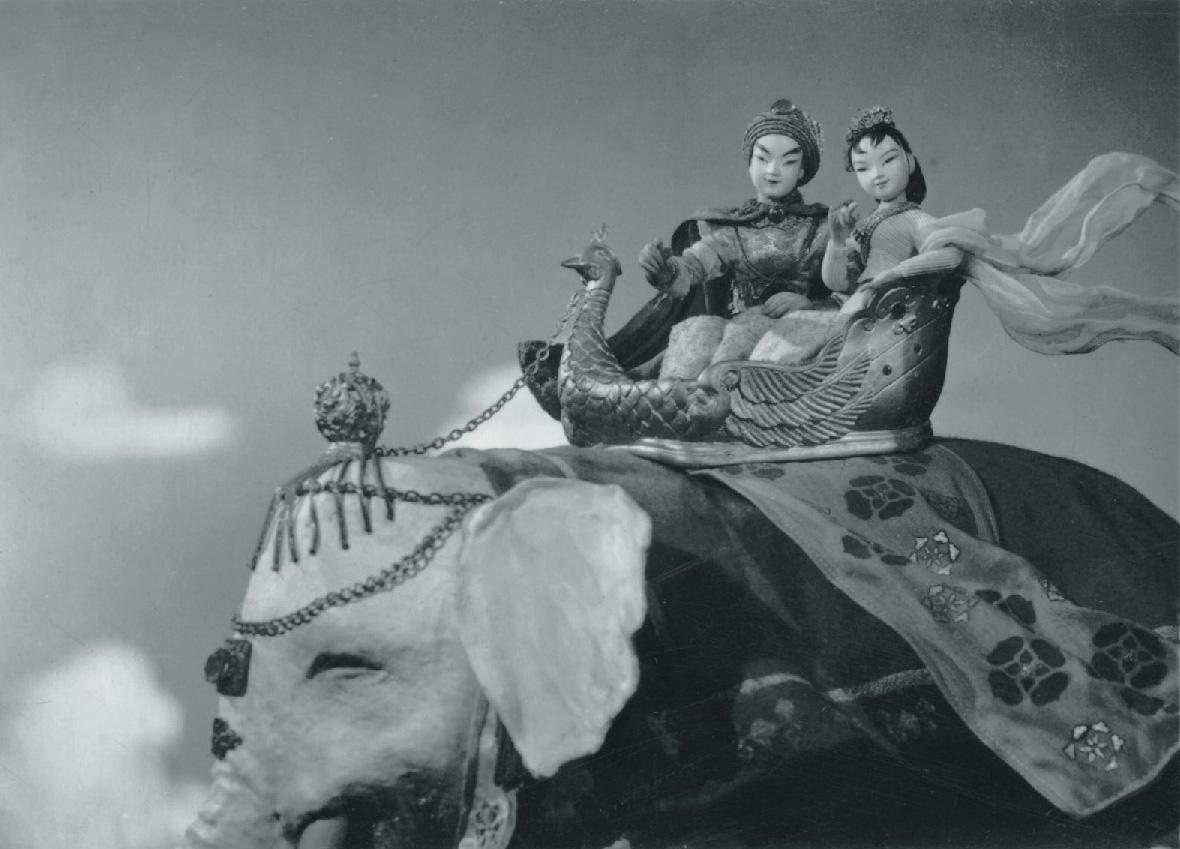
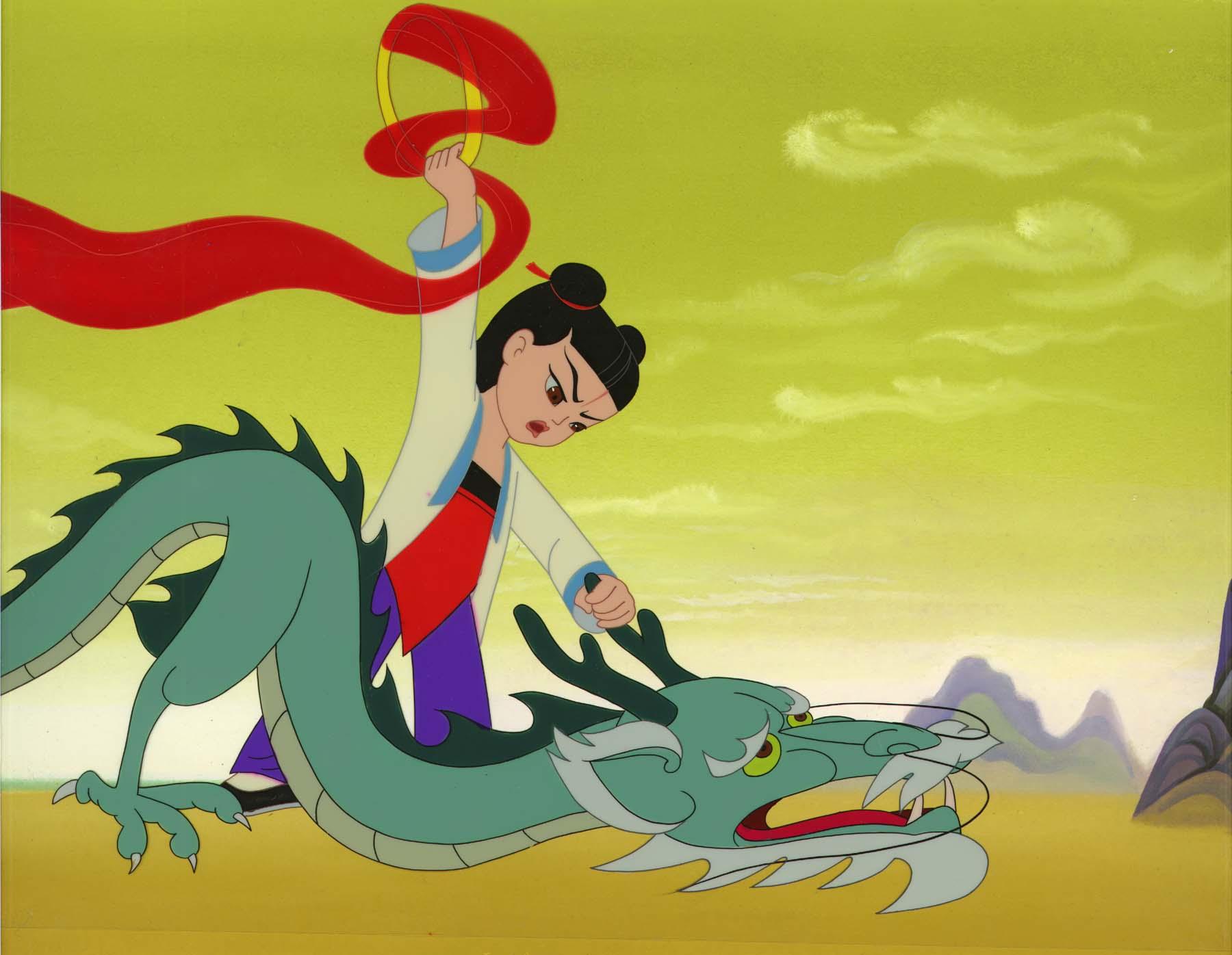
Chinese Film Panorama 2024 presents delightful Mainland animated films since 1940s (with photos)

     The Chinese Film Panorama 2024 entitled "Looking Back to see the Future: A Century of Chinese Animation" will be held from October 9 to November 16, screening 10 delightful feature-length animated films and two short film programmes produced on the Mainland since the 1940s. The films will be shown at the Theatre of Hong Kong City Hall, the Cinema of the Hong Kong Film Archive, and lecture halls of the Hong Kong Science Museum and Hong Kong Space Museum. Two of the films were selected for free screenings at the East Kowloon Cultural Centre (EKCC), Cine-Art House (Maritime Square) and the Rayson Huang Theatre of the University of Hong Kong. The Chinese Film Panorama 2024 is presented by the Leisure and Cultural Services Department (LCSD) and the Southern Film Culture Foundation.
 
     The opening film "Into the Mortal World" (2024), directed by Zhong Ding, is a reinterpretation of the mythology of "The Cowherd and the Weaver Girl". The weaver girl's son reconnected with his long-lost sister when he is demoted to the mortal world and embarks on an adventure in the divine realm. The film fuses traditional Chinese culture with modern elements and fun, giving audiences a new visual experience.
 
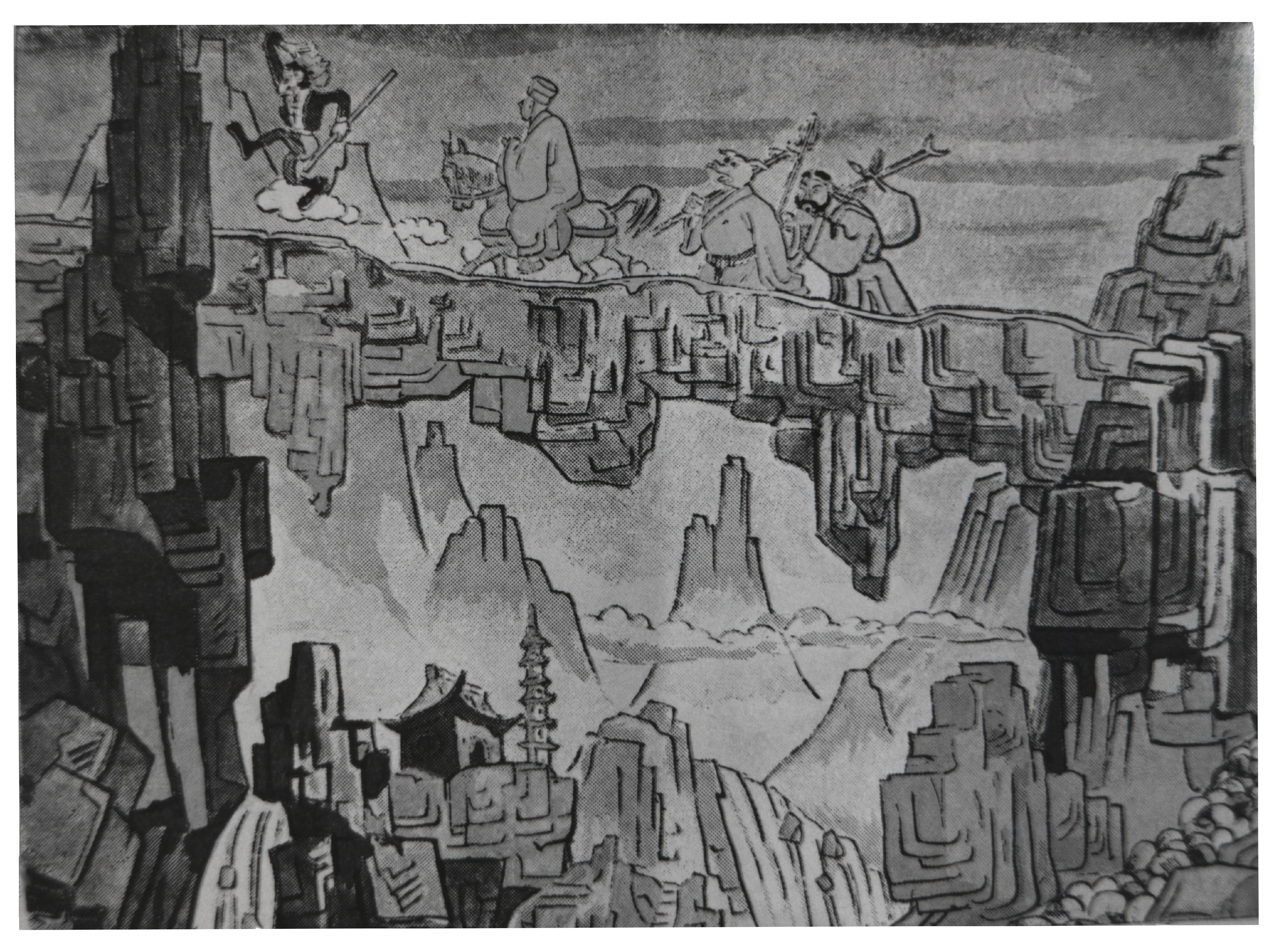
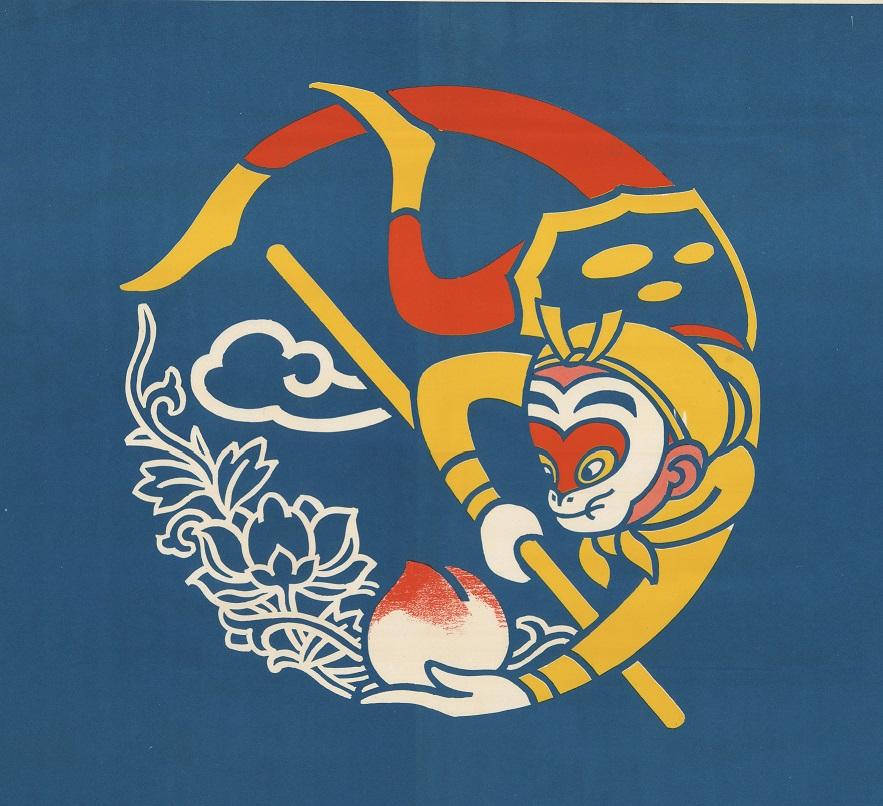
     Adapted from the classical tale "Journey to the West", "Princess Iron Fan" (1941) (4K restored version) is the first Chinese feature-length animated film which follows the monk Tong and his three disciples taking Princess Iron Fan's magical fan amid their pilgrimage, while "The Monkey King: Uproar in Heaven" (First and Second Parts) (1961-1964) revolves around the story of the Monkey King wreaking havoc at the heavenly court. Based on the narrative poem originated from the Dai people in Yunnan with the same title, "Peacock Princess" (1963) tells the poignant love story between a prince and a peacock-turned-princess in stop-motion puppet animation.
 
     Based on the novel "Investiture of the Gods", "Nezha Conquers the Dragon King" (1979) not only features a remarkable battle between Nezha and the four dragon kings, but also intricately portrays Nezha's spirit of self-sacrifice and the touching relationship between Nezha and his master. The story of "The Legend of Sealed Book" (1983) (4K restored version) is partly taken from the novel "The Three Sui Quash the Demons' Revolt". The protagonist, grandpa Yuan, once the guardian of a heavenly book, has been exiled to the human realm for accidentally exposing the book's content to mortals. In order to save humankind, grandpa Yuan decides to teach a boy called Eggborn the secrets of the heavenly book.
 
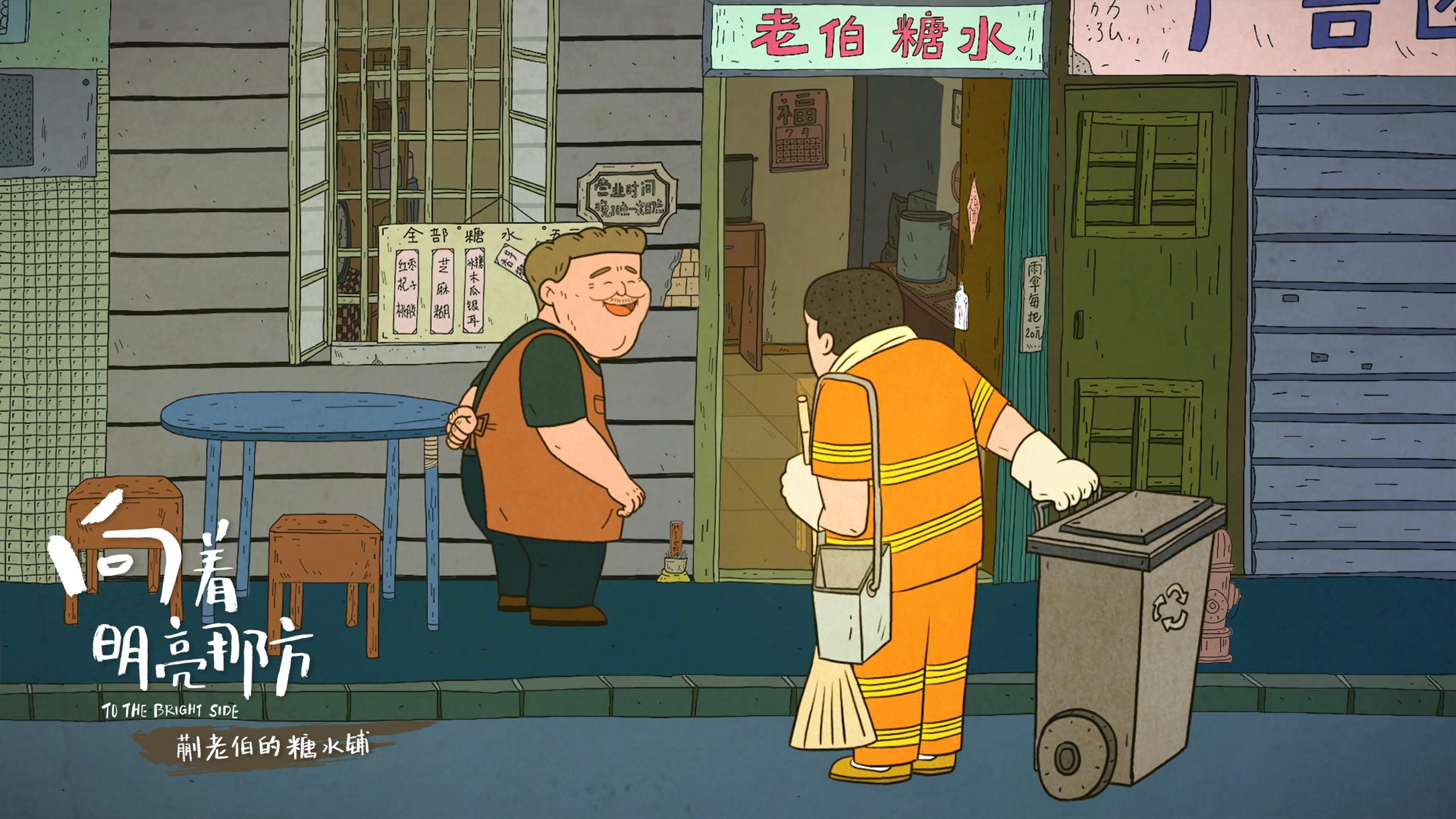
     In the hand-painted animation "The Storm" (2024), a ship mysteriously reappears after it has sunk many years ago. A father boards the ship to hunt for the rumoured treasure and goes missing. A thrilling journey ensues as his son goes to the ship to search for his father. Set in the Tang dynasty, "Chang An" (2023) tells a touching epic formed by the friendship among poets including Li Bai, Du Fu and Gao Shi. "Boonie Bears: Time Twist" (2024) fuses elements of sci-fi, action and comedy, among others, with advanced 3D computer animation technology to draw the time-bending adventure of the protagonist named Vick and two bear brothers. "To the Bright Side" (2021), the first original picture book animated film in China, is a collection of seven childhood stories in different visual styles including ink painting art, paper cutting and water colours.
 
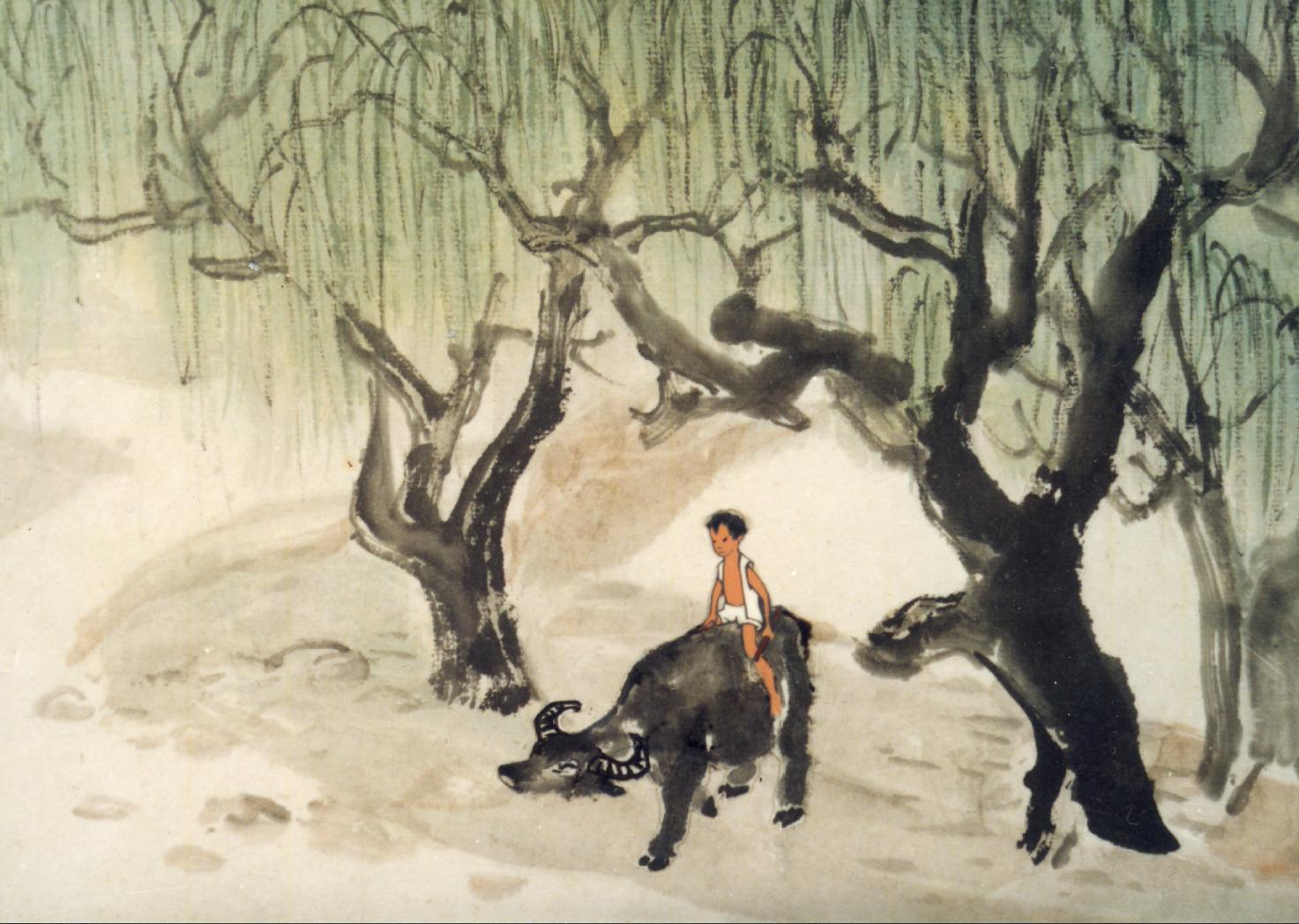
     Apart from animated feature films, two collections of animated short films will also be screened. "Animated Short Film Collection 1" features seven animated works from different times: ink-style creations "Baby Tadpoles Look for Their Mother" (1960) and "The Cowherd’s Flute" (1963), stop-motion animation "Mr. Dong Guo" (1955), "Afanti: the Miracle Doctor" (1979), the amusing "36 Characters" (1984), a depiction of lives of lower class children in a comic style "Sanmao: Alone and Neglected" (1984) and the highly artistic "Yao-Chinese Folktales: Ship Down The Well" (2023).
 
     "Animated Short Film Collection 2" also consists of seven distinctive animated short films: ink-styled "Feeling from Mountain and Water" (1988); paper-cut animation "Monkeys Fish the Moon" (1981); stop-motion puppet animation "The Magic Brush" (1955); the Dunhuang mural-inspired "A Deer of Nine Colours" (1981); "Three Monks" (1980), carrying the plots forward only by characters' motions and music; and "Yao-Chinese Folktales: Goose Mountain" (2023) and "Untitled" (2020), showcasing cutting-edge animation technology.
 
     "Into the Mortal World" is in Cantonese while other films are in Putonghua. "Chang An" will be screened on October 14 at Rayson Huang Theatre of the University of Hong Kong and on November 16 at the EKCC for free. Cine-Art House (Maritime Square) will offer a free screening of "Peacock Princess" on October 12. The admission tickets for the screening at Rayson Huang Theatre of the University of Hong Kong will be distributed at The University of Hong Kong Staff Association located at 5/F, TT Tsui Building of the University of Hong Kong starting from September 30. The admission tickets for the free screenings at Cine-Art House (Maritime Square) and EKCC will be distributed at the respective screening locations from September 30 and November 1 respectively. Each person can obtain up to two tickets per screening on a first-come, first-served basis. Other film tickets priced at $70 are now available at URBTIX (www.urbtix.hk). For telephone bookings, please call 3166 1288. For programme details, please call 2734 2900 (LCSD) or 2780 5355 (Cine-Art House (Maritime Square)) or visit www.lcsd.gov.hk/fp/en/listing.html?id=66.
 
     The Chinese Film Panorama 2024 is one of the activities in the Chinese Culture Promotion Series. The LCSD has long been promoting Chinese history and culture through organising an array of programmes and activities to enable the public to learn more about the broad and profound Chinese culture. For more information, please visit www.lcsd.gov.hk/en/ccpo/index.html.

Photo  Photo  Photo  Photo  Photo  Photo  Photo  Photo  Photo  Photo  Photo  Photo  


Quality Assurance Council publishes report on quality audit of HKU

The following is issued on behalf of the University Grants Committee:
 
     The Quality Assurance Council (QAC) under the University Grants Committee (UGC) today (September 17) published the report on the quality audit of the University of Hong Kong (HKU) in the third audit cycle.
 
     The HKU was the fourth university audited in the third audit cycle, which places an emphasis on how individual universities review and enhance their framework on academic standards and academic quality, academic programme development, teaching and learning, student learning assessment and support for students, as well as the collection, analysis and usage of data to inform such quality assurance processes.
 
     The audit report presents the findings of the audit panel appointed by the QAC based on the self-evaluation report prepared by the HKU and a series of audit meetings with staff, students and external stakeholders (such as employers) of the university held in December 2023. The audit report was endorsed by the UGC after being considered by the QAC.
 
     The report identified a number of features of good practice and a recommended action with a view to encouraging the HKU and the higher education sector as a whole to strive for continuous enhancement to their quality assurance regimes. The full audit report with the formal response from the HKU is available on the QAC website (www.ugc.edu.hk/eng/qac/about/term/publications/report.html) for public access.
 
     The QAC quality audits ascertain whether the arrangements for quality assurance adopted by universities are fit for purpose and comparable with international best practices. The QAC third audit cycle covers all programmes at the levels of sub-degree, first degree and above, however funded, leading to a qualification wholly or partly awarded by the UGC-funded universities.
     
     The QAC expressed gratitude to the HKU and all stakeholders for their support for the quality audit.


Remarks by CE at media session before ExCo (with video)

     Following are the remarks by the Chief Executive, Mr John Lee, at a media session before the Executive Council meeting today (September 17):

Reporter: Good morning, Mr Lee, two questions. First, the US House passed a bill to shut down Hong Kong's ETOs. What countermeasures that Hong Kong could have to defend its own interest? And second, the Government has paused the imports of construction workers. What are the issues that the Government wants to resolve, and how likely the overall importation scheme will be reviewed? Thank you.
 
Chief Executive: I strongly condemn the US House of Representatives for making use of the so-called Hong Kong Economic and Trade Office Certification Act to slander the Hong Kong laws on safeguarding national security and also smear the human rights situation in Hong Kong. These are political tactics to suppress the development of China and also Hong Kong. These are shameless and ugly political tactics, especially since the United Nations (should be United States) itself has the most stringent and wide-ranging national security laws and is using them to attack its competitors, particularly when it fails to compete well. On multiple occasions, it uses national security to target competitors, especially China and Hong Kong.
 
     Other than allowing the politicians to make their own political gains, these acts will damage the normal trade relations, particularly the trade relations between Hong Kong and the US. The figures for the past 10 years indicate the US has been making a big profit out of trade with Hong Kong – US$271.5 billion with Hong Kong over 10 years. This trade surplus works to their advantage, and with any acts to damage trade relations, I think those who suffer will be the US business sector. They will be the ones to foot the bill. Although politicians may make their own political gains, that is at the expense of normal businesses. In fact, a lot of overseas companies have been setting up businesses in Hong Kong. This includes the US as well. More than 1 200 US companies have set up offices in Hong Kong. In the first seven months of this year, Invest Hong Kong has assisted over 350 non-local companies in setting up or expanding their businesses in the city. This is a substantial increase compared with last year, a 40 per cent increase year-on-year, and among them, the US ranked number three. If the US is determined to go its way, then our country has already indicated that we will retaliate, and we will retaliate with strong and resolute measures.
 
     On your second question, the Government policy on imported labour is very clear. First of all, local employment takes precedence. Second, local wages must be protected, so for all imported labour, the salary or the wages they get cannot be lower than the median income (median wages of relevant posts in Hong Kong). Also, we focus on training local workers. That is why for each imported worker, the employer has to pay $400 a month for training fees, and that will benefit local workers. Also, under the Enhanced Supplementary Labour Scheme, the employer has to do four weeks of recruitment advertisement. The Labour Department supervises and will ensure that all the requirements that are necessary will have to be fulfilled to the satisfaction of the department, so as to protect the integrity of the system. The overall unemployment rate in Hong Kong is about 3 per cent. According to a lot of statisticians, that almost has a meaning that there is full employment here. Plus the fact that we do have an ageing population and that the labour force is getting old, we have to balance between protection of local labour and ensuring that we have enough workers to support our economic development, as well as the running of businesses such as restaurants and shops.
 
     We will do the approval very stringently and carefully. For example, in the last exercise when the construction workers' employers tried to apply for approval, no approval was given, because it was assessed that, first of all, some of the construction sites actually will not start yet, while in the long run, they will be up and running. Also, some of the labour, for example, the plasterers, can be released because some work has finished. That's why there's no need for immediate importation. There will be a stringent vetting and approval process. In fact, some associations, for example, the Hong Kong Construction Association, and the Hong Kong Federation of Restaurants & Related Trades, have indicated they are still short of labour. For example, for restaurants and related trades, they have said that they are still short of something like 20 to 30 per cent of workers. The Government will ensure that all the applications really satisfy the conditions that we have laid down. We will also ensure that there will be a tight and proper approval system. Where we don't think it is appropriate, we will reject.
 
(Please also refer to the Chinese portion of the remarks.)


LD reminds employers and employees to take heat stroke preventive measures in times of Heat Stress at Work Warning

     â€‹As the Heat Stress at Work Warning is now in effect, the Labour Department (LD) reminds employers and employees to take appropriate measures during the effective period of the warning to prevent heat stroke when working in hot weather or hot environments.
      
     Employees who work outdoors or in non-air-conditioned indoor environments face high levels of heat stress and are at a relatively higher risk of heat stroke. Employers should assess the risk factors of heat stress for employees at work and, based on the identified risk factors, take necessary preventive and control measures, including rescheduling work periods, setting up shading covers, providing ventilation and heat dissipation equipment, and reminding employees to replenish water and rest in a timely manner.
      
     The Heat Stress at Work Warning is formulated by the LD based on the Hong Kong Heat Index. There are three levels of the warning: Amber, Red and Black, which help employers and employees better understand the level of heat stress while working outdoors or indoors without air-conditioning systems.
      
     A spokesman for the LD said that when the department issues the Heat Stress at Work Warning, employers must refer to the criteria and recommendations provided in the "Guidance Notes on Prevention of Heat Stroke at Work" to conduct risk assessments, according to the workloads and other relevant heat stress risk factors, for employees who work outdoors or in non-air-conditioned indoor workplaces. Appropriate rest breaks should be arranged every hour, as far as reasonably practicable, based on various levels of the Heat Stress at Work Warning, to reduce employees' risk of heat stroke.
      
     Employees must also follow instructions to rest on time. Whenever there are any symptoms of heat-related illnesses, such as headache, dizziness, thirst, and nausea, they should rest in a cool and shady place, drink water, and inform employers/supervisors to take appropriate action immediately.
      
     The LD issued the "Guidance Notes on Prevention of Heat Stroke at Work", detailing the various risk factors that should be considered when conducting heat stress risk assessments and recommending corresponding control measures for identified risk factors for employers' and employees' reference. For the Heat Stress at Work Warning and related guidelines, please refer to the department's thematic webpage: www.labour.gov.hk/eng/news/prevention_of_heat_stroke_at_work.htm.