Police detain passengers for using phones during flight

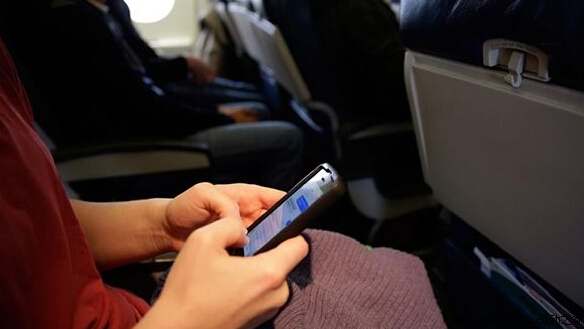
Using mobile phones during flight can lead to detention of up to five days and fines as high as 50,000 yuan (US$7,284.1). [file photo] 

Beijing police detained three passengers from Jan. 5 to Feb. 6 for allegedly using mobile phones during flights, the Civil Aviation Administration of China (CAAC) News reported Wednesday.

The first passenger surnamed Zhang was held for five days after being arrested upon landing at Beijing Capital International Airport on a flight from Harbin, Heilongjiang Province, on the evening of Jan. 5.

A flight attendant said that Zhang refused to turn off her cell phone when the plane was taking off and insisted on making calls during flight. When she was arrested and taken to airport police station after landing, she refused to cooperate.

The second passenger, surnamed Niu, was detained for three days when her plane was landing at Beijing airport from Nanchang, Jiangxi Province, on the afternoon of Feb. 5.

The third passenger, surnamed Wang, was taken for five days after landing at Beijing from Mudanjiang, Heilongjiang Province, at noon on Feb. 6. Wang was punished for allegedly listening to music on cell phone during takeoff and landing.

According to China’s civil air safety regulations, using mobile phones and other communication tools during flight may threaten public security and can lead to detention for up to five days. For those cases of gross violation, passengers can be fined as much as 50,000 yuan (US$7,284.1) and be given criminal sanctions.


Beijing to stamp out toxic school racetracks

Beijing will issue new standards on the quality of synthetic racetracks in primary and high schools in 2017 after children reportedly fell sick from exposure to toxic running tracks last year.

Construction of new synthetic running tracks will be suspended until the enforcement of the new standards, which have been given priority by the Beijing Municipal Education Commission this year.

Makeshift racetracks, such as water permeable brick or concrete ones, will be adopted with the new standards.

Zhang Yongkai from the commission said the new standards would require extensive tests on chemical substances, and that the entire construction process, including raw material purchase and processing, would be under strict inspection.

Last year, pupils in a primary school in downtown Beijing reported nosebleeds, dizzy spells and coughs after alleged exposure to the newly renovated tracks. Tests on the tracks in mid-June, nine months after they were put into use, showed excessive amounts of benzene substances and formaldehyde.

Similar cases were also reported in other provincial regions, such as Jiangsu and Guangdong.

Media reports said some of the racetracks were made of industrial waste, such as scrap tires and cables, and were built with substandard glue.


Foreigner’s fingerprints to be collected upon entry in China

Foreign nationals’ fingerprints will be collected by China’s border authorities when entering China, according to a statement on the website of China’s Ministry of Public Security on Thursday.

The country’s border authority will gather the fingerprints of incoming foreigners aged 14 to 70. Foreign nationals holding diplomatic passports or enjoying mutual exemption of this kind will not have to, according to the statement. The regulation will begin trials in Shenzhen airport on Feb. 10 and will be expanded to other airports and ports this year.

The ministry said the practice, which is commonplace in many other countries, is to enhance exit/entry administration, and border authorities will take measures to make customs clearance more efficient.


Police arrest over 30 drug suspects in SW China

Police in southwest China’s Guizhou Province have seized a large amount of equipment and 900 kilograms of raw materials for drug production and arrested more than 30 suspects, police said Thursday.

In July 2015, police in Guizhou’s provincial capital Guiyang began to investigate the activities of a drug gang headed by a suspect surnamed Li. The gang operated a drug lab in a remote village in north China’s Hebei Province.

In October 2016, police raided the lab and arrested Li and five other suspects. They also confiscated over 900 kilograms of raw materials and equipment. A major member of the gang, surnamed Zhang, however, evaded capture and fled the scene.

On Feb. 1 this year, the police were tipped off that Zhang had resurfaced in Guiyang and was in the process of setting up another lab. Zhang had also secured sales with drug dealers in Malaysia.

Zhang and 30 other suspects were arrested in Guiyang on Feb. 7.


Guangxi officials probed over pangolin dinner

The disciplinary authority in south China’s Guangxi Zhuang Autonomous Region has launched a probe into the case of a “pangolin dinner”, after a newly discovered social media post went viral online.

A controversial microblog post in 2015 about an official banquet has been dug up by netizens, sparking public outrage with regards to eating endangered animals and putting local officials in serious trouble.

Weibo user Al_cal, later identified to be the son of a clock tycoon in Hong Kong, posted on his Weibo account that he’d been hosted by local officials in Guangxi to a banquet that included a pangolin dish.

Al_cal’s microblog post on the pangolin banquet has sparked public outrage with regards to eating endangered animals. [Photo: Weibo] 

“Thanks to the hospitality of Director Li and Secretary Huang for inviting me to their office and cooking pangolin meat for us,” wrote Li Jiahe in July 2015, when he was on a research trip in south China with a Hong Kong delegation. “This is the first time that I had it, and I find it very delicious.”

The post also includes pictures from the alleged banquet, including the pangolin dish and a group photo of Li with several government officials. All of his posts were later deleted after wide online circulation.

In response to the extensive public attention, Guangxi Investment Promotion Agency, which was hosting the Hong Kong delegation, said that they cannot recognize any of its leaders or employees among the diners in the photo. It also claimed that there is no senior official surnamed Li or Huang when the post was published on July 15, 2015.

The current Party secretary of the agency, named Huang Wenbiao, is said to have been in Singapore at the time and was only appointed to the job on July 21.

According to a written statement issued on Feb. 8, the Hong Kong business delegation revealed that all the members were having group buffet dinner during their visit in Guangxi between July 8 and 10, and Li did not return to Hong Kong with rest of the group. “The alleged pangolin dinner was Li’s personal involvement and the delegation has nothing to do with the case.”

The investigation is still underway.

The Chinese pangolin, one of the eight species of pangolins, has been heavily hunted and trafficked for its meat and scales, which are believed to have medicinal qualities.

The International Union for Conservation of Nature listed the Chinese pangolin as “critically endangered” in 2014 on the basis of predicted decline of up to 90 percent over the next couple of decades.

Late last year, Shanghai customs officials seized more than 3 tons of pangolin scales – the largest pangolin seizure in China’s history, officials said.