CSTB co-ordinates measures in relation to arrival of visitors to Hong Kong during Mainland’s National Day Golden Week (with photos)

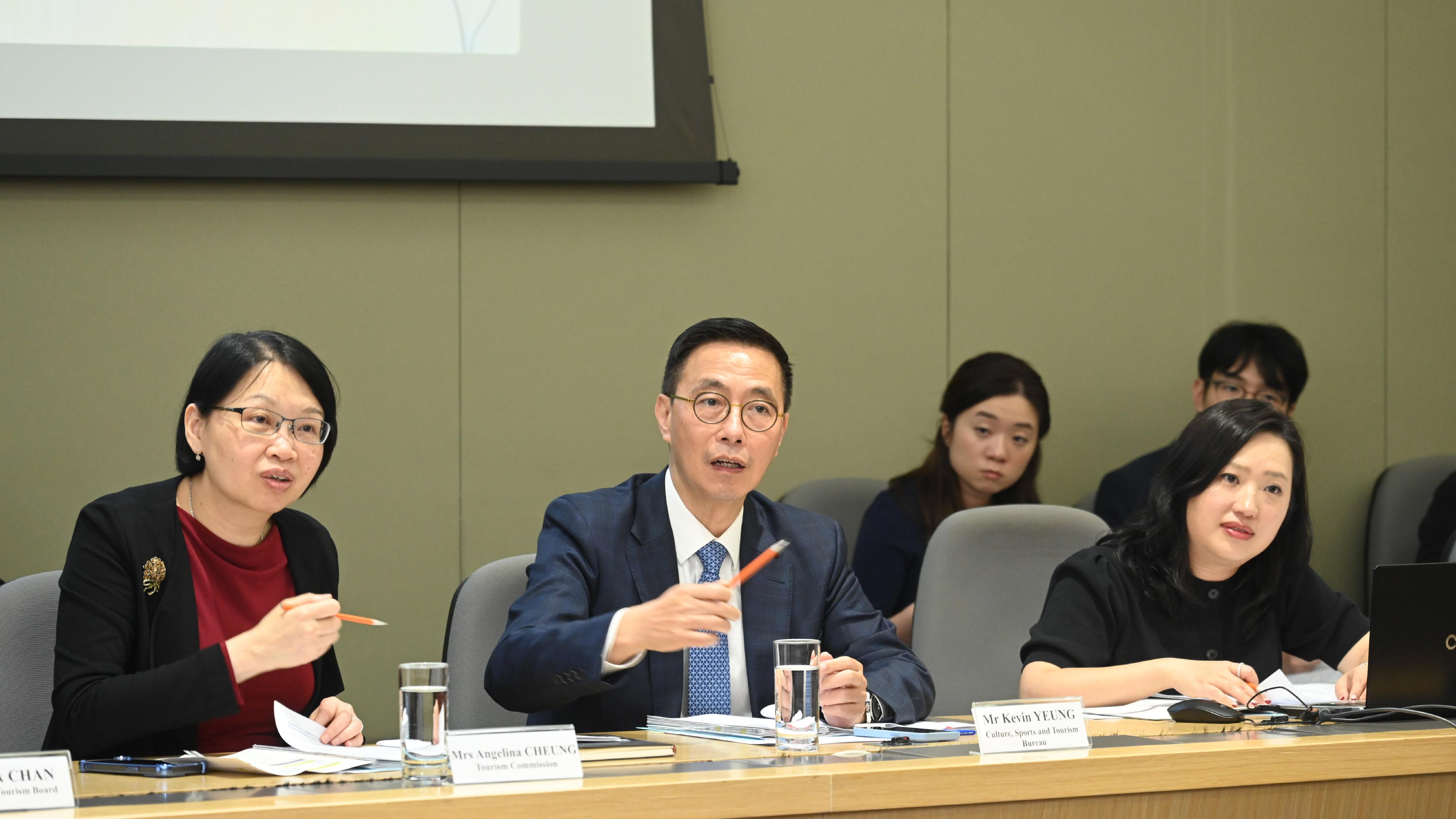
     Following the first interdepartmental meeting held on August 23 to co-ordinate the preparation work for the arrival of visitors to Hong Kong during the Mainland's National Day Golden Week, the Culture, Sports and Tourism Bureau convened another meeting today (September 20) to follow up on the preparation work carried out by various departments, including crowd-control management of visitors, etc, said a Government spokesman. The meeting was chaired by the Secretary for Culture, Sports and Tourism, Mr Kevin Yeung, with representatives from government departments including the Hong Kong Customs (Customs), the Hong Kong Police Force (Police), the Immigration Department (ImmD), the Transport Department, various District Offices, etc. Representatives from various tourism-related organisations including the Travel Industry Authority (TIA), the Hong Kong Tourism Board (HKTB), the Travel Industry Council of Hong Kong, the West Kowloon Cultural District Authority, major tourist attractions, the hotel industry, etc, also attended. Relevant parties will continue to maintain close communication on the crowd control of visitors during the Mainland's National Day Golden Week with a view to preparing in advance and co-ordinating different aspects for receiving visitor arrivals to Hong Kong.

     Mr Yeung said, "The HKSARG has been closely monitoring visitor arrivals during the Mainland's National Day Golden Week and will continue to maintain close liaison with various government departments, relevant organisations and the trade to properly manage visitor flows, so as to offer visitors with a good travel experience and a taste of Hong Kong's city charm of 'Tourism is everywhere in Hong Kong'."

     During the Mainland's National Day Golden Week, relevant government departments will strengthen manpower as well as co-ordination of transport and cross-boundary services at various control points, including strengthening crowd management, increasing transport frequency, etc. If necessary, the Police will make appropriate traffic arrangements according to the actual circumstances, including arranging public transport to use the designated dedicated lane at San Sham Road to travel to Lok Ma Chau/Huanggang Port. In addition, the Inter-departmental Joint Command Centre set up by Customs, the Police, the ImmD and other departments will be activated during the Mainland's National Day Golden Week to monitor the situation at each land control point, as well as to maintain close liaison with Mainland counterparts and take contingency actions where necessary.  The Emergency Transport Co-ordination Centre of the Transport Department will operate 24 hours to monitor the traffic conditions of different districts, including various boundary control points and major stations, disseminate the latest traffic information through various channels and implement response measures where appropriate. 

     Various District Offices will closely monitor the flow of visitors within their corresponding districts during the Mainland's National Day Golden Week and strengthen management of the relevant spots having regard to the actual circumstances. Major tourist attractions will also put in place crowd control measures.

     The TIA has been reminding travel agents receiving relevant Mainland inbound tour groups to stagger arrival times as far as possible and urge travel agents, shops, restaurants, etc, receiving Mainland inbound tour groups to implement appropriate measures for managing the order of visitors and coaches. The TIA will also deploy additional manpower during the Mainland's National Day Golden Week to conduct inspections in districts where relatively more registered shops for inbound tour groups are located, and offer assistance to visitors and tourist guides to protect the rights of inbound tour group visitors. In addition, Customs will step up inspections of shops serving visitors to combat unfair trade practices.

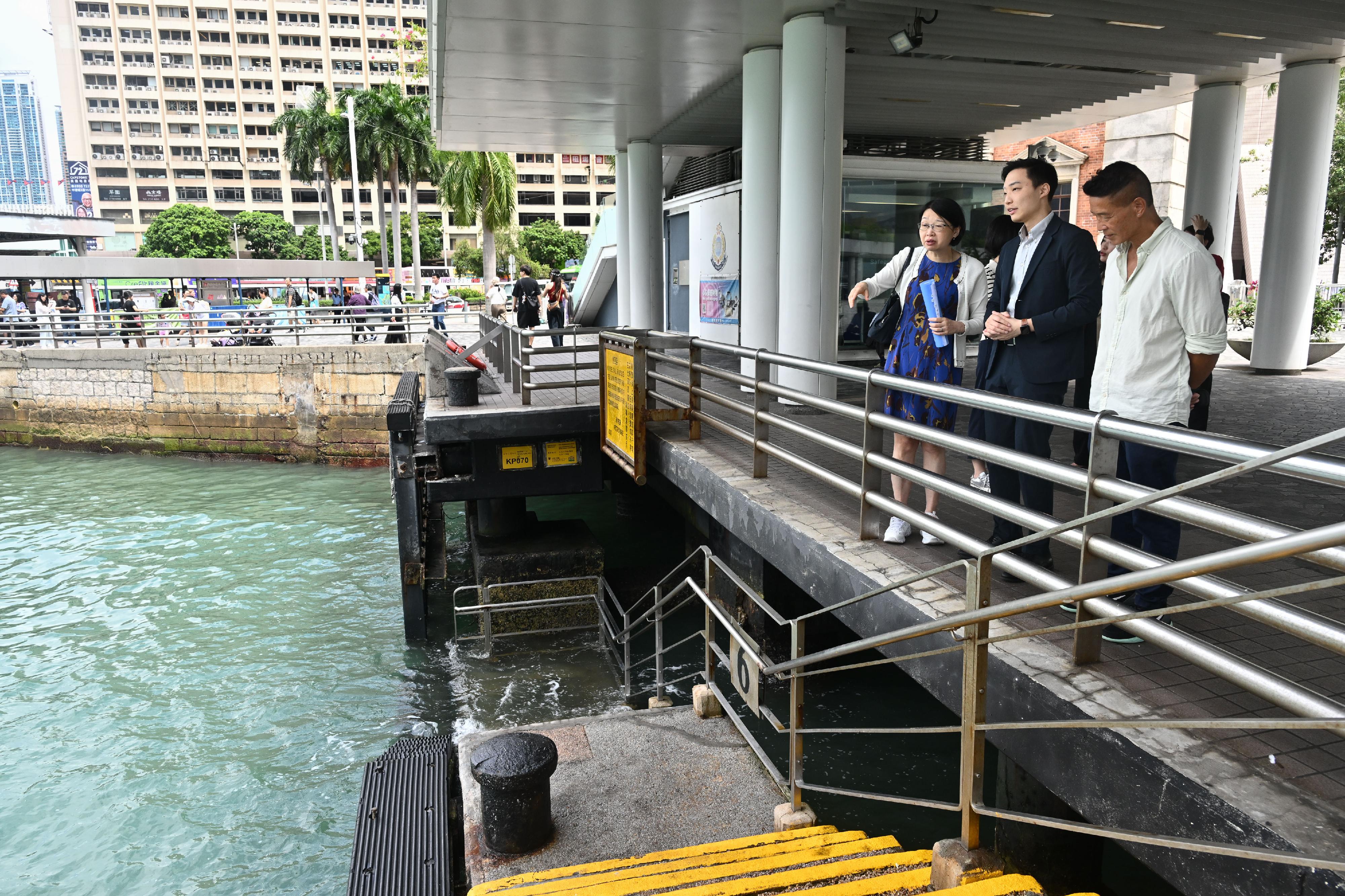
     The Tourism Commission, together with representatives from various government departments and the TIA, visited Tsim Sha Tsui Star Ferry Pier and the nearby piers offering Victoria Harbour tours earlier (September 9) to inspect enhancement arrangements of crowd control deployed by relevant parties, as well as visiting the Kowloon City District to inspect registered shops and catering premises for Mainland inbound tour groups to remind the relevant parties to better prepare for the co-ordination work for crowd management. In addition, the Tourism Commission has been maintaining liaison with Mainland tourism authorities and communicating with them on the arrival of Mainland visitors. It has provided the hotlines of the relevant local organisations to Mainland inbound group visitors via the Mainland tourism authorities.

     At present, the ImmD will upload the daily arrival figures of each control point to its website (www.immd.gov.hk). In addition, visitors may check the estimated waiting time at each land boundary control point via the Immigration mobile application.

     â€‹During the Mainland's National Day Golden Week, in case of emergency, Mainland inbound tour group visitors, tour escorts accompanying the tour groups and local tourist guides may seek assistance from the TIA by calling its service hotline 3698 5900 (operating from 9am to 6pm from October 1 to 7). For enquiries or complaints, visitors may call the HKTB's hotline 2508 1234 (operating from 9am to 8pm from October 1 to 7) or the Consumer Council's hotline 2929 2222 (operating from 9am to 5.30pm from October 2 to 4 and on October 7).

Photo  Photo  


Appeal for information on missing girl in Sham Shui Po (with photo)

     Police today (September 20) appealed to the public for information on a girl who went missing in Sham Shui Po.

     Chuenarom Mei-yee, aged 13, went missing after she left her residence on Kei Lung St on September 16 night. Her family then made a report to Police yesterday (September 19).

     She is about 1.4 metres tall, 40 kilograms in weight and of thin build. She has a square face with yellow complexion and long black hair. She was last seen wearing a pair of black-rimmed glasses.

     Anyone who knows the whereabouts of the missing girl or may have seen her is urged to contact the Regional Missing Persons Unit of Kowloon West on 3661 8036 or 9020 6542 or email to rmpu-kw@police.gov.hk, or contact any police station.

Photo  


Drug abuse and drug situation in Hong Kong in first half of 2024

     The Action Committee Against Narcotics (ACAN) noted at its meeting today (September 20) the statistical figures of the Central Registry of Drug Abuse (CRDA) and other drug-related figures in the first half of 2024. ACAN noticed that the total number of reported drug abusers in the first half of 2024 was lower than that of 2023, while the number of reported young drug abusers aged under 21 increased. ACAN will closely monitor the situation in the remaining quarters of 2024, and will carry out its anti-drug work according to the latest situation.
 
     Figures from the CRDA revealed that the total number of reported drug abusers in the first half of 2024 decreased by 8 per cent (from 3 279 to 3 025) when compared with that of 2023. The three most common types of drugs abused in the first half of 2024 were heroin, cocaine and methamphetamine (commonly known as "Ice"). Nevertheless, the number of reported young drug abusers aged under 21 increased from 394 to 452 when compared with the same period last year. Among these reported young drug abusers, nearly 75 of them abused "space oil". In this group, the most common type of drugs abused was cannabis, followed by cocaine. "Space oil" has become the third most common type of drugs abused for the first time.
 
     The ACAN Chairman, Dr Donald Li, said "space oil" is a name drug dealers created in order to sugar-coat drugs with devious tactics. "Space oil" is a kind of liquid with harmful substances added illegally. Although there is no standard formula for "space oil", it usually contains an anaesthetic called etomidate, which can only be prescribed by a doctor. Etomidate is regulated as Part 1 poison according to the law.
 
     Dr Li explained that, in addition to etomidate, "space oil" may be mixed with other drugs, including cannabis, "Ice" and ketamine (commonly known as "K"), etc. "Space oil" can cause serious physical and mental harm, including addiction, memory loss, seizure, unconsciousness, and even death. He added that etomidate and other drugs are strictly regulated under the existing laws. Members of the public must not defy these laws.
 
     "It is scientifically proven that using e-cigarettes is harmful to one's health. Vaping 'space oil' through e-cigarettes is the same as taking drugs. I urge young people to be more vigilant against 'space oil', and they should never try this emerging drug out of curiosity. Otherwise, they will lose their health, their prospects, and even their precious lives. I also suggest that the Government should adopt measures for raising public awareness of 'space oil'."
 
     The Narcotics Division (ND) of the Security Bureau is highly concerned about the emerging trend of "space oil" abuse. It has adopted the suggestions from ACAN and launched education and publicity initiatives targeting "space oil" to enhance the public's abilities to protect themselves against this emerging drug. In July this year, the Commissioner for Narcotics wrote to all primary schools and secondary schools in Hong Kong, reminding the education sector to stay alert to "space oil". At the end of last month, the ND co-organised an exchange session with the Hospital Authority and a social welfare service organisation to improve the capabilities of front-line social workers for providing services to "space oil" abusers. The ND is also stepping up promotion and released an animated video (www.youtube.com/watch?v=zHQVLgU3wAA) on the theme of "space oil" at the end of August to remind the public about the harmful effects caused by "space oil". Together with relevant government departments and social welfare service organisations, the ND will meet the education sector on October 8 to further raise teaching staff's awareness of "space oil". Furthermore, law enforcement agencies (LEAs) will step up patrols, including online surveillance, carry out intelligence-based law enforcement actions and continue to spare no effort to combat crimes relating to "space oil".
 
     According to the statistical figures from the LEAs, the number of persons arrested for drug offences in the first half of 2024 dropped by 10 per cent (from 1 791 to 1 611) when compared with that of 2023. The number of young arrestees aged under 21 decreased by 32 per cent (from 179 to 122). Cannabis and cocaine were the main drugs involved in these arrests. According to the court cases concluded for the same period, the conviction rate of persons being prosecuted for drug offences was as high as nearly 90 per cent. As for young offenders aged under 21 who were sentenced to imprisonment for drug trafficking, more than half of them were sentenced to over five years in prison, and the longest period of imprisonment was nearly 22 years. The ND reminded members of the public, especially young people, not to take part in drug trafficking activities out of greed. Otherwise, there will be lifelong regrets. Young age is not a valid mitigating factor. Anyone who commits a drug offence is liable for serious criminal punishment. The maximum penalty for drug trafficking is life imprisonment and a fine of $5 million.
 
     The statistical figures of the CRDA for the first half of 2024 are available on the website of the ND (www.nd.gov.hk/en/crda_main_charts_and_tables.html). The ND's website (www.nd.gov.hk) as well as its official accounts ("narcotics.divisionhk") on Facebook and Instagram also contain detailed information about drugs, including frequently asked questions about "space oil", cocaine and cannabis for the public's reference. If members of the public encounter any drug problems, they can send messages to 98 186 186 on instant messaging applications WhatsApp and WeChat, or call the 24-hour hotline 186 186 to seek information or assistance from professional social workers.


Speech by SDEV at Colliers Leaders’ Forum 2024 (English only)

     Following is the speech by the Secretary for Development, Ms Bernadette Linn, at the Colliers Leaders' Forum 2024 today (September 20):
 
Director CK Lau (Managing Director of Colliers Hong Kong, Mr Lau Chun-kong), Professor Ling (Interim Vice President (Campus Development and Facilities) and Director of Jockey Club Design Institute for Social Innovation of the Hong Kong Polytechnic University, Professor Ling Kar-kan), distinguished speakers and guests, ladies and gentlemen,
 
     Good afternoon. It gives me great pleasure to join you all at this year's Colliers Leaders' Forum. The forum today is an excellent opportunity for us to exchange views on demographic transformation in Hong Kong.
 
     I think when we talk about demographic transformation, it's not just about the transformation brought about by the bringing in of new talent, or changes in our population themselves, but also transformation prompted by changes in the conditions of our buildings, and that is why the theme of my speech today will cover two aspects: challenges in old districts and opportunities in new development areas.
 
I. Double-ageing as our unique challenge 

     As we all know, Hong Kong’s population is ageing and is ageing fast. At the moment, one-fifth of our population are elderly. By elderly, I mean those aged 65 and above. Four years later, this proportion will increase to 25 per cent, meaning that one in every four people will be elderly by the definition I mentioned just now. Some 40 per cent of our elderly either live alone or with their spouses. At the same time, "ageing of building stock" has been witnessed in most areas, and it is affecting particularly the livelihood of residents in our older districts. This phenomenon of "double-ageing" is very pressing in Hong Kong and I guess KK, who has written on this subject about "Tackling Double-ageing with Double-smart" and who will be delivering his keynote speech later, may touch on this subject in greater details.
 
     As far as the demographic side is concerned, under the leadership of the Deputy Financial Secretary, we have been working on a package of elderly-friendly building design proposals for consultation later this year. We welcome your views on how we could create a more elderly-friendly building environment in pursuit of the "ageing in place" policy.
 
     I would like to take the opportunity of today's forum to share with you how the Government will grasp the opportunities brought about by the Northern Metropolis to tackle the challenges of urban decay, and the Government's proactive efforts to incentivise people to move out from our older districts to these new development areas.

II. Urban renewal 

Rapidly ageing building stock
 
     I have mentioned about the ageing building stock. Here are some figures to illustrate the pace of this urban decay. The number of private buildings redeveloped in the past 10 years are estimated to be about 1 600, equivalent to an average of 160 buildings per annum. Over the same 10-year period, the number of private buildings aged 50 or above significantly increased from slightly over 5 000 to now over 10 000, resulting in an average increase of 510 per annum. So it means 160 buildings redeveloped per annum versus an increase of 510 old buildings per annum. The number of these buildings aged 50 or above is projected to rise further in the next 20 years. And by 2043, the number will be close to 2.5 times the number in 2023.
 
The rehabilitation-cum-redevelopment strategy
 
     Against this background, the Government has been implementing a rehabilitation-cum-redevelopment strategy to arrest our urban decay. As with people, the golden rule is "prevention is better than cure". Building rehabilitation is playing an important role in our urban renewal strategy. Based on the principle that owners should be the ones primarily responsible for maintaining their properties in good condition, the Government adopts a two-pronged approach in enhancing building safety. First, we have since 2018 allocated a total of $19 billion for implementing various building rehabilitation support schemes to assist our eligible building owners, providing them with technical and financial support to maintain and repair their properties.

     Secondly, we intervene proactively through law enforcement, and undertake repair works in default of the owners when a defective or dilapidated building endangers public safety. Stepped-up measures include identifying high-risk buildings in a more precise manner for the issuance of Mandatory Building Inspection Scheme notices, proactively inspecting the external walls of buildings with higher risk and carrying out emergency works for the owners, and strengthening procurement support for owners joining our Operation Building Bright financial subsidy scheme to accelerate the pace for inspection and repairs. Just yesterday, the Buildings Department accounted for progress with a special inspection exercise on the external walls of buildings. Out of 278 buildings with external walls inspected since the beginning of this year, as many as 270 revealed defects here and there requiring rectification. While this high percentage probably has partly reflected that the Buildings Department has selected the right samples for priority inspection, the results, I think, leave us no room for complacency. We are reviewing the penalties against non-compliance with the Mandatory Building Inspection Scheme and we are trying to streamline the prosecution procedures, so as to enhance the deterrent effect. We are planning to consult the public with our specific proposals by the end of this year.
 
     Without timely and proper upkeep, buildings may deteriorate rapidly to the point where rehabilitation is no longer economically viable. For buildings beyond economical repairs, redevelopment is of course a more practical and sustainable solution. The Urban Renewal Authority, being our close partner in undertaking urban renewal, has commenced some 70 redevelopment projects providing over 36 000 new flats since its establishment more than 20 years ago. In recent years, the Authority has been adopting a "planning-led" and "district-based" approach which capitalises on the opportunity brought by redevelopment to re-plan traffic routes, pedestrian facilities as well as re-plan the whole urban design in the whole urban landscape. 
 
     Of course our developer-owners in the private sector also play a crucial role in leading redevelopment projects, as evidenced by the fact that 75 per cent of new flats from all redevelopment projects in the past 10 years came from private redevelopment projects. To quicken the pace of urban redevelopment, we need more target-oriented policy measures to incentivise the participation of our private sector. The Development Bureau has, among other things, secured in July this year the Legislative Council's approval of amendments that will update and streamline the statutory compulsory sale regime, which include lowering the compulsory sale application thresholds and providing more flexibilities for amalgamating adjoining lots for compulsory sale to enhance redevelopment potential. This amended legislation is expected to take effect in December this year.
 
     In expediting urban renewal, we have not lost sight of protecting the interest of minority owners. Just last month, our support centre, aiming to provide one-stop services for minority owners including many elderly owners, commenced operation. This support centre will provide advisory services on how to deal with compulsory sale applications. It will also provide professional valuation services and counselling. We are also making arrangements to introduce a government guarantee loan scheme to help tie over the cashflow needs of minority owners in case of litigation over compulsory sales.
 
III. Opportunities in "new" development areas to tackle the challenges in "old" districts
 
     Urban renewal is essentially revitalisation of urban land resources for more beneficial uses. We are also very much after the aim of revitalising under-utilised land and optimising unused land in the northern part of our New Territories where we call the Northern Metropolis. Through land transformation, we want to build a better Hong Kong with more quality homes, as well as more space for our emerging industries to grow and thrive. 
      
     The Northern Metropolis has an area of 30 000 hectares, around one-third of Hong Kong’s total area. It covers many existing new towns as well as many new planning development areas which are at different planning stages or even have entered into the construction stages. As one of the priorities of the current-term Government, the Northern Metropolis will be the foothold for Hong Kong’s future strategic development, and a new engine for Hong Kong to scale new heights. Adopting an "industry‑driven and infrastructure‑led" approach, the Northern Metropolis will forge a major hub for Hong Kong to integrate into the overall development of our country. It is the major source of land supply in the future, providing some 3 000 hectares of new development land. Upon full development, we anticipate that the entire Northern Metropolis will deliver half a million new residential units and half a million new jobs. Our target for the medium term is to form 40 per cent of the new development land and complete 40 per cent of the new residential flats by 2032.
      
     So, how are the Northern Metropolis and urban renewal related to each other? The answer lies in the vast living space to be made available from the mega project and also the new standards to be adopted. The Northern Metropolis will provide the much-needed new land and new residential units to support thinning out the dense population in the old districts. To this end, we are embarking on a study to devise viable policy measures to encourage the use of new development land to facilitate large-scale urban redevelopment projects. For example, we are exploring the feasibility of transferring plot ratio from sites of the old urban areas to sites of the New Development Areas, as well as what we may do to encourage owners or residents affected by urban redevelopment projects to move to residential units on the new development land. We aim to formulate proposals for consultation in the first half of next year.
 
IV. The appeals/draws of the Northern Metropolis
 
     We are well aware that new development land with residential units are not enough to attract people to move there. Experiences tell us that a balanced and self-contained community in terms of ample employment opportunities, a comprehensive transport network and adequate community facilities are all instrumental. We have therefore planned the Northern Metropolis as a growth area accommodating niche economic sectors like innovation and technology, one integrating quality life, industry development, culture and leisure, and promoting a better home-job balance and green living. Under an "industry-driven" approach, we will provide land in the Northern Metropolis according to the needs of different industries.
      
Enhanced liveability through comprehensive planning and urban design
 
     Through comprehensive planning integrated with smart, green and resilient (SGR) strategies, the New Development Areas within the Northern Metropolis will provide quality and green living spaces, alongside iconic cultural and performance venues and sports and recreation facilities. To promote diversity, age friendliness, inclusiveness and a healthy lifestyle, the planning concept of "15-minute neighbourhood" will be adopted. We will adopt smart and green building design in the urban design concept.
 
     To make the community more liveable, we had a few years ago proposed that the target provision of open space should be increased from 2 square metres per person to 3.5 sq m per person. The more recently planned New Development Areas in the Northern Metropolis have already adopted this revised standard as the basis for reserving land. We will adopt the active conservation approach to preserve ecologically significant habitats while creating the environmental capacity for complementing worthy developments.
      
     We will open up opportunities for eco-tourism and leisure pursuits. In addition, the traditional rural townships are plentiful in historical and cultural resources. The significant built heritage will be integrated with the future development in harmony, adding to the character and appeal of the Northern Metropolis.
 
Ease of mobility
 
     Apart from new and improved road networks, a number of local and cross-boundary railway projects will be implemented to bring ease of movement to the future residents, workers and visitors of the Northern Metropolis. In particular, the two new cross-boundary railways, namely the Northern Link Spur Line and the Hong Kong-Shenzhen Western Rail Link, will greatly enhance the accessibility between the Northern Metropolis and Shenzhen, facilitating the ever-growing needs for cross-boundary travels. The Government is also actively introducing smart and green mass transit systems to serve as a light and green feeder service in some of the New Development Areas, such as the Hung Shui Kiu/Ha Tsuen and Yuen Long South area.
 
Northern Metropolis university town
 
     I note that today’s forum, some of you will be touching on the theme of student accommodation. This I think is very timely when the Government is trying to strengthen Hong Kong as a regional education hub. In Northern Metropolis, we will be reserving more than 60 hectares of sites in Hung Shui Kiu/Ha Tsuen, Ngau Tam Mei and New Territories North New Town for post-secondary education use, with a view to establishing university clusters to tie in with the Government's objective of building Hong Kong into an international post-secondary education hub. With new land, new population, excellent connectivity, development opportunities of different industries, and close connections with the Mainland, the Northern Metropolis will provide valuable opportunities for the post-secondary education sector to grow and excel. 
 
V. Closing
 
     These are our visions for a major growth area for Hong Kong. Visions, which we firmly believe, are realisable and evolving with time. Why I have to emphasise evolving with time? I think Rome was not built in one day. Likewise, our New Development Areas take time to sail through different stages, from planning inception to full-swing implementation with intake of population, completion of basic as well as signature facilities, and progressive efforts in place making. We have to set goals and themes, but we also have to be open-minded in allowing flexibility to cope with changing needs and perhaps changing tastes over the period of developments straddling 20 years or so.
      
     With this in mind, we welcome and are looking forward to the insightful ideas on how we may attract people to relocate to new areas from all the experts, leaders and practitioners gathered here in the forum today. Your contributions will no doubt provide an invaluable reference for us to shape a better future for our city.
      
     Once again, I would like to express my sincere gratitude to Colliers for giving me this opportunity to address such a distinguished audience. Lastly, I wish you all an inspiring and rewarding forum this afternoon. Thank you.


CHP investigates local measles infection case and reminds public that vaccination is the most effective preventive measure

     The Centre for Health Protection (CHP) of the Department of Health (DH) is today (September 20) investigating a local case of measles infection and reminded the public that vaccination is the most effective way to prevent measles, and people born outside Hong Kong who might not have received a measles vaccination during childhood should review their vaccination history.

     The case involves a 57-year-old male with good past health. He had developed fever and sore throat since August 31, and developed rash on September 5. He sought medical attention from a private doctor on September 4 and 7, and attended Evangel Hospital on September 11. Due to persistent fever, cough and sore throat, he attended the Accident and Emergency Department of Queen Elizabeth Hospital (QEH) on September 12 and was admitted for treatment on the same day. He was transferred to an isolation ward of QEH on the next day. His blood sample tested positive for antibodies to measles virus upon laboratory testing. He is still hospitalised and is in stable condition after treatment.

     An epidemiological investigation revealed that the patient has not received measles vaccinations and had no travel history during the incubation period. His two household contacts are currently asymptomatic. During the communicable period, the patient had visited a private clinic and Super Super Congee & Noodle located at Chuk Yuen Plaza in Wong Tai Sin. The CHP will conduct medical surveillance on four staff members and eight patients of the clinic concerned and 24 staff members of the restaurant. So far, no symptomatic person has been identified.

     As measles is highly infectious, the CHP has set up an enquiry hotline (2125 2372) for contact tracing of the case. The CHP appealed to the persons who visited Super Super Congee & Noodle located at Shop S112, 1/F, Chuk Yuen Plaza, Wong Tai Sin, between 7am and 10am from September 1 to 7 to call the hotline. Officers of the CHP will assess their conditions and offer suggestions. The hotline will operate from 9am to 1pm tomorrow (September 21) and September 22, and from 9am to 5pm between September 23 and 27.

     The investigations are ongoing.
 
     "The global immunisation coverage rates have dropped since the COVID-19 pandemic. Many countries worldwide are facing a resurgence of measles outbreaks. According to the World Health Organization (WHO), the number of measles cases had risen worldwide to over 300 000 cases reported in 2023, a roughly 80 per cent increase from 2022. The Western Pacific region recorded a total of about 5 000 cases in 2023, which represented more than a 2.5 times when compared with 2022, with persistent transmission found in the Philippines and Malaysia. In view of the continuous increase in measles cases, the WHO has urged parents to bring their children to get vaccinated as early as possible to prevent measles from spreading," a spokesman for the DH said.
 
     The CHP reiterated that vaccination is the most effective way to prevent measles. As revealed by the vaccination uptake of primary school students and the findings of the territory-wide immunisation surveys regularly conducted by the DH, the two-dose measles vaccination coverage has been consistently maintained at a high level, well above 95 per cent, and the local seroprevalence rates of measles virus antibodies reflect that most of the people in Hong Kong are immune to measles. On the whole, the information available indicates that the risk of large-scale outbreak is considered to be low in Hong Kong. However, it is possible for some not fully vaccinated people to get infected and transmit the measles virus to susceptible people (including children aged below 1 who are not due for the first dose of measles vaccine).
 
     The spokesman reminded members of the public that delays in vaccination will weaken the protection for children against measles, and parents are reminded to maintain up-to-date vaccination for their children for comprehensive and timely protection. All people who are non-immune to measles, especially foreign domestic helpers, people working or studying in tertiary institutions, and workers of sea/land/air border control points who may be at a higher risk of contacting an imported case, should receive two doses of measles-containing vaccine. In general, people can be considered as non-immune to measles if they (i) did not have the infection confirmed by laboratory test before, and (ii) had not received two doses of measles-containing vaccines in the past, or have unknown vaccination status or unknown immunity against measles. On the other hand, as measles was endemic in Hong Kong and most parts of the world before 1967, people born before 1967 are considered to have acquired immunity to measles through natural infection.
 
     The spokesman supplemented that, members of the public who are planning to travel to places with a high incidence or outbreaks of measles should review their vaccination history and past medical history, especially people born outside Hong Kong who might not have received a measles vaccination during childhood. Those who have not received two doses of measles-containing vaccines, with unknown vaccination history or unknown immunity against measles, are urged to consult their doctor for advice on vaccinations at least two weeks before departure.
 
     The spokesman advised, "The incubation period (the period from infection to appearance of illness) of measles ranges from seven days to 21 days. Symptoms of measles include fever, skin rash, cough, runny nose and red eyes. If symptoms arise, members of the public should wear surgical masks, stop going to work or school and avoid going to crowded places. They should also avoid contact with non-immune persons, especially persons with weakened immunity, pregnant women and children aged below 1. Those suspected to have been infected are advised to seek medical attention as early as possible and reveal relevant contact history of measles to healthcare professionals."
 
     Besides being vaccinated against measles, members of the public should take the following measures to prevent infection:
 
• Maintain good personal and environmental hygiene;
• Maintain good indoor ventilation;
• Keep hands clean and wash hands properly;
• Wash hands when they are dirtied by respiratory secretions, such as after sneezing;
• Cover the nose and mouth while sneezing or coughing and dispose of nasal and mouth discharge properly;
• Clean used toys and furniture properly; and
• Persons with measles should be kept out of school till four days from the appearance of a rash to prevent the spread of the infection to non-immune persons in school.
 
     For more information on measles, the public may visit the CHP's measles thematic page. Members of the public who are going to travel can visit the website of the DH's Travel Health Service for news of measles outbreaks outside Hong Kong.