China plans smart health and elderly care

China plans to develop the smart health and elderly care industry in the next four years to grants universal access to health management services and home-based elderly care, the Ministry of Industry and Information Technology (MIIT) said Thursday.

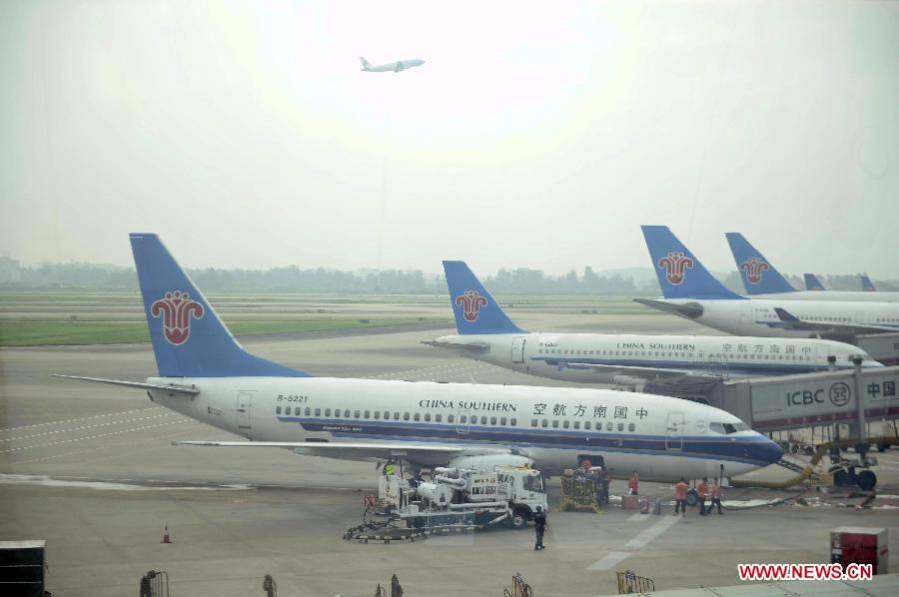
China will build a smart health and elderly care industry with more than 100 industrial leading enterprises and a number of brands by 2020. [Photo: Xinhua]

According to an action plan jointly made by the MIIT, the Ministry of Civil Affairs and the National Health and Family Planning Commission, China will build a smart health and elderly care industry with more than 100 industrial leading enterprises and a number of brands by 2020.

The country will also have more than 100 model bases for the industry in the next four years, said the plan.

Efforts should be made to make breakthroughs in core technologies and promote the development of intelligent analysis technologies such as real-time health status analysis and health trend analysis based on big data, so as to provide more types of health-care services to the public.

The government will also encourage the development of advanced health devices such as health management wearables, portable health monitors and home service robots, it said.

The MIIT said the it will build a unified information sharing system to improve the quality and security of the service network of the smart health and elderly care industry.


China hopes to cover flights, trains with internet

China is hoping to make the internet available in aircraft cabins, high speed trains or even remote mountainous areas, thanks to six communication satellites it’s planning to send into orbit this year, according to China National Radio.

The first satellite – Shijian-13 – is to be launched on a Long March 3B (also known as the CZ-3B) rocket from the Xichang Satellite Launch Center (XSLC) in April.

Shi Jian 13 is an experimental geostationary satellite, designed to test electric propulsion, with an orbital life of 15 years, according to Gunter’s Space Page.

Deputy chief designer, Wang Min, says it’s the country’s first high-throughput satellite (HTS). It’s capable of relaying traffic many times the speed of traditional fixed satellite services (FSS), for the same amount of allocated frequency on orbit, according to intelsat.com.

Later in the year, the scientific research satellite Shijian-18 will be delivered into orbit by the Long March 5B rocket in mid-2017, according to Space Flights News.

Zhou Zhicheng, director of the communications satellite department of the China Academy of Space Technology, said the launch of these communications satellites will help improve the prospects for China’s satellite mobile communications system.

On a global scale, 24 communications satellites operating in orbit currently were manufactured by Chinese organizations, according to China National Radio.


Police seize over 1 tonne of meth

Police in south China’s Hainan Province have seized 1,060 kilograms of methamphetamine, sometimes referred to as ice, the largest ever haul of the drug in the province, police said Thursday.

Nine suspects, including the alleged ringleader, surnamed Zhuang, and drug producers, were arrested on Jan. 8, said a police officer with the provincial public security department at a press conference.

Based in the provincial capital Haikou, the gang contacted dealers in Guangdong Province and also sold the drugs to other areas of Hainan.

Hainan initiated a three-year drug control campaign from November 2016, and started offering up to 100,000 yuan (14,600 U.S. dollars) to informants the next month.

To date, more than 1,700 suspects in connection with drug-related crimes have been caught in over 1,500 cases, up 193 percent and 207 percent year on year, respectively, according to the police officer.

A total of 3 million yuan has been awarded to informants so far.


Electronic fence to be launched in Baiyun Airport


An airplane flies over the Guangzhou Baiyun International Airport in Guangzhou, capital of south China’s Guangdong Province, June 6, 2012. [Xinhua photo]

With the development of drones, airliners’ safety has been threatened in recent years. Since the beginning of 2017, the safety of some airliners was influenced by drones.

Huang Hao, vice-general manager from Baiyun International Airport, said they are designing an electronic fence to block unmanned aircraft from flying in sensitive areas.

Huang also said they will establish the electronic fence to block UVA within airport boundaries. Once UVA enters into its boundary, the electronic fence system will disturb the UVA system and make it return automatically. Also, the Baiyun International Airport will cooperate with the local government and the police to strengthen the safety campaign and the daily monitor.

Yang Jieqiong, the deputy secretary-general of Shenzhen UAV Industry Association, said that there are more than 50,000 unmanned aerial vehicle (UVA) players in China, and more than half of them are in the Pearl River Delta region. The number of the UVA players is still increasing rapidly. Most of players do not have qualifications for UVA operation.

Technical measures could be taken to block UVA from the airport, said Yang. However, these technical measures have not been used in airports in Guangdong Province. Moreover, Yang calls for strengthening law enforcement and establishing real-name registration system for UVA players to ensure the safety of airliners.

The electronic fence is expected to be launched within the year.


Too many banquets to handle: an endemic disease

The Chinese tradition of giving monetary gifts on wedding or funeral banquets has been around for centuries, but the hosting of various banquets aiming to make money has become an unbearable burden especially in rural areas.
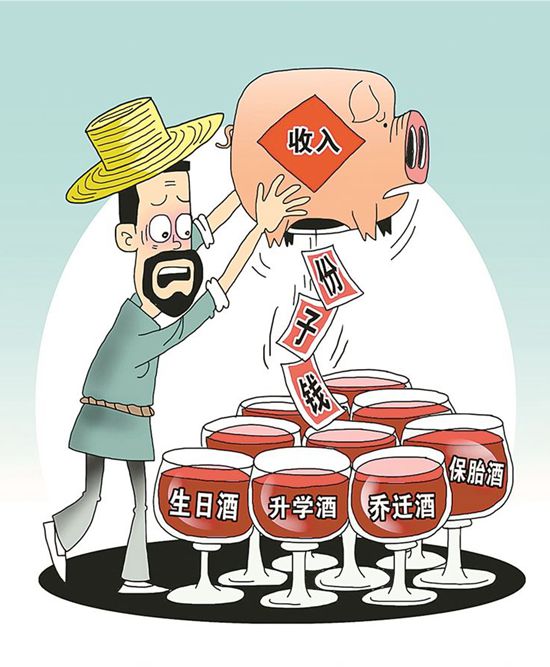
Hosting banquets under different pretexts aiming to make money has become an unbearable burden especially in rural areas. [Photo: Xinhua]

During important occasions like weddings and funerals, the family would host open-air banquets for friends and relatives, and those who are invited will pay an amount of money, depending on closeness, as a gesture of affection and care.

“I spent over 40,000 yuan (US$ 5,824) last year on various banquets,” said a winery boss surnamed Yang in a small town in central China’s Hunan Province. “This way of returning other’s favor is really costly.”

In some places, however, banquets are also held for various reasons. Moving into a new house, family members getting enrolled into college and celebrating someone’s birthday are some of the justifiable excuses. And there could be also not-so-justifiable ones like hosting a banquet to “prevent miscarriage” for pregnant women and to “start a new life” after being released from prison.

Relief fund used for monetary gifts

Those banquets could be a huge burden for some people, especially in rural areas.

“The average annual income of a farmer is between 30,000 and 40,000 yuan, and some people are spending half of it to pay for monetary gifts on those occasions,” said Lyu Caifu, a farmer at the Three Gorges Reservoir Region in Chongqing Municipality.

Some low-income families are even drawing on their government allowance for those banquets, he added.

Hosting banquets under different pretexts has grown into a vicious cycle. Understandably, those who have paid could rack their brains to find any excuses for others to return the favor.

Tightened regulatory measures

Many places have rolled out measures to cure the “endemic” disease, with some targeting party and government officials and some the general public as well.

Regulations may vary from region to region but they mostly forbid any banquets except for wedding and funerals and limit the scale as well as attendees of those events.

As for punishment, party cadres are regulated based on party discipline. Some have even been removed from their current posts and expelled from party membership; non-party members were often investigated by the public security department or food and drug regulators. For example, a town in the Three Gorges Reservoir Region stipulated that the violator will be disqualified from enjoying subsistence allowances.

Some places have seen preliminary results. “Much of our burden has been lifted since then,” said Yao Qiong, a self-employed business owner in a small town of Chongqing.

In the past, the average annual amount paid on banquets was over 40,000 yuan, and the number has reduced to only 3,000 yuan after the campaign.

There were also some controversial measures adopted during the campaign. Some cities even banned wedding banquets for second marriages and a declaration needs to be filed ahead of hosting a banquet.

“Local government has the responsibility to curb unhealthy customs, but it should never cross the line,” said Li Ping, a professor at Renmin University of China (RUC). Li advised the local community to formulate its own rules after soliciting opinions from the masses and lead the transformation of old habits in a step by step manner.