Child lifted from 15-meter deep well in East China

The toddler who fell into a 15-meter-deep dry well in East China’s Shandong province Monday afternoon was rescued early Tuesday morning.

The boy, two and a half years old, was pulled out of the well at 3:06 am, alive and clear in consciousness. He remains in hospital under observation.

The accident occurred at about 5:30 pm Monday as the boy in Fangdong village in Zhangdian district of Zibo City fell into the unprotected well with a diameter of 30 centimeters, the district government said.

The well is so narrow that rescuers could not go down to bring the boy to the ground. Dozens of excavators and bulldozers were used to dig a big hole near the mouth of the well to reach the boy.

When the well was reduced to around six to seven meters, rescuers managed to pull the child out with the help of underwater camera and a “shaft lifter” specially designed for such situation.

In November 2016, a six-year-old boy in Hebei province died after falling down a 80-meter-deep dry well with a diameter of 30 cm, despite a marathon rescue operation that attracted nationwide attention.


Japanese man donates Battle of Nanjing documents to China

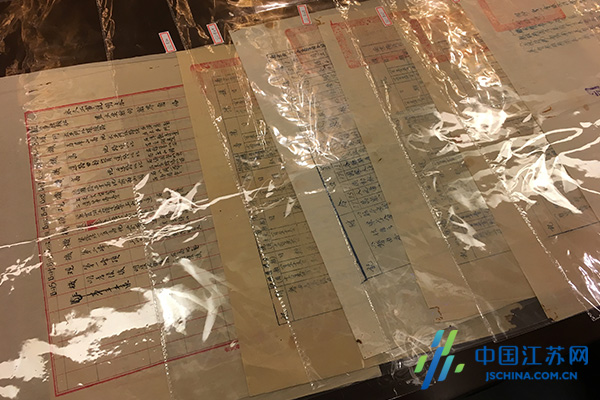
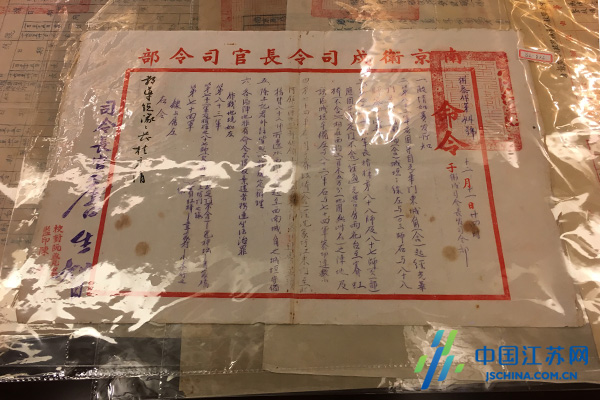
A Japanese man has donated 16 Chinese historical military documents to the Nanjing Massacre Memorial Hall.

Retired Japanese school principal Iwamatsu attending a donation ceremony in Nanjing with a Japanese delegation, during which he donated historical documents about the Battle of Nanjing to the Nanjing Massacre Memorial Hall, March 31, 2017. [Photo/ jschina.com.cn]

76-year-old retired primary school principal, Iwamatsu, discovered the documents in a bookshop in Japan in 2007, and decided to return them to China after bought them.

They contain orders issued by a commander named Tang Shengzhi relating to the Battle of Nanjing in 1937 when the then Chinese capital was captured by Japanese troops, and a permit for foreign missionaries.

It’s not the first time that Iwamatsu has visited the Nanjing Massacre Memorial Hall. Back in 1997 when he was a high school teacher, he was part of a delegation from the Japanese National Board of Education.

Historical documents about the Battle of Nanjing donated by Japanese man Iwamatsu.[Photo/ jschina.com.cn]

On returning to Japan, Iwamatsu told his students about the history of the Nanjing Massacre, where over 300,000 Chinese civilians and unarmed soldiers were killed by Japanese soldiers.

Iwamatsu attended the donation ceremony in Nanjing with a Japanese delegation visiting Nanjing to commemorate the victims of the Nanjing Massacre by planting trees during the Tomb-sweeping Day holiday. The practice has been an annual event since 1986.

Historical documents about the Battle of Nanjing donated by Japanese man Iwamatsu.[Photo: jschina.com.cn]


Home from past brings sense of better future

Huang Juan tells the story of The Little Prince to the pupils in the village. [Photo by Lin Aihua/ China Daily]

The first time Huang Juan arrived at Sanjia village, in the Guangxi Zhuang autonomous region, her goal was to demolish decrepit buildings and homes, rather than preserve them.

She was working on a tourism development program to boost incomes by improving living conditions and rural tourism.

Just less than 100 km from Nanning, the region’s capital, the village is located in Mashan county surrounded by looming karst mountains.

Most of the villagers had moved into their new houses with the help of the government in 2014 when a reconstruction program was launched to promote rural tourism.

“How could people make a sustainable future out of a place with little tourism resources like Sanjia”, said Huang, “I began to wonder whether there is a way to inspire the villagers to be more involved to attract visitors”.

South yard is a house she decided to renovate. Its cob brick structure was built more than 60 years ago.

“When there are very few old dwellings left, I began to realize the villagers may lose their past and how urgent it is to save the authentic heart of the place,” said Huang.

She wanted to restore it as a public space for the villagers and a platform to exchange ideas and introduce resources, or even use it as a place of retreat and contemplation.

Mu Wei, an architect who designed the Norwegian pavilion for the Shanghai Expo, joined her and undertook the design.

The building was designed in two sections, the former main building and a new light house, which stand together in harmony by the river.

The main building, which presents the past, was renovated in its original style with a tilt roof.

The light house is characterized with large area of French casement and a wood framework which makes the space transparent and bright.

Nearby villagers offered their help in the renovation although they didn’t understand her concept at first.

South yard was completed in September 2016, after a year’s hard work, at a cost of 1.3 million yuan ($190,000).


Rain to hit central and south China, smog to hit north China

Parts of central and south China will be swept by heavy rain from Wednesday to Thursday, while parts of north China will be hit by smog, said the country’s national observatory Tuesday.

The National Meteorological Center (NMC) forecast heavy rain or rainstorms accompanied by thunder in parts of Hubei, Anhui, Jiangsu, Guizhou and Hunan provinces from Wednesday to Thursday.

Light rain or sleet will continue in northwest China’s Xinjiang until Tuesday night, said the NMC.

From Wednesday to Friday, smog will envelop Beijing, Tianjin, Hebei, Henan, Shandong and Shanxi due to a weak cold front, while heavy fog will hit some of the regions from evening until morning.

Conditions for the air to diffuse will gradually improve in most of these regions starting Friday night, said the NMC.


2,105 police killed on duty since late 2012

A total of 2,105 police officers have died and 22,977 have been injured while on duty since the 18th National Congress of the Communist Party of China (CPC) in late 2012, according to the Ministry of Public Security.

In 2016, 362 police officers died while on duty, the ministry said.

During the three-day holiday for Tomb-Sweeping Day, people across the nation commemorated police officers who have died.

The China Police Daily launched a section on its website for online memorial activities, with millions of visits and more than 6,400 comments.

Tomb-Sweeping Day, or Qingming, falls on Tuesday, when Chinese people honor their deceased loved ones by visiting tombs and making offerings.