Wild panda filmed for the first time breastfeeding cub

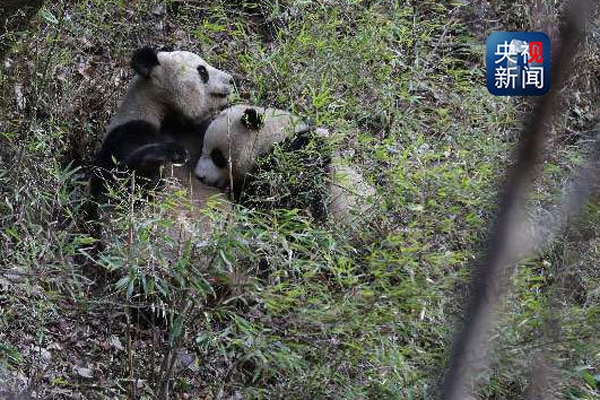
A giant panda feeds her cub in Qinling Mountains, Shaanxi Province. [Photo/CCTV]

A giant panda has been filmed for the first time breastfeeding her cub in the wild, according to CCTV.

The rare footage was captured by local journalists in Foping county in Northwest China’s Shaanxi Province, CCTV said.

The mother and cub were first sighted resting on the upper branches of a big fir tree.

The cub, about two years old, then appeared to be hungry and wanted to feed, and her mother climbed down from the tree and suckled her cub lying on a slope.

The footage was filmed in Qinling Mountains which is home to China’s largest giant panda population living in the wild.

There were about 345 giant pandas living in Qinling Mountains according to China’s Fourth National Survey on Giant Pandas conducted two years ago. Area of the animals’ habitat had increased from 347,000 hectares to 360,000 hectares over the past decade.


Police probe death of 14-year-old boy in Luxian County

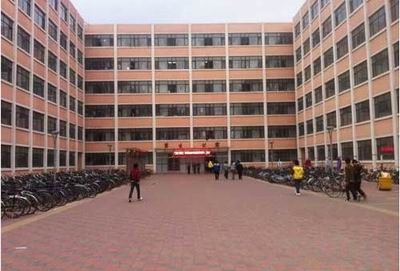
A dormitory building in Taifu Town Middle School [Photo/Shanghai Daily]

Police in Luxian County in southwest China’s Sichuan Province are investigating the death of a 14-year-old boy and will conduct autopsy as soon as possible, said a statement by local authorities Wednesday evening following a spate of speculation that he was beaten to death by bullies.

The student surnamed Zhao was found dead outside his dormitory building in Taifu Town Middle School at 6 a.m. on April 1, local police said on that day. One day later it said preliminary investigation has ruled out homicide and the injuries he sustained suggested he fell from high places.

However, Xinhua news agency reported that a video showed the mother of the boy stormed into the funeral parlor, cut the boy’s shirt off and found large area of bruises on his back. Meanwhile claims that the boy was beaten up by a gang of bullies were widely circulated online, Xinhua said.

In an interview with Xinhua, school headmaster Chen Liang and local education bureau director Zhu Daqing didn’t answer if there was bully in the school, only saying the incident was being probed by police.

“All I can say is we will tighten up management,” Chen was quoted by Xinhua.

Although local police said on April 3 the online allegations were not true and several people were caught fabricating rumors such as the boy was beaten up by five others and his arms and legs were broken in the assault, it failed to appease local residents.

The Xinhua report said checkpoints were set up several kilometers away from the county to stop any cars from entering. After the reporter detoured and walked into the town, large crowds of people were found standing in front of the school and hundreds of police officers wearing helmets were separating them apart.

While conducting the interview, the Xinhua reporter claimed he was constantly harassed by phone calls and the family of the student was badgered by local government officials and were afraid from telling the truth.


Survey shows vandalism troubles shared bike users

Bicycles from OFO, one of the major companies involved in China’s shared bike business, are spotted abandoned in massive numbers under a flyover in Beijing. [Photo/Weibo]

Users of urban shared-bike programs have called for regulation to address bike vandalism, and suggested that shared bike schemes should be an urban planning consideration, according to a survey by China Youth Daily.

The survey, which was published by the paper Thursday, revealed that 50.5 percent of respondents said vandalized bikes had forced them to rethink their travel plans, and 78.8 percent suggested shared bikes should be incorporated into urban planning management.

The survey was based on the answers of 2,000 respondents. The top complaint relating to shared bike programs was shared bikes crowding the sidewalks, with 63.6 percent saying it was a common sight. The other concerns related to vandalism and theft.

“It is not unusual to see shared bikes secured with private locks,” Miao Yue, an undergraduate in Guangzhou, told China Youth Daily. “During rush hour, sometimes it takes 20 minutes to find a usable shared bike.”

In addition, 88.6 percent voiced support for a law that would address the vandalizing of public facilities.

There are government-run shared-bike programs, but they only offer bicycles that must be returned to docking stations.

“Dockless bicycle-sharing is more efficient and convenient,” Zhao Jie, a transportation expert with the China Academy of Urban Planning & Design, was quoted as saying.

Zhao suggested that there should be a system that tracks user’s conduct.

According to the survey, 78.6 percent of respondents have used shared bikes, with 0.7 percent born after 2000, 21.1 percent born in the 1990s, 54.4 percent in the 1980s, 18.1 percent in the 1970s, and 5.6 percent in the 1950s and 1960s.


China pledges to improve secondary education coverage

China aims to increase secondary education coverage nationwide to 90 percent or more by 2020 from 87.5 percent in 2016, the Ministry of Education announced on Thursday.

Despite a rise in the gross enrollment rate of the country’s high schools, poor areas in central and western China still face a shortage of educational resources and slower development in secondary vocational education, said Lyu Yugang, senior official with the ministry, at a press conference.

There has been an imbalance between the development of high school education and secondary vocational education in affluent eastern China, added Lyu.

According to a plan released by the ministry on Thursday, China will promote secondary vocational education, and improve facilities in schools and the education funding mechanism from 2017 to 2020.

More resources will go to schools in poor and ethnic regions, and the right to education for students with disabilities as well as children of poor families and migrant workers should be ensured, Lyu said.


Draft to protect good Samaritans

Draft regulations aimed at protecting good Samaritans and their families in Henan province would block companies from firing employees, including those unable to work due to injuries sustained in an act of bravery.

The proposals, which are open to public feedback until April 30, also include rewards of up to 100,000 yuan (US$14,500) and “green channels” at hospitals to fast-track patients who help save others.

Children of people killed or disabled while acting as good Samaritans could enjoy privileges when entering high school or college, according to the draft released on Saturday.

The government document clarifies five situations in which a person can be defined as a good Samaritan, including protecting State security, helping authorities crack a significant criminal case or conducting a rescue during or after a disaster.

“Good Samaritans deserve rewards and help,” said Li Min, the daughter of Li Xuesheng, a resident of Henan’s Shangqiu city who died in 2005 while saving two children playing on a railway track in Wenzhou, Zhejiang Province. “I’m happy to see that the government has considered that and made it part of the regulation.”

Wang Junzhang, 36, of Jiaozuo, who saved two boys from a frozen lake in Beijing in 2014, added: “I think this draft is very detailed. It will better protect good Samaritans and will definitely encourage more people to help others.”

Last month, the Ministry of Public Security issued a draft guideline on protecting and rewarding good Samaritans. Henan followed the step and carried out a draft of its own on that basis.

“The revised version will be presented to the provincial legislature and will be officially issued as a local law if passed,” said Yuan Shuhang, an official with the Henan Legislative Affairs Office, whose office is responsible for considering the suggestions collected and making necessary revisions.

“It will have greater legal validity than similar regulations or guidelines released before,” he added.