Boy’s death triggers controversy over safety of shared bikes

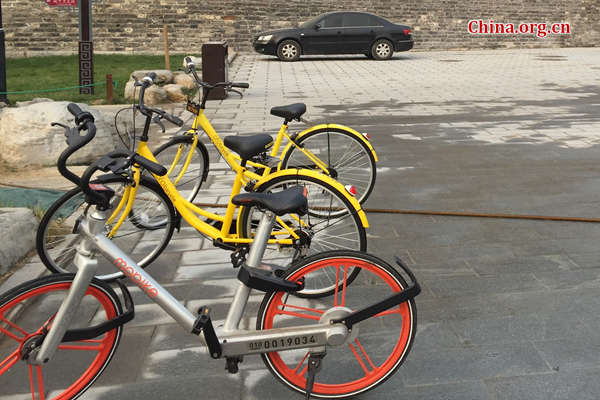
A report from Beijing-based BigData Research showed the number of shared bicycle users exceeded 18 million as of the end of 2016 and is expected to approach 50 million by the end of this year. [Photo/China.org.cn] 

The case of a boy who fell down while riding a shared bike and died in Central China has drawn people’s attention to safety problems of shared bicycles, hnr.cn reported.

Photo shows bikes that users can easily ride or park under the sharing scheme. [File photo: sohu.com]

The boy, whose name has not been revealed, was reportedly 12 or 13 years old. Witnesses said he and other boys were riding yellow bicycles at high speed and practicing drifting on a steep road in Zhengzhou, Henan province, when the accident happened on Sunday. The bicycles are run by Ofo.

Though the accident is under investigation, some said the boys illegally used the bicycles after cracking the password of the mechanical locks on the bicycles.

Users of Ofo bikes first need to pay via their mobile phones before they are sent the password that unlocks the bicycle.

Many primary students in Zhengzhou, however, showed that they can unlock the Ofo bicycles without the password, with one student unlocking four bicycles out of the 10 locked ones, according to the report.

According to law, those under 12 are not allowed to ride bicycles on roads. As Ofo’s mechanical lock has long been criticized for its lax features, many question who should be held responsible for the safety of juveniles who illegally use the bicycles.

“I think the parents should be held responsible,” said Liu Ming, a resident of Zhengzhou. He said he once saw his 9-year-old son riding the yellow bicycle and warned him.

Another resident, surnamed Wu, agreed on the importance of guardian’s role but suggested that Ofo should change its mechanical locks into safer ones. Shared bicycles on other platforms use smart locks, which are hard to illegally break.

An Ofo employee said the company has launched bicycles with smart locks in Beijing and will introduce the new version in other regions of the country in the future.

If somebody dies due to quality defects or poor management of the shared bicycle, the company should take the responsibility, said lawyer Zhang Shaochun.

But if the minor cracked the password then the juvenile and the guardian should take the main responsibility, Zhang added.




HK chief pledges to serve people with pragmatism

The Hong Kong Special Administrative Region (HKSAR)’s fifth-term chief executive Lam Cheng Yuet-ngor answers questions during a press conference in south China’s Hong Kong, June 21, 2017. [Photo: Xinhua]

The Hong Kong Special Administrative Region (HKSAR)’s fifth-term chief executive Lam Cheng Yuet-ngor on Wednesday introduced to the media her governing team, pledging to serve the people with pragmatism and build a better Hong Kong for the next generation.

China’s State Council, on the nomination of Lam, approved the appointments of principal officials of the fifth term government of the HKSAR earlier Wednesday.

Speaking at the press conference, Lam said that each member of her team is passionate, capable, committed and prepared to serve the people of Hong Kong, in accordance with the Basic Law with utmost sincerity and stamina.

Lam described her team as a practical one, which is conversant with the operation of the government, has rich administrative experience and supports the idea that the SAR government should play more active roles.

“My team and I will strive to rebuild social harmony, enhance public confidence in the government and ensure that the government will better align its work with public aspirations,” Lam said.

She mentioned that frank discussions with Legislative Council members and stakeholders of different sectors, as well as taking on broad views of frontline workers and young people will be an important part of her new style of governance.

All of the 21 officials appointed showed up at the press conference. According to the Basic Law of the HKSAR, the officials will assume office on July 1, 2017.


China to compile historical data about South China Sea

Photo taken aboard the U.S. drilling ship JOIDES Resolution shows the sunset scenery of the South China Sea on March 31, 2017. Scientists from China, the United States, France and other countries were on the U.S. drilling ship JOIDES Resolution to conduct an expedition to the South China Sea. As part of the International Ocean Discovery Program, they will explore the lithosphere extension during the continental breakup, by drilling at four sites in the northern area of the South China Sea to a depth of up to 4,000 meters. The study will contribute to understanding of how marginal basins grow. [Photo/Xinhua]

A project was launched Wednesday in China that will see researchers compile historical data obtained during expeditions to the South China Sea since the late 1950s.

Researchers will collect and compile valuable data and materials obtained during China’s major ocean expeditions to the South China Sea and its affiliated islands and reefs, said Long Lijuan, deputy head of the South China Sea Institute of Oceanology under the Chinese Academy of Sciences.

The project is one of the 14 resource investigation programs approved by the Ministry of Science and Technology this year.

A comparative analysis and research into the data will provide insight into the resources, environment and changes related to the South China Sea and its affiliated islands and reefs.

The project has the participation of 193 scholars from 10 domestic research institutions and universities, who specialize in fields such as marine life, ecology, fishery and geology.

Retired expedition members have been invited to assist the program to ensure the reliability and precision of the data.


Beijing on alert for heavy rain

Beijing is bracing for a period of heavy rain, which is expected to last from Wednesday night to Friday.

Beijing meteorological station issued a yellow alert for rain and storms at 4:40 p.m. on Wednesday.

China has a four-tier color-coded system for severe weather, with red being the most serious, followed by orange, yellow and blue.

The office of Beijing flood control headquarters warned of high risks of floods and geological disasters in mountainous areas. It also warned that low-lying areas may be inundated.

The office asked people to keep away from rivers, flooded road sections and mountainous regions.

Beijing Drainage Group has checked its flood control facilities and the drainage systems across the city before the rain.

The district of Tongzhou, in the east of the city and in the lower reaches of Beijing’s rivers, is also prepared for the upcoming rainstorm.

The flood control department in Tongzhou has prepared 21 large pumps and organized 19 emergency rescue teams.

Beijing Municipal Commission of Transport has organized an emergency team of more than 3,800 people. To ensure traffic safety, Beijing has increased highway, mountain, bridge and underground passage patrols.

Beijing Bus Group will dispatch more buses, especially on routes linking major railway stations in the city, to help passengers.

Moreover, Beijing Subway will install water fenders in its stations to prevent rain water from pouring in. The subway stations operated by Beijing MTR will provide raincoats to passengers for free.


China’s mining of combustible ice beats expectations

Photo taken on June 21, 2017 shows the trial mining site in the Shenhu area of the South China Sea. China has extracted about 235,000 cubic meters of the combustible ice from the South China Sea, beating previous expectations for the mining operation. Wednesday afternoon marked six weeks of an ongoing mining operation in waters near the Pearl River estuary, without being disrupted by this year’s second typhoon Merbok. [Photo/Xinhua]

China has extracted about 235,000 cubic meters of the combustible ice from the South China Sea, beating previous expectations for the mining operation.

Wednesday afternoon marked six weeks of an ongoing mining operation in waters near the Pearl River estuary, without being disrupted by this year’s second typhoon Merbok, according to operators of the trial mining site in the Shenhu area of the South China Sea.

“China has beaten expectations in completing the trial explorations of combustible ice using local innovations in technology and engineering. It marks a historic breakthrough,” according to a statement released by the mining site.

Combustible ice usually exists in seabed or tundra areas which have the strong pressure and low temperature necessary for its stability. It can be ignited like solid ethanol, which is why it is called combustible or flammable ice.

One cubic meter of combustible ice, a kind of natural gas hydrate, is equal to 164 cubic meters of regular natural gas.

China declared its first success in collecting samples of combustible ice in the South China Sea on May 18 after discovering the substance in the South China Sea in 2007.