China to introduce official medals and titles of honor

China’s national medals and honorary titles include Medals of the Republic, July 1 Medals, Aug. 1 Medals, Friendship Medals, and national titles of honor. [File Photo] 

The Communist Party of China (CPC) Central Committee has approved a series of documents to set up an honoring system for the contributors in the Party, the country and the military.

According to the documents, China’s national medals and honorary titles include Medals of the Republic, July 1 Medals, Aug. 1 Medals, Friendship Medals, and national titles of honor.

The Medals of the Republic, the highest honor of the country, will be given to honor those with great contributions and distinguished service for the Party, the country and the people, said the documents.

The July 1 Medals, the highest honor of the CPC, will be awarded to CPC members who have made great contributions to the development of socialism with Chinese characteristics and the construction of the CPC.

The Aug. 1 Medals, the highest honor of the military, will be given to servicemen and women who have strongly safeguarded the country’s sovereignty, national security and benefit, and who have made outstanding contributions to the development of national defense and the modernization of the military.

The Friendship Medals will be presented to foreigners who have made outstanding contributions to China’s socialist modernization drive, promoted exchange and cooperation between China and the world, and helped maintain world peace.

National titles of honor will be awarded for prominent figures who have made great contributions and earned reputations in fields such as economy, education, science, culture and sports.

The documents also stressed that a record book will be kept to remember the recipients and their deeds.


Panda keepers under fire amid mistreatment accusations

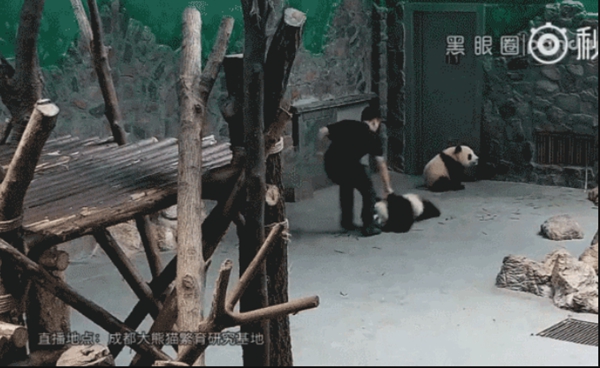
In an online video that went viral, a staff member can be seen pushing, dragging and throwing “Rourou” and “Manman,” the two popular pandas at the research base. [Printscreen] 

Staff are under fire following accusations of mistreatment of giant pandas at Chengdu Research Base of Giant Panda Breeding in Chengdu, capital of Sichuan Province.

In an online video that went viral, a staff member can be seen pushing, dragging and throwing “Rourou” and “Manman,” the two popular pandas at the research base.

The video has fueled heated discussion, and many are outraged by the mistreatment of the animals, seen as national treasures of China. A post about the incident on microblog Sina Weibo had drawn more than 6,000 comments as of 8 p.m. Thursday.

Authorities at the base Thursday explained what happened during the incident.

Panda keeper Guo Jingpeng said he was feeding milk to some panda cubs on July 12, when one of them suddenly became violent.

“It bit my hand really hard, its teeth cut into the flesh and my hand started bleeding,” Guo said. “When it tried to bite me again, I pushed it away out of instinct.”

Even though it has been two weeks since the incident, Guo’s hand is still scarred by the panda bite.

Guo said when he heard about the viral video and its scathing comments, he felt he had been wronged.

“The over 50-minute video was intentionally edited into less than two minutes of footage,” Guo said.

Another panda keeper, Xie Huhai, said that to the playful pandas, biting is just a way of “having fun,” but “panda fun” could cause injuries to the keepers.

“We often get hurt by the pandas,” Xie said. “Scratches and bites are daily occurrences.”

Pandas can become violent once they reach one or two years old, Guo said.

“When they are happy, they may act normally, but if they experience any external stimulation, they can react quite violently,” he said.

Authorities with the breeding base said they have questioned the staff members involved and taken measures. They demanded all staff treat the pandas more “gently” when the animals try to bite or scratch.

“When we saw the video, we thought the staff members had overreacted, even though they meant no harm to the pandas,” said Wu Kongju, a panda expert at the base. “But we hope people can show more understanding towards the panda keepers, because although giant pandas look cute, they are quite strong and can be violent.”

Many people have agreed with Wu’s explanation.

“Firstly, a panda is a bear, and they can be strong and violent,” said Weibo user Dengzheshouxindehanzi. “They just happen to have a babyface.”

The current giant panda population count, including cubs, is approaching 2,060 and mature adults are estimated to constitute 50.5 percent of that figure, according to a report by the International Union for Conservation of Nature (IUCN) in 2016.

In the Red List of Threatened Species on Sept. 4, 2016, the IUCN reported the giant panda population had improved enough for the endangered species label to be downgraded to “vulnerable.”

However, the threat of declining bamboo resources due to climate change could, in the near future, reverse the gains made during the last two decades, the IUCN warned.


National roaming fee scrapped

National roaming charges will be scrapped for 1.36 billion Chinese phone users from September, one month ahead of the original plan. [File Photo] 

National roaming charges will be scrapped for 1.36 billion Chinese phone users from September, one month ahead of the original plan, China’s three biggest telecommunication carriers said yesterday.

China Mobile, China Unicom and China Telecom all said yesterday that they will stop charging national roaming fees from September. However, the international roaming charges remain.

The roaming fee, almost double the local call cost on average, has been an irritant for consumers who wanted it scrapped for a long time. The Ministry of Industry and Information Technology asked carriers to “gradually stop charging” the fee since 2016.

In Shanghai, carriers have already launched packages that do not include the roaming fee since 2015.


China says no to ‘foreign garbage’

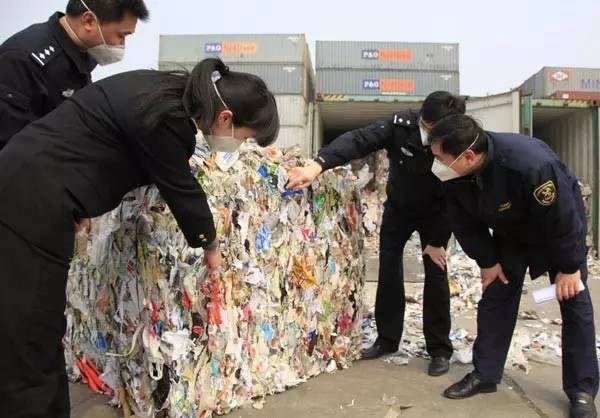
By the end of 2017, the country will forbid imports of solid waste that cause great environmental damage and raise strong public concerns. [File Photo]

China’s cabinet said Thursday “foreign garbage” will be entirely banned from entering the country as authorities plan stricter management on solid waste imports.

By the end of 2017, the country will forbid imports of solid waste that cause great environmental damage and raise strong public concerns, according to a reform plan on solid waste import management released by the State Council.

By the end of 2019, the country will phase out imports of solid waste that can replaced by domestic resources, the plan said.

The release of the plan came after China notified the World Trade Organization last week that it will ban imports of 24 types of solid waste, including waste plastics, unsorted scrap paper, discarded textiles and vanadium slag by the end of 2017.

China started to import solid waste as raw materials to make up for the domestic shortage of resources in the 1980s, but some companies have illegally smuggled “foreign garbage” into the country for profit, damaging the environment and public health.

China will gradually reduce the categories and amount of solid waste imports and raise the import threshold, according to the plan.

Border control on “foreign garbage” will be intensified, and severe punishment will be imposed on the reselling and illegal processing of imported waste.

A long-term mechanism will be established to kept “foreign garbage” out, while international cooperation on returning the garbage will be enhanced, the plan said.

The Chinese government is stepping up the fight against pollution and environmental degradation as decades of fast growth have left the country saddled with smog and contaminated soil.

The Ministry of Environmental Protection (MEP) launched a month-long campaign on July 1 to crack down on pollution in imported waste processing, with 420 inspectors selected from 27 provincial regions forming 60 teams to conduct full-scale investigations.

China’s medium-sized and large cities imported 46.98 million tonnes of solid waste in 2015, down 5.3 percent year on year, according to MEP figures.

In 2014, the whole country imported 49.6 million tonnes of solid waste, with scrap paper, plastics and metal taking up large shares, according to the MEP.


China says no to ‘foreign garbage’

By the end of 2017, the country will forbid imports of solid waste that cause great environmental damage and raise strong public concerns. [File Photo]

China’s cabinet said Thursday “foreign garbage” will be entirely banned from entering the country as authorities plan stricter management on solid waste imports.

By the end of 2017, the country will forbid imports of solid waste that cause great environmental damage and raise strong public concerns, according to a reform plan on solid waste import management released by the State Council.

By the end of 2019, the country will phase out imports of solid waste that can replaced by domestic resources, the plan said.

The release of the plan came after China notified the World Trade Organization last week that it will ban imports of 24 types of solid waste, including waste plastics, unsorted scrap paper, discarded textiles and vanadium slag by the end of 2017.

China started to import solid waste as raw materials to make up for the domestic shortage of resources in the 1980s, but some companies have illegally smuggled “foreign garbage” into the country for profit, damaging the environment and public health.

China will gradually reduce the categories and amount of solid waste imports and raise the import threshold, according to the plan.

Border control on “foreign garbage” will be intensified, and severe punishment will be imposed on the reselling and illegal processing of imported waste.

A long-term mechanism will be established to kept “foreign garbage” out, while international cooperation on returning the garbage will be enhanced, the plan said.

The Chinese government is stepping up the fight against pollution and environmental degradation as decades of fast growth have left the country saddled with smog and contaminated soil.

The Ministry of Environmental Protection (MEP) launched a month-long campaign on July 1 to crack down on pollution in imported waste processing, with 420 inspectors selected from 27 provincial regions forming 60 teams to conduct full-scale investigations.

China’s medium-sized and large cities imported 46.98 million tonnes of solid waste in 2015, down 5.3 percent year on year, according to MEP figures.

In 2014, the whole country imported 49.6 million tonnes of solid waste, with scrap paper, plastics and metal taking up large shares, according to the MEP.