Cervical cancer vaccine cleared for Chinese clinics

The first imported batch of Cervarix, the cervical cancer vaccine, has passed quality inspections and is heading to health clinics across the Chinese mainland, pharmaceutical company GlaxoSmithKline said on Monday.

“Cervical cancer is a common form of malignant tumor that severely threatens the health of women. There are 100,000 new cases of cervical cancer in China each year, and over 30,000 deaths due to the disease,” said Qiao Youlin, a top epidemiologist and member of the Chinese Academy of Medical Sciences.

“It is the third most common cancer among women aged 15 to 44,” he added. “For this reason, cervical cancer vaccination, together with cervical cancer screening, will significantly reduce the incidence of cervical cancer and precancerous lesions, thus reducing the burden of this disease”.

Cervarix was approved by the China Food and Drug Administration in July last year.

The vaccine is registered in 132 countries and regions, and more than 69 million doses have been provided to the global market, according to GSK.


Beijing is China’s ‘smartest city’: report

Beijing ranked first in the penetration of a cashless society, followed by Shenzhen, Guangzhou and Shanghai. [File Photo]

Beijing is the “smartest” city in China, according to a report on the cashless society released Monday.

The report was jointly published by Chinese tech giant Tencent, the Chongyang Institute for Financial Studies at Renmin University of China, and French market research firm Ipsos.

It measured the level of “smart cities” using different indexes, such as transportation, education, shopping and food delivery, in 324 Chinese cities and polled over 6,500 residents on their use of mobile payments.

Overall, Beijing ranked first in the penetration of a cashless society, followed by Shenzhen, Guangzhou and Shanghai.

The cities of Dongguan and Foshan were the dark horses in the top ten, ranking sixth and tenth, respectively.

The report also showed that 40 percent of Chinese carry less than 100 yuan (US$15) in cash when going out, while 52 percent only use cash for 20 percent of their total monthly consumption.

Over 70 percent of respondents said they could live more than a week with only 100 yuan in cash, and 84 percent were “comfortable” going out with only mobile phones, no cash.

The report was part of a week-long celebration of WeChat’s annual “Cashless Day,” scheduled on Aug. 8.

“Cashless Day” aims to promote a green, fashionable and efficient lifestyle. Even though a completely cashless society is unlikely to happen, a new age of smart life has already arrived, according to WeChat, China’s largest social media company.


China utilizes AI technology to prevent crime

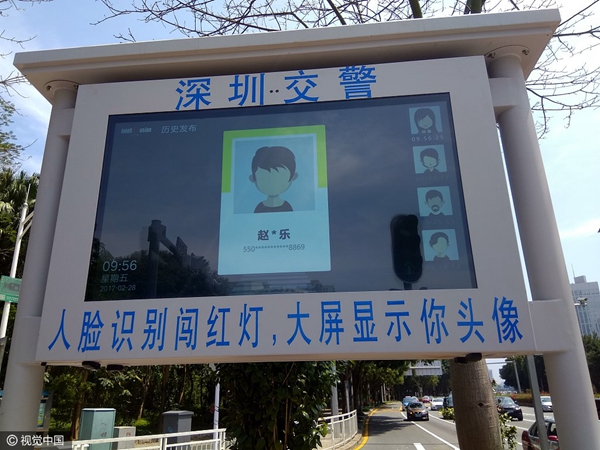
Face recognition display screen. A smart traffic system launches at a crossroad in Shenzhen, Guangdong on April 17, 2017. [Photo/VCG]

China is looking to predict and prevent crime with the help of AI technology, according to a Financial Times report.

Facial recognition company Cloud Walk is helping police develop a system that tracks individuals’ movements and behavior to assess their chances of committing a crime.

The big-data rating system warns police of highly suspicious groups based on where someone goes and what he or she does, a company spokesperson told FT.

Risks arise if a person “frequently visits transport hubs and goes to suspicious places like a knife store,” the spokesperson added.

The vice-minister of science and technology, Li Meng, said that AI will be a key function in crime prediction for the government.

“If we use our smart systems and smart facilities well, we can know beforehand…who might be a terrorist, and who might do something bad,” said Li.

The crime-prediction technology is dependent on several AI techniques, like behavioral recognition and gait analysis, to identify people from surveillance footage.

In addition, “crowd analysis” can be used to detect “suspicious” patterns of behavior in crowds, for example singling out thieves from normal passengers at a train station.

From shaming jaywalkers to keeping intruders out of university dorms, China continues to embrace facial recognition and other AI technologies in public spheres.

The State Council declared on July 20 that the country plans to build a world-leading AI industry worth $150 billion by 2020.


Missing Chinese teacher leaves note for parents

The handwritten letter is found in the missing Chinese teacher Wei Qiujie’s hotel room in Japan. [Photo/dzwww.com]

The father of a Chinese teacher, Wei Qiujie, who went missing in Japan last week has been shown a handwritten letter in her hotel room, saying farewell, reports China Daily quoting Japanese media Hokkaido News.

Accompanied by police officers, her father went to the room in central Sapporo, where they found the note, in which Wei thanked her parents for years of parenting. She went on to write that she wasn’t happy with her previous life and wanted to start a new one.

The 27-year-old primary school teacher from Fujian Province was last seen on the morning of July 22, when she left the guesthouse leaving her luggage in her room. She had arrived in Japan just a few days earlier.

Wei Qiujie’s father arrived in Japan on Friday and was briefed by the police on the ongoing investigation, and confirmed that the handwriting in the letter was that of his daughter.

He told reporters that she had no friends in Japan, couldn’t speak the language and that this was the first time she had visited Hokkaido.

Wei’s friends have reportedly also said that she showed no signs of wanting to start a new life.

The search for the young teacher continues.


Pollution inspectors sharply criticize Tianjin, Anhui, Shanxi

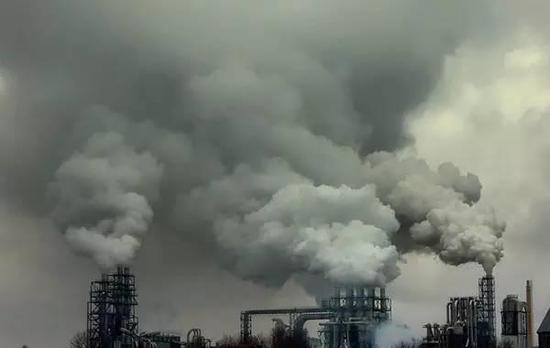
About 10,000 polluting companies were ordered to suspend production or shut down by the end of June. [File Photo]

Environmental inspectors sent by the central government uncovered severe problems in Tianjin and the provinces of Anhui and Shanxi during a monthlong review and said slack leadership has led to environmental degradation in some areas.

The inspectors transferred 11,527 pollution-related cases to the provincial-level governments, following the highest-level environmental inspection since late April.

The governments are required to submit improvement plans within 30 days and make them public.

In the three provincial-level areas, 1,686 government officials had been held accountable for pollution as of the end of June. Officials from Shanxi were the most numerous-more than 1,000. Another 136 were detained, according to Ministry of Environmental Protection statements on Saturday and Sunday.

About 10,000 polluting companies were ordered to suspend production or shut down by the end of June, the ministry said. Of those, about half (4,331) were from Tianjin. Environmental authorities have issued fines totaling 1.25 billion yuan ($185 million).

The common thread in these cases was that leadership was weak and officials failed to give sufficient attention to pollution control.

Tianjin received an unusually harsh evaluation.

“There is a clear gap in Tianjin in meeting the requirements from the central government to match its position as a municipality and meet the expectations of the public,” inspectors said on Saturday.

Some leaders did not insist on adherence to tough measures on air pollution, and air quality actually worsened in some periods. Likewise, the bureaus responsible for agriculture and urban greening did not work together, but evaded their duty to build a garbage processing plant, said Jiang Jufeng, head of the inspection team.

In Shanxi, inspectors also found that insufficient attention had been paid by provincial and city leaders, as the concentration of major airborne pollutants increased in 2016 and continued to worsen this year.

Leaders in Lyuliang, Shanxi Province, were summoned to talk with the ministry twice because of severe pollution. But they did not pay sufficient attention, and measures to correct problems lagged behind schedule, said Yang Song, the team leader in Shanxi.

For example, 966 small coal-fired boilers in the city, which should have been phased out by the end of 2014, were still in operation at the end of 2016, hurting air quality.

In addition, six coal mines continued to operate illegally inside a natural protection zone in Jinzhong.

In Anhui, inspectors found that the provincial water resources bureau did not supervise drains, and that wastewater contained excessive pollutants. Also, officials in Hefei’s Binhu New District allowed construction waste to pile up and harm wetland, they said.

In some places in the three areas, half the sewage was discharged without treatment.