17 killed, damage widespread in wake of Typhoon Hato

Relief workers on Thursday began the arduous task of recovery in Guangdong, Hong Kong and Macao after Hato — the strongest typhoon to hit the country this year — made landfall on Wednesday, causing 17 deaths and major damage.

The Macao government stepped up its post-typhoon relief work on Thursday after Typhoon Hato left eight people dead and over 150 injured and cut power and water supplies to some parts of the special administrative region.

Two transformer stations in Zhuhai, which were damaged and cut power to Macao about noon on Wednesday, resumed operation about 9 pm on Thursday. Backup facilities were used during the repair process, according to China Southern Power Grid Co.

Macao Chief Executive Fernando Chui Sai-on apologized for insufficient actions taken by the Macao government in response to the typhoon. He and 14 other senior officials of the Macao government, expressed condolences to the victims and their families. The government will offer a total of 1.35 billion MOP ($167 million) for emergency relief to those who were affected by the disaster.

Meanwhile, Fong Soi-kun, the SAR’s Meteorological and Geophysical Bureau director, resigned on Thursday.

In Hong Kong, the airport operated overnight to ease air traffic to and from Hong Kong after Hato forced the cancellation of 480 flights on Wednesday. Hong Kong’s Airport Authority estimated that it would have to handle more than 1,200 flights on Thursday alone.

Guangdong Party chief Hu Chunhua visited a hospital, a village, a residential community and a water plant in Zhuhai on Thursday, urging all agencies and businesses to make greater efforts to safeguard people’s lives and property and to bring life and production back to normal.

There were touching moments in some areas struck by Hato, as professional rescuers were joined by volunteers in rescuing and relief efforts.

Ten military divers sent by a brigade of the Southern Theater Command rescued on Wednesday three people trapped in underground garages submerged by muddy seawater in residential complexes in Zhuhai, the People’s Liberation Army Daily reported.

Twelve SWAT police officers and an armored vehicle were dispatched Wednesday morning to bring back more than 80 people who were unable to move in fierce winds or unable to get out from the bus as their vehicles were stranded by fallen electrical cables and poles and capsized trucks on Zhuhai Bridge.

Food deliverer Yuan Zuzhuo and two of his colleagues helped clear fallen trees in roads, as soldiers, police officers, urban managers and sanitation workers cleaned up roads blocked by fallen trees and items blown from buildings and structures.

A store owner surnamed Yuan in Jida, Zhuhai, handed out 20,000 steamed buns free to local residents before dinnertime on Wednesday. “We found most supermarkets, stores and markets were closed. There was no power or water supply. We thought that many people would not have enough food. They don’t cost much but can fill the stomach,” he said.


China’s graft watchdog exposes corruption in poverty relief

China’s top disciplinary watchdog has named a number of grassroots officials implicated in abuse of poverty relief funds.

The nine cases involve dereliction of duty, embezzlement of poverty relief funds and theft of allowances for house renovation, according to the Communist Party of China (CPC) Central Commission for Discipline Inspection (CCDI).

In one case, Long Zuoshi, former Party chief of Jile Village in Hunan Province, was stripped of his CPC membership for stealing 81,800 yuan (12,300 U.S. dollars) of poverty relief funds and abusing his power to help another villager illegally obtain 100,000 yuan. Long’s case has been transferred to judicial organs.

Xiao Guangliang, head of the agricultural cooperative society of Fenghuang village in Guizhou Province embezzled 150,000 yuan for his personal use and hosted banquets using public funds, among other violations, from 2014 to 2016. Xiao was stripped of his CPC membership and his case has been transferred to judicial organs.

The CCDI ordered harsh punishments for officials implicated in misuse of poverty relief funds.

China has set 2020 as the target year to complete the building of a moderately prosperous society, which requires the eradication of poverty.


Lawyer pioneering green card service in China

[unable to retrieve full-text content]GaoYuying, partner and director of the International Legal Transaction Department of Beijing Century Law Firm, is offering pioneering legal consultation and assistance for foreigners intending to apply for the Foreign Permanent Resident ID Card in China, otherwise known as the green card.


5 punished over Japanese uniforms outrage

Three men have been detained and two given an admonition for wearing Japanese military uniforms from World War II and posing for photos at a renowned war monument in downtown Shanghai earlier this month.

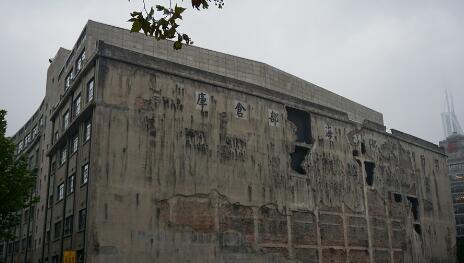
Sihang Warehouse War Memorial Hall, where five men caused outrage over the wearing of Japanese uniforms.

Sihang Warehouse War Memorial Hall, where five men caused outrage over the wearing of Japanese uniforms.

Police announced the punishments yesterday. Four of them are in the photos while fifth took and published the photographs. Earlier, the Sihang Warehouse War Memorial Hall issued a statement criticizing the young men, calling their act “impudent blasphemy” after their photos appeared on the Internet on August 8 and went viral, sparking an indignant reaction from online users.

During China’s War of Resistance against Japanese Aggression (1931-1945), Japanese troops invaded Shanghai for the second time on August 13, 1937, but met strong resistance.

The conflict in Shanghai, known as the second Battle of Songhu, was one of the bloodiest campaigns in the war.

In the autumn of 1937, a few hundred Chinese soldiers successfully defended against Japanese invading troops at the warehouse. Entrenched around the concrete warehouse just opposite the so-called International Settlement at that time, the Chinese officers and men of the 524th Regiment, 88th Division, knew only too well that their mission was suicidal, but they accepted their fate stoically to showcase Chinese courage.

Their ordeal started on October 26, 1937, continuing for a further four days of brutal fighting until the main Chinese Army had successfully withdrawn.

Their heroic stand during the defense of Sihang Warehouse had amply demonstrated Chinese courage to the world.

Police said the five, who are from out of town traveled to Shanghai on August 1 and took the controversial pictures about 10pm on August 3, with one of them putting the pictures onto the Internet a few days later.

The suspects turned themselves in when Shanghai police traveled to Sichuan, Zhejiang and Beijing to investigate the case, police said.

They didn’t reveal for how long the three offenders will be held in detention, but said two of the five were not detained because they were under the age of 18. The five, who claimed to be fans of military uniforms, were also made to write down notes of apology for hurting the feeling of their compatriots who will never forget that more than 35 million people in China died or were injured in World War II.

The police yesterday said the five men knew that the warehouse was a famous historic site. Their actions were offensive to Chinese people, police added, and the accused had fallen foul of the law on penalties for administration of public security.


Xiongan looks good in survey

Xiongan New Area has a stable geologic structure, good for ground construction and underground infrastructure, as well as vast farmland and groundwater resources, according to the first phase of a geological survey released on Wednesday.

China announced plans in April to establish Xiongan New Area, a new economic zone about 100 kilometers southwest of Beijing that covers Xiongxian, Rongcheng and Anxin counties in Hebei province.

The plans include buildings, such as entertainment complexes and logistics and transportation hubs, some underground.

Experts from China Geological Survey, a research bureau under the Ministry of Land and Resources, started the first stage of their survey in June.

Over 1,700 experts have participated in the first phase of the survey, which covered 1,770 square kilometers in the region, collecting extensive data on water, soil and other geological information.

They concluded that 89.5 percent of the surveyed land is geologically stable and “suitable or relatively suitable for construction”, but they warned authorities should be aware of the land subsidence.

There is no heavy metal pollution on 99.3 percent of the land, and 1,533 hectares is good farmland – 573 hectares, were found to be rich in selenium, an essential trace element that is good for human health.

“It’s valuable, high-quality farmland without pollution in the region, and we suggest the authorities make better use of it and set it up as a special farmland zone with extra protection,” Ma Zhen, head of the geological survey groups in Xiongan, said on Wednesday.

Xiongan also has good groundwater, said Hao Aibing, director of the research bureau’s hydrogeological environment department. Seventy-eight percent of it in the shallow layer – up to 150 meters deep – and 95 percent from the deep layer could be drinkable immediately or after simple treatment.

The geologists also found that Xiongan New Area has rich geothermal energy resources in the shallow layer – up to 200 meters deep – which could make the area more ecologically sound.

Geological survey authorities intend to continue collecting data on the area.

By 2020, they will present comprehensive findings as the “transparent Xiongan” system, a compilation of multifaceted data from continuing surveys of space, resources, environment, and potential disasters, to fully support the city’s growth.