Classes of AM and whole-day kindergartens and some special schools are suspended

     Attention TV and radio duty announcers:

     Please broadcast the following special announcement by the Education Bureau concerning schools, and repeat it at suitable intervals:

     As the Tropical Cyclone Warning Signal no. 3 is now in force, classes of AM and whole-day kindergartens, schools for children with physical disability and schools for children with intellectual disability are suspended today.

     If the Hong Kong Observatory cancels the Tropical Cyclone Warning Signal no. 3 before 10.30am, classes of PM kindergartens will resume today.


To Kwa Wan Typhoon Shelter is now full

Attention TV/radio announcers:

Please broadcast the following as soon as possible and repeat it at suitable intervals:

     The Marine Department has announced that To Kwa Wan Typhoon Shelter is now full.

     Local vessels are advised to use other typhoon shelters.


Fresh beef sample found to contain sulphur dioxide

     The Centre for Food Safety (CFS) of the Food and Environmental Hygiene Department announced today (June 7) that a fresh beef sample was found to contain sulphur dioxide, a preservative which is not permitted to be used in fresh meat. The CFS is following up on the case.
      
     A spokesman for the CFS said, "Following up on a food complaint, the CFS took the fresh beef sample from a fresh provision shop in Tung Chung for testing. The test result showed that the sample contained sulphur dioxide at a level of 85 parts per million."
      
     According to the Preservatives in Food Regulation (Cap 132BD), it is an offence to add sulphur dioxide to fresh or chilled meat. The maximum penalty is a $50,000 fine and six months' imprisonment.
      
     The CFS has informed the vendor concerned of the abovementioned irregularity. Prosecution will be instituted should there be sufficient evidence.
      
     Sulphur dioxide is a commonly used preservative in a variety of foods including dried fruits, pickled vegetables and meat products such as sausages and grilled burgers, but under the Regulation it is not permitted in fresh or chilled meat. Nonetheless, individual meat traders have been found illegally using sulphur dioxide to make meat look fresher. This preservative is of low toxicity. As it is water soluble, most of it can be removed through washing and cooking. However, susceptible individuals who are allergic to this preservative may experience breathing difficulties, headache and nausea.
      
     The spokesman reminded the food trade to comply with the law and not to sell fresh or chilled meat adulterated with sulphur dioxide. Members of the public should purchase meat from reliable market stalls or fresh provision shops. They should avoid buying or consuming meat which is unnaturally red and maintain a balanced diet to avoid malnutrition or excessive exposure to chemicals from a small range of food items.
      
     The CFS will continue to follow up on the case and take appropriate action.


Hong Kong Customs seizes suspected scheduled dried seahorses and dried shark fins (with photo)

     Hong Kong Customs seized about 140 kilograms of suspected scheduled dried seahorses and 220kg of dried shark fins from a container with an estimated market value of about $420,000 at the Kwai Chung Customshouse Cargo Examination Compound on June 4.

     Through risk assessment, Customs officers inspected a 20-foot container declared to contain fish maw arriving in Hong Kong from Indonesia. Upon inspection, Customs officers found the suspected scheduled dried seahorses and dried shark fins in the container.

     After follow-up investigation, Customs officers yesterday afternoon (June 6) arrested a 64-year-old male director and a 63-year-old female director of a dried seafood shop suspected to be involved in the case in Sheung Wan.

     Investigation is ongoing. The arrested persons have been released on bail pending further investigation.

     Under the Import and Export Ordinance, any person found guilty of importing or exporting unmanifested cargo is liable to a maximum fine of $2 million and imprisonment for seven years.

     Under the Protection of Endangered Species of Animals and Plants Ordinance, any person found guilty of importing or exporting an endangered species without a licence is liable to a maximum fine of $10 million and imprisonment for 10 years.

     Members of the public may report any suspected smuggling activities to the Customs 24-hour hotline 2545 6182 or its dedicated crime-reporting email account (crimereport@customs.gov.hk).
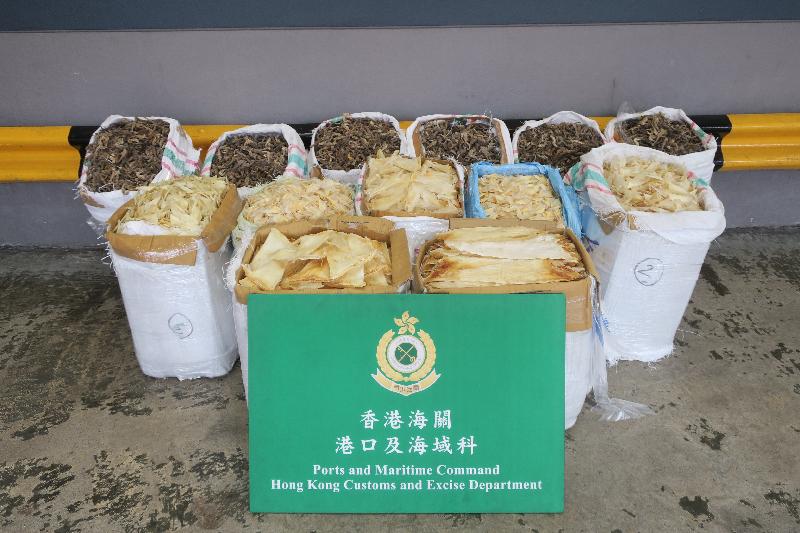
Photo  


Cluster of Carbapenemase-Producing Enterobacteriaceae cases in Shatin Hospital

The following is issued on behalf of the Hospital Authority:

     The spokesperson for Shatin Hospital made the following announcement today (June 7):
 
     Four male patients (aged 56 to 80) in a Medical and Geriatric Ward have been confirmed as being carriers of Carbapenemase-Producing Enterobacteriaceae (CPE) since May 31. The patients concerned are being treated under isolation with stable condition.
 
     The Hospital Infection Control Team has followed up with the departments concerned and experts of the Centre for Health Protection. The following enhanced infection control measures have already been adopted in the ward:
 

  1. Enhanced patient and environmental screening procedures;
  2. Applying stringent contact precautions and enhanced hand hygiene for staff and patients; and
  3. Enhanced cleaning and disinfection of the ward.

 
     The hospital will continue to closely monitor the situation of the ward. The cases have been reported to the Hospital Authority Head Office and the Centre for Health Protection for necessary follow-up.