Hong Kong Customs seizes suspected cannabis buds worth about $3.9 million at airport (with photo)

     â€‹Hong Kong Customs yesterday (October 16) detected a drug trafficking case involving baggage concealment at Hong Kong International Airport and seized about 14.4 kilograms of suspected cannabis buds with an estimated market value of about $3.9 million.
      
     A 25-year-old male passenger and a 25-year-old female passenger arrived in Hong Kong from Bangkok, Thailand, yesterday. During Customs clearance, Customs officers found a total of 14.4kg of suspected cannabis buds inside their check-in suitcases. They were subsequently arrested.
      
     An investigation is ongoing.

     Customs will continue to step up enforcement against drug trafficking activities through intelligence analysis. The department also reminds members of the public to stay alert and not to participate in drug trafficking activities for monetary returns. They must not accept hiring or delegation from another party to carry controlled items into and out of Hong Kong. They are also reminded not to carry unknown items for other people.
      
     Customs will continue to apply a risk assessment approach and focus on selecting passengers from high-risk regions for clearance to combat transnational drug trafficking activities.
      
     Under the Dangerous Drugs Ordinance, trafficking in a dangerous drug is a serious offence. The maximum penalty upon conviction is a fine of $5 million and life imprisonment.
      
     Members of the public may report any suspected drug trafficking activities to Customs' 24-hour hotline 182 8080 or its dedicated crime-reporting email account (crimereport@customs.gov.hk) or online form (eform.cefs.gov.hk/form/ced002).

Photo  


Secretary for Health meets with delegation of Hainan Province (with photos)

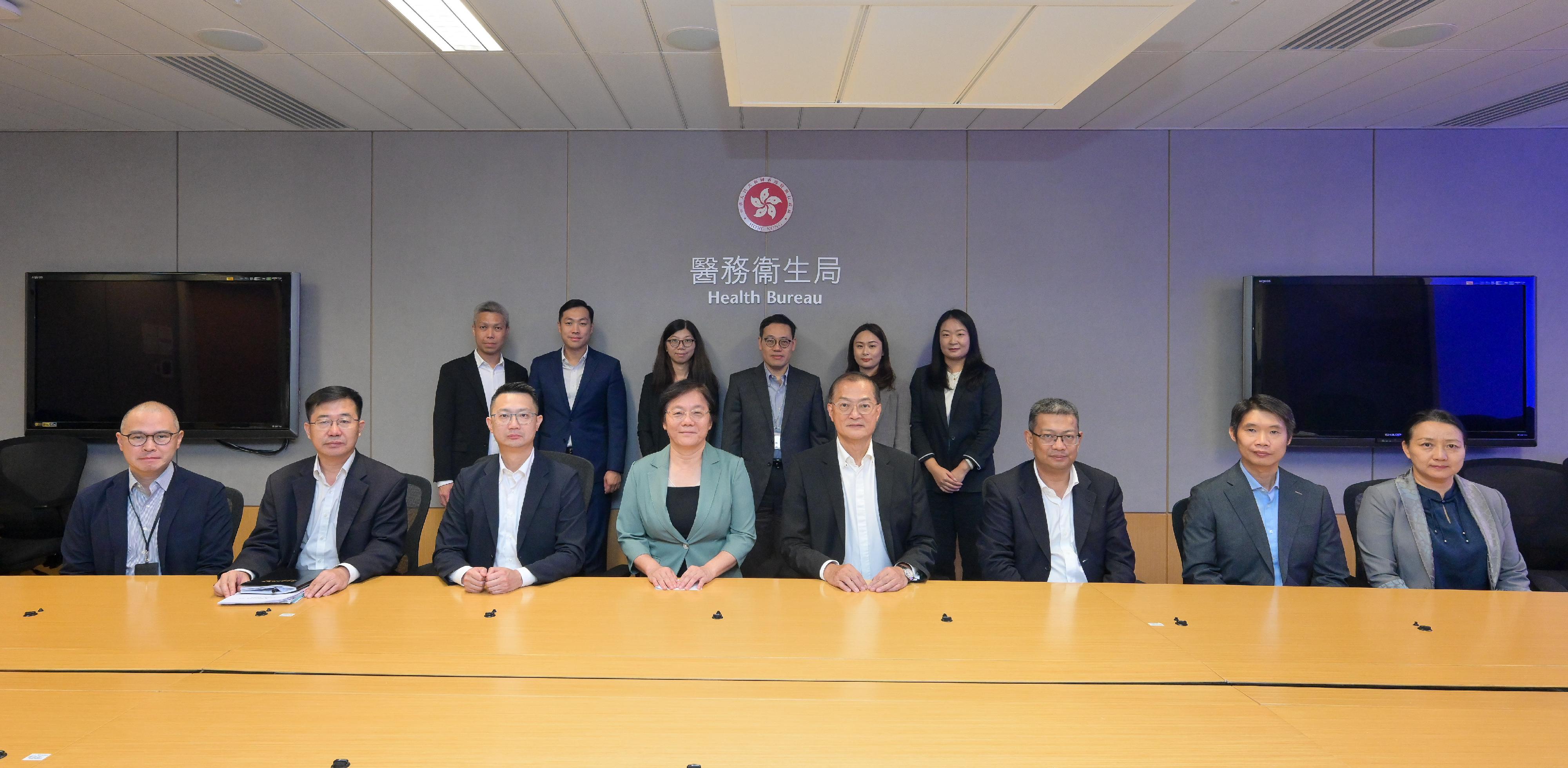
     The Secretary for Health, Professor Lo Chung-mau, met with a delegation of Hainan Province led by Vice Governor of the People's Government of Hainan Province Ms Xie Jing today (October 17) and introduced to them the multiple initiatives on developing Hong Kong into an international health and medical innovation hub as set out in "The Chief Executive's 2024 Policy Address" newly announced as well as the progress of Hospital Accreditation of public hospitals in the Hong Kong Special Administrative Region (HKSAR) through the adoption of the China's International Hospital Accreditation Standards (2021 Version) (the Standards). The two parties also explored room for collaboration on healthcare aspects.
 
     At the meeting, Professor Lo updated the delegation with the latest development of Hong Kong's healthcare policy, including complementing technological innovation with institutional innovation through expediting the reform of the approval mechanism for drugs and medical devices, and strengthening research and development and translation of biomedical technology put forward in "The Chief Executive's 2024 Policy Address". The HKSAR Government will support innovation and application of advanced biomedical technology, with a view to attracting the world's top-notch biomedical enterprises and research organisations to set up operations in Hong Kong.
 
     Meanwhile, the HKSAR Government will continue to actively promote the adoption of the Standards by more public hospitals for accreditation, including extending the adoption of relevant Standards in the coming year to two to three public hospitals other than Pamela Youde Nethersole Eastern Hospital and Prince of Wales Hospital, with a view to ensuring that the management and service levels as well as healthcare quality of local hospitals are on par with international standards. The participation of public hospitals in the accreditation programme can serve as a demonstration to the international community the national hospital accreditation standards, with Hong Kong acting as a gateway to facilitate the national standards to go global. In this connection, both parties also explored ways to further encourage more hospitals in the two places to pursue accreditation under the Standards so as to amplify the impact of the Standards.
 
     Professor Lo emphasised, "The HKSAR Government has long been reinforcing co-operation on healthcare service developments with various Mainland provinces and cities under the principle of complementarity and mutual benefits, and on the premise of benefitting the healthcare development of both the Mainland and Hong Kong to level up the healthcare quality. Looking ahead, we will remain committed to fostering cross-boundary medical co-operation so as to propel the important national strategy of 'Healthy China' through concerted contributions."

Photo  Photo  


Speech by DCS at National Day of Republic of Korea reception (English only) (with photos)

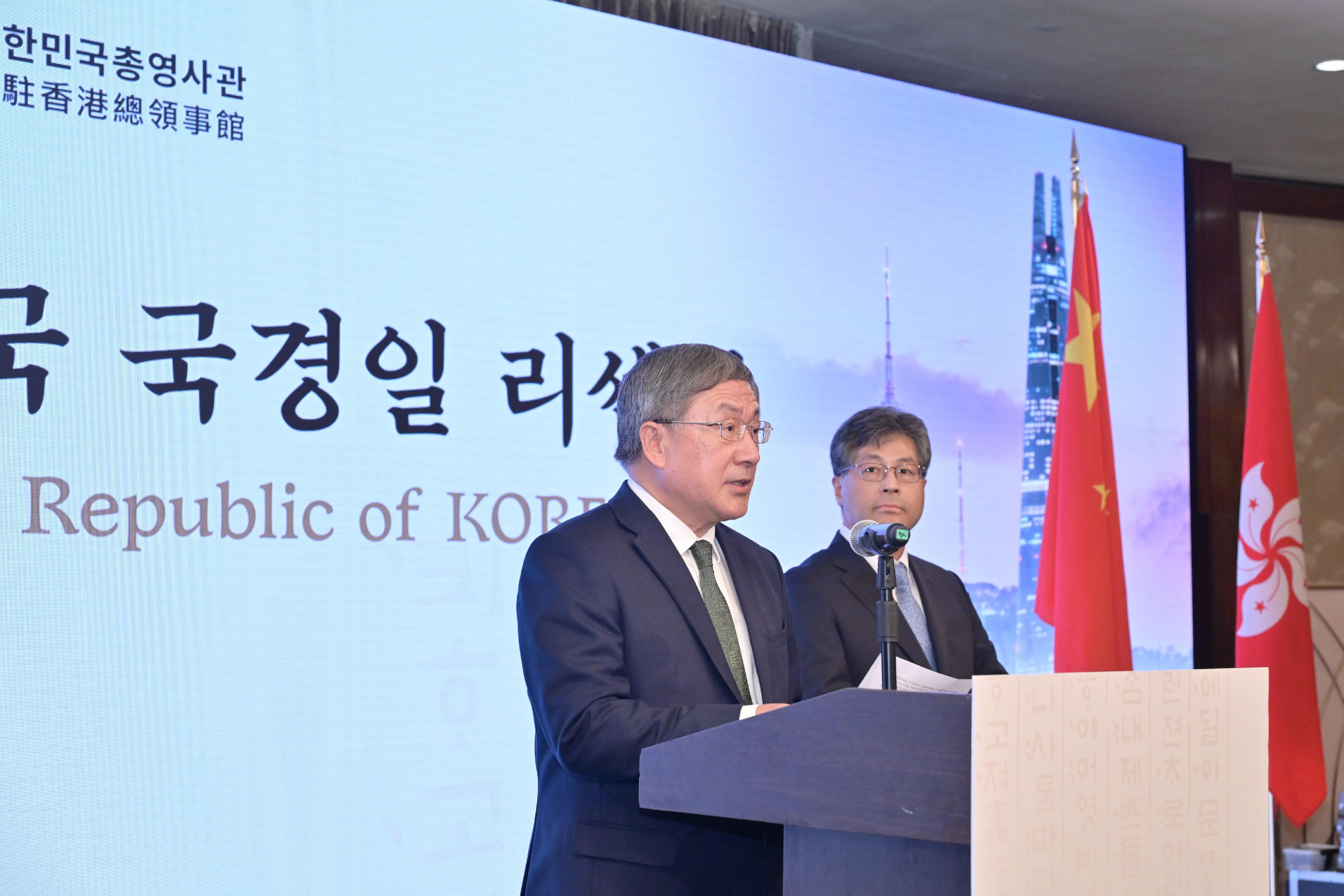
     Following is the speech by the Deputy Chief Secretary for Administration, Mr Cheuk Wing-hing, at the National Day of the Republic of Korea reception today (October 17):

Consul General (Consul General of the Republic of Korea in Hong Kong, Mr Yoo Hyungcheol), Deputy Commissioner Fang Jianming (Deputy Commissioner of the Office of the Commissioner of the Ministry of Foreign Affairs of the People's Republic of China in the Hong Kong Special Administrative Region), ladies and gentlemen,
 
     Good evening. I am delighted to be here in honour of the Republic of Korea and its National Foundation Day.  
 
     On this proud day, we celebrate Korea's rich cultural heritage, as well as the 75th anniversary of the establishment of the Consulate General of the Republic of Korea in Hong Kong, representing three-quarters of a century of close co-operation, goodwill and good business between Hong Kong and the Republic of Korea.
 
     Korea and Hong Kong have benefitted from our close business relationship. Last year, Korea was Hong Kong's fourth-largest source of imports and sixth-largest goods trading partner, while Hong Kong was Korea’s 10th largest trading partner. It is also worth noting that 10.6 per cent of the total merchandise trade between Korea and Mainland China was routed through Hong Kong. That adds up to US$33.4 billion.

     With our well-established ties, Korea and Hong Kong continue to explore opportunities for co-operation on various fronts. In late June, the Tokyo ETO (Economic and Trade Office) and other Hong Kong organisations held a seminar and luncheon in Seoul, with a focus on Hong Kong's advantages as a regional logistics hub and the opportunities that Korean companies would gain through Hong Kong's accession to the RCEP – the Regional Comprehensive Economic Partnership free trade agreement. We hope to receive the support of Korea, as one of the RCEP's founding members, for our RCEP accession, which will certainly further boost trade and investment between us.

     Speaking of business opportunities, I would like to mention that Hong Kong FinTech Week, being Hong Kong's largest and most influential gathering of international leaders in fintech, will open on October 28. I invite Korean companies, entrepreneurs and investors to join the various forums, workshops and networking events at FinTech Week to build connections and explore partnerships with Hong Kong and global innovators.
 
     Our co-operation is further extended into the legal field. As a result of an earlier Memorandum of Understanding signed by our respective justice departments, Korea's Ministry of Justice and the Hong Kong SAR (Special Administrative Region)'s Department of Justice partnered in a Joint Legal Workshop and Networking Reception in Hong Kong at end July this year. The event brought together about 150 participants from our respective business and law sectors. It also put a spotlight on Hong Kong's legal and dispute-resolution services, and how they can help Korean businesses find opportunities in Hong Kong and the Greater Bay Area. As part of that joint effort, Korean law school students were invited to Hong Kong, visiting legal institutions and gaining practical training here. I am excited to know that both sides have agreed to further promote exchange programmes and workshops for our law students and young lawyers.

     Korean arts and culture, especially the K-pop culture, is very much enjoyed by the people of Hong Kong. The annual Festive Korea, now in its 14th edition and fully packed with Korea's films, foods, visual arts and music, has just opened this month and will continue through November, allowing locals and tourists alike to have fun immersing themselves in Korea's vibrant culture. 
 
     With the co-operation and cross-fertilisation between Korea and Hong Kong on so many fronts, I look forward to another year of fruitful development between the two places.
 
     Ladies and gentlemen, please join me now in a toast on this auspicious occasion: to the Republic of Korea on its national day. Cheers!
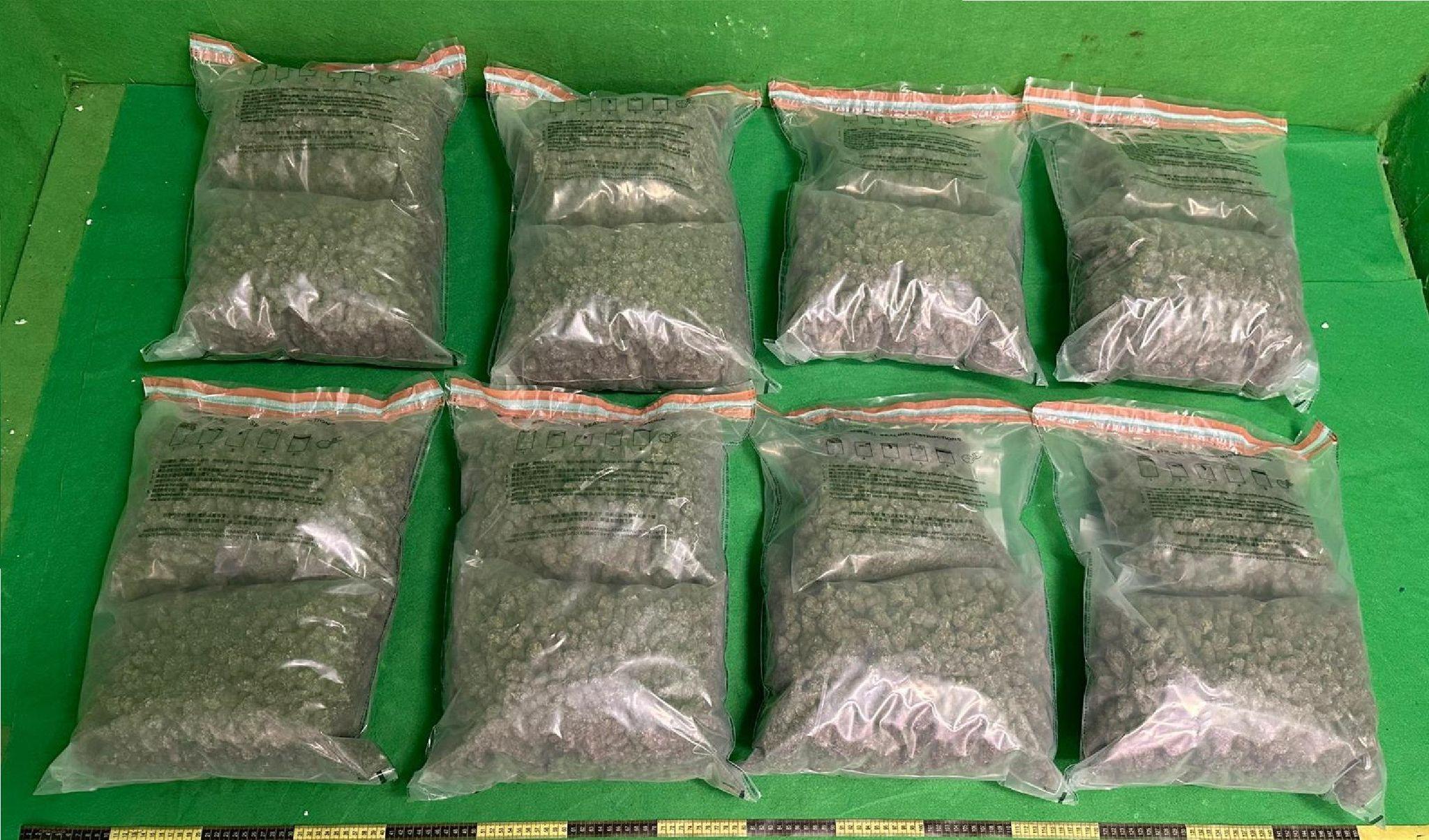
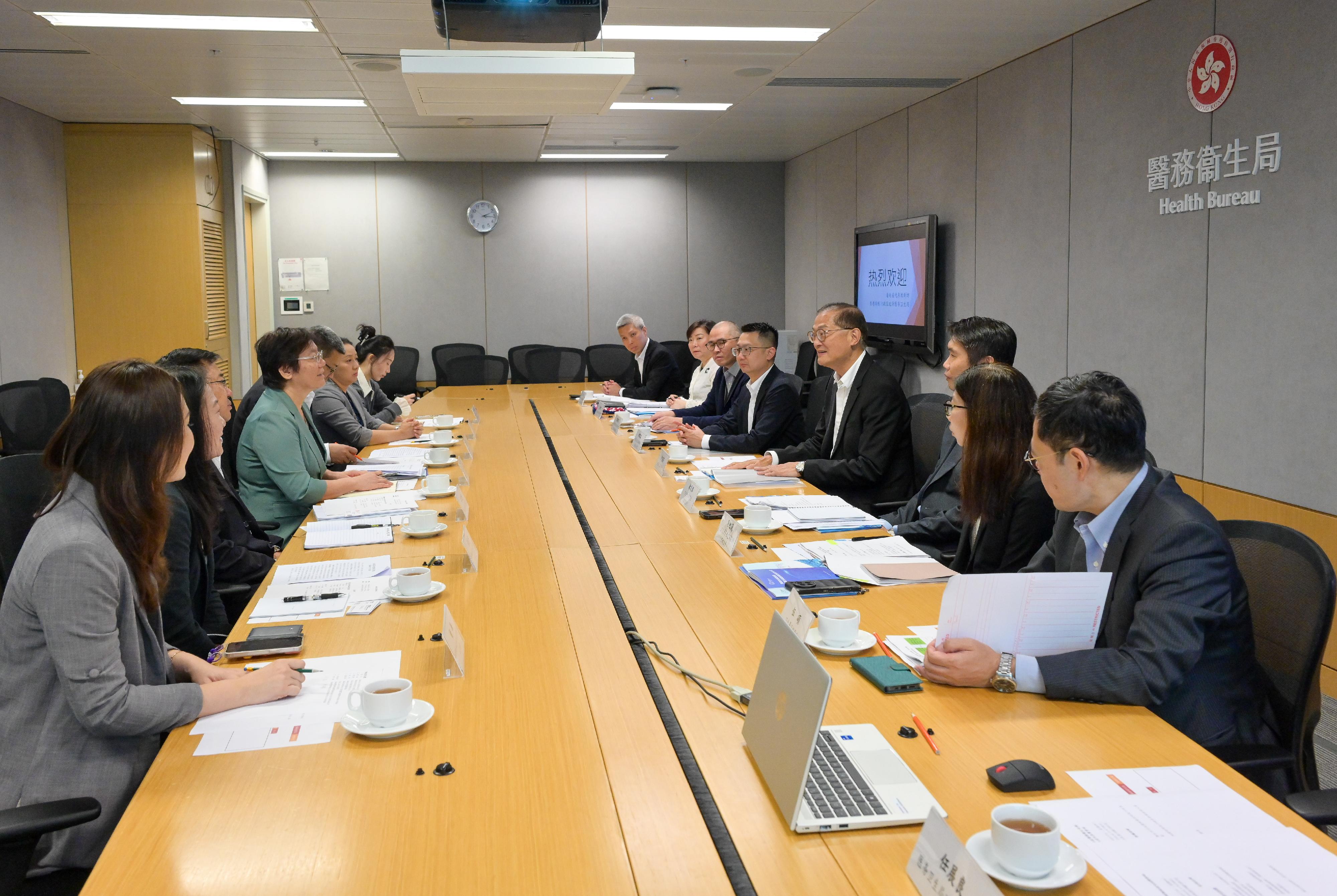
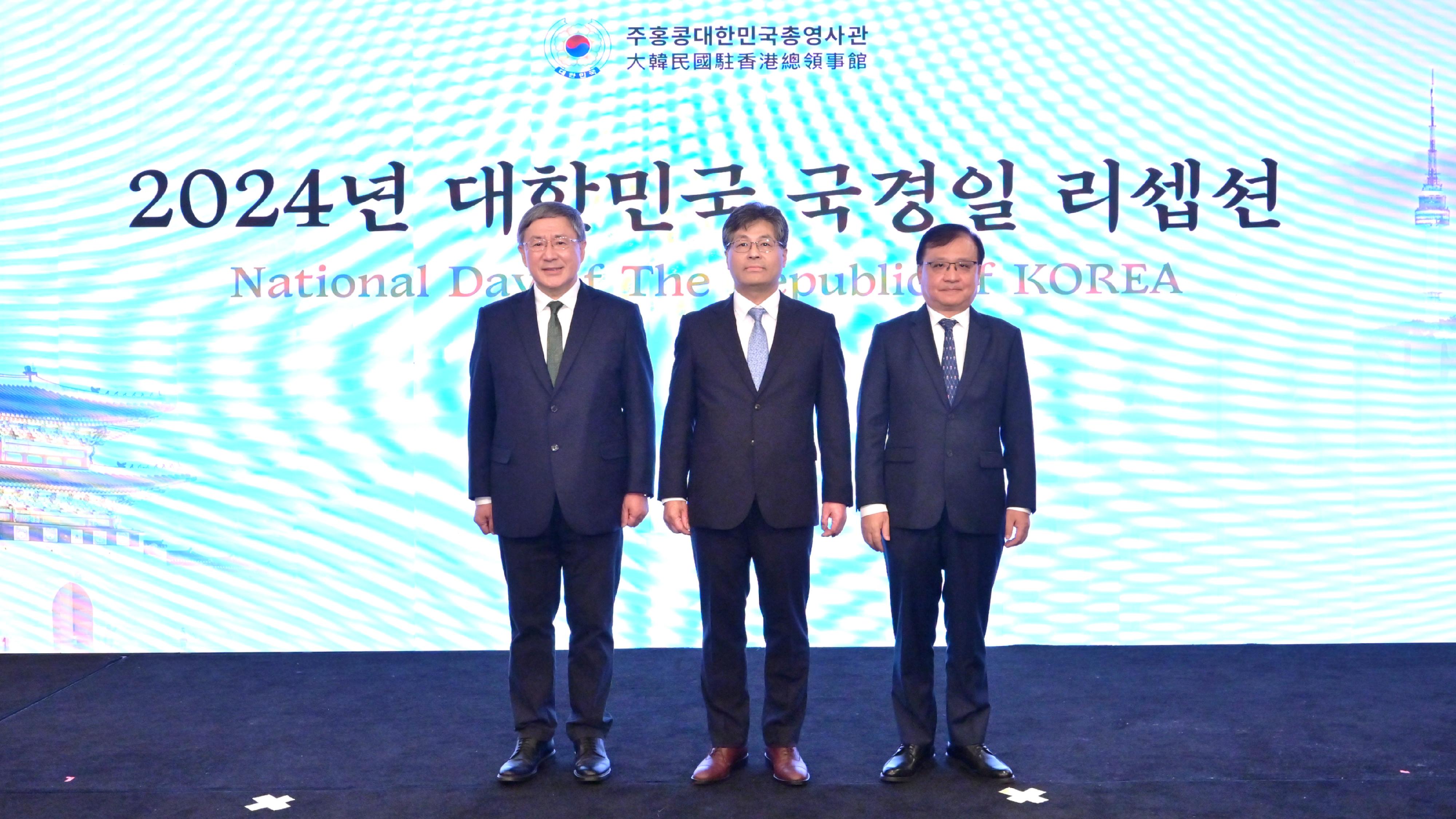
Photo  Photo  


Non-local student jailed for causing to be made false statement

     A 24-year-old female Mainland student was charged at the Eastern Magistrates' Court with one count of causing to be made a false statement for the purpose of obtaining an entry permit and was sentenced to 17 weeks' imprisonment today (October 17).

     In May 2024, the Immigration Department (ImmD) and the Police conducted a joint investigation into a case regarding a person who had submitted a false academic certificate to a university. The defendant was suspected of providing a false graduation certificate from an overseas university upon admission to a master's programme at a local university. After reviewing the defendant's application for an entry permit to study in Hong Kong, the ImmD found that the defendant, upon her application for an entry permit, had reported the same false academic qualifications on the application form in order to obtain an entry permit to study in Hong Kong.
 
      The defendant was intercepted by ImmD staff upon her departure via the Lo Wu Control Point on June 22. After a joint investigation by the ImmD and the Police, it was determined that the defendant had not taken up studies in the overseas university concerned. The defendant was charged with one count of causing to be made a false statement for the purpose of obtaining an entry permit. The defendant pleaded guilty to the charge at the Eastern Magistrates' Courts today and was sentenced to 17 weeks' imprisonment.
     
     "Under the laws of Hong Kong, any person who makes or causes to be made a false statement to an Immigration officer commits an offence. Offenders are liable to prosecution and, upon conviction, subject to the maximum penalty of a fine of $150,000 and imprisonment for 14 years. Aiders and abettors are also liable to prosecution and penalties. Moreover, any person who makes, uses or has in his custody a false instrument commits an offence and is liable to prosecution and, upon conviction, subject to imprisonment for 14 years," an ImmD spokesman said.
 
      The ImmD and the Police urge applicants not to defy the law or be misled into believing that study or residence can be obtained by fraudulent means or false information. The ImmD reiterates that if any person is found to have obtained their student visa/permit or residence status in Hong Kong by fraudulent means, such visa or residence status will be declared invalid according to the laws of Hong Kong, and they will be subject to criminal liability. They will also be subject to removal back to their place of origin.


CHP investigates case of suspected mad honey poisoning

     The Centre for Health Protection (CHP) of the Department of Health is today (October 17) investigating a case of suspected mad honey poisoning, and reminded the public to buy honey from a reliable source or apiary.

     A 48-year-old male developed dizziness, vomiting and syncope around two hours after consuming honey this morning. He was taken to the Accident and Emergency Department of North District Hospital and was admitted for treatment. The patient was in stable condition. His clinical diagnosis was suspected mad honey poisoning.

     Initial enquiries revealed that the patient consumed honey brought to Hong Kong by a friend from Nepal. The poisoning might have been caused by grayanotoxin. The investigations are ongoing.

     "Mad honey poisoning is caused by ingestion of honey containing grayanotoxins derived from plants belonging to the Ericaceae family, including rhododendrons. Grayanotoxins are neurotoxins which can affect nerves and muscles. Symptoms of poisoning include nausea, vomiting, diarrhoea, dizziness, weakness, excessive perspiration, hypersalivation and paraesthesia shortly after ingestion. In severe cases, hypotension, bradycardia or shock may occur," a spokesman for the CHP explained.

     Members of the public are reminded to take heed of the following preventive advice:

  • Buy honey from a reliable source or apiary;
  • Discard honey with a bitter or astringent taste – grayanotoxin-containing honey may cause a burning sensation in the throat; and
  • Pay special attention to honey from India, Nepal and the Black Sea region of Türkiye as there have been grayanotoxin poisoning cases connected with honey from these areas.