Update on number of dengue fever cases

     The Centre for Health Protection (CHP) of the Department of Health today (November 2) reported the latest number of cases of dengue fever (DF), and again urged the public to maintain strict environmental hygiene, mosquito control and personal protective measures both locally and during travel.
 
     From October 26 to November 1, the CHP recorded three imported DF cases. The patients had been to Cambodia (one case), the Philippines (one case) and multiple countries and areas (one case, who had been to India and Taiwan) during the incubation period.

     As of yesterday (November 1), 135 cases had been confirmed this year, of which 29 were local cases and 106 were imported cases. The imported cases were mainly from Thailand (32), Mainland China (22) and the Philippines (17). 

     DF remains endemic in some areas of Asia and beyond. The latest figures for 2018 revealed that 70 146 cases had been recorded in Thailand, 2 396 in Singapore (since December 31, 2017) and 153 in Japan. In Taiwan, 169 local cases have been recorded to date in 2018.
 
     The public should take heed of the following advice on mosquito control:
 

  • Thoroughly check all gully traps, roof gutters, surface channels and drains to prevent blockage;
  • Scrub and clean drains and surface channels with an alkaline detergent compound at least once a week to remove any deposited mosquito eggs;
  • Properly dispose of refuse, such as soft drink cans, empty bottles and boxes, in covered litter containers;
  • Completely change the water of flowers and plants at least once a week. The use of saucers should be avoided if possible;
  • Level irregular ground surfaces before the rainy season;
  • Avoid staying in shrubby areas; and
  • Take personal protective measures such as wearing light-coloured long-sleeved clothes and trousers and apply insect repellent containing DEET to clothing or uncovered areas of the body when doing outdoor activities.
     

     To reduce the risk of infections spread by mosquitoes, apart from general measures, travellers returning from affected areas should apply insect repellent for 14 days (DF) or at least 21 days (Zika Virus Infection) upon arrival in Hong Kong. If feeling unwell, seek medical advice promptly and provide travel details to the doctor. DEET-containing insect repellents are effective and the public should take heed of the tips below:
 

  • Read the label instructions carefully first;
  • Apply right before entering an area with risk of mosquito bites;
  • Apply on exposed skin and clothing;
  • Use DEET of up to 30 per cent for pregnant women and up to 10 per cent for children*;
  • Apply sunscreen first, then insect repellent; and
  • Re-apply only when needed and follow the instructions.

 
* For children who travel to countries or areas where mosquito-borne diseases are endemic or epidemic and where exposure is likely, those aged 2 months or above can use DEET-containing insect repellents with a DEET concentration of up to 30 per cent.

     The public may refer to the CHP's tips for using insect repellents for details.


Effective Exchange Rate Index

     The effective exchange rate index for the Hong Kong dollar on Friday, November 2, 2018 is 105.3 (down 0.7 against yesterday's index).


CE meets Minister for Foreign Affairs of Japan in Tokyo (with photos/videos)

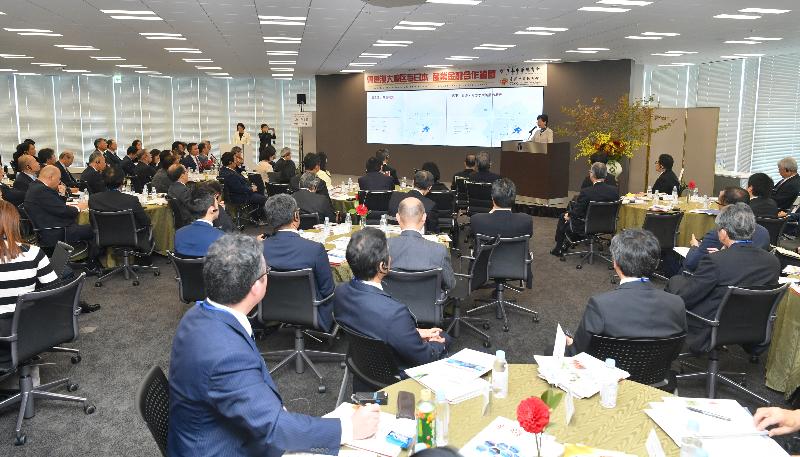
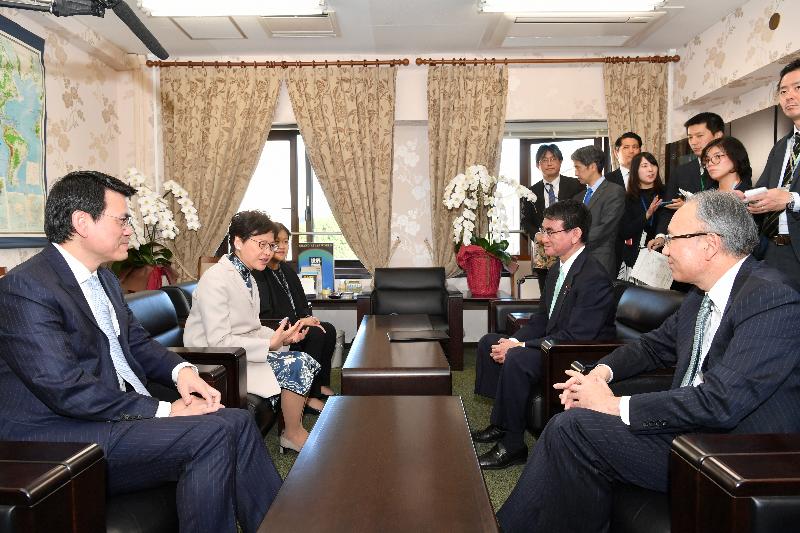
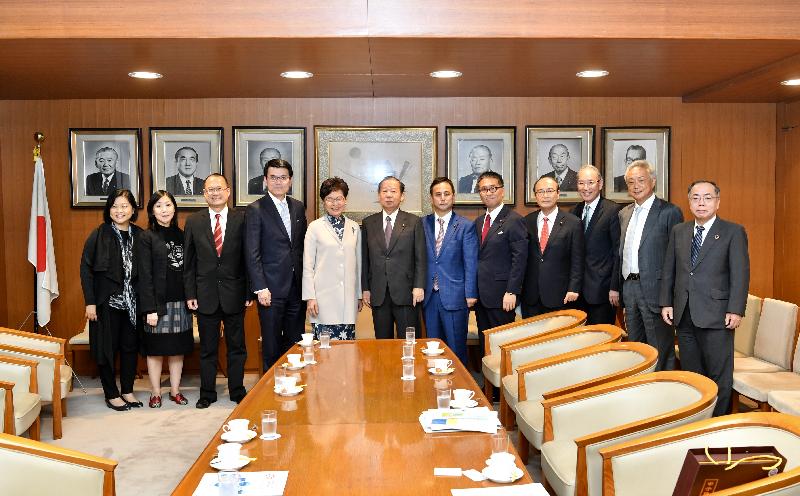
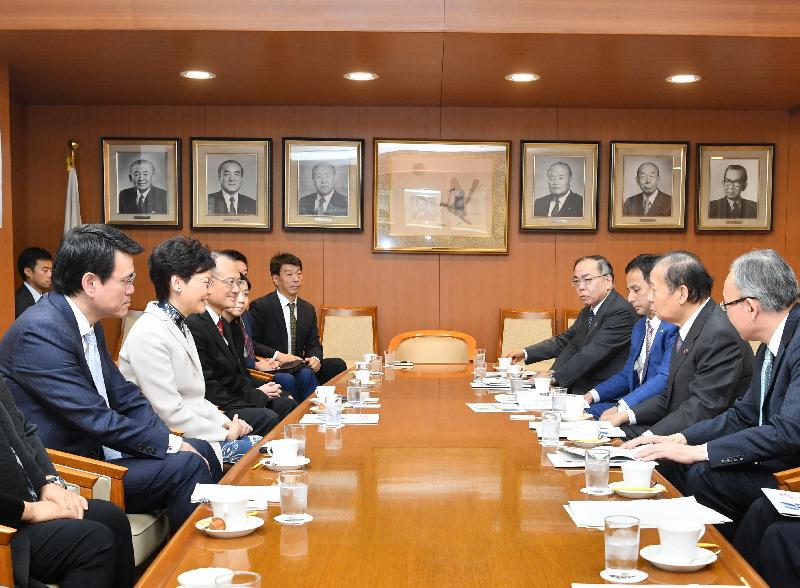
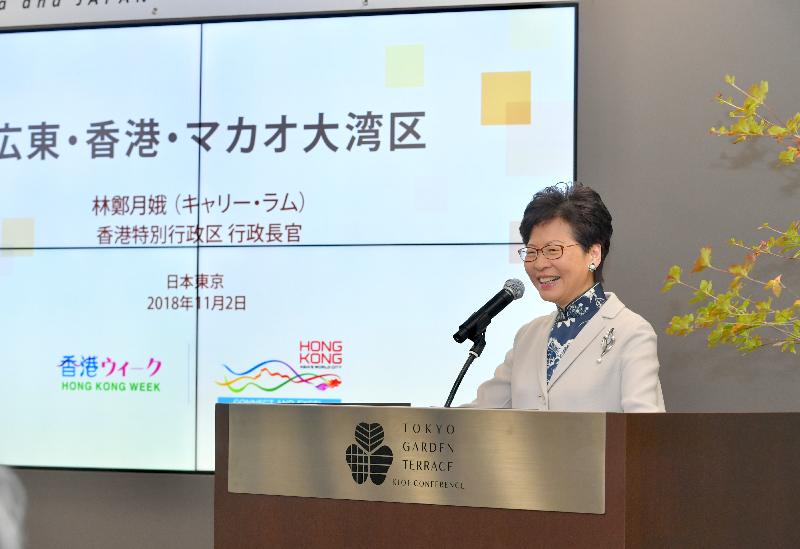
     The Chief Executive, Mrs Carrie Lam, conducted the last day of her visit to Japan in Tokyo today (November 2). She met with the Minister for Foreign Affairs of Japan and the Secretary-General of the ruling Liberal Democratic Party separately, and attended a forum to promote business opportunities in the Guangdong-Hong Kong-Macao Greater Bay Area. 

     At noon, Mrs Lam met with the Minister for Foreign Affairs of Japan, Mr Taro Kono. She thanked him for inviting her to visit Japan and the assistance offered in the arrangement of the visit, resulting in a fruitful trip for her. She pointed out that Hong Kong and Japan have long maintained a close connection in many areas including economic affairs, trade and tourism, and that this visit has helped to further strengthen co-operation between the two sides, particularly in innovation and technology (I&T). She said that during her stay in Japan, she met with representatives of a number of research institutions, universities and the industry to introduce to them the advantages and prospects of Hong Kong's scientific research, and that she realises that both sides are keen to further their co-operation, including on how to develop an international I&T hub in the Guangdong-Hong Kong-Macao Bay Area. She added that she believes that the visit has been a good new start and looks forward to maintaining close contact with various sectors in Japan to implement co-operation in different areas.

     After the meeting, the two sides issued a joint statement expressing the aspirations of both parties to leverage on Hong Kong's role as an international trade and financial centre as well as its unique advantage of "one country, two systems" to further deepen and broaden practical co-operation. The statement also states both sides' specific views on trade, tourism, I&T and the Guangdong-Hong Kong-Macao Greater Bay Area, as well as sports and culture.

     In the afternoon, Mrs Lam met with the Secretary-General of the ruling Liberal Democratic Party, Mr Toshihiro Nikai. Noting that many lawmakers of the Liberal Democratic Party are members of the Japan-Hong Kong Parliamentarian League and have been supportive of Hong Kong's development all along, she said that progress has indeed been seen in exchanges and co-operation between the two places at the government and business levels as well as the people-to-people level during the party's time in power. She expressed the hope that the Liberal Democratic Party would continue its support to strengthen ties between Hong Kong and Japan.

     In the morning, Mrs Lam also attended a forum on financial co-operation between the Guangdong-Hong Kong-Macao Greater Bay Area and Japanese enterprises organised by the Chinese Chamber of Commerce in Japan and the Chinese General Chamber of Commerce, Hong Kong, and delivered a speech. She briefed more than 120 participants at the forum on the background of the Guangdong-Hong Kong-Macao Greater Bay Area and its favourable conditions for development, including the country's support, the unique advantage of "one country, two systems", infrastructure connectivity in the area and complementarity among the cities. She said that with sound scientific research capabilities, outstanding technology talents and world-class universities, Hong Kong has allocated substantial resources and implemented a host of measures to complement the development of the Greater Bay Area as an international I&T hub. She said that with Japan's advanced technologies, she hopes that relevant Japanese enterprises will establish a presence in Hong Kong to jointly seize the opportunities brought about by the Guangdong-Hong Kong-Macao Greater Bay Area.

     Mrs Lam will conclude her visit and return to Hong Kong this afternoon.

Photo  Photo  Photo  Photo  Photo  Photo  Photo  


New round of application under Quality Enhancement Support Scheme opens

     The Education Bureau announced today (November 2) the 2018/19 round of application for the Quality Enhancement Support Scheme (QESS) under the Self-financing Post-secondary Education Fund (SPEF).

     As one of the major support measures to promote the healthy and sustainable development of the self-financing post-secondary sector, the QESS was launched in November 2012 with the aim of enhancing the quality of teaching and learning in the sector. The Scheme currently supports three project categories, namely theme-based, open-ended and industrial attachment projects.

     All applications are considered by the independent QESS Sub-committee established under the SPEF Steering Committee. In the 2017/18 round of application, 11 out of 31 applications were approved with a total earmarked grant of about $26.8 million. The approved projects aimed to enhance internship support, improve students' learning experience, enhance students' language proficiency and so forth.

     The 2018/19 round of application invites proposals on projects to be launched in the 2019/20 academic year. For theme-based projects, applicants are allowed, as last year, to set their own themes as long as the proposals are collaborative in nature, i.e. proposed and undertaken by more than one eligible institution, to foster closer collaboration and synergy among institutions and benefit the sector as widely as possible.

     For open-ended projects, applicants should submit applications within the scope of the QESS, which mainly includes the following:

(1) improving the overall learning experience and language proficiency of students;

(2) developing and improving teaching methodology and practices, including development of assessment strategies;

(3) strengthening and improving quality assurance and related measures; and

(4) enhancing student support and career guidance services, including support for non-Chinese speaking students and students with special educational needs.

     For industrial attachment projects, applicants should submit proposals with the aim of increasing students' employability by sourcing more internship opportunities for post-secondary students, and/or enhancing relevant institutional support for students.
     
     The deadline for the 2018/19 round of application is February 28, 2019. All non-profit-making education institutions offering full-time locally accredited self-financing sub-degree or bachelor's degree (including top-up degree) programmes are eligible to apply. Other related bodies such as the federations of these education institutions and quality assurance agencies may also apply.

     Further details about the QESS are available at the Concourse for Self-financing Post-secondary Education at
www.cspe.edu.hk/en/Overview-Measures-Fund-QESS.html.


Land Registry releases statistics for October

     The Land Registry today (November 2) released its statistics for October 2018.
 
Land registration
——————-

* The number of sale and purchase agreements for all building units received for registration in October was 5,374 (+12.0 per cent compared with September but -23.9 per cent compared with October 2017)

* The 12-month moving average for October was 7,247 (1.9 per cent below the 12-month moving average for September but 2.8 per cent above that for October 2017)

* The total consideration for sale and purchase agreements in October was $45.5 billion (+0.1 per cent compared with September but -15.1 per cent compared with October 2017)

* Among the sale and purchase agreements, 4,243 were for residential units (+21.2 per cent compared with September but -19.8 per cent compared with October 2017)

* The total consideration for sale and purchase agreements in respect of residential units was $38.6 billion (+4.0 per cent compared with September but -7.9 per cent compared with October 2017)
     
     Statistics on sales of residential units do not include sale and purchase agreements relating to sales of units under the Home Ownership Scheme, the Private Sector Participation Scheme and the Tenants Purchase Scheme unless the premium of the unit concerned has been paid after the sale restriction period.

     Figures on sale and purchase agreements received for the past 12 months, the year-on-year rate of change and breakdown figures on residential sales have also been released.

     As deeds may not be lodged with the Land Registry until up to 30 days after the transaction, these statistics generally relate to land transactions in the previous month.
 
Land search
————-                                                                                 
 
* The number of searches of land registers made by the public in October was 445,881 (+17.1 per cent compared with September but -1.0 per cent compared with October 2017)

     The statistics cover searches made at the counter, through the self-service terminals and via the Integrated Registration Information System Online Services.