Hong Kong Customs seizes Juicy Wrap containing suspected tetrahydro-cannabinol (with photo)

     Hong Kong Customs seized about 267 kilograms of Juicy Wrap containing suspected tetrahydro-cannabinol (THC) with an estimated market value of about $1.5 million at a container yard in Yuen Long on November 5.

     Through risk assessment, Customs officers inspected a transshipment seaborne consignment from the Philippines to Canada via Hong Kong on November 5 and found the batch of Juicy Wrap containing suspected THC in 153 carton boxes.

     Investigation is ongoing.

     THC is a dangerous drug controlled under the Dangerous Drugs Ordinance. Under the ordinance, trafficking in a dangerous drug is a serious offence. The maximum penalty upon conviction is a fine of $5 million and life imprisonment.

     Members of the public may report any suspected drug trafficking activities to the Customs 24-hour hotline 2545 6182 or its dedicated crime-reporting email account (crimereport@customs.gov.hk).

Photo  


Update on number of dengue fever cases

     The Centre for Health Protection (CHP) of the Department of Health today (November 9) reported the latest number of cases of dengue fever (DF), and again urged the public to maintain strict environmental hygiene, mosquito control and personal protective measures both locally and during travel.

     From November 2 to 8, the CHP recorded six imported DF cases. The patients had been to Bangladesh (two epidemiologically linked cases), Indonesia (one case), Guangdong in Mainland China (two cases) and Malaysia (one case) during the incubation period.

     As of yesterday (November 8), 141 cases had been confirmed this year, of which 29 were local cases and 112 were imported cases. The imported cases were mainly from Thailand (32), Mainland China (24) and the Philippines (17). 

     DF remains endemic in some areas of Asia and beyond. The latest figures for 2018 revealed that 71 976 cases had been recorded in Thailand, 2 457 in Singapore (since December 31, 2017) and 157 in Japan. In Taiwan, 174 local cases have been recorded to date in 2018. In the Americas, the latest figures indicated that 215 585 and 58 685 cases have been filed in Brazil and Mexico respectively in 2018.

     The public should take heed of the following advice on mosquito control:
 

  • Thoroughly check all gully traps, roof gutters, surface channels and drains to prevent blockage;
  • Scrub and clean drains and surface channels with an alkaline detergent compound at least once a week to remove any deposited mosquito eggs;
  • Properly dispose of refuse, such as soft drink cans, empty bottles and boxes, in covered litter containers;
  • Completely change the water of flowers and plants at least once a week. The use of saucers should be avoided if possible;
  • Level irregular ground surfaces before the rainy season;
  • Avoid staying in shrubby areas; and
  • Take personal protective measures such as wearing light-coloured long-sleeved clothes and trousers and apply insect repellent containing DEET to clothing or uncovered areas of the body when doing outdoor activities.
     

     To reduce the risk of infections spread by mosquitoes, apart from general measures, travellers returning from affected areas should apply insect repellent for 14 days (DF) or at least 21 days (Zika Virus Infection) upon arrival in Hong Kong. If feeling unwell, seek medical advice promptly and provide travel details to the doctor. DEET-containing insect repellents are effective and the public should take heed of the tips below:
 

  • Read the label instructions carefully first;
  • Apply right before entering an area with risk of mosquito bites;
  • Apply on exposed skin and clothing;
  • Use DEET of up to 30 per cent for pregnant women and up to 10 per cent for children*;
  • Apply sunscreen first, then insect repellent; and
  • Re-apply only when needed and follow the instructions.

 
* For children who travel to countries or areas where mosquito-borne diseases are endemic or epidemic and where exposure is likely, those aged 2 months or above can use DEET-containing insect repellents with a DEET concentration of up to 30 per cent.

     The public may refer to the CHP's tips for using insect repellents for details.


CHP appeals for vigilance against hepatitis A

     The Centre for Health Protection (CHP) of the Department of Health today (November 9) drew the public's attention to a rise of hepatitis A cases recorded by the CHP since October this year, and hence reminded members of the public to stay alert and maintain strict personal, food and environmental hygiene.
 
     According to the latest surveillance data, a total of 12 hepatitis A cases were reported to the CHP in October, which was higher than a range of one to five cases recorded per month from January to September this year. As of yesterday (November 8), two cases have been recorded in November.
 
     The 14 cases recorded from October 1 to yesterday affected eight males and six females with ages ranging from 9 to 54, with a median age of 24.5. While four cases were imported from Pakistan, another three cases also affected Pakistanis (one local case and two cases with place of infection undetermined). The remaining seven cases included five local cases, one imported case from Bangladesh and one case with place of infection undetermined. All cases required hospitalisation and were in a stable condition.
 
     Of note, no imported cases from Pakistan or involving Pakistanis were reported from January to September this year. As of yesterday, the CHP has recorded a total of 44 cases of hepatitis A in 2018. From 2013 to 2017, 44, 46, 138, 98 and 117 cases were recorded respectively.
 
     “Our epidemiological investigations so far have not identified a common food or water source among these cases. There was also no epidemiological linkage identified among them. The CHP's investigations are ongoing. We will continue to closely monitor the situation,” a CHP spokesman said.

     “The CHP will update relevant non-governmental organisations of the latest situation of hepatitis A and its preventive measures and seek their support to strengthen health education and promotion among the Pakistani community. The CHP will also arrange broadcasting of related health messages via radio channel to raise their awareness of the risk of contracting hepatitis A.”
 
    The spokesman advised that hepatitis A is endemic in many countries including Pakistan. Hepatitis A vaccine is safe and effective in preventing the infection. The World Health Organization recommends hepatitis A vaccination for high-risk groups, such as travellers to endemic areas, men who have sex with men and chronic liver disease patients.

     "Hepatitis A is a liver disease caused by the hepatitis A virus (HAV). It is clinically characterised by fever, malaise, loss of appetite, diarrhoea, nausea, abdominal discomfort and jaundice (yellowing discolouration of the skin and sclera of the eyes, dark urine and pale stool). Adults have signs and symptoms of illness more often than children, and the severity of disease increases in older age groups. Recovery from symptoms following infection may be slow and may take several weeks or months," the spokesman explained.

     HAV is transmitted primarily by the faecal-oral route, that is when an uninfected person contacts or ingests objects, food or water that has been contaminated with the faeces of an infected person. HAV can also be transmitted by eating contaminated food (especially shellfish) without thorough cooking and drinking contaminated drinks.

     The CHP urged members of the public to take heed of the preventive measures below against hepatitis A:
 

  • Wash hands properly with liquid soap and water before eating or handling food, and after going to the toilet or changing diapers;
  • Purchase fresh food from reliable sources. Do not patronise illegal hawkers.
  • Drinking water should be from the mains and preferably boiled.
  • Cook food thoroughly before consumption. Avoid raw food or undercooked food.
  • Clean and wash food thoroughly. Scrub and rinse shellfish in clean water. Remove the viscera if appropriate. All shellfish should be thoroughly cooked before eating.
  • Vegetables and fruits to be eaten raw should be cleaned and washed thoroughly with safe drinking water.
  • Keep the premises and kitchen utensils clean; and
  • Dispose of rubbish properly.

      
     The public may visit the Hepatitis A page of the CHP and its Viral Hepatitis Preventive Service for more information.


CS calls on international organisations in Geneva (with photos)

     The Chief Secretary for Administration, Mr Matthew Cheung Kin-chung who is currently in Geneva, Switzerland, called on senior representatives of several international organisations to foster mutual understanding and keep them abreast of Hong Kong's latest development.

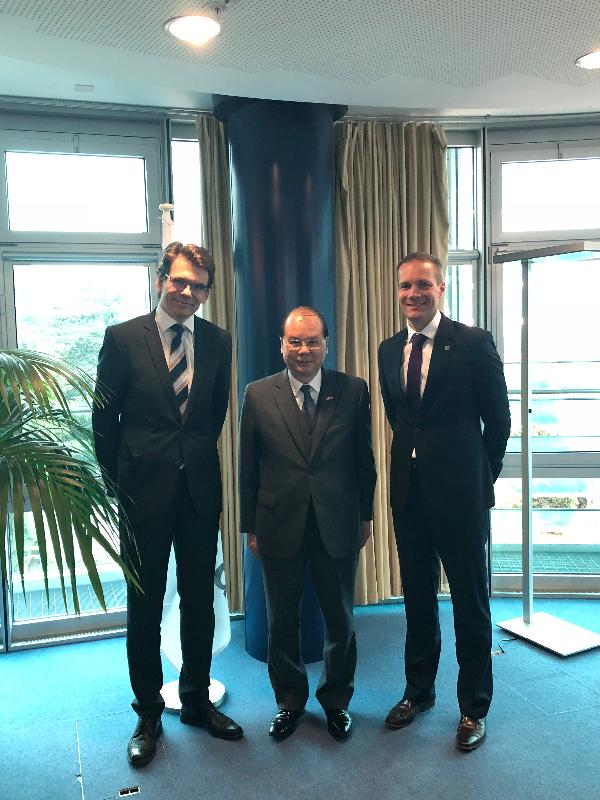
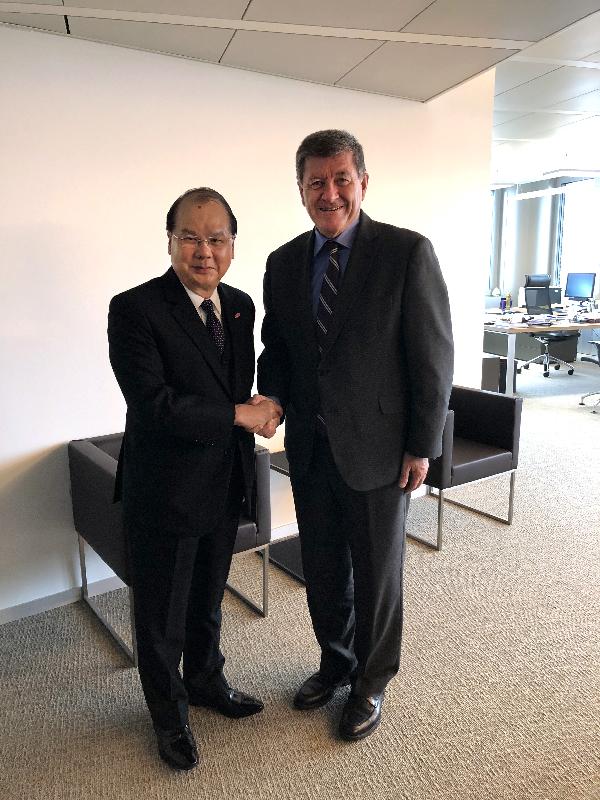
     Today, (November 9, Geneva time), Mr Cheung called on the Director-General of the International Labour Organization (ILO), Mr Guy Ryder, to brief him on Hong Kong's latest development in enhancing employees' benefits and support such as the proposals to abolish the "offsetting" arrangement under the Mandatory Provident Fund Scheme, extend maternity leave period and strengthen protection for grassroot employees and employees injured at work.

     Mr Cheung pointed out that the current-term Hong Kong Special Administrative Region (HKSAR) Government was committed to enhancing employees' benefits. In the process, the Government will strike a balance between the interests of employers and employees. ILO is devoted to promoting social justice and internationally recognised labour rights.

     On November 7 (Geneva time), Mr Cheung also met the Director of Member Services and Promotion Branch of the International Social Security Association (ISSA), Mr Graham Minton, and Head of the ISSA's Office of the Secretary General, Mr Jens Schremmer, to exchange views on setting up and managing an effective social security system.

     He also outlined Hong Kong's support to the under-privileged, such as Comprehensive Social Security Assistance, Higher Old Age Living Allowance and Working Family Allowance Scheme.

     Mr Cheung pointed out that the HKSAR Government had all along been committed to improving people's livelihood and that social welfare expenditure rose 86 per cent over the past six years. He added that a range of initiatives had been announced in the Policy Address this year to support families and alleviate poverty.

     Founded under the auspices of the ILO, the ISSA aims at promoting excellence in social security administration through professional guidelines, expert knowledge, services and support to enable its members to develop dynamic social security systems and policies throughout the world.

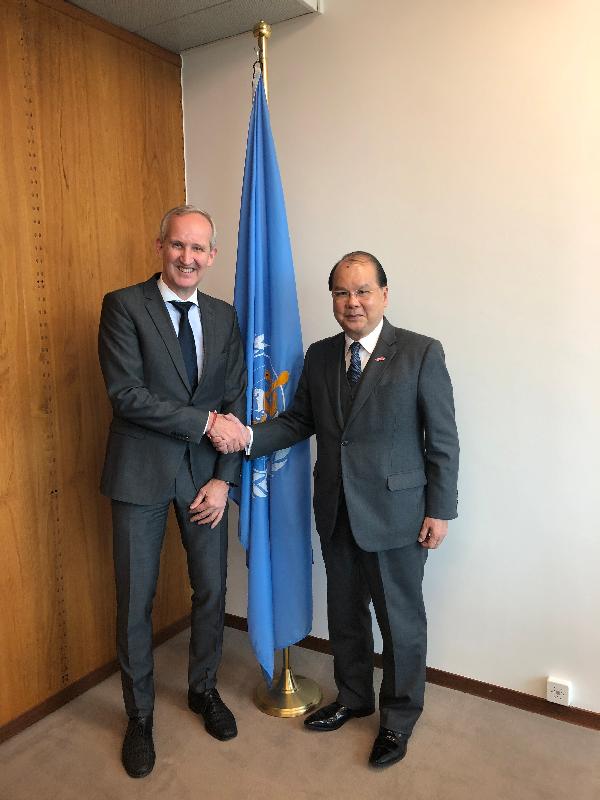
     Mr Cheung later called on the World Health Organization (WHO) and met its Assistant Director-General and Chef de Cabinet, Dr Bernhard Schwartländer. Mr Cheung stressed that the HKSAR Government would continue to maintain close liaison with the WHO in enhancing co-operation and exchanges on public health issues.

     He pointed out that to meet the increasing demand for healthcare services arising from an ageing population, the HKSAR Government had already planned ahead the necessary healthcare infrastructure and set aside a total of HK$500 billion for these purposes. In tandem with the implementation of projects under the first 10-year hospital development plan, the Hospital Authority had been invited to commence planning for the second 10-year hospital development plan.
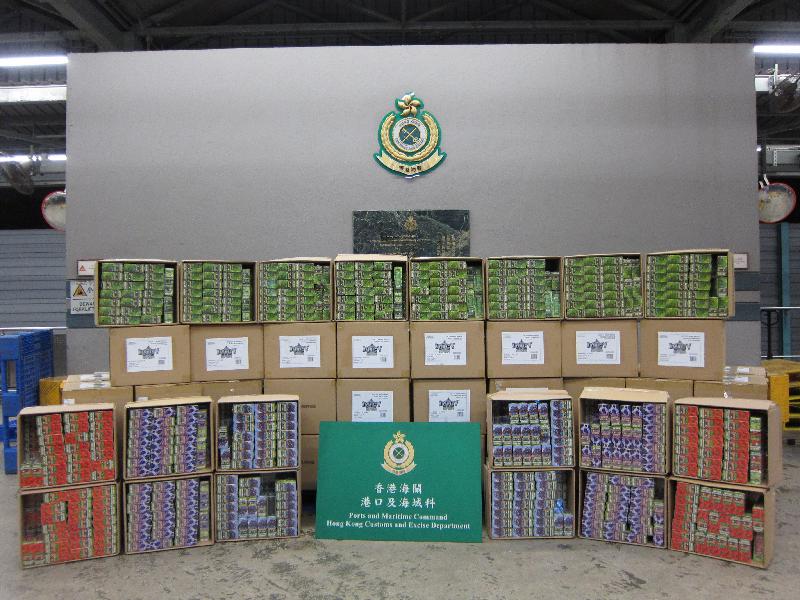
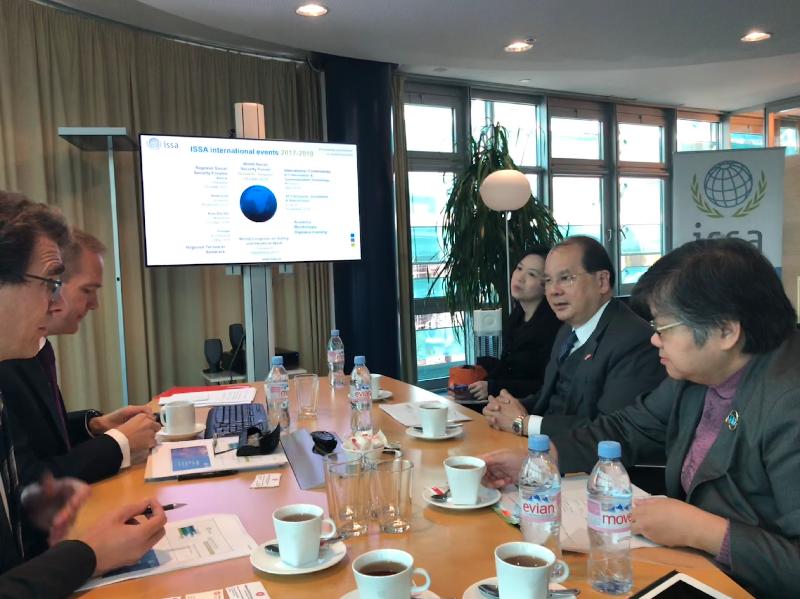
Photo  Photo  Photo  Photo  


Transcript of remarks by STH and SCED on relevant issues of Hong Kong-Zhuhai-Macao Bridge

     Following is the transcript of remarks by the Secretary for Transport and Housing, Mr Frank Chan Fan, and the Secretary for Commerce and Economic Development, Mr Edward Yau, at a media session on the relevant issues of the Hong Kong-Zhuhai-Macao Bridge this afternoon (November 9):
 
Reporter: On the booking service and also B5 line that you spoke about just now, are these already introduced earlier? And so what are the new steps going to be taken? How are you boosting these services? And do you have any estimate on how these measures can help divert the crowds in Tung Chung? And on Tung Chung, you mention earlier there are specific measures to reduce, to minimise the effect of queuing in the square? What exactly are the steps? And on Guangdong authorities, you have discussions with Guangdong authorities, aside from boosting advertisements and making it give orders asking local travel agencies to follow the law, are there any other steps taken by both sides of the governments to make sure that there won't be any illegal tours coming through the bridge?

Secretary for Transport and Housing: Let me first take the question regarding the B5 and B6 bus routes. The B5 bus route is basically going to the Sunny Bay whereby the passengers could transit over to the Mass Transit Railway. According to what we understand on Sunday last week, there were about 7 000 passengers going to the Sunny Bay. In respect of the bus route B6, there were roughly about 11 000 (passengers) going to Tung Chung, and roughly about 7 000 of them taking the Mass Transit (Railway) going to town. The remaining we would expect they were going over to the cable car (station), the southern Lantau and also Tai O. So, basically these passengers are having different routes to places staying around. For those who are taking the Mass Transit (Railway), they are basically taking a transfer. Therefore, if they know about the fare and the speed, then B5 would be a more preferred option to go to town.
 
     As regard to the queuing arrangement at Tung Chung, we are making lines so that people could line up in an orderly manner. We will arrange more staff (from the operator) to help the passengers pay (the fare) and speed up the boarding because we will allow two buses to board at the same time. That would help shorten the queue and minimise the kind of impact upon the local community.

Secretary for Commerce and Economic Development: I just said that soon after (learning) the alleged contravention of travel agents requirements in Hong Kong, we have got in touch with the provincial authority, which is the Department of Culture and Tourism (of Guangdong Province), conveying to them our concern. The provincial authority has informed us that they have issued instructions and guidelines to all the travel agencies operating such tours to Hong Kong, reminding them that there are rules and regulations concerning the conduct of tourist guides business in Hong Kong. We don't want them to contravene these laws. If tourist groups are coming in groups through the assistance of travel agents, the preferred and recommended arrangements are that there are Hong Kong agents at the receiving end, as that would help to better organise and manage the groups, including with better planning of their sightseeing routes and transport arrangements on both coming in and returning to their home places.
 
     The Travel Industry Council is also taking initiatives in contacting its Mainland counterparts to better dovetail their services, so as to ensure better services. All in all, the two governments and the travel businesses of both ends of the bridge are in contact and working together to ease the pressure in Hong Kong, particularly in Tung Chung. Thank you.

(Please also refer to the Chinese portion of the transcript.)