LCQ15: Compilation of statistics on mortgage loans

     Following is a question by the Hon Wu Chi-wai and a written reply by the Secretary for Financial Services and the Treasury, Mr James Lau, in the Legislative Council today (November 21):
 
Question:
 
     The Hong Kong Monetary Authority (HKMA) indicated that the debt-servicing ratio (DSR) for the new residential mortgage loans (RMLs) approved in the second quarter of this year was 34 per cent, and that this ratio had factored in the repayments for all additional mortgage loans obtained by the borrowers from third parties other than banks (third-party mortgages). However, HKMA's data on third-party mortgages were not directly provided by the finance companies offering such mortgage loans, but were estimations based on figures provided by banks and outcome of sampling checks on the land records. In this connection, will the Government inform this Council:
 
(1) of the number of cases in which the borrowers were granted mortgages on the same residential property both by a bank and by a third party/third parties, the amount of the loans involved and the percentage of such amount in the total amount of new RMLs approved throughout the year, in each of the past three years, as well as the average (i) loan-to-value (LTV) ratio, (ii) loan amount and (iii) DSR in respect of those cases; the average (iv) LTV ratio and (v) loan amount of the third-party mortgages involved in those cases;
 
(2) in respect of the new RMLs approved in each of the past three years by (i) banks and (ii) finance companies not associated with banks and developers, whether it knows (a) the number of such loans, (b) the total amount of loans involved, (c) the average LTV ratio and loan amount, and (d) the average, the highest and the lowest interest rates charged;
 
(3) whether it knows the following details of the new RMLs approved in each of the past three years by finance companies under developers:
 
(i) the number and total amount of such loans, with a breakdown by LTV ratio, interest rate and whether or not income tests were conducted;
(ii) the average, the highest and the lowest interest rates charged; and
(iii) the average DSR;
if not, whether the Government will request the finance companies concerned to submit such information direct or through the banks;
 
(4) as the interest rates charged on the mortgage loans provided by finance companies under developers will usually be raised substantially after a number of years, whether HKMA has grasped the situation where the borrowers concerned have applied to banks for remortgaging/loan refinancing for full repayments of the mortgage loans provided by such finance companies; if so, of the respective numbers of such applications received, approved and rejected by banks in each of the past three years; if not, whether HKMA will request the banks to compile and provide such statistics; and
 
(5) of the details of the sampling checks on the land records conducted by HKMA (including the sampling method and proportion); whether HKMA will consider conducting a comprehensive check on all the land records in respect of the transactions in the past three years of newly completed residential properties, so as to fully grasp the data on third-party mortgages; whether it has assessed the impacts of this type of mortgages on the stability of the property market and the banking system; if so, of the outcome; if not, whether it will conduct such an assessment expeditiously?
 
Reply:
 
President,
 
     Since October 2009, the Hong Kong Monetary Authority (HKMA) has introduced eight rounds of countercyclical macroprudential measures for property mortgage loans to strengthen the risk management of banks and the resilience of the Hong Kong banking sector to cope with possible downward adjustments of property prices. These measures include: lowering the caps on loan-to-value (LTV) ratios and limits on debt servicing ratios (DSR) for property mortgage loans; applying stress testing on mortgage applicants' repayment ability in the face of rising interest rates; and requiring banks to hold more capital against their residential mortgage portfolios. Our reply to different parts of the question is as follows:
 
(1) The HKMA regularly collects from banks data on residential mortgage loans (RMLs), which include the value of the mortgage loans approved by banks and the number of mortgage loans involving co-financing arrangements. However, the HKMA does not collect data on the value of the second mortgages granted by other companies. For example, in the first three quarters of 2018, banks approved a total of 1 913 RMLs involving co-financing arrangements, amounting to 2.2 per cent of total new RMLs approved, with an aggregate value of HK$10.1 billion, representing 2.8 per cent of total new RMLs approved. Please refer to the Table 1 of the Annex for detailed figures in the past three years.
 
     In respect of RMLs involving co-financing arrangements, the HKMA collects only data on the mortgage loans granted by banks. As such, it is unable to provide data on the overall value of second mortgages. It should be noted that under the HKMA's supervisory guideline, banks are required to take into account all the monthly debt obligations of borrowers when calculating their DSRs, including the total monthly repayment of second mortgages.
 
     Furthermore, the above-mentioned figures reflect only second mortgages which have been reported by the borrowers to banks. There have been cases where mortgage borrowers may have further mortgaged their properties without seeking prior consent from the mortgagee banks. In order to facilitate banks' better management of their risks, the HKMA, in collaboration with the Land Registry (LR), introduced a mortgage e-Alert Service for banks in February 2017. By subscribing to this service, banks will receive electronic notifications from the LR when further mortgage documents in respect of the properties mortgaged to the banks concerned are lodged for registration with the LR. If a bank finds that a customer has breached the mortgage deed by obtaining further mortgage without seeking the bank's prior consent, the bank can follow up with the customer and take appropriate risk mitigating measures.
 
(2) and (3) Figures on new RMLs approved by banks in the past three years are set out in Table 2 of the Annex.
 
     In general, as property developers and money lenders are not regulated by the HKMA, it does not have information relating to new RMLs approved by these companies in the past three years. However, to ensure proper risk management by banks and the effectiveness of the HKMA's macroprudential measures, the HKMA has been collecting from banks the outstanding value of mortgage loans extended by property developers and money lenders. These figures show that the outstanding value of mortgage loans extended by property developers and money lenders account for only a very small portion of the outstanding value of RMLs offered by banks. Please see Table 3 of the Annex for details.
 
(4) Based on RML data regularly collected by the HKMA from banks, the average LTV ratio of newly approved RMLs (including refinanced mortgages and further charges) remains at a level of around 47 per cent. The HKMA therefore has not specifically requested banks to analyse the number of customers who have switched their mortgage loans from finance companies owned by property developers to banks or applied for further charges from banks. The HKMA will review from time to time the need to collect such information having regard to the latest market conditions.
 
(5) The HKMA has been monitoring second mortgages on properties through different channels, including data on RMLs associated with co-financing arrangements collected from banks, and information from the LR and the Sales of First-hand Residential Properties Electronic Platform.
 
     Currently, the main providers of second mortgages are money lenders and property developers. For money lenders that have a credit relationship with banks, as the value of mortgage loans extended by them accounts for less than 1 per cent of the aggregate outstanding value of RMLs of the banking sector, the impact on banking stability is assessed to be very limited.
 
     For property developers, while the total outstanding value of mortgage loans extended by them remains small relative to the aggregate outstanding value of RMLs of the banking sector, the HKMA observed that it has been growing quickly. In this connection, the HKMA has, since May 2017, required banks to strengthen their credit risk management with respect to lending to property developers. The requirements include lowering the financing caps for construction loans and requiring banks to set aside additional capital for exposures to property developers offering high LTV mortgages.
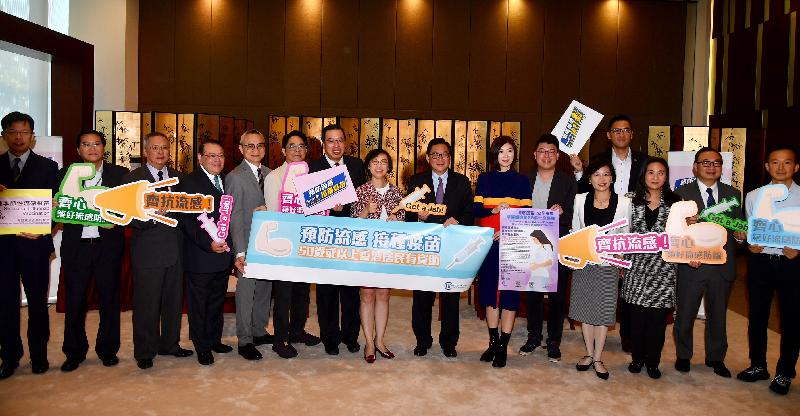
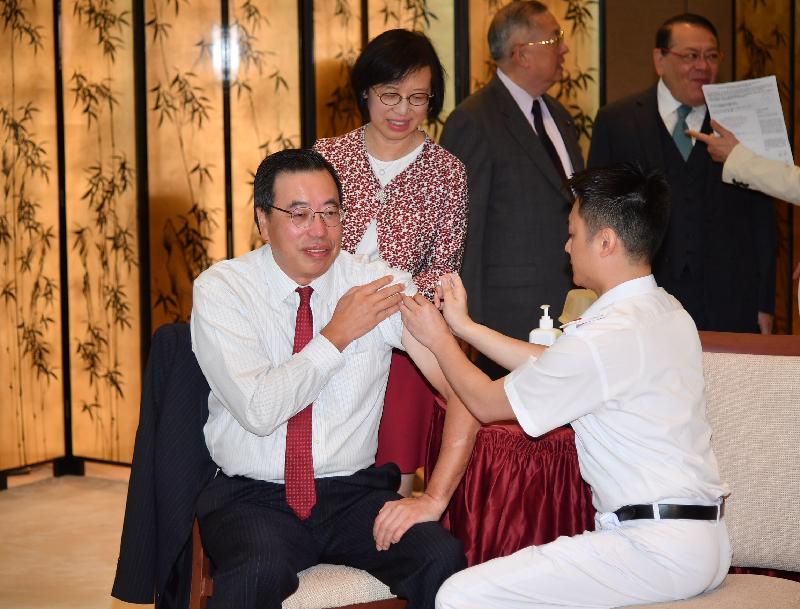


Transcript of remarks by SFH at media session (with photos)

     Following is the transcript of remarks by the Secretary for Food and Health, Professor Sophia Chan, at a media session after attending the Legislative Council's seasonal influenza vaccination event this morning (November 21):

Reporter: Professor Chan, could you give us an update on how many people have received flu jab this year so far and how are we doing compared to last year? And also, any plan to expand the pilot scheme for primary schools?

Secretary for Food and Health: This year, actually every year, the peak of seasonal influenza is usually from January to March or April. The best prevention method for seasonal influenza is to take the vaccination. The Government has increased the coverage of subsidy. We have the outreach programme to cover primary schools. The Department of Health (DH) has a team going to schools to provide vaccination to the kids. Another extension of the subsidy coverage is for people who are 50 to 64. They are also included in the coverage programme (Vaccination Subsidy Scheme). We appealed to the general public, especially the high-risk groups, such as elderly people, kids, pregnant women and those who have chronic diseases to take seasonal influenza vaccination as soon as possible. As far as the number is concerned, this year so far we have already administered some 590 000 doses of vaccines. Comparing to last year, there is an increase of over 50 per cent. We felt that the awareness of people in Hong Kong has improved. Of course, both the Hospital Authority (HA) and the DH have been doing a lot of promotion. As far as healthcare professional is concerned, every cluster of the HA has been doing a lot of promotional programmes for healthcare professionals to take flu jabs. I understand that there is also an increase in the number of people taking flu jabs this year.

(Please also refer to the Chinese portion of the transcript.)

Photo  Photo  


LCQ14: Opening and maintenance of bank accounts by enterprises

     Following is a question by the Hon Kenneth Leung and a written reply by the Secretary for Financial Services and the Treasury, Mr James Lau, in the Legislative Council today (November 21):
 
Question:
 
     The Hong Kong Monetary Authority (HKMA) issued guidelines for a number of times in the past two years to request banks to take measures to improve customer interfacing in the account opening processes, including streamlining the account opening processes and adopting customer due diligence (CDD) that is proportionate to the risk level. Besides, HKMA launched a Mystery Shopping Programme (MSP) in December 2017 to assess the effectiveness of such measures and banks' compliance with HKMA's guidelines and requirements. However, some members of the accounting sector have recently complained to me that their customers still encounter quite a number of difficulties in opening and maintaining bank accounts. The process of document submission and CDD involved in the account opening applications are quite complicated and time-consuming, thereby hindering the normal operation of the enterprises concerned. In this connection, will the Government inform this Council:
 
(1) whether it knows (i) the respective numbers of account opening applications from new enterprise customers received, approved and rejected by banks in each month of the past three years, and (ii) the average processing time in respect of those applications the vetting and approval of which have been completed;
 
(2) of the total number of complaints received by HKMA in the past three years about banks' (i) refusal to open accounts for new enterprise customers, and (ii) cancellation of accounts of individual or enterprise customers; the major types of enterprises involved in those complaints, and the reasons for refusal to open accounts/cancellation of accounts;
 
(3) of the details and results of MSP; whether HKMA has, in the light of the results of MSP, (i) given comments, advices or warnings to the banks concerned, and (ii) adjusted the relevant measures and guidelines; and
 
(4) whether HKMA has plans to issue clearer guidelines to banks to stipulate that banks must formulate arrangements for risk assessments and CDD which are proportionate to the type, business nature, and operation scale of the customers; if so, of the details; if not, the reasons for that?
 
Reply:
 
President,
 
     In recent years, as the international community steps up efforts to combat money laundering and terrorist financing (ML/TF), financial institutions around the world have generally strengthened the related controls, including undertaking more comprehensive due diligence on customers.
 
     The Hong Kong Monetary Authority (HKMA) has been reminding the local banking industry that, in implementing robust anti-money laundering and counter-terrorist financing controls, they should be mindful not to create hurdles for legitimate businesses and ordinary citizens to access banking services. The HKMA has issued guidance to banks in the past two years, reiterating that banks should apply a risk-based approach in conducting customer due diligence (CDD) and adopt measures which are commensurate with the customer's background, circumstances and ML/TF risk level. Banks should also maintain proper communication with customers throughout the CDD process, and ensure that the process is transparent, reasonable and efficient, in accordance with the "Treat Customers Fairly" principle. 
 
     In response to the HKMA guidance, banks have taken measures to improve the account opening process. Apart from the establishment of mechanisms to review unsuccessful applications, all retail banks currently provide a "pre-vetting" service, whereby banks accept submissions of requisite documents for account opening by applicants via email, fax or mail for pre-screening or pre-assessment before arranging face-to-face meetings with the applicants, with a view to providing greater convenience to applicants. Some banks have also set up dedicated hotlines and dedicated branches deployed with properly trained front-line staff to handle account opening matters, so as to improve customer experience. 
 
     Our response to each part of the question is as follows:
 
(1) The retail banking sector currently opens an average of about 10 000 new business accounts every month, of which some 60 per cent to 70 per cent belong to small and medium-sized enterprises (SMEs) and start-up companies. Of the successful cases, on average some 50 per cent to 60 per cent were able to open accounts within two weeks, and some accounts could even be opened as quickly as within a few days. The exact time taken depends on the complexity of individual cases and whether the applicants can provide the requisite information. The average unsuccessful rate of account opening applications for the first nine months of this year is below 5 per cent, which is an improvement from around 10 per cent in early 2016.
 
(2) In 2016, 2017 and 2018 (up to the end of October), the HKMA received 31, 22 and 17 complaint cases respectively concerning refusal of opening corporate accounts by banks. The corporates involved were mainly engaging in trade or financial services (such as finance or investment companies) business. The number of complaints relating to closure of corporate accounts by banks during the same period was 53, 46 and 70 cases respectively, involving corporates from different industries. The major reasons for unsuccessful account opening or closure of accounts were that the customers concerned could not provide the banks with the relevant information or documents for conducting CDD, or that the relevant accounts were found to be involved in suspicious transactions during banks' ongoing CDD process. 
 
     The HKMA requires banks to put in place appropriate mechanism for handling customer complaints in a fair and expeditious manner. Retail banks should have appropriate procedures to review their decisions on refusal of account opening or account closure upon requests of customers. If a customer considers that a bank has not handled his/her case properly, he/she can make a complaint to the bank concerned or the HKMA. The HKMA will follow up on each and every complaint case, and require the bank concerned to handle the complaint properly and provide feedback to the complainant. In some cases, accounts were subsequently opened or could be maintained after review by banks and provision of supplementary information or documents to the banks by the applicants or customers.
 
(3) The mystery shopping programme focused on the customer interface aspect of the account opening processes for SME and ethnic minority customers. The service provider engaged by the HKMA has completed the on-site fieldwork at retail banks.  The HKMA is now reviewing the preliminary reports submitted by the service provider. Depending on the results, HKMA will appropriately follow up with the banks concerned.
 
(4) The Guideline on Anti-Money Laundering and Counter-Financing of Terrorism (for Authorised Institutions) issued by the HKMA has stipulated that banks should apply risk-based approach when conducting CDD and the relevant measures taken should be commensurate with the ML/TF risks associated with a business relationship. When assessing the ML/TF risks involved, banks should consider various factors including customer risk, country risk, as well as product, service, transaction or delivery channel risk. Banks should adopt a balanced and reasonable approach when conducting customer risk assessments and CDD, without creating hurdles for legitimate businesses and individuals to access banking services.


LCQ9: Cross-boundary ferry services

     Following is a question by the Hon Starry Lee and a written reply by the Secretary for Transport and Housing, Mr Frank Chan Fan, in the Legislative Council today (November 21):

Question:

     At present, the Marine Department levies, pursuant to the law, a passenger embarkation fee at $11 per passenger from the owners of cross-boundary ferries, and such a fee is passed on to the passengers. There are comments that with the economies within the Guangdong-Hong Kong-Macao Greater Bay Area growing and integrating in an increasingly fast pace, the governments of the three places have all indicated that they will actively remove the various obstacles for exchange and co-operation. However, among the three governments, only the Hong Kong Government collects a passenger embarkation fee, which is not conducive to the connectivity and economic integration of the three places. Moreover, there are views that as a similar passenger boarding fee has not been imposed on the various modes of cross-boundary land transport in Hong Kong at present, the embarkation fee is unfair to those passengers departing by sea. In this connection, will the Government inform this Council:

(1) of the number of passenger trips departing by cross-boundary ferries and the total amount of embarkation fees collected in each of the past three years, with a tabular breakdown by ferry route;

(2) of the measures taken by the Government in the past three years to promote sea transport connectivity among Guangdong, Hong Kong and Macao, as well as the effectiveness of such measures; and

(3) whether it will review the current policy of levying a passenger embarkation fee, including whether that fee should be abolished; if it will, of the details; if not, the reasons for that?

Reply:

President,

     Cross-boundary ferry services, being one type of cross-boundary transport services, help promote the connectivity at sea between Hong Kong and the Pearl River Delta (PRD) region. With the development of the Guangdong-Hong Kong-Macao Greater Bay Area, the Government will continue to closely monitor the development of, and demand for, cross-boundary transport services (including cross-boundary ferry), and will adopt measures in a timely manner to meet the needs of the community.  

     My reply to the various parts of the Hon Starry Lee's question, after consulting the Financial Services and the Treasury Bureau as well as the Marine Department (MD), is as follows:

(1) and (2) At present, there are three cross-boundary ferry terminals in Hong Kong owned by the Government. Two of these terminals are managed by the Government (namely the Hong Kong-Macau Ferry Terminal and the China Ferry Terminal), providing a total of 14 routes of cross-boundary ferry services connecting Hong Kong and Macau Outer Harbour Ferry Terminal and Taipa Ferry Terminal, as well as 12 Mainland cities (including Zhuhai (Jiuzhou Port), Zhuhai Guishan, Zhongshan, Panyu Lianhuashan, Nansha, Heshan, Shunde, Gaoming, Jiangmen, Doumen, Shekou and Shenzhen Airport). The other cross-boundary ferry terminal (namely the Tuen Mun Ferry Terminal) is managed by a private operator, providing specified route between Hong Kong and Macao.  The operator may provide cross-boundary ferry services between Hong Kong and other PRD cities having regard to commercial principles. At present, a cross-boundary ferry route between Hong Kong and Zhuhai (Jiuzhou Port) is operating at this terminal. The annual passenger departures and embarkation fees collected for the aforementioned cross-boundary ferry routes between 2015 and 2017 are set out at the Annex.

     The patronage of cross-boundary ferry services has been stable in recent years, reflecting that there is a continuous demand from visitors for cross-boundary ferry services. In the past three years, at the request of the ferry operators, the Government approved an additional nine trips per day in total by the operators for routes between Hong Kong and Taipa Ferry Terminal in Macao, Zhuhai and Shekou, as well as the introduction of a new route between Hong Kong and Shenzhen Airport (chartered service).

     On the other hand, the MD reviews the utilisation of cross-boundary ferry terminals from time to time with a view to enhancing the operation and facilities of the terminals, thereby encouraging more passengers to use cross-boundary ferry services. The relevant measures include enhancing the mechanism for allocating berthing slots for optimal use of each berth so as to increase the number of sailings that can be handled and the patronage; enhancing the berths and passenger facilities so as to raise the operational efficiency of ferry operators; and arranging additional terminal-based staff during peak periods of passenger flow and on festive days so as to respond to emergencies and maintain the order at the terminals. The MD also holds regular meetings with stakeholders for the sake of enhancing the operational efficiency of cross-boundary ferry terminals.

(3) Under regulation 34 of the Shipping and Port Control (Ferry Terminals) Regulations (Cap 313H), a passenger embarkation fee shall be paid to the Government by the owner of a ferry vessel in respect of each passenger embarking on the ferry vessel at cross-boundary ferry terminals. At present, the embarkation fee is $11 per passenger. Ferry operators will determine the ferry fares on commercial principles.

     Cross-boundary ferry terminals are one of the public utilities owned by the Government. It is the Government's established policy that charges of Government-owned public utilities should in general be set at a level to recover the full cost for the provision of services, including the cost of the capital employed. The passenger embarkation fee is charged to recover the relevant cost of providing the ferry terminal services. The Government has an established mechanism to regularly review the level of passenger embarkation fee having regard to various relevant factors including public acceptance and affordability.


LCQ8: The nomination of the Hong Kong members of the Committee for the Basic Law of the Hong Kong Special Administrative Region

     Following is a question by the Hon James To and a written reply by the Secretary for Constitutional and Mainland Affairs, Mr Patrick Nip, in the Legislative Council today (November 21):

Question:

     According to the Decision of the National People's Congress Approving the Proposal by the Drafting Committee for the Basic Law of the Hong Kong Special Administrative Region on the Establishment of the Committee for the Basic Law of the Hong Kong Special Administrative Region Under the Standing Committee of the National People's Congress, the Hong Kong members of the Committee for the Basic Law of the Hong Kong Special Administrative Region under the Standing Committee of the National People's Congress (BLC) shall be Chinese citizens who are permanent residents of the Hong Kong Special Administrative Region with no right of abode in any foreign country and shall be nominated jointly by the Chief Executive, the President of the Legislative Council and the Chief Justice of the Court of Final Appeal, for appointment by the Standing Committee of the National People's Congress (NPCSC) for a term of office of five years.  BLC was established on July 1, 1997, and the current BLC is of the fifth term.  Regarding the nomination of the Hong Kong members of BLC, will the Government inform this Council whether it knows:

(1) how the nomination procedure is activated;

(2) the qualifications, apart from meeting the aforesaid requirements, that Chinese citizens must possess before they will be considered for the nomination, and whether self-recommended persons will be considered for the nomination; if so, of the details; if not, the reasons for that; and

(3) the number of nominees for each term of BLC and, among such nominees, the number of those who were not appointed by NPCSC (if any) and the reasons for that; whether a mechanism has been put in place for unappointed nominees to lodge appeals; if so, of the details; if not, the reasons and the legal basis for that, and whether it will put forward a proposal to the Central Authorities for establishing such a mechanism?

Reply:

President,

     Our consolidated reply to the Hon James To's question is as follows:

     On April 4, 1990, the Third Session of the Seventh National People's Congress adopted the "Decision of the National People's Congress Approving the Proposal by the Drafting Committee for the Basic Law of the Hong Kong Special Administrative Region on the Establishment of the Committee for the Basic Law of the Hong Kong Special Administrative Region under the Standing Committee of the National People's Congress" (the Decision).  The Decision includes approving the proposal by the Drafting Committee for the Basic Law of the Hong Kong Special Administrative Region (HKSAR) on the Establishment of the Committee for the Basic Law of the HKSAR (the Basic Law Committee) under the Standing Committee of the National People's Congress (NPCSC), and establishing the Basic Law Committee when the Basic Law of the HKSAR of the People's Republic of China (the Basic Law) is put into effect.

     According to the Decision, the Basic Law Committee is a working committee under the NPCSC.  Its function is to study questions arising from the implementation of Articles 17, 18, 158 and 159 of the Basic Law and submit its views thereon to the NPCSC.  According to the Decision, the Basic Law Committee comprises 12 members, six from the mainland and six from Hong Kong, including persons from the legal profession, appointed by the NPCSC for a term of office of five years.  Hong Kong members shall be Chinese citizens who are permanent residents of the HKSAR with no right of abode in any foreign country and shall be nominated jointly by the Chief Executive, President of the Legislative Council and Chief Justice of the Court of Final Appeal of the HKSAR for appointment by the NPCSC.

     On June 22, 2018, the Third Session of the Thirteenth National People's Congress adopted the composition of the fifth Basic Law Committee, including Ms Maria Tam (Vice-chairperson), Mr Lau Nai-keung, Mr Albert Chen, Mr Johnny Mok, Mr Wong Yuk-shan and Dr Priscilla Leung as Hong Kong members.

     The nomination and appointment of members of the Basic Law Committee follow the aforementioned procedures and principles.  It is our established position that we will not publicly comment on the Government's communication with the Central Authorities.