Speech by SED at opening ceremony of Learning and Teaching Expo 2018 (English only) (with photos)

     Following is the speech by the Secretary for Education, Mr Kevin Yeung, at the opening ceremony of the Learning and Teaching Expo 2018 today (December 12):
 
Mr Lee (Chairman of the Board of Directors of Hong Kong Education City, Mr Sunny Lee), distinguished guests, ladies and gentlemen,
 
    Good morning. It is my great pleasure to join you all today at the opening ceremony of the ninth Learning and Teaching Expo. First of all, I would like to extend a very warm welcome to everyone here, especially visitors from other places.
 
    The Learning and Teaching Expo is Asia's leading education exposition and Hong Kong's annual signature education event presented by the Hong Kong Education City. Gathering education professionals and technology practitioners, the Expo provides an excellent platform for exchanging views on the smart use of technology to enhance the quality of learning and teaching. This year, we have a record-breaking number of exhibition booths and professional development sharing sessions. They show a great variety of resources and technology, and new developments on education.
 
    The theme this year is "Tomorrow's Learning Today". Through efforts to sustain the development of information technology (IT) in education, the Government aims to prepare students for challenges of the 21st century. Over the past two decades, we have been tapping into the power of IT to enhance the effectiveness of learning and teaching, and there has been remarkable enhancement in schools' IT environment and capacity.
 
     Building on existing strengths and the experiences gained, the Education Bureau continues to unleash students' potential and develop their "learning to learn" capabilities through leveraging on the use of IT. We have adopted a holistic approach that encompasses different strategic actions, which include enhancing schools' IT infrastructure, promoting capacity building in schools, and renewing curriculum. By now and for the first time in Hong Kong, all 1 000 public sector schools have basically established a WiFi infrastructure on their campus. With WiFi service covering all classrooms, students can learn on their own and collaborate with one another by using mobile computing devices. This development provides a favourable environment for revolutionary changes both within and outside the classroom. What was once unlikely has or will become possible and practicable. To facilitate teachers in adjusting to the wave of change, we have been organising a variety of training programmes that seek to further enhance the professional leadership and capacity of school leaders and teachers.
 
    Schools have been positive towards implementing e-learning. Apart from devising their own e-learning plans according to their circumstances and needs, schools also adopt various e-learning strategies to enhance effectiveness of learning and teaching. I am excited to learn of these good practices in some schools. For example, various learning management systems facilitate peer collaboration, and enable students to exchange information and ideas or work on a project together anytime and anywhere. Also, the collection of learning data and the provision of timely feedback are at our fingertips, which encourages self-directed learning of students. The technologies of virtual reality and augmented reality are now used by schools to conduct virtual field trips and experiments, and to help students acquire new knowledge in various subjects and areas, such as Chinese history, geography, STEM education and language learning. While schools have different paces in implementing e-learning, the school community has generally demonstrated a paradigm shift in transforming learning and teaching through the innovative use of IT.
 
    In fact, competency in using IT is an important 21st century skill. We have also placed due emphasis on developing students' information literacy, with a view to enhancing their awareness of e-safety and nurturing them as effective, responsible and ethical IT users. Since the update of the framework on "Information Literacy for Hong Kong Students" in 2016, various online resources and training programmes have been made available to support teachers in developing students' information literacy and teaching students the right attitude towards using IT. I know that teachers have skilfully incorporated the element of information literacy into cross-curriculum learning activities that put students into authentic contexts. For example, the ability to locate reliable information among multiple sources and to identify facts and judgements when reading a news article is developed in library and language lessons. In addition, many schools have already agreed on a set of principles with students and their parents to ensure that students will use IT and IT tools to enhance learning in a responsible and proper way. With teachers' adequate support, students set out to explore the digital world and this exploration has become part of their learning experience and daily life.
 
    To better equip the younger generation for a challenging future, we need to enrich the education sector with useful insights, expertise and innovation from different countries and regions. Let me take this opportunity to thank the Hong Kong Education City for making this exposition a valuable platform for educators to conceive and exchange innovative ideas on learning and teaching. I believe that what educators aspire to learn and do today will inspire the education community on tomorrow's learning. May I wish the event a great success and all of you a fruitful and inspirational experience. Thank you.
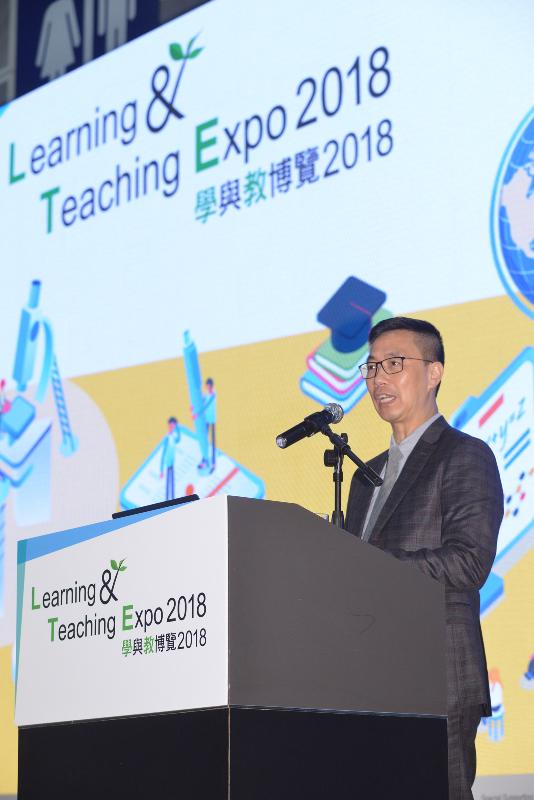
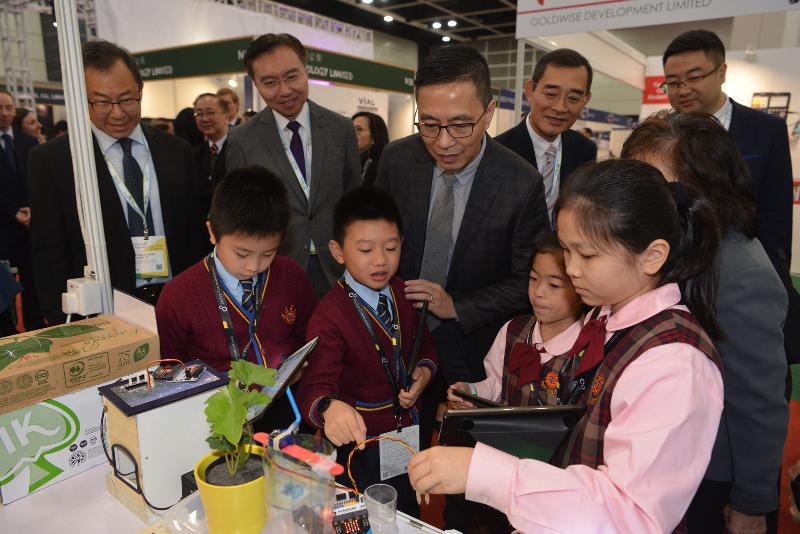
Photo  Photo  


Delineation of constituencies for 2019 District Council Ordinary Election

     The Chief Executive in Council has accepted all the final recommendations in the report submitted by the Electoral Affairs Commission regarding the delineation of constituencies for the District Council Ordinary Election in 2019.
 
     A government spokesman said today (December 12) that the decision of the Chief Executive in Council would be effected by way of the Declaration of Constituencies (District Councils) Order 2018, which will be published in the Gazette on December 14 and tabled at the Legislative Council on January 9, 2019 for negative vetting.
 
     The report of the Commission, submitted to the Chief Executive on November 20, was tabled at the Legislative Council today as required by law. The report is divided into three volumes. Volume 1 is the report, setting out the Commission's recommendations and the reasons for its recommendations. Volume 2 contains the index map and 22 maps on the recommended constituency boundaries and the related boundary descriptions. Volume 3 records all the written representations. The report is available for public viewing at all Public Enquiry Service Centres of District Offices and the Registration and Electoral Office during ordinary business hours starting from today. The report may also be viewed at the Commission's website (www.eac.gov.hk).
 
     The spokesman said that the Commission had conducted public consultation on its provisional recommendations from July 23 to August 21.
 
     "The Commission had carefully considered all the public representations before making its final recommendations for submission to the Chief Executive. It endeavoured to strike a fair and proper balance between the expressed wishes of the public on the one hand, and the statutory criteria for delineation on the other hand."
 
     There will be 452 constituencies for the District Council Ordinary Election to be held in 2019. One District Council member will be elected for each constituency.
 
     "The making of the Order is an important step in the preparation for the next District Council Ordinary Election in late 2019. The Government and the Commission will put in place all necessary arrangements to facilitate the smooth conduct of the election," the spokesman said.


Special traffic arrangements for race meeting in Happy Valley

     Special traffic arrangements will be implemented in Happy Valley today (December 12). The arrangements will come into effect one and a half hours before the start of the first race and will last until the crowds have dispersed after the race meeting.

A. Traffic arrangements before the commencement of the first race

1. Road closure

     Southbound Wong Nai Chung Road between Queen's Road East and the up-ramp outside Hong Kong Jockey Club (HKJC) will be closed except for vehicles heading for Aberdeen Tunnel.

2. Traffic diversions

– Southbound Wong Nai Chung Road between Village Road and the up-ramp outside HKJC will be re-routed one way northbound;
– Vehicles from eastbound Queen's Road East heading for Wan Chai and Happy Valley will be diverted to turn left to Morrison Hill Road;
– Traffic along southbound Morrison Hill Road heading for Happy Valley will be diverted via Sports Road and Wong Nai Chung Road;
– Traffic along Queen's Road East cannot turn right to Wong Nai Chung Road except for vehicles heading to Aberdeen Tunnel;
– Traffic from Cross Harbour Tunnel heading for Queen's Road East will be diverted via the down-ramp leading from southbound Canal Road flyover to Morrison Hill Road to turn right at the junction of Wong Nai Chung Road and Queen's Road East; and
– Traffic from Cross Harbour Tunnel heading for Happy Valley or Racecourse will be diverted via the down-ramp leading from southbound Canal Road flyover to Canal Road East, southbound Morrison Hill Road, Sports Road and Wong Nai Chung Road.

B. Traffic arrangements before the conclusion of race meeting

1. Road closure

     The following roads will be closed from 35 minutes before the start of the last race:

– The up-ramp on Wong Nai Chung Road outside HKJC leading to Aberdeen Tunnel;
– Southbound Wong Nai Chung Road between Queen's Road East and the up-ramp leading to Aberdeen Tunnel;
– Southbound Wong Nai Chung Road between Village Road and the Public Stands of HKJC;
– Westbound Leighton Road between Wong Nai Chung Road and Canal Road East; and
– Southbound Morrison Hill Road between Leighton Road and Queen's Road East.

     In addition, southbound Wong Nai Chung Road between the up-ramp leading to Aberdeen Tunnel and the Public Stands of HKJC will be closed from about 10 minutes before the start of the last race.

2. Traffic diversions

     The following traffic arrangements will be implemented from 35 minutes before the start of the last race:

– Eastbound Queen's Road East at its junction with Morrison Hill Road will be reduced to one-lane traffic heading for northbound Canal Road flyover;
– Vehicles from Cross Harbour Tunnel heading for Wan Chai will be diverted via the down-ramp leading from Canal Road East, U-turn slip road beneath Canal Road flyover, Canal Road West and Hennessy Road;
– Vehicles from Cross Harbour Tunnel heading for Happy Valley will be diverted via the down-ramp leading from Canal Road East, eastbound Leighton Road and Wong Nai Chung Road;
– Traffic on southbound Morrison Hill Road will be diverted to turn left to eastbound Leighton Road;
– Traffic along southbound Morrison Hill Road heading for Happy Valley will be diverted via eastbound Leighton Road and Wong Nai Chung Road; and
– Traffic along westbound Leighton Road will be diverted to Wong Nai Chung Road.

C. Learner drivers prohibition

     Learner drivers will be prohibited to turn left from Caroline Hill Road to Leighton Road between one and a half hours before the start of the first race and one hour after the last race. In addition, learner drivers will be prohibited from accessing the following roads within the above period of time:

– Shan Kwong Road between Yik Yam Street and Wong Nai Chung Road;
– Village Road between its upper and lower junctions with Shan Kwong Road;
– Percival Street between Hennessy Road and Leighton Road;
– Canal Road East; and
– The service road leading from Gloucester Road to Canal Road flyover.

D. Suspension of parking spaces

     Parking spaces on southbound Wong Nai Chung Road between Sports Road and Blue Pool Road will be suspended from 11am to 7pm during day racing, from 4.30pm to 11.59pm during evening racing, and from 5pm to 11.59pm during night racing.

     Any vehicles found illegally parked within the precincts of the above affected areas will be towed away without prior notice.

     Actual implementation of road closure and traffic diversion will be made by the Police at the time depending on traffic conditions in the areas. Motorists should exercise tolerance and patience, and follow the instructions of Police on site.


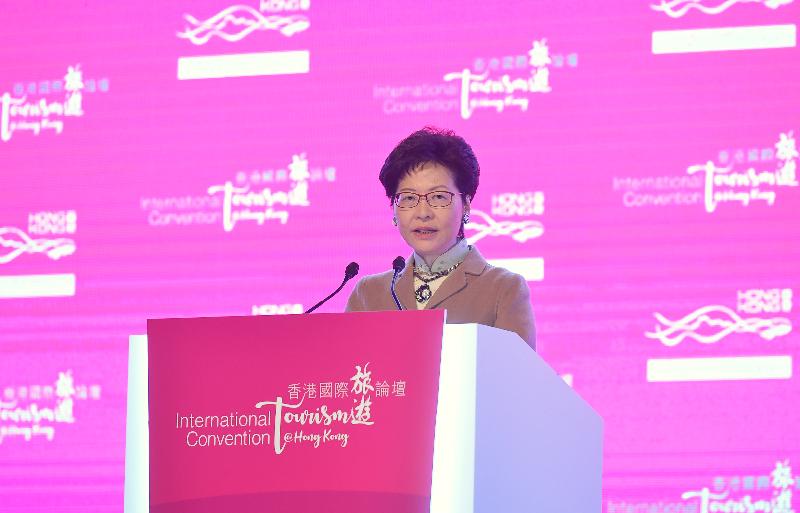
Speech by CE at Hong Kong International Tourism Convention (English Only) (with photo/video)

     Following is the speech by the Chief Executive, Mrs Carrie Lam, at the Hong Kong International Tourism Convention today (December 12):
 
Director Wang Zhimin (Director of the Liaison Office of the Central People's Government in the Hong Kong Special Administrative Region (HKSAR)), Mr Yu Qun (Member of the leadership, Ministry of Culture and Tourism), Commissioner Xie Feng (Commissioner of the Ministry of Foreign Affairs of the People's Republic of China in the HKSAR), Vice Governor Xu Ruisheng (Vice Governor of Guangdong Province), Secretary Tam (Secretary for Social Affairs and Culture, Macao Special Administrative Region Government, Mr Alexis Tam), Mr Zhu Shanzhong (Executive Director of World Tourism Organization), ladies and gentlemen,
 
     Good morning. I'm pleased to be here today for the opening of the Hong Kong International Tourism Convention, delighted to be among so many distinguished government officials and business leaders. Among the thousand or so guests here today, I'm pleased to note the participation of senior players from the nine neighbouring Mainland cities of the Guangdong-Hong Kong-Macao Greater Bay Area, the Macao Special Administrative Region, as well as a number of other Mainland provinces and a total of 34 countries.
 
     In a time of increasing unilateralism and protectionism, tourism is a welcome tonic – a buoyant multilateral embrace of shared experience, cultural co-operation and people-to-people bonds. Indeed, connectivity, inclusiveness, the promise of mutual benefits and many other ambitions are the reasons why President Xi Jinping launched the Belt and Road Initiative some five years ago.
 
     We know that developing people-to-people bonds is one of the five connectivities pertaining to the Belt and Road Initiative, and we believe that tourism exchange is a powerful means of promoting such bonds. Tourism exchange can foster people's understanding and appreciation of each other's culture and living. This provides the foundation for closer and stronger relationships and co-operation in the longer term.
 
     Multilateral co-operation is no less central to the Belt and Road Initiative and to tourism development. Easing visa regulations, expanding flight connections, enhancing cultural co-operation – these and other considered measures can only help boost tourism and the rewards they offer us all. In developing regional tourism, for example, multi-destination visits can be effective. Consider, for example, the Asia Cruise Cooperation, a strategic alliance among Hong Kong, Hainan, Taiwan, Xiamen, the Philippines and Korea, in which alliance members jointly promote cruise tourism for mutual benefits.
 
     The Belt and Road Initiative is about capacity building and sharing benefits. Hong Kong is an international hub for professional services, from financial and legal, to architectural, communications, transportation management and many more. We also run one of the largest hospitality and tourism schools in Asia. We have the expertise, the experience and the institutions to provide services to other economies along the Belt and Road on tourism infrastructure developments, as well as train professionals for the tourism industry. And we look forward to playing a central role in the Belt and Road Initiative's international tourism development.
 
     Closer to home, the Greater Bay Area has the means to rival Tokyo, San Francisco and New York – the world's three renowned bay areas – in tourism potential. The Bay Area's size and significance underscore that promise. With a collective population of 70 million, the Bay Area boasts a combined GDP of some US$1.5 trillion, that is roughly the size of Australia or South Korea. The Greater Bay Area's tourism offerings are wide-ranging and undeniably inviting – from cosmopolitan, East-meets-West Hong Kong and the entertainment capital of the world, Macao, to the rich Chinese culture and heritage of the Greater Bay Area's nine Mainland cities. At the same time, the Greater Bay Area is an important source market for other economies given its high level of affluence. You will hear more in-depth sharing of what this Greater Bay Area means for international and regional tourism in one of the plenary sessions this morning.

     I believe that Hong Kong is uniquely positioned to drive tourism opportunities emanating from the Belt and Road Initiative and the Greater Bay Area. And my Government is committed to realising Hong Kong's tourism potential. Last October, we published a development blueprint for Hong Kong's tourism industry. It emphasises four key strategies: diversifying our visitor source markets; offering tourism products with international and local characteristics; promoting smart tourism; and enhancing our service quality.
 
     Enhancing connectivity is the key for the strategies to work. In this connection, our Hong Kong International Airport links more than 70 million passengers a year to 220 destinations. And we are now expanding the airport into a three-runway system. On completion in 2024, we will have the capacity to handle up to 100 million passengers a year.
 
     On land, the Hong Kong section of the Guangzhou-Shenzhen-Hong Kong Express Rail Link opened at the end of September. It now offers direct connection from Hong Kong to 44 Mainland destinations. And from those destinations, the rest of China opens up through the nation's 25 000-kilometre high-speed rail network.
 
     Then there's the Hong Kong-Zhuhai-Macao Bridge, which opened in late October and speeds us to the Greater Bay Area's western region. The impact of the bridge in bringing tourists to Hong Kong is obvious. Therefore we have been working to ensure that our tourist spots and local communities are prepared. We are also collaborating with the Zhuhai and Macao authorities to ensure that our guests can have the best experience in Hong Kong.
 
     I should also add that there will be a new – which is the seventh – land boundary control point between Hong Kong and Shenzhen at Liantang/Heung Yuen Wai. To be completed next year, this boundary control point will significantly shorten the time needed to travel from Hong Kong to the east of Shenzhen, and beyond. All these infrastructure projects open up new opportunities barely reachable before and provide a solid foundation for Hong Kong to serve as an international gateway of the Greater Bay Area.
 
     Hong Kong has received about 60 million visitors so far this year, including over 13 million international visitors, and was ranked as the most visited city in the world by Euromonitor International. Coupled with the fact that Hong Kong is the world's freest economy and China's most international city, Hong Kong is best positioned to leverage the vast tourism potential of the Belt and Road Initiative and the Greater Bay Area development. We are prepared to grasp these opportunities ahead of us, and we welcome you to join us.
 
     My thanks to colleagues in the Tourism Commission, the Hong Kong Tourism Board and the Tourism Industry Council for organising today's timely and welcome Tourism Convention. I wish you all a memorable stay in Hong Kong, and with Christmas and New Year approaching, a very merry Christmas and a prosperous year ahead. Also, I invite you to see for yourself what makes Hong Kong Asia's world city – the most visited city in the world. Thank you very much.

Photo  


LC: CS presents Government Minute in response to Annual Report of The Ombudsman 2018

     Following is the speech (translated from Chinese) by the Chief Secretary for Administration, Mr Matthew Cheung Kin-chung, in presenting the Government Minute in response to the Annual Report of The Ombudsman 2018 in the Legislative Council today (December 12):
 
President,
 
     Today, I submit the Government Minute (GM) responding to the recommendations set out in the Annual Report of The Ombudsman 2018 (the Annual Report).
 
     The Ombudsman summed up 12 direct investigation and 195 full investigation cases and made a total of 209 recommendations in the Annual Report. The GM responds to the 10 direct investigation and 83 full investigation cases where recommendations were made by The Ombudsman. Government departments and relevant public bodies accepted most of The Ombudsman’s recommendations, and follow-up actions have been or are being taken accordingly. As for individual recommendations that were not accepted, relevant departments or public bodies have given an account to The Ombudsman, explaining their difficulties or other follow-up actions taken in response to relevant issues.
 
     In 2017-18, the Office of The Ombudsman (the Office) handled nearly 4 800 complaints by way of inquiry, full investigation or mediation. Of these, 237 cases were concluded by mediation, representing a rise of over five folds as compared to 2013-14; while the number of participating Government departments and public bodies went up from 11 half a decade ago to 28 last year. I am most thankful to The Ombudsman for promoting mediation and bringing in a breath of fresh air. Many complaints involving no or only minor maladministration can be settled quickly with satisfactory outcomes for all parties by this speedy, convenient and amicable approach. I encourage more Government departments and public bodies to resolve disputes with the public by mediation as far as possible. With the Apology Ordinance coming into effect in December last year, departments and public bodies should also offer apologies, where appropriate, for the inconvenience and nuisance experienced by the public.
 
     Over the past four years, the Office has furthered its emphasis on direct investigation. Apart from a significant increase in the number of direct investigations completed each year, the Office was committed to examining public administration issues with extensive and profound impact on Hong Kong people, as well as exploring long-term solutions in collaboration with Government departments. The Office made a total of 63 recommendations in 10 of the 12 direct investigations completed last year. As mentioned by The Ombudsman in the Annual Report, direct investigation reports catalysed changes in Government policies and measures in recent years. As a catalyst for enhancing the quality of public administration, the Office is a powerful change agent. Government departments and public bodies were also receptive to the Office’s recommendations, and actively improved the quality and effectiveness of their services, thereby enhancing operation efficiency and responsiveness to public needs.
 
     For instance, after conducting a direct investigation into the criteria and procedures for procurement and withdrawal of library materials by the Leisure and Cultural Services Department (LCSD), the Office made a number of recommendations on effective utilisation of public resources for procurement of library materials, and proper disposal of worn-out/damaged and outdated library collections. LCSD immediately reviewed and revised the procedure of setting procurement targets and compiling procurement plans. It has also been keen to explore possible collaboration with non-profit-making organisations in disposing withdrawn books through donation and a trial scheme on community book sharing, subject to compliance with Government regulations, cost-effectiveness and availability of resources, so as to better serve the community.
 
     In addition, thanks to the Office's direct investigation into subjects such as the Government's mechanism for handling smoking offences, its control over fly-tipping of construction waste and landfilling activities on private land, as well as its regulation of factory canteens, there has been better communication and collaboration among Government departments, and greater efficiency and proactiveness in taking law enforcement actions. Such improvements have brought tangible benefits to the living environment, safety and health of our citizens.
 
     While stepping up its effort on direct investigation, the Office has not overlooked the complaints lodged by individual complainants. In 2017-18, the Office conducted full investigation into 195 complaints, and close to 70 per cent of the complaints were found to be unsubstantiated after investigation. In its striving for justice for members of the public through professional investigation/inquiry and impartial judgement, the Office was also conscious of the constraints faced by Government departments and public bodies in deploying resources and exercising statutory powers. For instance, the Office respected the practice of the Buildings Department and the Lands Department in handling issues of building safety, illegal structures and illegal occupation of government land, taking into account such factors as threat to public safety when setting the priorities for enforcement actions. Some of the investigation findings also indicated that Government departments and public bodies had already made every effort within their purview to handle the issues and requests raised by members of the public. The Ombudsman praised some Government departments and public bodies in particular for taking follow-up actions and making improvements on relevant issues even before the Office concluded its investigations. This is an apt demonstration of the positive interactions between the Office and Government departments. On the other hand, the Office also made rather strong criticisms against Government departments and public bodies, and reminded them to utilise their resources and powers in more flexible and targeted manner to enable effective law enforcement and solve problems for members of the public. Such criticisms and recommendations are worth the reflection of departments and public bodies.
 
     As mentioned in the Government Minute last year, the number of requests for information made to Government departments has been on the rise. In 2017-18, departments received a record high of over 6 100 requests for information made by members of the public under the Code on Access to Information (the Code), which was an increase of over 10 per cent as compared to the figure in 2016-17. Even so, more than 94 per cent of the cases were provided with all the information requested and 3 per cent of them were provided with part of the information requested. In 2017-18, the Office also received as many as 91 Code-related complaints, which shows mounting public expectation for an open and accountable Government. In the investigation of 71 Code-related cases concluded in 2017-18, the Office found non-compliance with the Code in 30, mostly relating to nonconformity with specific provisions of the Code and refusal of requests for information without sufficient justification. To enhance understanding about the spirit and principle of the Code among departments, the Government has sought to strengthen staff training. A training video was produced in the third quarter of this year for the reference of staff involved in regular handling of Code requests. The purpose is to improve staff awareness and understanding of the various provisions of the Code including justifiable reasons to refuse disclosure of information. In addition, the Constitutional and Mainland Affairs Bureau will continue to send officers to relevant departments to provide briefing on cases and content of the Code.
 
     At the same time, the Government attaches importance to the Office's recommendations regarding the enactment of access to information and archives laws. The Law Reform Commission (LRC) launched on December 6 this year a public consultation on its studies about reforming the system of access to information and archives law. The Government will pay close attention to the public’s views on these two issues, study and follow up the recommendations as appropriate after the LRC has completed its consultation and published its final reports.
 
     President, I would like to express my gratitude to The Ombudsman, Ms Connie LAU, and her professional team for their independent and impartial handling of public complaints as well as their dedication to raising the standard of public administration of Hong Kong over the last four years. The comprehensive and in-depth investigations as well as constructive criticisms and recommendations of the Office, coupled with the positive response of the departments and bodies concerned, have greatly benefitted the community of Hong Kong. The Government will continue to support The Ombudsman's work and looks forward to meeting public expectation more effectively in its administration and better addressing the needs of our society in the delivery of public services.
 
     Thank you, President.