LCQ6: Support for nurturing of local technology talents

     Following is a question by the Hon Charles Mok and a reply by the Secretary for Innovation and Technology, Mr Nicholas W Yang, in the Legislative Council today (December 12):
 
Question:
 
     In the World Talent Report 2018 published by the International Institute for Management Development in Lausanne of Switzerland, Hong Kong's ranking has fallen from the 12th place of last year to the 18th of this year, and Singapore, which ranks the 13th, has replaced Hong Kong as becoming the highest ranking economy in Asia. There are comments that in order to enhance Hong Kong's international competitiveness and to ensure the diversification of its economy, the Government needs to strengthen its work in the areas of "talents investment and development", "appeal to and retention of talents" and "readiness for talents", step up its efforts to promote the upgrading and transformation of various industries through application of innovation and technology, and enhance the training of local technology talents. In this connection, will the Government inform this Council:
 
(1) whether it will formulate a comprehensive strategy for training of talents, and conduct studies on the impacts of artificial intelligence, including studying the impacts of the technological development in areas such as artificial intelligence, machine learning and robotics on various industries in the next decade, as well as draw up specific targets in respect of training of talents;
 
(2) whether it will provide tuition fee subsidies and other incentives (e.g. providing employers with a double tax deduction for training expenditure) to encourage local technology talents to enroll in local and overseas technology training courses and massive open online courses and obtain recognised professional qualifications; and
 
(3) whether it will analyse the competitive strengths and weaknesses of various major industries, as well as their needs for and challenges in undergoing upgrading and transformation; whether it will formulate corresponding support strategies to assist enterprises (especially small and medium enterprises) in increasing investment in the application of digital technologies for upgrading and transformation, and to assist practitioners in the industries in acquiring the required skills?
 
Reply:
 
President,
 
     Having consulted relevant Government bureaux and departments, our reply to the three parts of the question is as follows:
 
(1)  With the wave of innovation and technology (I&T) sweeping through the world, robotics, artificial intelligence and machine learning etc. are undergoing rapid development and revolutionising the traditional business models. Automation is also expected to bring about certain degrees of transformation in industry structures and job requirements. To compete in such a rapidly evolving environment, the local labour force should continuously update and enhance their knowledge and skills through education, retraining and up-skilling, etc., in order to keep abreast of the latest technology development and enhance their digital literacy, such that they can work complementarily with technology and grasp the opportunities brought by technology development.
      
     In recent years, various international institutions and enterprises have published research reports on the impact of artificial intelligence. A research report pointed out that more routine tasks, such as data processing and machinery operation, have a higher chance of being automated. On the contrary, less routine tasks, such as those involving communication, management, decision-making, planning and creation, have a lower chance of being automated. The Human Resources Planning Commission chaired by the Chief Secretary for Administration has initially examined and discussed the impact of automation on human resources and the labour market.
      
     Government bureaux and departments will, through various measures, facilitate industries to capitalise the opportunities brought by technology development, as well as encourage and assist workers of different industries in receiving training and improving skills to embrace the challenges of automation.  
 
(2) The Government has been nurturing local technology talent through different measures. The Innovation and Technology Bureau (ITB) has earlier briefed the University Grants Committee (UGC)-funded universities on the trends and development of manpower requirements in the I&T sector. In view of the demand of the industry, the UGC-funded universities have responded positively in their Planning Exercise Proposals for the 2019/20 to 2021/22 triennium by, inter alia, proposing more cross-disciplinary programmes, such as those relating to artificial intelligence and financial technology, with a view to providing industries with more technology talent.
      
     In respect to self-financing post-secondary education, the Government launched the Study Subsidy Scheme for Designated Professions/Sectors (SSSDP) in the 2015/16 academic year on a pilot basis to subsidise about 1 000 students per cohort to pursue designated full-time locally-accredited self-financing undergraduate programmes in selected disciplines, with a view to nurturing talent for specific industries with keen manpower demand. The SSSDP has been regularised from the 2018/19 academic year and the number of subsidised self-financing undergraduate places has been increased to about 3 000 per cohort. Current students of the designated programmes may also receive the subsidy from that academic year. In the 2018/19 academic year, there are a total of 37 programmes offered under the SSSDP, including five computer science programmes and four financial technology programmes which provide 306 and 265 subsidised first-year intake places respectively.
      
     The Government has recently announced a series of enhancement measures of the Continuing Education Fund (CEF), including increasing the subsidy ceiling from $10,000 to $20,000 per person, re-activating closed CEF accounts to also benefit relevant holders and expanding the scope of CEF courses to all eligible courses (including technology courses) registered in the Qualifications Register. The related measures will be implemented from April 1, 2019.
      
     On the other hand, the ITB launched the Reindustrialisation and Technology Training Programme in August this year to subsidise local companies on a 2:1 matching basis to train their staff in advanced technologies, especially those related to "Industry 4.0", thereby encouraging companies to arrange technology training for their staff. As at the end of last month, there have been 67 open courses registration under the scheme in just three months. The technology areas involved included "Industry 4.0"-related technologies, information technology, textiles and clothing, biomedicine and medical care, automotive technology and environmental protection etc. The scheme has approved 90 training grants applications, involving 148 trainees and a funding amount of around $1.2 million.
 
(3) Government bureaux will actively review the competitive advantages and challenges of various industries under their policy purview, and take appropriate measures as necessary to assist enterprises in enhancing their competitiveness through upgrading and transformation. The ITB will provide assistance from the technological perspective, such as encouraging enterprises to conduct more R&D activities, subsidising companies in using technologies to upgrade and transform, etc.
 
     In regard to the manufacturing industry, the Government actively promotes re-industrialisation to develop high-end manufacturing based on new technologies and smart production without occupying much land. The latest Policy Address proposed to create the $2 billion Re-industrialisation Funding Scheme to subsidise manufacturers to set up smart production lines in Hong Kong; and allocate an additional $2 billion to the Hong Kong Science and Technology Parks Corporation for building dedicated manufacturing facilities in Industrial Estates required by advanced manufacturing sector, thereby promoting re-industrialisation.
      
     In addition, the ITB rolled out the $500 million Technology Voucher Programme (TVP) in November 2016 to subsidise local small and medium enterprises in using technological services and solutions to improve productivity, upgrade and transform. We have relaxed the eligibility of TVP since February this year, including allowing applications from non-listed enterprises of all sizes, in order that more enterprises could benefit from the scheme. After implementation of the enhanced measures, the numbers of applications and approved projects have increased substantially. As at the end of last month, the scheme has approved 939 applications with a total funding amount of $130 million.


LCQ17: Provision of ancillary facilities for staff of franchised bus companies

     Following is a question by the Hon Wu Chi-wai and a written reply by the Secretary for Transport and Housing, Mr Frank Chan Fan, in the Legislative Council today (December 12):

Question:

     Regarding the regulator kiosks, rest rooms and toilets provided for use by bus captains and regulators of franchised bus companies (bus companies), will the Government inform this Council: 

(1) of the current number of bus termini not provided with toilets (such as public toilets provided by the Government or toilets provided by bus companies) therein and within 50 metres therefrom, with a breakdown by District Council (DC) district;

(2) of the number of public transport interchanges (PTIs) currently not provided with toilets and their locations (set out the relevant information by DC district); as the Hong Kong Planning Standards and Guidelines stipulates that essential facilities such as toilets and regulator kiosks should be provided at PTIs, whether the Government will, in its future planning for PTIs, provide such facilities across the board;  

(3) given that currently bus companies have to obtain the consent of government departments (such as the Transport Department, the Lands Department and the Highways Department) before installing latrines fitted with a chemical closet fitment for bus captains' use, of (i) the respective numbers of the relevant applications received, approved and rejected by the Government and (ii) the average and longest processing time taken in respect of the approved cases, in each of the past five financial years, as well as the current number of such applications being processed (with a breakdown by name of bus company);

(4) whether it will require that bus termini to be constructed in the future be provided with regulator kiosks, rest rooms and toilets; and

(5) whether the bus companies have to pay the Government nominal rents or market rents for the sites occupied by the aforesaid facilities of the bus termini; if the latter is the case, of the amount of rents paid by each bus company in each of the past five financial years; whether the expenditures concerned are included in the operating costs of the bus companies?

Reply:

President,

     My consolidated reply to the Hon Wu Chi-wai's question is as follows:

     The Transport Department (TD) and franchised bus companies have been striving to provide an appropriate working environment for the staff of the franchised bus companies, including providing ancillary facilities such as rest rooms and toilets at bus termini and public transport interchanges (PTIs). Depending on the size and locations of the proposed facilities, franchised bus companies will submit applications for the provision of regulator kiosks, staff rest rooms and chemical toilets to the TD, other government departments or private organisations. Since 2017, the TD has set up a task force, comprising representatives from relevant government departments (e.g. Government Property Agency, Lands Department and Housing Department) and franchised bus companies, to monitor the progress of these applications. The TD will continue to follow up and co-ordinate with relevant government departments for processing these applications to facilitate the early provision of these facilities for the convenience of the staff of the franchised bus companies.   

     As for the newly planned bus termini and PTIs, regulator kiosks, staff rest rooms and toilets are already classified as basic facilities. The Government will arrange for the provision of these basic facilities in the planning of new bus termini and PTIs with a view to creating a better working environment for the staff of the franchised bus companies. 

     At present, there are 298 bus termini and PTIs across the territory, of which 287 (about 96 per cent) of them are provided with toilets within a walking distance of three minutes (or within the site of the bus termini or PTIs), while the rest are served by toilets located within a walking distance of around four to seven minutes (Note 1). The figures concerned with a breakdown by District Council district are set out at Annex 1.  

     Notwithstanding the provision of toilets within or near the bus termini and PTIs, the franchised bus companies will still seek to provide chemical toilets where necessary for further convenience of their staff. The number of applications for the provision of chemical toilets processed by the TD in the past five years is set out at Annex 2.  

     Upon receipt of an application from a franchised bus company, the TD will consult relevant government departments and the local community. The TD has to pursue co-ordination work if there are objections from the local community. Where necessary, the TD will also work with the franchised bus companies to draw up revised proposal for further consultation. Records show that in general the average time taken for the TD to process these applications was about six to seven months. The approval process may take longer for more complicated cases. The longest time required to process a case in the past was about 23 months, and that case was approved in July 2016.   

     In general, any facilities provided by the franchised bus companies on government land are charged with market rents. The amount of rentals paid by each franchised bus company in the past five years to the Government for the facilities installed at bus termini and PTIs is at Annex 3. Such rentals constitute part of the operating costs. Nonetheless, franchised bus companies have offered concessionary half fares to elderly passengers through the Elderly Concessionary Fare Scheme (ECFS) since 1993. Under the ECFS, franchised bus companies are exempted from the annual vehicle licence fees and receive reimbursement of rentals paid in respect of government land so as to facilitate their introduction or continuous provision of fare concessions to the elderly (Note 2). In other words, franchised bus companies are reimbursed for the rentals that they paid to the Government (Note 3). 

Note 1: The only exception is the bus terminus located at the Aircraft Maintenance Area of the Airport, which is currently used by one bus route (i.e. Citybus route no. S52 plying between Yat Tung Estate, Tung Chung and the Aircraft Maintenance Area of the Airport). No toilet facility is provided in the vicinity of the bus terminus due to security and safety concerns. However, a round trip of the bus route only takes about 22 minutes, and the bus captains can use the toilet facilities at the other terminating point of the route (i.e. Yat Tung Estate, Tung Chung) where necessary. The TD will continue to keep in view the situation of this bus terminus.

Note 2: Under the Government Public Transport Fare Concession Scheme for the Elderly and Eligible Persons with Disabilities ($2 Scheme) introduced in 2012, franchised bus companies will only receive reimbursement for the difference between the $2 fare and the concessionary half fare. They still have to absorb any fare revenue forgone arising from the provision of fare concessions for the elderly under the $2 Scheme (i.e. the difference between full fare and the concessionary half fare)

Note 3: The amount of reimbursement will not exceed the amount shouldered by the franchised bus company in the provision of fare concessions for the elderly.


LCQ13: Ensuring polling staff to properly discharge duties

     Following is a question by the Hon Andrew Wan and a written reply by the Secretary for Constitutional and Mainland Affairs, Mr Patrick Nip, in the Legislative Council today (December 12):
 
Question:

     The Legislative Council Kowloon West Geographical Constituency By-election was held on the 25th of last month. It has been reported that on the morning of that day when a candidate and some members of his electioneering team were conducting canvassing activities in a Chinese restaurant in Shek Kip Mei, a Presiding Officer told the candidate that the premises were within a No Canvassing Zone (NCZ) and demanded that he immediately stop his canvassing activities and leave. However, the Presiding Officer did not make the same demand to another candidate who was present at the premises at the time. The Chairman of the Electoral Affairs Commission subsequently met the media and advised that there was no problem for candidates to canvass for votes on non-street level storeys within NCZs. On the other hand, section 40(17) of the Electoral Affairs Commission (Electoral Procedure) (Legislative Council) Regulation (Cap. 541D) provides that a person may, on polling day, canvass for votes, without obstructing any person, on the storeys above or below street level in a building within NCZ provided that the person's entry to the building for canvassing votes is allowed and the building has no polling station inside it. In this connection, will the Government inform this Council:

(1) whether it has gained an understanding of the reasons for the aforesaid Presiding Officer to adopt different approaches for handling the conduct of canvassing activities by the two candidates; whether personal political orientations were involved; if so, of the authorities' further measures to ensure that polling staff will act in an impartial manner; and

(2) whether it has reviewed if the training on electoral legislation and relevant guidelines currently provided to polling staff is sufficient; if it has, of the outcome; if not, the reasons for that?

Reply:
 
President:

     My reply to Hon Andrew Wan's question is as follows:

(1) In accordance with the Electoral Affairs Commission (Electoral Procedure) (Legislative Council) Regulation (Cap. 541D), door-to-door canvassing and, for the purpose of such canvassing, the display or wearing of propaganda materials, will be allowed on the storeys above or below street level in a building within a No Canvassing Zone (NCZ) other than a building in which there is a polling station, provided that permission has been obtained for entry to the building for canvassing votes, and that obstruction is not posed to others and no sound amplifying device is used.

     Apart from this, no other canvassing activities will be allowed within a NCZ except for static display of election advertisements mounted at designated spots approved by the Returning Officer. On the polling day, Presiding Officers (PROs) will make their best endeavour to ensure that no person carries out the aforesaid canvassing activities in the NCZ in respect of their polling stations. Any person found to have conducted canvassing activities prohibited in the NCZ will be asked to leave the area.

     The Electoral Affairs Commission has already received the complaint mentioned in the question, and will follow up on the case in accordance with the established practice.

     According to the existing mechanism, the Registration and Electoral Office (REO) will, as far as possible, avoid deploying polling staff to work in the polling station where they would cast their votes. The REO will also require each staff to disclose if he/she had any close relationship with any candidates, and if so, he/she would not be assigned to work at any of the polling stations concerned, such that the election can be conducted in a neutral and fair manner.  

(2) There were around 2,700 electoral staff responsible for polling and counting duties on the polling day in the by-election. As in previous elections, the REO arranged briefing sessions for all polling staff (including the PROs, Deputy Presiding Officers and all polling and counting staff) of the by-election, so as to ensure that the polling stations would be operated in a smooth and effective manner. Besides, polling management training which covered important provisions of the Electoral Affairs Commission (Electoral Procedure) (Legislative Council) Regulation, crisis management, quality polling service, complaint handling and training on emotional quotient, as well as experience sharing workshops was organised by the REO for staff at the supervisory level. Staff deployed to compile statistical returns on the polling day was provided with specialised training on statistical work.

     The PROs must follow a set of working guidelines, so as to ensure that the entire election is conducted in an open, honest and fair manner.


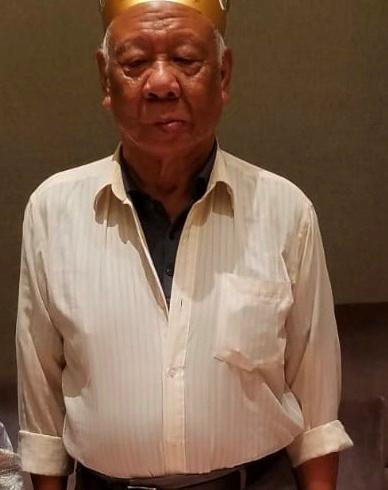
Appeal for information on missing man in Tsing Yi (with photo)

     Police today (December 12) appealed to the public for information on a man who went missing in Tsing Yi.

    Shek Ming-kwun, aged 81, went missing after he left his residence in Cheung Wang Estate yesterday morning (December 11). His family made a report to Police on the same day.
        
     He is about 1.68 metres tall, 77 kilograms in weight and of fat build. He has a round face with yellow complexion and short white hair. He was last seen wearing a black long-sleeved shirt, grey trousers and carrying a black shoulder bag.
    
     Anyone who knows the whereabouts of the missing man or may have seen him is urged to contact the Regional Missing Person Unit of New Territories South on 3661 1173, 9480 3644 or email to rmpu-nts-2@police.gov.hk, or contact any police station.

Photo  


LCQ1: RTHK as a public service broadcaster

     Following is a question by the Hon Hui Chi-fung and a reply by the Secretary for Commerce and Economic Development, Mr Edward Yau, in the Legislative Council today (December 12):
 
Question:

     The Report on Review of Public Service Broadcasting in Hong Kong published in 2007 has pointed out that the status and structure of Radio Television Hong Kong (RTHK) as a government department does not fit the bill of a public service broadcaster in full. It has been reported that in August this year, the Director of Broadcasting prohibited the News and Current Affairs of RTHK from televising live a speech delivered by the Convenor of the Hong Kong National Party. Some members of the public have queried that the incident has reflected that the Director of Broadcasting, in his capacity as a department head, can hardly safeguard the editorial independence of RTHK as a public service broadcaster, simply by virtue of the Charter of Radio Television Hong Kong (the Charter) signed by RTHK with the Chief Secretary for Administration and the Chairman of the Broadcasting Authority. On the other hand, the Government submitted a funding proposal to the Public Works Subcommittee of this Council at the end of 2013 for the construction of a New Broadcasting House to replace the existing three buildings which were aging, had obsolete facilities and had run out of space, and for RTHK to implement new services and projects to fulfill its mission as a public service broadcaster, but the funding proposal was subsequently negatived. In this connection, will the Government inform this Council:

(1) as it is stated in the Charter that RTHK will adhere to the editorial principles of being impartial in reflecting views and immune from commercial, political and/or other influences, whether the Government has assessed if the aforesaid act of the Director of Broadcasting has violated the spirit of the Charter; whether it will demand the Director of Broadcasting to undertake to continue to safeguard RTHK's editorial independence and keep RTHK immune from external interferences;

(2) of the measures in place to ensure that RTHK is provided with sufficient resources to fulfill its mission as a public service broadcaster; the follow-up work undertaken by the Government on the construction of the New Broadcasting House and the latest progress made; and

(3) whether it has studied the disestablishment of RTHK from the government structure and giving RTHK financial and operational autonomy, with a view to ensuring that RTHK will adhere to the editorial principle of being immune from political and commercial influences; if so, of the outcome; if not, the reasons for that?
 
Reply:

President,

     The Report on Review of Public Service Broadcasting in Hong Kong published in 2007 mentioned in the Hon Hui Chi-fung's question was prepared by the Committee on Review of Public Service Broadcasting, which had been appointed by the Government in 2006 to review the future development of public service broadcasting in Hong Kong. After extensive discussion and consultation, the Government made its decisions on the matter. In September 2009, the Government announced the way forward for Hong Kong's public service broadcasting and decided that Radio Television Hong Kong (RTHK) would undertake the work of Hong Kong's public service broadcaster and maintain its status as a Government department. Subsequently, in August 2010, the Government promulgated the Charter of RTHK (the Charter), which specifies the public purposes and mission of RTHK, the key programme areas of activities undertaken by RTHK and the modes of service delivery, thereby strengthening RTHK's governance.

     My reply to the various parts of the question raised by the Hon Hui Chi-fung is as follows:
 
(1) Aside from stipulating that RTHK is editorially independent and that it must adhere to the editorial principles of being impartial in the views it reflects and being immune from commercial, political and/or other influences, the Charter also clearly states that the Director of Broadcasting is RTHK's Editor-in-chief. RTHK has all along been committed to providing professional radio, television and new media services to the Hong Kong people in accordance with the Charter. As RTHK's Editor-in-chief, the Director of Broadcasting has been responsible for making the final editorial decisions in RTHK and accountable for editorial decisions taken by RTHK programme producers.

(2) The Government attaches great importance to public service broadcasting, and has allocated quite a lot of resources to RTHK to provide radio, television and new media services and to implement new development projects, including the launch and enhancement of digital terrestrial television broadcasting and the implementation of the Community Involvement Broadcasting Service. RTHK's expenditure rose from $469.9 million in 2010-11 to an estimated $1,012.5 million in 2018-19, representing an increase by 115 per cent. This is higher than the overall increase by 85 per cent in the Government's expenditure for the same period. As for manpower, RTHK's civil service posts of 738 in 2018-19 represent an increase by 41 per cent (or 215 posts) as compared with 2010-11. This is in comparison to an increase by 14 per cent in the Government's entire civil service establishment for the same period.

     As for the New Broadcasting House (New BH) project, the Government had submitted to the Public Works Subcommittee of the Legislative Council in December 2013 a funding application of $6 billion for the construction of the New BH in Tseung Kwan O. However, the application was negatived by the Legislative Council. Subsequently in January 2014, the Government reduced the cost to $5.3 billion in response to the request of the Subcommittee Members. Unfortunately, it was ultimately not supported by the majority of Subcommittee members. As such, the New BH project was unable to proceed on schedule as planned.

     RTHK and the Architectural Services Department have been examining the proposal, having regard to the views and concerns of the Legislative Council over the cost estimate and scope of the New BH project, with a view to working out a proposal that meets RTHK's operational requirements and can address Members' views.

     As the option of constructing a joint-user building is more cost-effective than an independent New BH, we have been exploring along this direction.
 
(3) With respect to Part 3 of the Hon Hui's question, the Government has no plan to conduct such a study.