Speech by SCED at Hong Kong International Tourism Convention (English only)

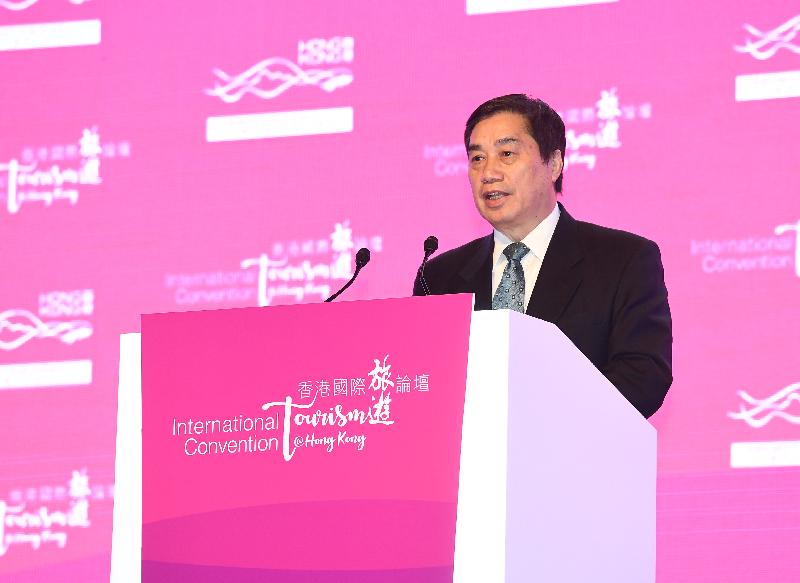
     Following is the speech by the Secretary for Commerce and Economic Development, Mr Edward Yau, at the plenary session on the implications of the Belt and Road Initiative on the development of international tourism of the Hong Kong International Tourism Convention today (December 12):
 
Ministers, excellencies, distinguished speakers,
 
     Since many speakers have spoken on the bigger picture, I am not going to overload you with further information. Perhaps as a host speaking on behalf of Hong Kong, I would like to share some observations on this very topic. I would start with a quote which might be irrelevant, a quote by a Greek philosopher from 3,000 years ago. He said, "No man ever steps in the same river twice, for it is not the same river and he is not the same man." However, it could be a very befitting description of the business we are in – tourism. Every day, we handle new visitors who come to the city for a new experience; at the same time, we are entertaining and receiving visitors coming for numerous times yet still looking for a new experience. I think that is exactly the challenge, and the difficulty, that cities like Hong Kong, Macao or cities in this region are facing.
 
     For Hong Kong, as you have heard, we are the world's number one destination eight years in a row, handling nearly 60 million visitors per year. Many of them might be coming to our city for the second, third or many times. We also have this very gigantic number, 60 million visitors, against 7.4 million of the total population, which is eightfold of our local residents. I believe some experiences Hong Kong has encountered might be of relevance to our common challenges in this business. So I will point out four areas.
 
     First, tourists these days begin their journey well before they set foot in a city. I say so because the tour journey starts usually not by plane, nor from any hotel, but actually it starts at the desktop computer, the cellphone, the pictures on Instagram or Twitter, through word of mouth and also comments on social media. So actually the journey starts well before they set off.
 
     My second observation is that tourists know far more than before, fortunately or unfortunately, not from official channels, but from, for instance, Twitter. I know Mr Hong (Founder of Lvmama and Chairman of Joyu Group, Mr Hong Qinghua) would have a lot to say. In fact, non-official information actually plays a more significant role than what we, the governments, are providing.
 
     The third observation is that tourists do not just come to see. The old description of "sightseeing" is a bit outdated because nowadays you can see a lot of things on the web. People come here to experience.
 
     Last but not the least, tourists these days instantly share their experience, real time, by split seconds, with their friends in other parts of the world. These are the major challenges that we are facing.
 
     I would also add that the typical Hong Kong experience in this business includes a highly internationalised tourist mix and a very large group of Mainland visitors. The Chief Executive mentioned just now that this year we might be seeing 60 million tourists coming to Hong Kong, with 47 million of them from the Mainland. The other 13 million are overseas visitors coming to Hong Kong, and although they capture a smaller share, it is not a small number by itself. So we are facing a very dynamic internationalised clientele coming to Hong Kong as tourists.
 
     The second experience that Hong Kong is having is that even Mainland visitors coming to Hong Kong are looking for some non-Mainland experience, because Hong Kong is not just another Chinese city. There is some uniqueness in every city, Hong Kong in particular.
 
     The third challenge we are facing is that tourism nowadays is highly cross-region and highly cross-culture. This is self-explanatory and I won’t go into details.
 
     Lastly, Hong Kong is taking advantage of the multi-destination travel that we are talking about in today's forum. Multi-destination means that people do not come to a single city for tourism experience. They are hopping on – using a place to go around. A figure that I can quote is that 49 per cent, almost half of the short haul visitors coming to Hong Kong are having multi-destination travel. For people coming here even for a very short while, say, a few days from nearby countries, almost half of them do not stop only in Hong Kong. So Secretary Tam's (Secretary for Social Affairs and Culture of Macao Special Administrative Region Government, Mr Alexis Tam) appeal for our friends to visit Macao is a reality. For long haul visitors, 88 per cent of them coming to Hong Kong are also multi-destination travellers. This backdrop gives us the context to talk about the Belt and Road Initiative and Greater Bay Area development.
 
     I would also share four observations and experiences with members here as a kick-off for the ensuing discussion. First, “every bridge connects”. I say this because Hong Kong is actually having the privilege of two major cross-boundary infrastructures commissioned in the last two months, the Express Rail Link (Hong Kong section of the Guangzhou-Shenzhen-Hong Kong Express Rail Link) and the Hong Kong-Zhuhai-Macao Bridge. I say "every bridge connects" to emphasise that infrastructures, particularly roads, railways, bridges, airports and sea ports, are important infrastructures supporting tourism. And to a certain extent, some of these infrastructures by themselves are also tourist attractions. For our case, the bridge connecting Hong Kong, Macao and Zhuhai is heavily patronised by first-time visitors, who come not just to Hong Kong, Macao and Zhuhai, but simply to have an experience of the bridge. In the initial months after the bridge opened, we had a survey which showed that about one-fifth of the visitors actually come for a single day, just to travel upon the bridge. It also says how important the investment in infrastructures that connect cities, regions and countries is, and how such investment boosts and changes the tourism landscape.
 
     The second observation also starts with "every”: "every visitor counts". That might be easier said than done. It might be just lip service, but with the experience I mentioned, with the very interesting background that we are having among our modern day visitors, every single visitor’s experience in a city or country actually counts. They bring back home their experience after visiting a city, and the experience they share and the comments they make on social media are also important. So that calls for a quick response from any government or tourism industry player in tackling problems, as well as leveraging on advantages. It also calls for inter-governmental co-ordination; streamlining of cross-boundary procedures; collaboration with the travel industry; enforcement of regulations and gauging tourists' feedback.
 
     The third observation also starts with "every": "every bit local". It is in fact a tagline we used in one of our tourist promotions in the Shum Shui Po area in Hong Kong, a very localised district. While the world is getting highly globalised, travellers and visitors tend to focus on things that are local rather than metropolitan or international. People simply like to travel, shop, eat or dine like a local. So we discover the cities with very interesting facets that might not be revealed to visitors in the old days. We are talking about local culture, local delicacies, local traditions, local festivals, local designs or street corner cafés. This is in fact relevant to the new tagline that we are using in rediscovering our city tourism.
 
     The final observation is "every difference makes a difference". Here I am talking about the diversity in any city and in our region. We are talking about rejuvenated heritage, in which Hong Kong, Macao and also Guangzhou have invested a lot. We are talking about the contrast between town and country. Yesterday night when I hosted a small dinner for incoming speakers, I talked about the "wow" factors created by the very stunning landscape on some of our coastline in the northeastern part of our territory, which surprised a lot of people as the common perception about Hong Kong is a metropolitan city. Actually, the hexagonal columns in the (Hong Kong UNESCO) Global Geopark in Sai Kung area are more spectacular than our skyscrapers on both sides of the harbour. These are the "wow" factors and differences that people coming to our city are getting. It also includes all the things about cross culture, about East meets West, and nature, which brings a contrast to a metropolitan city.
 
     To conclude, these are small things that might be too easy to neglect by policy makers or the tourism industry. But these are all little things that a big city destination like Hong Kong is facing day-in and day-out. But nothing is better than having all these dots connected and these experiences shared in the forum today. We hope this would be one of the dots that would connect Hong Kong with the neighbouring cities in the Greater Bay Area. We hope this would connect Hong Kong and the tourism industry around the world when we explore the vast markets along the Belt and Road. With these remarks, I am happy to join the panel discussion and I wish you all a very good day. Thank you.
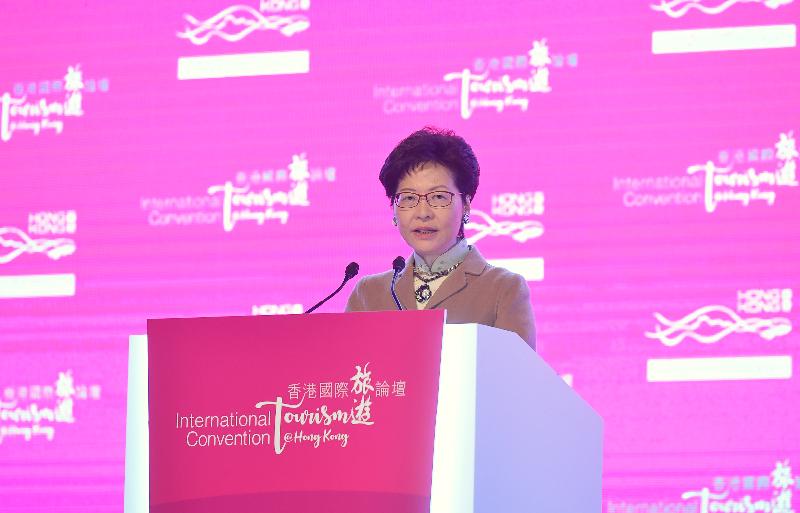
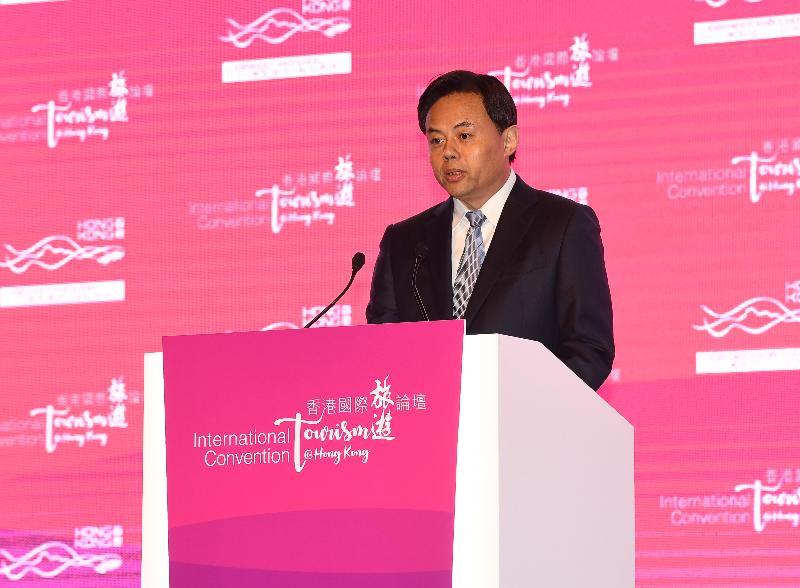
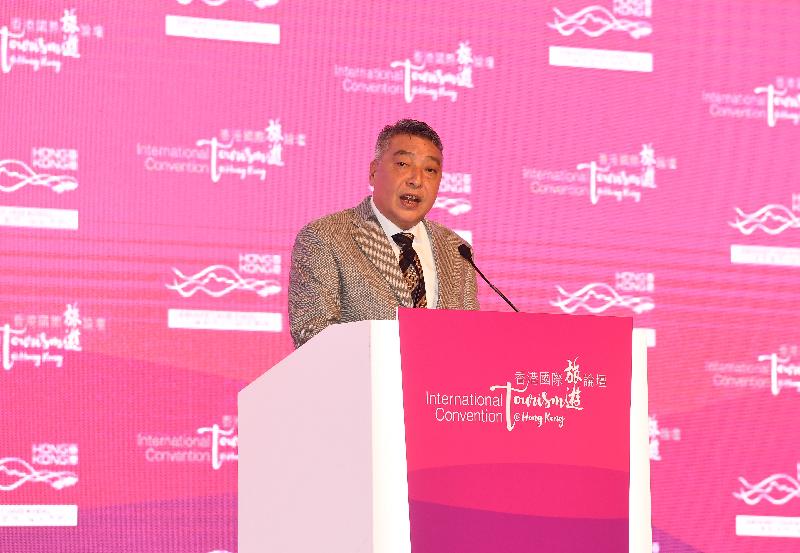
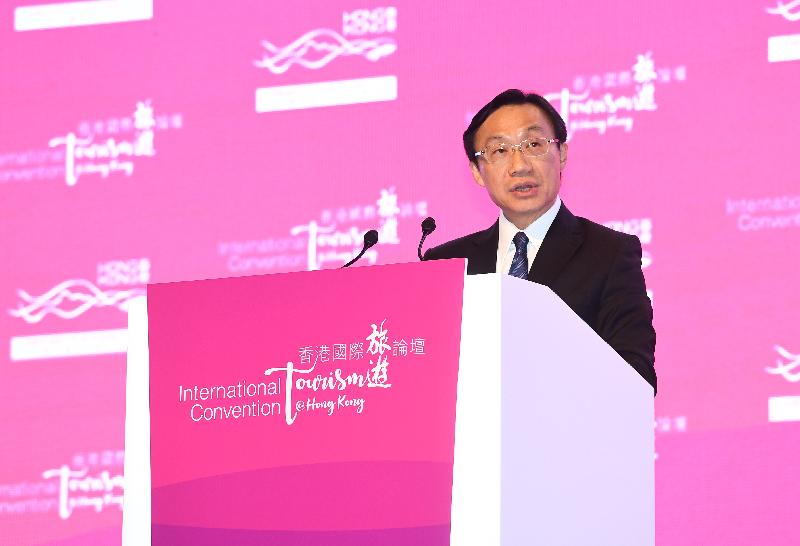
International tourism convention explores leveraging vast tourism potential of Belt and Road Initiative and Greater Bay Area development (with photos)

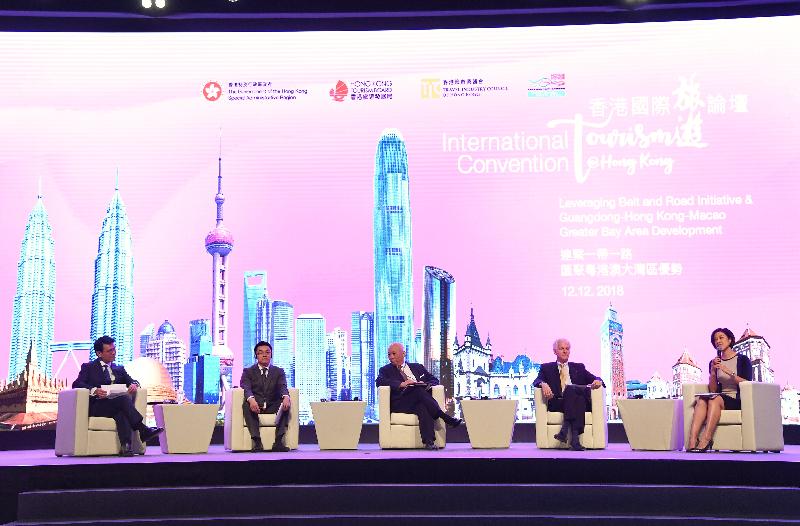
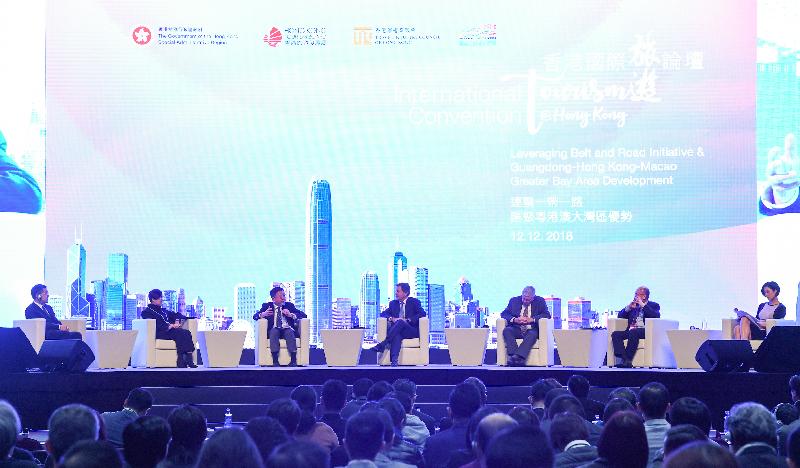
     The Hong Kong International Tourism Convention, jointly organised by the Government, the Hong Kong Tourism Board and the Travel Industry Council of Hong Kong, was successfully held today (December 12), providing a premier platform for over 1 000 participants from around the world to exchange views on leveraging the vast tourism potential of the Belt and Road Initiative and the Guangdong-Hong Kong-Macao Greater Bay Area development.
 
     Themed "Leveraging Belt and Road Initiative & Guangdong-Hong Kong-Macao Greater Bay Area Development", the Convention was attended by government officials, representatives of tourism authorities and trade members from the nine Mainland cities of the Greater Bay Area, the Macao Special Administrative Region and a number of other Mainland provinces, as well as 34 countries, including the Belt and Road countries.
 
     The Chief Executive, Mrs Carrie Lam, delivered an opening address at the Convention, followed by addresses from Member of the Leadership of the Ministry of Culture and Tourism Mr Yu Qun; the Vice Governor of Guangdong Province, Mr Xu Ruisheng; the Secretary for Social Affairs and Culture of the Macao Special Administrative Region Government, Mr Alexis Tam; and the Executive Director of the World Tourism Organization, Mr Zhu Shanzhong.
 
     Noting that developing people-to-people bonds is one of the five connectivities pertaining to the Belt and Road Initiative, and tourism exchange is a powerful means of promoting such bonds, Mrs Lam said multilateral co-operation is central to the Belt and Road Initiative and to tourism development, and multi-destination visits can be effective in developing regional tourism.
 
     "The Belt and Road Initiative is also about capacity building and sharing benefits. Hong Kong is an international hub for professional services, from financial and legal, to architectural, communications, transportation management and many more. We also run one of the largest hospitality and tourism schools in Asia. We have the expertise, the experience and the institutions to provide services to other economies along the Belt and Road on tourism infrastructure developments, as well as train professionals for the tourism industry," she said.
 
     Mrs Lam also pointed out that new infrastructure projects enhancing connectivity such as the Hong Kong section of the Guangzhou-Shenzhen-Hong Kong Express Rail Link, the Hong Kong-Zhuhai-Macao Bridge and the upcoming land control point at Liantang/Heung Yuen Wai can open up new opportunities barely reachable before and provide a solid foundation for Hong Kong to serve as an international gateway of the Greater Bay Area.
 
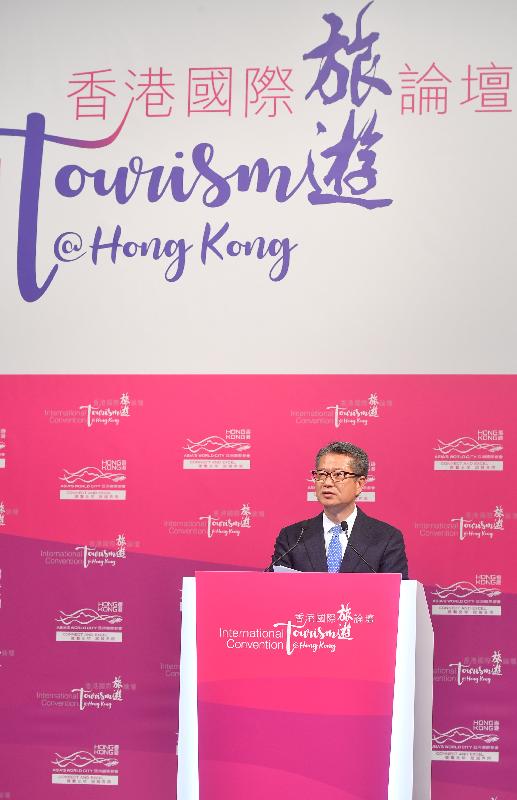
     After the opening session, two plenary sessions and a keynote luncheon were held. Speaking at the keynote luncheon, the Financial Secretary, Mr Paul Chan, said Hong Kong is committed to strengthening co-operation with different economies to promote tourism development, be it regionally or internationally.
 
     "The Belt and Road Initiative and the Greater Bay Area development, which are about collaboration and sharing benefits, have presented us with new potential. And Hong Kong as the world's most visited city, freest economy, top financial centre, safest city, and one which has one of the world's best educational facilities and the world's top hotel brands, is your ready partner to leverage on the opportunities offered by the two initiatives," he said.
 
     At the plenary session on the implications of the Belt and Road Initiative on the development of international tourism, the Secretary for Commerce and Economic Development, Mr Edward Yau, shared his observations on the tourism trend and Hong Kong's experience in coping with the challenges.
 
     Other speakers at the two plenary sessions included the Director General of the Department of Culture and Tourism of Guangdong Province, Mr Wang Yiyang; the Director of the Macao Government Tourism Office, Ms Maria Helena de Senna Fernandes; the Executive Director of the Hong Kong Tourism Board, Mr Anthony Lau; the Founder of Lvmama and Chairman of Joyu Group, Mr Hong Qinghua; the Chairman of the Board of the Ocean Park Corporation, Mr Leo Kung; the Chairman of Cathay Pacific Airways Limited, Mr John Slosar; the President and Managing Director, Asia Pacific of the Walt Disney Parks and Resorts, Mr Michael Colglazier; the Chief Executive Officer of the West Kowloon Cultural District Authority, Mr Duncan Pescod; and the Associate Dean and Chair Professor of Tourism, Mr and Mrs Chan Chak Fu Professor in International Tourism of the School of Hotel and Tourism Management of the Hong Kong Polytechnic University, Professor Song Haiyan.

Photo  Photo  Photo  Photo  Photo  Photo  Photo  Photo  Photo  


EMSD urges public to stop using three models of LDNIO extension unit (with photos)

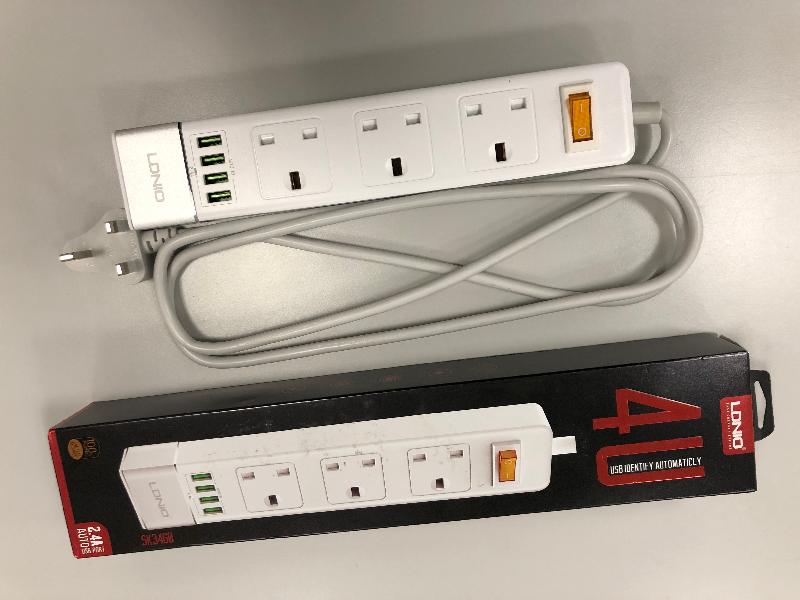
     The Electrical and Mechanical Services Department (EMSD) today (December 12) urged the public to stop using three models of LDNIO extension unit with the model numbers SK3460, SK3661 and SK3662.

     The EMSD recently found that the above three extension units do not comply with the relevant safety standards, including that the plug of each model was not fused and the flexible cords were undersized, thus posing an overheating safety hazard to users.

     These extensions units are supplied through the HKTV Mall on-line store. HKTV Mall has committed to notify the affected customers for recalling the products and will post notices announcing the recall arrangement on their website (www.hktvmall.com).

     As these extension units could possibly be supplied at other retail points in the market, the EMSD alerts members of the public not to purchase these products. The EMSD is further investigating the origin of these extension units.

     The EMSD also reminds the public to note during the purchase of extension units that the extension units should be in compliance with the relevant safety standards (e.g. marked with British Standard (BS1363)), and to use them properly for the sake of safety.

Photo  Photo  Photo  


Second round of FEHD anti-rodent operation in designated target areas concludes with fruitful results

     The Food and Environmental Hygiene Department (FEHD) concluded the second round of its anti-rodent operation in designated target areas in various districts on December 7. During the operation, the FEHD collected 1 006 dead rodents, caught 829 rodents in traps and took out 362 prosecutions. The operation effectively enhanced the rodent prevention and control work at the district level.
      
     An FEHD spokesman said, "The FEHD launched a two-month anti-rodent operation in designated target areas on October 8, and adopted multi-pronged strategies including improving environmental hygiene, rodent disinfestation and enforcement action to carry out targeted anti-rodent work. In the past two months, the FEHD strengthened rodent disinfestation work at problematic spots such as rear lanes, refuse collection points, markets, hawker bazaars, cooked food markets and peripheral areas of construction sites. The department placed poisonous baits and traps at 12 328 and 14 016 locations respectively, and destroyed 460 rat holes, with 1 006 dead rodents collected and 829 rodents caught in traps.
      
     "Apart from strengthening rodent elimination work, FEHD staff also enhanced street cleaning services and cleansing of public markets and hawker bazaars in the target areas, including sweeping and washing of streets and rear lanes, emptying and cleaning of litter containers, and clearance of miscellaneous articles and refuse on the streets, in public markets and at hawker bazaars, so as to keep the environment clean.
      
     "In addition, the FEHD stepped up inspections of food premises, markets, hawker bazaars and cooked food markets. Enforcement actions against food premises causing poor environmental hygiene conditions, food preparation and scullery at rear lanes and improper handling and disposal of rubbish were strengthened. The FEHD conducted 16 136 inspections, issued 2 495 health advisories, 1 182 verbal warnings, 48 warning letters, one statutory notice and 652 fixed penalty notices, and took out 362 prosecutions."
      
     Since the improper handling of food waste and remnants by food premises can give rise to rodent problems, the FEHD has started a five-week territory-wide special operation on December 10, just after the anti-rodent operation, to target irregularities of food premises such as food preparation, scullery, improper storage of articles, illegal disposal of refuse (including dumping of bagged refuse in small hours) at rear lanes, with a view to further enhancing the awareness of rodent prevention and control among the operators of food premises, by educating them to adopt measures to combat rodent problems and upkeep the hygiene condition of rear lanes as well as taking stringent enforcement action. The FEHD will also continue to step up cleansing and rodent elimination work at rear lanes, as well as public education and publicity.
      
     The spokesman said that cross sector co-operation is essential to sustaining effective rodent prevention and control. He called on the community to continue their support and participation in the anti-rodent work, and to eliminate the three fundamental survival conditions of rodents in their daily life, namely food, harbourage and passages, meaning the elimination of the food sources and hiding places of rodents as well as blockage of their dispersal routes.


Kowloon Hospital makes appeal regarding in-patient failing to return from home leave

The following is issued on behalf of the Hospital Authority:

     The spokesperson for Kowloon Hospital (KH) made the following appeal today (December 12) regarding an in-patient who failed to return from home leave.
 
     A male patient, aged 46, applied for home leave from the hospital but did not return to the hospital on schedule last Thursday (December 6). The patient did not provide any contacts for his relatives during his hospitalisation. To ensure timely medication treatment for the patient, the hospital reported the case to the Police for assistance on December 7 and will support the Police in the search.
 
     The patient is about 1.86 metres tall and of thin build, has short black hair and wears glasses. The hospital appeals to the public to contact the Police or call the hospital hotline (3129 7111) if they know the whereabouts of the patient.