LCQ19: Possession or use of caltrops for illegal purpose may contravene legislative provisions

     Following is a question by the Hon Andrew Wan Siu-kin and a written reply by the Acting Secretary for Security, Mr Sonny Au, in the Legislative Council today (January 23):
 
Question:
 
     It has been reported that some drivers have recently found a number of metal nails commonly known as "caltrops" or "crow’s feet" on the roads in the vicinity of Tsuen Wan and Sham Tseng. A number of vehicles had a blowout after running over such metal nails. Some members of the transport trade have pointed out that vehicles may lose control due to blowouts, which may subsequently cause traffic accidents. In this connection, will the Government inform this Council:
 
(1) whether the Police have so far made any arrest in relation to the aforesaid incidents, and whether the Police will step up its efforts in monitoring and patrolling the roads concerned;
 
(2) of the legislation violated by the act of placing sharp object(s) on roads; the number of persons who were prosecuted for that in the past five years; and
 
(3) whether "caltrop" is one type of "prohibited weapons" the possession of which is prohibited under the Weapons Ordinance (Cap 217); if so, of the number of persons prosecuted in the past five years for possession of "caltrops"; if not, whether any legislation is currently in place to regulate the possession, use and import of caltrops; if not, whether it will consider enacting such legislation?
 
Reply:
 
President,
 
     Placing sharp object(s) on roads resulting in bodily harm to other persons or damage to property is a serious offence. Having consulted the Transport and Housing Bureau, a reply to all parts of the question is provided as follows:

(1) Regarding the suspected "caltrops" recently found on Tuen Mun Road and Castle Peak Road, the Police have so far received five reports and collected eight "caltrops" from the road sections concerned. These cases are classified as criminal damage and are now under investigation by the District Crime Squad of Tsuen Wan District. No person has been arrested so far. On the other hand, the Police have enhanced patrol to the above road sections to protect the safety of road users. For the time being, no more similar metal nails have been found by the Police. 

(2) Placing sharp object(s) on roads may cause damage to passing vehicles, or even endanger driving safety and cause casualties.  Such acts may be liable to the offence of criminal damage under the Crimes Ordinance (Cap 200), the offences of assault occasioning actual bodily harm and wounding with intent to do grievous bodily harm under the Offences against the Person Ordinance (Cap 212). If death is caused by the incident, it may even be liable to murder or related offences.

     As regards figures of prosecution relating to the placing of sharp object(s) on roads, the Police do not keep such figures.

(3) Under section 4 of the Weapons Ordinance (Cap 217), "any person who has possession of any prohibited weapon commits an offence and is liable to a fine of $10,000 and to imprisonment for 3 years". "Prohibited weapon" means any weapon specified in the Schedule to the Weapons Ordinance, i.e. Chinese-style throwing dart, gravity knife, gravity-operated steel baton, knuckleduster whether spiked or not and with or without blade, Chinese-style fighting iron, spring-loaded steel baton, any knife the blade of which is exposed by a spring or other mechanical or electric device, and any bladed or pointed weapon designed to be used in a fashion whereby the handle is held in a clenched fist and the blade or point protrudes between the fingers of the fist. "Caltrop" is not in the Schedule.  

     Nevertheless, depending on the actual circumstances of the case and the evidence obtained, possession and/or use of "caltrop" may contravene other existing legislation.

     Under the Summary Offences Ordinance (Cap 228), any person who has in his possession any instrument fit for unlawful purposes, with intent to use the same for unlawful purposes, shall be liable to a fine of $5,000 or to imprisonment for 2 years. In addition, under the Public Order Ordinance (Cap 245), any person who, without lawful authority or reasonable excuse, has with him in any public place any offensive weapon shall be guilty of an offence and liable to imprisonment.
 
     Under the Crimes Ordinance (Cap 200), a person who without lawful excuse destroys or damages any property belonging to another shall be liable to imprisonment for 10 years. Furthermore, under the Offences against the Person Ordinance (Cap 212), assault occasioning actual bodily harm shall be liable to imprisonment for 3 years, and wounding with intent to do grievous bodily harm shall even be liable to imprisonment for life.
 
     As mentioned above, possession and/or use of "caltrop" for illegal purpose may contravene a number of existing legislative provisions. The existing legislation is adequate in regulating and penalising such acts. As such, there is no need to enact laws against "caltrop".


LCQ11: Commodities seized by Customs and Excise Department

     Following is a question by the Hon Chu Hoi-dick and a written reply by the Acting Secretary for Commerce and Economic Development, Dr Bernard Chan, in the Legislative Council today (January 23):
 
Question:
 
     The Import and Export Ordinance (Cap. 60) imposes controls on the import or export of strategic commodities. Moreover, in accordance with the United Nations Sanctions Ordinance (Cap. 537) and the relevant regulations, Hong Kong enforces sanctions imposed by the Security Council of the United Nations against certain countries. It was reported that when the authorities of the United States (US) announced, in 2016, the imposition of export restrictions on ZTE Corporation (ZTE), they had made public some internal confidential documents of ZTE which revealed ZTE's violation of US's export bans. It was mentioned in one of the documents that in 2008, as ZTE had violated Hong Kong's export control laws (made in line with the US laws), there were four separate occasions on which ZTE's cargos were seized and confiscated by the Customs and Excise Department (C&ED) and ZTE was fined. In this connection, will the Government inform this Council:

(1) of the details of the aforesaid four occasions of cargo seizure (set out in Table 1);

Table 1

  Date
of
seizure
Details of commodities Ordinance allegedly violated Penalty/
amount
of fine
Name
of
owner of commodities
Description
and
model number
Quantity
and
total
value
Category
of
controlled
commodities
Place
of
origin
Destination
of
export/
re-export
1                  
2                  
3                  
4                  

(2) of the respective numbers of cases of suspected violation of export control requirements in respect of which C&ED (i) conducted investigations and (ii) instituted prosecutions in the past five years, and the details of such cases (set out in Table 2 and Table 3); and

Table 2: Details of investigation cases

Date
of
seizure
Details of commodities Ordinance
allegedly violated
Description
and model number
Quantity
and
total value
Category
of
controlled
commodities
Place
of
origin
Destination
of
export/
re-export


Table 3: Details of prosecution cases

Date
of
seizure
Details of commodities Ordinance
allegedly violated/ found to have violated
Details
of penalty (if convicted)
Name of owner of commodities Description
and model number
Quantity
and
total
value
Category
of
controlled
commodities
Place
of
origin
Destination
of
export/
re-export


(3) among the investigation and prosecution cases mentioned in (2), of the number and details of those cases which involved the violation of the export requirements by exporting or re-exporting telecommunications products to Iran (set out in Table 4)?

Table 4

Date of seizure Description and model number of the telecommunications products Quantity and total value of the products Place of origin
       

Reply:
 
President,
 
     Hong Kong implements strategic trade control in accordance with the Import and Export Ordinance (Chapter 60, Laws of Hong Kong) (Ordinance). The Ordinance stipulates that the import, export and transhipment of strategic commodities are subject to licensing control. More sensitive items, despite being article-in-transit, also require to be covered by import and export licences.  Any person who imports or exports strategic commodities without a valid import or export licence commits an offence and is liable to an unlimited fine and to imprisonment for seven years on conviction. Offending strategic commodities seized are also subject to mandatory forfeiture.
 
     The Hong Kong strategic trade control lists are drawn up on the basis of the control lists adopted by relevant international non-proliferation regimes and conventions, and are set out in detail in the Schedules to the Import and Export (Strategic Commodities) Regulations (Chapter 60G, Laws of Hong Kong). The Government has all along implemented trade control on strategic goods in accordance with Hong Kong laws, and such efforts have been recognised and respected by our trading partners. Hong Kong will continue to maintain our robust trade control system in accordance with the law. Our law enforcement agencies will continue to conduct investigation in an impartial manner and in accordance with the law on any cases of suspected violation of the Ordinance.
 
     Individual countries may, based on their own consideration, implement unilateral control against certain other countries on products not set out in Hong Kong's strategic trade control lists. Hong Kong does not have the responsibility nor the legal basis to implement such unilateral controls.

     Our replies to the three parts of the question are as follows:
 
(1) The Government does not comment on individual cases.
 
(2) The Government does not comment on individual cases.
 
     Statistics on strategic commodity-related enforcement in the past five years, i.e. 2014 to 2018, is tabulated below:
 

  2014 2015 2016 2017 2018
No. of licence verifications 2,732 3,090 2,899 3,046 3,527
No. of investigation cases 204 179 192 231 285
No. of prosecution cases 23 62 45 33 49
Fine (in  million dollars) 0.85 3.58 1.18 0.75 0.94
Value of forfeited goods
(in million dollars)
0 0.98 10.93 1.17 1.45

(3) In the past five years, i.e. 2014 to 2018, there was no strategic commodity-related prosecution case which involved export or re-export of telecommunication products to Iran.


LCQ3: Figures on subsidised sale flats projects

     Following is a question by Hon Tony Tse Wai-chuen and a reply by the Secretary for Transport and Housing, Mr Frank Chan Fan, in the Legislative Council today (January 23):
  
Question:
 
     In recent years, the various subsidised sale flats projects (subsidised projects) launched by the Hong Kong Housing Authority, the Hong Kong Housing Society and the Urban Renewal Authority have received overwhelming responses and have often been oversubscribed by dozens or even hundreds of times, resulting in slim chances for applicants to purchase flats. It is learnt that quite a number of members of the public have, in recent years, subscribed for the flats of the various subsidised projects for a number of times but in vain, and their home ownership aspirations have turned into feelings of disappointment and even despair. In this connection, will the Government inform this Council:
 
(1) of the number of applications received from each category of applicants (such as Green Form applicants and White Form applicants), and the number and percentage of each category of applicants who purchased a flat, in each sale exercise for the various subsidized projects launched since 2014;
 
(2) whether the authorities concerned have kept records on the cumulative number of times in the past that an applicant had made an application but was unsuccessful in purchasing a flat; if so, of the average and highest number of times in respect of the last sale exercise of each type of subsidised projects; if not, the reasons for that, and whether they will start keeping such figures; and
 
(3) whether the authorities concerned will suitably boost the chance to purchase a flat for those applicants who repeatedly failed to do so, for example, by offering an applicant, whenever the number of times for which he was not invited to select and purchase a flat has accumulated to three, an additional application number when he makes the next application, so that such applicants will have a greater chance to purchase flats; if not, of the reasons for that?

Reply:

President,
 
     My consolidated reply to various parts of the question raised by the Hon Tony Tse is as follows.
 
     According to the Long Term Housing Strategy (LTHS), public rental housing (PRH) is to serve as a "safety net" for the grassroots who cannot afford private rental housing; while the main purpose of providing subsidised sale flats (SSFs) is to enable low-to-middle-income families to meet their home ownership aspirations, and to provide an avenue for better-off PRH tenants to buy their own homes, thereby releasing their PRH units to those genuinely in need.
 
     To ensure the rational use of public resources, buyers of SSFs have to comply with the income and asset limits, while the pricing of SSFs is fixed in accordance with the new pricing mechanism, which was revised in June 2018. Under the revised pricing mechanism, the price discount based on the market value of SSFs is determined with reference to the affordability of eligible buyers .
 
     Since 2014, the Hong Kong Housing Authority (HA) has put up four batches of sale under new Home Ownership Scheme (HOS) and two batches of sale under Green Form Subsidised Home Ownership Scheme (GSH) involving about 14 700 flats. Amongst HOS applicants, an average of 90 per cent were White Form applicants whilst the percentage shares of buyers from different categories varied in different batches. Sales statistics on the SSFs of HA, the Hong Kong Housing Society (HKHS) and the Urban Renewal Authority (URA) are summarised at Annex.
 
     In line with HA's established policy and procedures, its Subsidised Housing Committee (SHC) will annually review the housing and non-housing expenditure required for an ordinary family to purchase a reasonably sized flat in the private sector annually in setting the latest HOS income and asset limits. SHC will then decide on the sale of HOS and GSH flats located at different districts and the selling prices of flats according to the pricing mechanism. Sales arrangements including priority of flat selection for applicants under different categories will also be drawn up based on operational experience and the latest situation in society. Since the resumption of the sale of HOS in 2014, HA has been according the highest priority to applicants affected by the Government's clearance programme(s), followed by applicants with elderly members, family applicants, and so on.
 
     As the income and asset limits of eligible HOS buyers for each year; the locations, the number of flats for sale as well as selling prices of HOS and GSH flats; and the priority of flat selection for various categories of buyers, differ each year, it has been HA's established practice to openly invite applications from eligible applicants of HOS and GSH and announce details of the sales and application arrangements in each sale exercise. Upon receipt of all applications, HA will conduct an open ballot to determine the priority of flat selection for the applicants. Similar sales arrangements are also adopted by HKHS and URA.
 
     HA, HKHS and URA have not kept records of the number of unsuccessful applications submitted by individual SSF applicants mainly because no priority has been accorded to this type of applicants.
 
     According to the findings of HA's surveys on applicants of the Sale of HOS Flats, each sale exercise covered both first-time applicants as well as those whose applications had been unsuccessful in previous round(s). Taking the Sale of HOS Flats 2017 as an example, among the unsuccessful applicants, 63 per cent claimed that they had not applied for the Sale of HOS Flats 2014 and the Sale of HOS Flats 2016; 19 per cent claimed that they had applied for the Sale of HOS Flats 2014 only; 7 per cent claimed that they had applied for the Sale of HOS Flats 2016 only; while the remaining 10 per cent claimed that they had applied for both. Such information has been uploaded onto HA's website.
 
     As to whether the number of times a buyer has applied for SSFs in the past should be adopted as a criterion for determining the buyer's priority for purchasing, our initial view is that the following factors should be considered:
 

  1. According a higher priority to applicants with more previous applications means a lower priority for applicants of other categories, such as those under the Priority Scheme for Families with Elderly Members and one-person applicants who did not apply in previous round(s). Is this arrangement in line with the principle of allocating public resources to those who with a greater need?
     
  2. According a higher priority to those with more previous applications will attract more applicants for SSFs, including those who are less in need or less interested in purchasing SSFs, to submit their applications earlier in a bid to obtain a higher priority for purchase in the future.This will make it more difficult for families with a greater need for purchasing SSFs.

     As mentioned above, HA will review the various arrangements of SSFs from time to time, and take into account views from various parties. Thank you Chairman.


Hong Kong Customs seizes suspected smuggled bird nest (with photos)

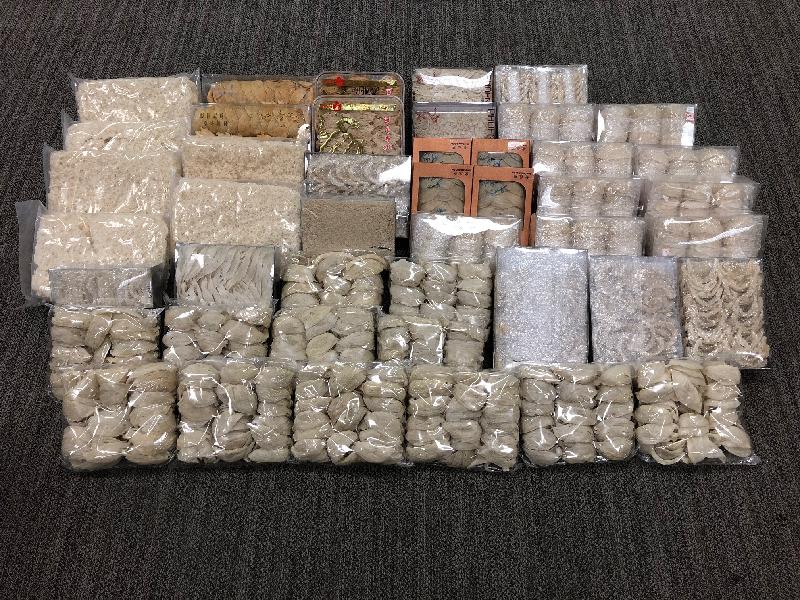
     Hong Kong Customs yesterday (January 22) seized about 25 kilograms of suspected smuggled bird nest with an estimated market value of about $850,000 at Lok Ma Chau Control Point.

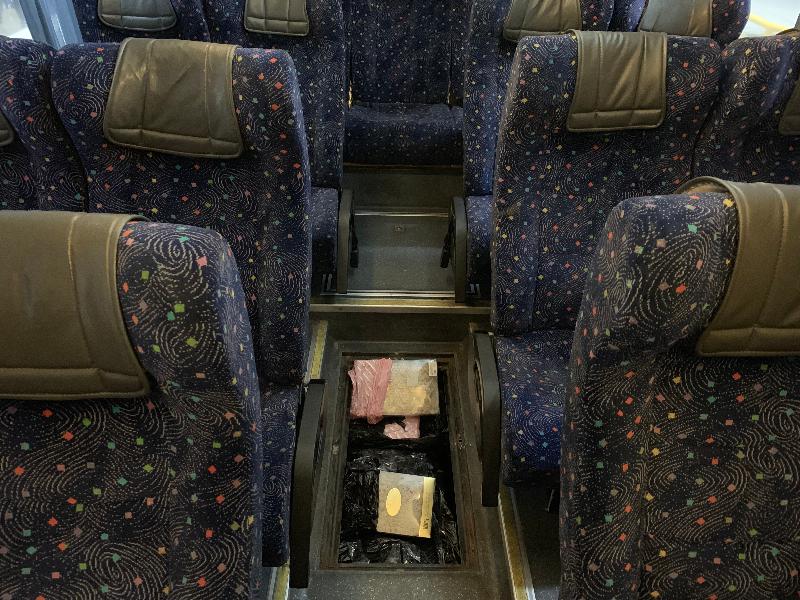
     Customs officers intercepted an outgoing coach at Lok Ma Chau Control Point for inspection yesterday and seized the batch of bird nest under the floor platform in the cabin.

     The 53-year-old male driver was arrested. Investigation is ongoing.

     Smuggling is a serious offence. Under the Import and Export Ordinance, any person found guilty of importing or exporting unmanifested cargo is liable to a maximum fine of $2 million and imprisonment for seven years.

     Members of the public may report any suspected smuggling activities to Customs' 24-hour hotline 2545 6182 or its dedicated crime-reporting email account (crimereport@customs.gov.hk).

Photo  Photo  


EMSD releases lift and escalator contractors’ latest performance ratings

     The Electrical and Mechanical Services Department (EMSD) today (January 23) announced the performance ratings of the registered lift and escalator contractors for the past 12 months (from January 2018 to December 2018) for public reference.
      
     According to the rating results, 28 registered lift contractors and 26 registered escalator contractors were awarded the Safety Star. Among these contractors, 15 registered lift contractors and 19 registered escalator contractors had not been found non-compliant with the safety and maintenance requirements as reported in the last two consecutive announcements of performance results, and were therefore given the highest rating of five Quality Stars. The EMSD conducted 14,617 inspections of lifts and escalators during the period.
      
     The rating results, conviction records, summaries of the warning letters and equipment failure records are available on the EMSD's website (www.emsd.gov.hk/emsd/eng/pps/le_pub_mpr.shtml).