SFH visits Kowloon City District (with photos)

     The Secretary for Food and Health, Professor Sophia Chan, today (January 29) visited Kowloon City District to learn more about elderly services and environmental hygiene condition in the district. She also exchanged views with members of the Kowloon City District Council on various local issues.

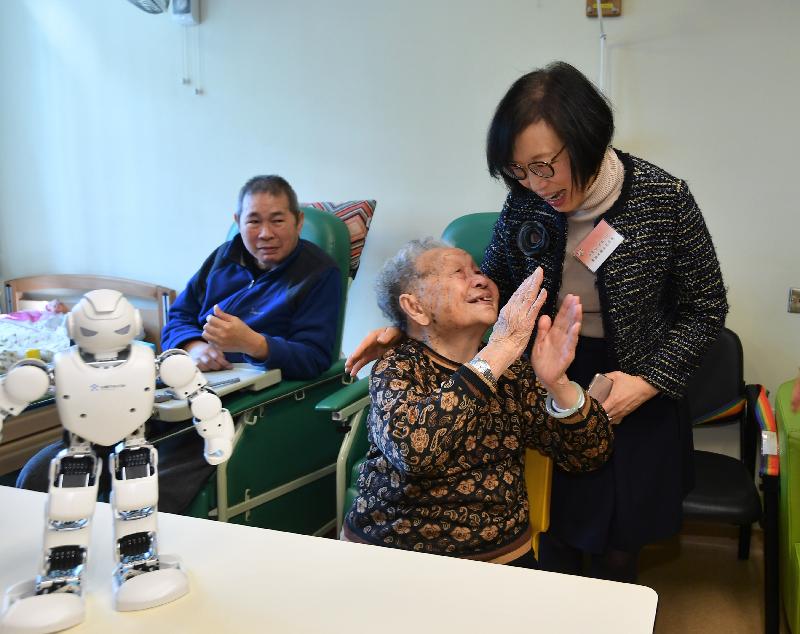
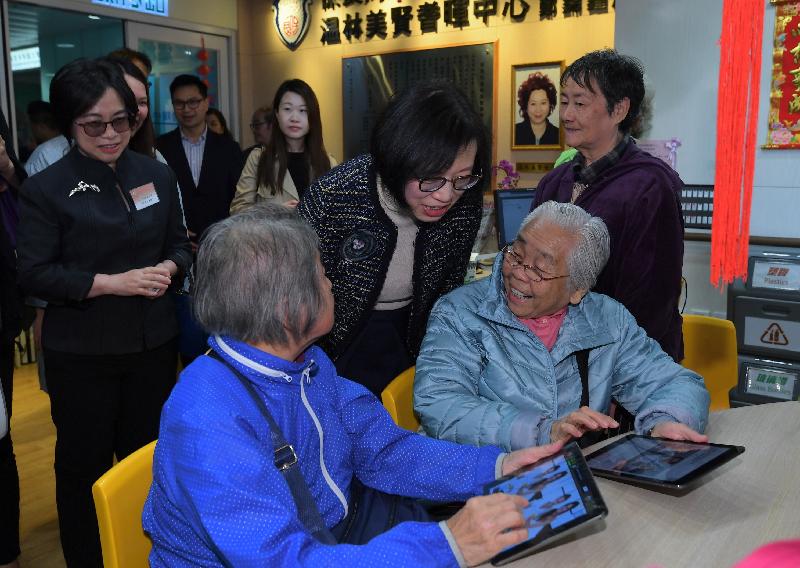
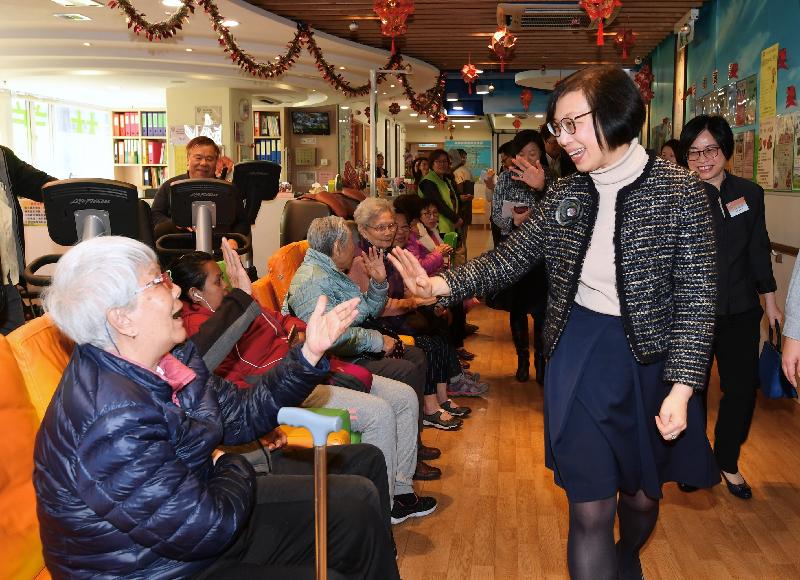
     Accompanied by the Chairman of the Kowloon City District Council (KCDC), Mr Pun Kwok-wah, and the District Officer (Kowloon City), Mr Franco Kwok, Professor Chan visited the Po Leung Kuk Wan Lam May Yin Shirley Neighbourhood Elderly Centre to learn about the operation of its elderly voluntary progarmmes, Elderly Volunteer Teams and Community Canteen. During the visit, Professor Chan chatted with senior citizens and exchanged views with them about participating in voluntary work. She also presented certificates to award-wining elderly people taking part in the Caring Neighbourhood Carnival.

     Being the first social welfare service unit in the Kai Tak Development Area in Kowloon City, the centre set up Elderly Volunteer Teams to encourage the elderly to participate in voluntary work, and identifies hidden elderly people in the district through continuous outreach services. The programmes provide the elderly with opportunities to serve the community and exemplify their sense of self-worth. The centre also operates Community Canteen to serve needy elderly in the district with high nutrition value and low cost hot meals three times a day.

     They then proceeded to the vicinity of Kowloon City Road, Sheung Heung Road and Ha Heung Road to inspect the situation of shop front extensions and the environmental hygiene of rear lanes in order to have a better understanding of the joint operations conducted by the Kowloon City District Office (KCDO), the Food and Environmental Hygiene Department and other relevant departments to improve environmental hygiene and combat shop front extension.

     "The Government earlier implemented a pilot scheme in rear lanes of Kowloon City Road and their vicinity. A series of improvement measures including strengthening inspection and clearance of refuse, increasing cleaning frequencies in rear lanes, leveling irregular ground surfaces and repairing broken drains. The KCDO will continue to closely monitor the situation and co-ordinate the work of different departments to improve environmental hygiene in the district.

     "The Government attaches great importance to the environmental hygiene of the districts. We will adopt a multi-pronged approach to further promote inter-departmental collaboration to enhance environmental hygiene and cleanliness with a view to improving our cityscape," Professor Chan said.

     To conclude the visit, Professor Chan met with KCDC members to listen to their views on various medical and environmental hygiene issues.
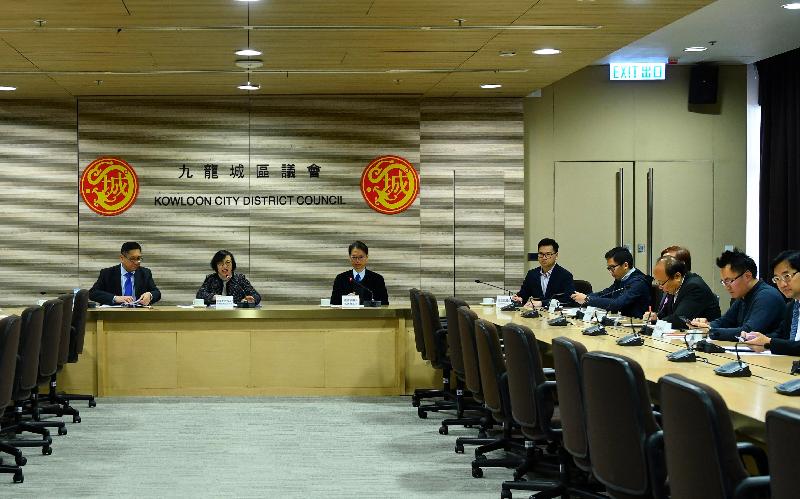
Photo  Photo  Photo  Photo  Photo  


CHP investigates case of severe paediatric influenza A infection

     The Centre for Health Protection (CHP) of the Department of Health (DH) is today (January 29) investigating a case of severe paediatric influenza A infection.

     The case involves a 2-month-old baby boy with good past health, who has presented with fever, cough and runny nose since January 24. He was brought to the Accident and Emergency Department of Prince of Wales Hospital for medical attention on January 28 and was admitted and transferred to the paediatric intensive care unit of the hospital for further management on the same day. His nasopharyngeal aspirate tested positive for influenza A virus upon laboratory testing. The clinical diagnosis was influenza A infection complicated with severe pneumonia. He is now in a serious condition.

     Initial enquiries revealed that the patient had no travel history during the incubation period. His grandparents and a male relative had upper respiratory tract infection symptoms recently, and they sought medical attention and have been in a stable condition. No hospitalisation is required. His other home contacts have remained asymptomatic so far.

     The CHP's investigations are ongoing.

    "The latest surveillance data indicated that the local seasonal influenza activity may remain at an elevated level for some time. We urge the community to continue heightening its vigilance against seasonal influenza. As young children are particularly affected in this influenza season, we appeal to parents who have not yet arranged vaccination for their children in this season to do so as soon as possible to strengthen their personal protection," a spokesman for the DH said.

     Apart from children, people aged 50 to 64 years, the elderly and those with underlying illnesses who have not yet received influenza vaccination this season are also urged to get vaccinated as early as possible to prevent seasonal influenza as it takes about two weeks for antibodies to develop in the body after vaccination. Medical advice should be sought promptly if influenza-like symptoms develop so that appropriate treatment can be initiated as early as possible to prevent potential complications. Parents and carers are reminded to render assistance in prevention, care and control for vulnerable people.

     Besides receiving seasonal influenza vaccination as early as possible for personal protection, the public should maintain good personal and environmental hygiene for protection against influenza and other respiratory illnesses. For more information, please visit the CHP's influenza page and weekly Flu Express.


Management company of Fu Heng Market in Tai Po convicted for illegal wastewater discharge

     Fu Heng Market in Tai Po illegally discharged substandard wastewater. Bright Lamp Industrial Limited, which is responsible for management of the premises, was fined $8,000 by Fanling Magistrates' Courts today (January 29) for contravening the Water Pollution Control Ordinance (WPCO).

     The Environmental Protection Department (EPD) received a complaint from a member of public last July about the discharge of wastewater from Fu Heng Market. After inspection, the EPD officers found that the wastewater discharged by one of the grease traps at Fu Heng Market was turbid and greasy, and suspected that the grease trap was not operating properly. The EPD officers then collected wastewater samples for analysis and the results showed that the concentration of oil and grease exceeded the upper limits of the relevant statutory discharge standards by nearly double. After evidence gathering, the EPD prosecuted the property management company of Fu Heng Market in accordance with the WPCO.

     A spokesperson for the EPD reminded all property management companies that they should arrange regular inspection, repair and maintenance of the wastewater treatment facilities for premises under their management. They should also ensure the proper operation of these facilities and strictly adhere to the relevant discharge standards as stipulated in the licence to avoid polluting the river channel or blocking the public sewers downstream by oil and grease discharged, which may result in overflow of wastewater and adversely affect environmental hygiene.

     Under the WPCO, anyone who discharges substandard commercial or industrial wastewater into communal sewers or communal storm drainage system commits an offence. First-time offenders are liable to a maximum fine of $200,000 and six months' imprisonment. A maximum fine of $400,000 and six months' imprisonment may be imposed on second or subsequent convictions.


Exchange Fund Position at end-December 2018

The following is issued on behalf of the Hong Kong Monetary Authority:
 
    The Hong Kong Monetary Authority (HKMA) today (January 29) published the unaudited financial position of the Exchange Fund at end-December 2018.
 
     The Exchange Fund recorded an investment income of HK$13.9 billion in 2018. The main components were:
 

  • gains on bonds of HK$57.4 billion;
  • losses on Hong Kong equities of HK$20.7 billion;
  • losses on other equities of HK$38.3 billion;
  • negative currency translation effect of HK$9.0 billion on non-Hong Kong dollar assets (Note 1); and
  • gains on other investments of HK$24.5 billion (Note 2).

     Fees on placements by the Fiscal Reserves and placements by HKSAR government funds and statutory bodies were HK$43.8 billion (Note 3) and HK$13.8 billion respectively in 2018 (the rate of fee payment is 4.6 per cent for 2018). After deducting all expenses and fees, the Accumulated Surplus of the Exchange Fund recorded a decrease of HK$113.7 billion (Annexes 1 and 2).
 
     The Abridged Balance Sheet shows that the total assets of the Exchange Fund increased by HK$44.1 billion, from HK$4,015.3 billion at the end of 2017 to HK$4,059.4 billion at the end of 2018. The increase was mainly attributable to increased placements by the Fiscal Reserves.
 
     The Exchange Fund recorded an investment return of 0.3 per cent in 2018 (Note 4). Specifically, the Investment Portfolio recorded a negative rate of return of 2.4 per cent, while the Backing Portfolio gained 2.1 per cent. The Long-Term Growth Portfolio (LTGP) recorded an annualised internal rate of return of about 13.8 per cent since its inception in 2009 up to the end of September 2018.
 
     Commenting on the performance of the Exchange Fund in 2018, the Chief Executive of the HKMA, Mr Norman Chan, said, "Looking back, several risk factors (including the pace of interest rate normalisation in the US, the negative impact of the US government's foreign trade policy and protectionism on global trade, and geopolitical risks), which had been under-priced by the markets, materialised one after another during the year, and there were considerable volatilities and adjustments in global financial markets. Despite a combination of falling equity prices, rising bond yields and a strong US dollar, the Exchange Fund managed to record a positive investment income of HK$13.9 billion in 2018, instead of a loss."
 
     Looking ahead, Mr Chan said, "It is very likely that the investment environment in 2019 will remain as unpredictable and difficult as in 2018. First, the global economy and financial markets will continue to be affected by the US-China trade tension. There are no winners in a trade war. The deteriorating market sentiment and slowing investment activities last year reflected to a large extent the market concerns on such a situation. Furthermore, the macroeconomic environment and financial markets in Europe will be badly hit in case of a 'hard' Brexit. Last but not least, the future direction of the US economic and monetary policies is unclear. Recently, there have been increasing market concerns about the US economy beginning to slow down. Emerging market economies including Mainland China are also facing increasing downside risks. All these risk factors will bring about greater uncertainties and potential risks to the global macroeconomic environment and asset markets.
 
     The HKMA will continue to manage the Exchange Fund prudently. We will monitor market developments closely and enhance our defensive measures as and when appropriate. We will also continue to diversify our investments so as to further strengthen the Exchange Fund's resilience against market volatilities."
 
Note 1:  This is primarily the effect of translating foreign currency assets into Hong Kong dollar after deducting the portion for currency hedging.
Note 2:  This is the valuation change of investments held by investment holding subsidiaries of the Exchange Fund.  This figure represents valuation changes up to the end of September 2018.  Valuations of these investments from October to December are not yet available.
Note 3:  This does not include the 2018 fee payment to the Future Fund because such amount will only be disclosed when the composite rate for 2018 is available.
Note 4:  This return excludes the performance of the Strategic Portfolio and only includes the performance of LTGP up to the end of September 2018. The audited full year return will be disclosed in the 2018 annual report to be released later this year.


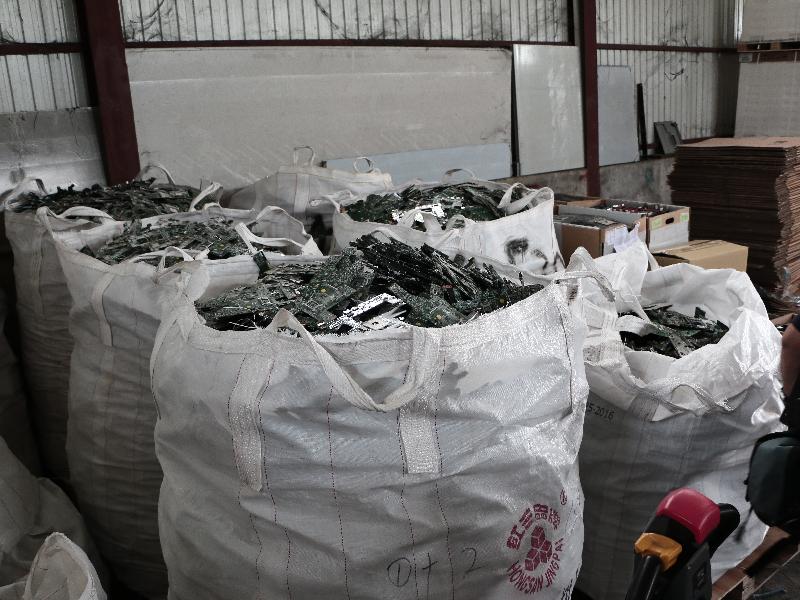
EPD detects illegal import and storage of hazardous electronic waste by importer (with photos)

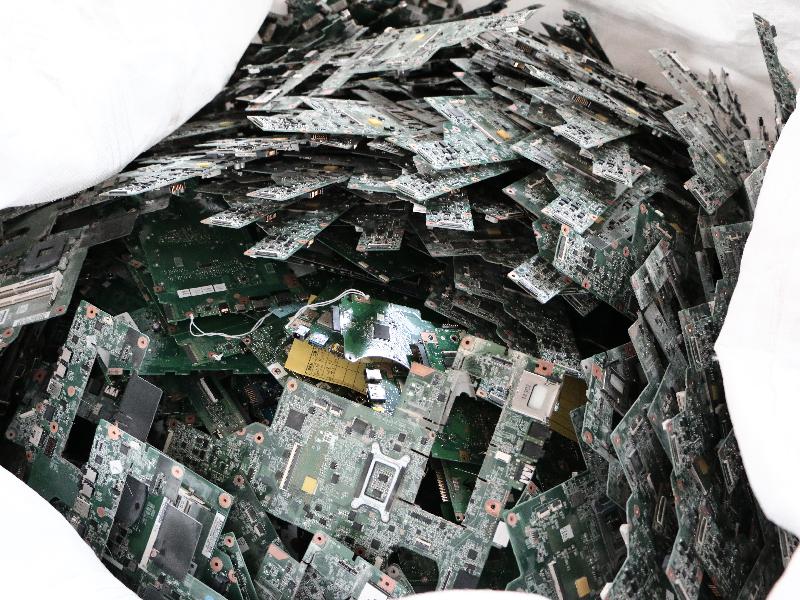
     YCHANG (HK) Limited illegally imported and stored waste printed circuit boards (PCBs), which are classified as chemical waste. The company was convicted and fined a total of $21,000 at Fanling Magistrates' Courts today (January 29) for contravening the Waste Disposal Ordinance (WDO) and the Waste Disposal (Chemical Waste) (General) Regulation (the Regulation).

     With the assistance of the Customs and Excise Department, enforcement officers of the Environmental Protection Department (EPD) intercepted an imported container from Shanghai at the Kwai Chung Container Terminals in July last year. The container was claimed to contain computer parts, but upon inspection was found to be loaded with a batch of hazardous electronic waste (e-waste) comprising waste PCBs. The EPD immediately sent back the intercepted container to its place of origin and notified the relevant Mainland authority to follow up. The department also instigated prosecution against the importer in accordance with the WDO.

     During the investigation of the above case, the EPD also successfully traced a recycling site in Fanling operated by that company. It was found that the site illegally stored waste PCBs, which are classified as chemical waste. The total weight of the waste PCBs was about 2 tonnes, with a market value of about $200,000. After evidence gathering, the EPD also laid additional relevant charges against the importer concerned in accordance with the Regulation.

     An EPD spokesman stressed that waste PCBs, LCD monitors and cathode ray tubes are hazardous e-waste, containing heavy metals and other toxic chemical substances. They are classified as chemical waste and must be properly handled. Otherwise, they will pollute the environment and pose a risk to the health of relevant trade practitioners and the general public. The EPD will continue to combat the illegal collection, storage, disposal or import of hazardous e-waste by recycling sites. First-time offenders are liable to a maximum fine of $200,000 and six months' imprisonment. For subsequent offences, offenders are liable to a maximum fine of $500,000 and two years' imprisonment.

     Members of the public may visit the EPD's website for more information about the control of chemical waste: www.epd.gov.hk/epd/english/environmentinhk/waste/guide_ref/guide_cwc.html.

Photo  Photo