CFS announces food safety report for December 2018 and summary of food surveillance programme for 2018

     The Centre for Food Safety (CFS) of the Food and Environmental Hygiene Department today (January 31) released the findings of its food safety report for last month (December 2018). The results of about 11 600 food samples tested were found to be satisfactory except for 13 unsatisfactory samples which were announced earlier. The overall satisfactory rate was 99.9 per cent.
 
     A CFS spokesman said about 900 food samples were collected for microbiological tests, some 2 100 samples were taken for chemical tests and the remaining 8 600 (including about 8 300 taken from food imported from Japan) were collected to test radiation levels.
 
    The microbiological tests covered pathogens and hygienic indicators, while the chemical tests included pesticides, preservatives, metallic contaminants, colouring matters, veterinary drug residues and others.
 
     The samples comprised about 2 500 samples of vegetables and fruit and their products; 500 samples of meat and poultry and their products; 1 700 samples of aquatic and related products; 600 samples of milk, milk products and frozen confections; 800 samples of cereals, grains and their products; and 5 500 samples of other food commodities (including beverages, bakery products and snacks).
 
     The 13 unsatisfactory samples comprised two dried shrimp samples, a pickled mustard sample and a candied lotus seed sample found to contain sulphur dioxide exceeding the legal limits; two fresh pork samples detected with sulphur dioxide; two vegetable samples detected with pesticide residues exceeding the legal limits; a ling fillet sample and a tuna sample detected with excessive mercury; a date sample found to contain sulphur dioxide undeclared on its food label; an oat wrap sample found to contain sorbic acid; and a grass carp sample found to contain traces of malachite green.
 
     The CFS has taken follow-up action on the unsatisfactory samples including informing the vendors concerned of the test results, instructing them to stop selling the affected food items and tracing the sources of the food items in question.
 
     Since the Pesticide Residues in Food Regulation (Cap 132CM) came into effect on August 1, 2014, as of December 31 last year, the CFS had taken over 164 000 food samples at import, wholesale and retail levels for testing for pesticide residues. The overall unsatisfactory rate is less than 0.2 per cent.
 
     The spokesman added that excessive pesticide residues in food may arise from the trade not observing Good Agricultural Practice, e.g. using excessive pesticides and/or not allowing sufficient time for pesticides to decompose before harvesting. The maximum residue limits (MRLs) of pesticide residues in food set in the Regulation are not safety indicators. They are the maximum concentrations of pesticide residues to be permitted in a food commodity under Good Agricultural Practice when applying pesticides. In this connection, consumption of food with pesticide residues higher than the MRLs will not necessarily lead to any adverse health effects.
 
     The spokesman reminded the food trade to ensure that food is fit for human consumption and meets legal requirements. Consumers should patronise reliable shops when buying food and maintain a balanced diet to minimise food risks.
 
Summary of food surveillance programme for 2018
———————————————————-
 
     Concluding the food surveillance programme for 2018, the spokesman said that apart from routine food surveillance, the CFS conducted a number of targeted as well as seasonal and popular food surveillance projects.
 
     "In addition to about 93 600 samples of imported Japanese food taken for testing of radiation levels in response to the Fukushima nuclear power plant incident in Japan, about 66 000 samples were tested by the CFS last year. The overall satisfactory rate was 99.8 per cent, which was comparable to the results in recent years. This indicates that food safety has been maintained at a high standard in Hong Kong.
 
     "The exceedances or breaches for most of the unsatisfactory samples were not serious and would not pose adverse health effects to the general public. For individual food items with unsatisfactory test results, the CFS has taken prompt and effective risk management action to safeguard public health," he said.
 
     He added that in planning the food surveillance programme, the CFS would always take into consideration a number of factors such as the food consumption level and the risk of the food concerned in deciding on the number of samples to be tested and the frequency of sampling as well as the testing parameters. In addition, the CFS would also adjust its food surveillance programmes and strengthen relevant testing with regard to local and overseas food incidents as well as past surveillance data, in particular breaches of regulatory requirements that occurred more frequently, so as to safeguard food safety in Hong Kong.


Suspected red tide sighted at Silverstrand Beach

Attention TV/radio announcers:

Please broadcast the following as soon as possible:

     Here is an item of interest to swimmers.

     The Leisure and Cultural Services Department announced today (January 31) that due to a suspected red tide sighting, the red flag has been hoisted at Silverstrand Beach in Sai Kung District. Beach-goers are advised not to swim at the beach until further notice.


Proper use of 999 hotline urged

     Police today (January 31) appealed to members of the public to use the 999 hotline service only for emergencies.

     In 2018, the Police Regional Command and Control Centres received 2,187,619 calls, of which only about 66.6 per cent, or 1,456,853 calls, were genuine. The remaining 730,766 were nuisance calls or misdialled.

     A Police spokesman said that misuse of the emergency hotline would delay the handling of genuine emergencies. It could also endanger the lives of people at risk by postponing their access to the service.

     The spokesman added that police stations in various districts could promptly handle most crime reports and requests of a non-emergency nature. Members of the public are advised to seek assistance from police stations.

     Police contact cards listing the telephone and fax numbers of all police stations as well as Police Hotlines are available for collection at police stations and Home Affairs Enquiry Centres of the Home Affairs Department. The list of contact numbers can also be found on the Police Public Page (www.police.gov.hk) and the Hong Kong Police Mobile Application.


Public reminded not to bring in endangered species without required licence (with photos)

     The Agriculture, Fisheries and Conservation Department (AFCD) and Hong Kong Customs today (January 31) reminded travellers not to bring endangered species into Hong Kong without a required licence when returning from visits to other places.

     Under the Protection of Endangered Species of Animals and Plants Ordinance (Cap 586), the import, export, re-export or possession of endangered animals and plants, including their parts and/or derivatives, are subject to control under a licensing system. The penalties under the Ordinance have been increased since May 1, 2018. Any person importing, exporting or possessing specimens of endangered species not in accordance with the Ordinance will be liable to a maximum fine of $10 million and imprisonment for 10 years. The specimens will also be forfeited upon conviction.

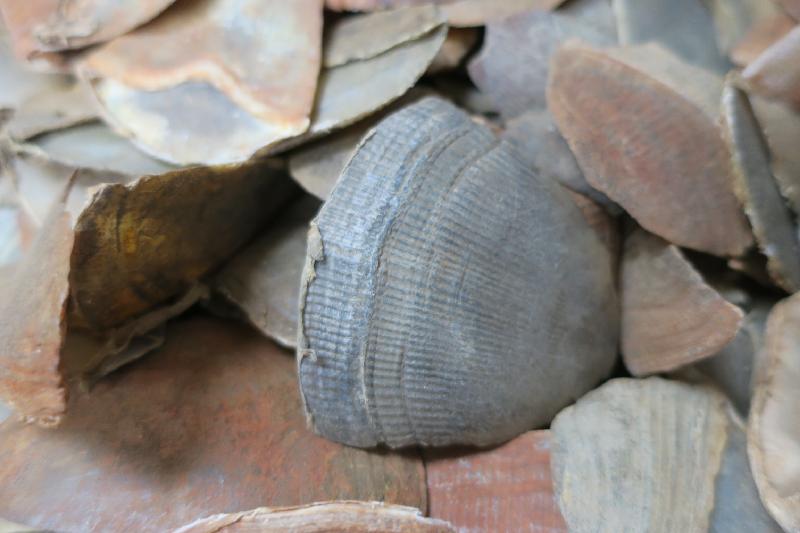
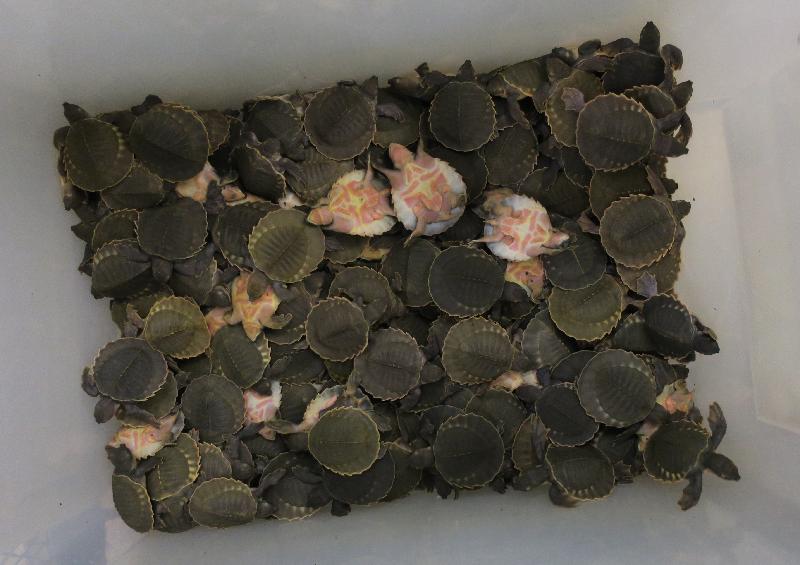
     An AFCD spokesman noted that more than 740 seizures were made at customs checkpoints in 2018. Some commonly encountered examples are ivory, live reptiles, pangolin scales, dried seahorse, American ginseng and orchids including artificially propagated species such as moth orchid. 

     The spokesman stressed that as some plant and animal species are facing the threat of extinction due to over-exploitation, import and export of such species are regulated under an international convention.

     As the Chinese New Year holiday is drawing near, the AFCD appealed to travellers to pay more attention when buying plant and animal products as souvenirs abroad. "There are examples of imprisonment sentences for bringing highly endangered species products, such as ivory, into Hong Kong. As it might not be easy to know which wildlife souvenirs are from endangered species, travellers are advised not to buy such items if they are not sure if the items are subject to control," the spokesman said.

     The AFCD and Customs will continue to work closely and step up their enforcement work in combating the illegal trade in endangered species.

     For details of the import of endangered species, please call 1823 or visit the website www.cites.hk.

Photo  Photo  Photo  Photo  


Appointments to Standing Committee on Company Law Reform

     The Financial Secretary has appointed two new members, Professor Low Chee-keong and Ms Christine Chung Wai-yin, to the Standing Committee on Company Law Reform (SCCLR). The Chairman of the SCCLR, Mr John Scott, SC, and eight incumbent members, namely Mr Bruno Arboit, Ms Linda Chan Ching-fan, SC, Mr Clement Chan Kam-wing, Ms Bonnie Chan Yiting, Mr David Fu Yat-hung, Ms Gillian Meller, Mr Keith Pogson and Mr Bernie Ting Wai-cheung, have been re-appointed.
 
     The appointments and re-appointments are for a term of two years starting from February 1, 2019.
 
     A government spokesman said today (January 31), "With the professional background and expertise of its members, the SCCLR has provided valuable advice on the improvement and modernisation of our company law to be commensurate with Hong Kong's status as an international commercial and financial centre.
 
     "We are grateful to the outgoing members, Professor David Donald and Ms Wendy Yung Wen-yee, for their valuable contributions to the SCCLR over the past six years," the spokesman added.
 
     The SCCLR was set up in 1984. It advises the Financial Secretary on amendments to the Companies Ordinance and the Companies (Winding Up and Miscellaneous Provisions) Ordinance, as well as amendments to the Securities and Futures Ordinance on matters relating to corporate governance and shareholders' protection, as and when necessary.
 
     As from February 1, 2019, the membership list of the SCCLR will be as follows:
 
Mr John Scott, SC (Chairman)
Mr Bruno Arboit
Ms Linda Chan Ching-fan, SC
Mr Clement Chan Kam-wing
Ms Bonnie Chan Yiting
Ms Christine Chung Wai-yin
Mr David Fu Yat-hung
Mr David Kidd
Mr Robert Lee Wai-wang
Professor Low Chee-keong
Dr Lewis Luk Tei
Ms Gillian Meller
Mr Albert Ng
Mr Keith Pogson
Mrs Natalia Seng Sze Ka-mee
Ms Cynthia Tang Yuen-shun
Mr Bernie Ting Wai-cheung
 
Ex-officio Members
————————-
 
Mr David Graham
Chief Regulatory Officer
Hong Kong Exchanges and Clearing Limited
 
Mr Stefan Gannon
Commissioner, Resolution Office
Hong Kong Monetary Authority
 
Mr Andrew Young
Chief Counsel
Securities and Futures Commission
 
Ms Ada Chung Lai-ling
Registrar of Companies
 
Ms Phyllis McKenna
Official Receiver
 
Ms Winnie Ng Ching-ching
Deputy Secretary for Financial Services and the Treasury (Financial Services)
Financial Services and the Treasury Bureau
 
Dr Stefan Lo Huoy-cheng
Senior Assistant Law Officer (Civil Law)
Department of Justice