Phishing email related to The Hongkong and Shanghai Banking Corporation Limited

The following is issued on behalf of the Hong Kong Monetary Authority:

     The Hong Kong Monetary Authority (HKMA) wishes to alert members of the public to a press release issued by The Hongkong and Shanghai Banking Corporation Limited on phishing email, which has been reported to the HKMA. Hyperlink to the press release is available on the HKMA website for ease of reference by members of the public.
 
     Anyone who has provided his or her personal information to the email concerned or has conducted any financial transactions through the email should contact the bank concerned using the contact information provided in the press release, and report to the Police or contact the Cyber Security and Technology Crime Bureau of the Hong Kong Police Force at 2860 5012.


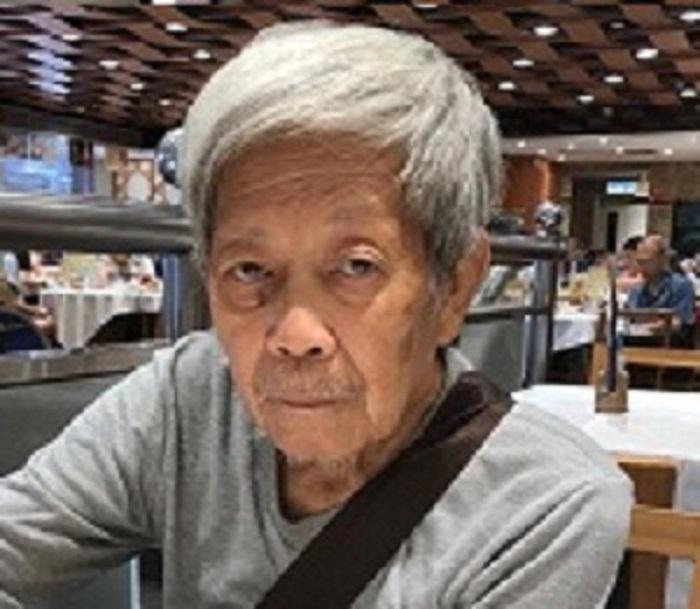
Appeal for information on missing man in Mong Kok (with photo)

     Police today (February 4) appealed to the public for information on a man who went missing in Mong Kok.

     Tse Kin-sun, Richard, aged 82, went missing after he was last seen at a restaurant on Nathan Road on February 1 afternoon. His friend made a report to Police on the same day.

     He is about 1.6 metres tall, 45 kilograms in weight and of thin build. He has a pointed face with yellow complexion and short white hair. He was last seen wearing a black vest, a green long-sleeved T-shirt, yellow shorts and green sports shoes.

     Anyone who knows the whereabouts of the missing man or may have seen him is urged to contact the Regional Missing Person Unit of Kowloon East on 3661 0316 or 9020 2746 or email to rmpu-ke-2@police.gov.hk, or contact any police station.

Photo  


Update on cases of Legionnaires’ disease

     The Centre for Health Protection (CHP) of the Department of Health today (February 4) reported the latest number of cases of Legionnaires' disease (LD), and stressed the importance of using and maintaining properly designed man-made water systems, and that susceptible groups should strictly observe relevant precautions.

     From January 27 to February 2, one community-acquired LD case was reported. The male patient, aged 55 with underlying illnesses, lives in Parker's Court, 62-64 Fort Street, North Point, and has passed away.

     "Epidemiological investigations are ongoing to identify potential sources of infection, high-risk exposure and clusters, if any," a spokesman for the CHP said.

     As of February 2, two LD cases had been reported in 2019. In 2018 and 2017, there were 105 and 72 cases respectively.
 
     "Men, people aged over 50, smokers, alcoholics and persons with weakened immunity are more susceptible to LD. Some situations may also increase the risk of infection, including poor maintenance of water systems leading to stagnant water; living in areas with old water systems, cooling towers or fountains; using electric water heaters, whirlpools and spas or hot water spring spas; and recent stays in hotels or vessels," the spokesman said.

     Legionellae are found in various environmental settings and grow well in warm water (20 to 45 degrees Celsius). They can be found in aqueous environments such as water tanks, hot and cold water systems, cooling towers, whirlpools and spas, water fountains and home apparatus which support breathing. People may get infected when they breathe in contaminated droplets (aerosols) and mist generated by artificial water systems, or when handling garden soil, compost and potting mixes.

     Immunocompromised persons should:
 

  • Use sterile or boiled water for drinking, tooth brushing and mouth rinsing;
  • Avoid using humidifiers, or other mist- or aerosol-generating devices. A shower may also generate small aerosols; and
  • If using humidifiers, or other mist- or aerosol-generating devices, fill the water tank with only sterile or cooled freshly boiled water, and not water directly from the tap. Also, clean and maintain humidifiers/devices regularly according to manufacturers' instructions. Never leave stagnant water in a humidifier/device. Empty the water tank, wipe all surfaces dry, and change the water daily.

    
     The public should observe the health advice below:
 

  • Observe personal hygiene;
  • Do not smoke and avoid alcohol consumption;
  • Strainers in water taps and shower heads should be inspected, cleaned, descaled and disinfected regularly or at a frequency recommended by the manufacturer;
  • If a fresh water plumbing system is properly maintained, it is not necessary to install domestic water filters. Use of water filters is not encouraged as clogging occurs easily, which can promote growth of micro-organisms. In case water filters are used, the pore size should be 0.2 micrometres (µm) and the filter needs to be changed periodically according to the manufacturer's recommendations;
  • Drain and clean water tanks of buildings at least quarterly;
  • Drain or purge for at least one minute the infrequently used water outlets (e.g. water taps, shower heads and hot water outlets) and stagnant points of the pipework weekly or before use;
  • Seek and follow doctors' professional advice regarding the use and maintenance of home respiratory devices and use only sterile water (not distilled or tap water) to clean and fill the reservoir. Clean and maintain the device regularly according to the manufacturer's instructions. After cleaning/disinfection, rinse the device with sterile water, cooled freshly boiled water or water filtered with 0.2 µm filters. Never leave stagnant water in the device. Empty the water tank, keep all surfaces dry, and change the water daily; and
  • When handling garden soil, compost and potting mixes:

     1. Wear gloves and a face mask;
     2. Water gardens and compost gently using low pressure;
     3. Open composted potting mixes slowly and make sure the opening is directed away from the face;
     4. Wet the soil to reduce dust when potting plants; and
     5. Avoid working in poorly ventilated places such as enclosed greenhouses.

     The public may visit the CHP's LD page, the Code of Practice for Prevention of LD and the Housekeeping Guidelines for Cold and Hot Water Systems for Building Management of the Prevention of LD Committee, and the CHP's risk-based strategy for prevention and control of LD.


An exceptionally warm January

     With fewer cold air outbreaks from the north reaching the south China coast, January 2019 was much warmer than usual in Hong Kong. The monthly mean temperature of 18.1 degrees and the monthly mean minimum temperature of 16.4 degrees, both the third-highest on record for January, were 1.8 degrees and 1.9 degrees above their corresponding normal figures respectively. The mean maximum temperature was 20.4 degrees which was 1.8 degrees above the normal figure and was the fifth-highest on record for January. January 2019 was also drier than usual, with only 4.7 millimetres of rainfall recorded in the month, about one-fifth of the normal figure of 24.7 millimetres for January.
 
     The intense winter monsoon that started to affect the south China coastal areas in late December 2018 brought cold weather to Hong Kong on the first day of January 2019. The minimum temperature recorded at the Hong Kong Observatory on that day was 11.4 degrees, the lowest of the month. The weather on the next two days was cool and cloudy with a few rain patches. Sunny intervals with gradual rises in local temperatures occurred on January 4 and 5 as the monsoon moderated. A weak replenishment of the northeast monsoon brought generally cloudy weather with a few rain patches from January 6 to 8.
 
     The weather of Hong Kong turned windy when a fresh to strong easterly airstream affected the south China coastal areas on January 9. With the easterlies subsiding, local weather from January 10 to 12 became milder with sunny periods and low visibility episodes. The easterlies strengthened again on January 13 and 14, leading to cloudy weather, light rain patches and morning mist.
 
     The weather was cooler with some rain patches on January 15 due to the northeast monsoon over the south China coastal areas. Local weather remained cloudy and cool the next day. While the clouds covering the coastal areas dissipated, the weather turned fine gradually during the day on January 17. The monsoon was gradually replaced by an easterly airstream on January 18, bringing mostly cloudy weather and a few light rain patches to Hong Kong on January 18 and 19. As the easterly winds moderated, it was warm with sunny periods during the day on January 20 with a few light rain patches in the morning and at night.
 
     The dry northeast monsoon reaching the south China coastal areas on the night of January 20 and its subsequent replenishment on January 26 brought fine and dry weather with cool mornings to Hong Kong from January 21 to 28. With the northeast monsoon moderating gradually, the weather was mild with sunny periods towards the end of the month. It was rather warm on January 31 with the maximum temperature at the Hong Kong Observatory soaring to 24.5 degrees, the highest of the month.
 
     One tropical cyclone occurred over the South China Sea and the western North Pacific in January 2019.
 
     Details of issuance and cancellation of various warnings/signals in January are summarised in Table 1. Monthly meteorological figures and departures from normal for January are tabulated in Table 2.


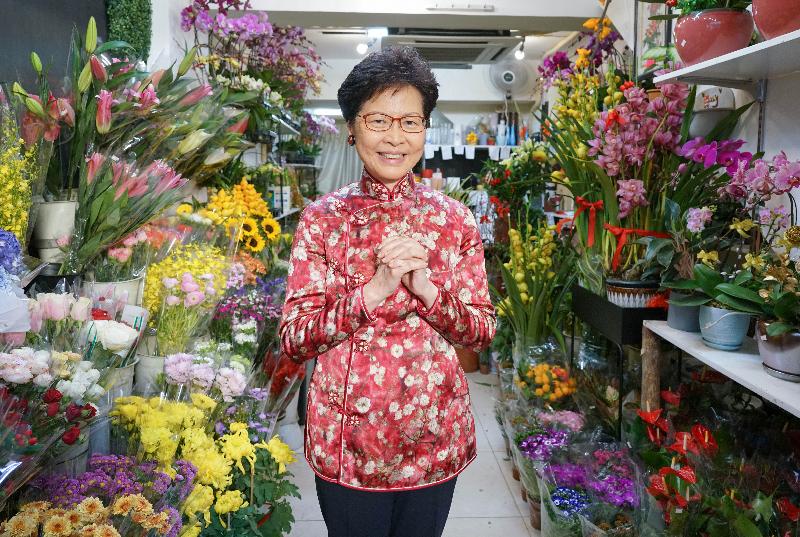
CE delivers Lunar New Year message (with photo/video)

     Following is the translation of the Lunar New Year message delivered by the Chief Executive, Mrs Carrie Lam, today (February 4):
 
     "The Lunar New Year is an important festival for Chinese people. It is also a time for families to get together. When the Lunar New Year approaches, many people will do their festive shopping. I also took a break from my busy schedule and went to Sheung Wan to buy some dried seafood and flowers. I chatted with shop owners and staff, and took the chance to extend early New Year greetings to members of the public and exchange good wishes with them. 
 
     "This year is the Year of the Pig. I wish you all a healthy and prosperous year ahead."
 
     The message is available on the Chief Executive's website (www.ceo.gov.hk/lny_message19/eng/).

Photo