Hospital Authority clarified unfounded rumours

The following is issued on behalf of the Hospital Authority:

     In response to media enquiries, the spokesperson for the Hospital Authority gave the following statement today (June 13):

     Regarding the unfounded rumours circulating in the social media regarding the death of a protest activities related patient, the Hospital Authority clarified that among the protest activities related casualties admitted to public hospitals in the past two days, none of the patient deceased.

     As at 10pm tonight, 81 casualties related to the protest activities attended the Accident and Emergency Department of 10 public hospitals, including 57 males and 24 females aged from 15 to 66. Three males and two females are staying at hospitals with stable condition.


Police take appropriate action to stop riot

Police had exercised restraints in handling the protests in Admiralty and its vicinity yesterday (June 12) morning. However, in the afternoon, a large group of protestors charged the Police cordon line in an organised manner which left Police with no choice but used force to disperse the crowd and stop the riot.

At around 8am yesterday, a large group of masked protesters dashed to Lung Wo Road and Harcourt Road in an organised way. They caused obstruction and disrupted public order by occupying the roads. Police had all along exercised restraint and tolerance in face of the intimidating and inciting acts by the protestors.

Till noon, Police found metal poles and planks in construction site stolen and bricks at nearby pavements pried up. At around 3pm, a large group of protestors used violence to charge police cordon line at different locations in a planned manner. During which, protestors performed life-threatening acts by hurling bricks, metal poles, planks and mills barriers at police officers who then used force with a view to protect personal safety, disperse the crowd, control the situation as well as maintain the effective operation of the Legislative Council and the safety of its staff.

The anti-riot measures Police used, including batons, pepper sprays, tear sprays, hand-throwing tear gas rounds, pepper balls, bean bag rounds and rubber bullets, are all non-lethal weapons. While overseas countries used similar equipment to deal with riots, Police had established stringent guidelines on the use of force.

The violent behavior of protestors yesterday imposed serious impact on public order. Some members of the public were trapped in the tunnel of Lung Wo Road. Upon the deployment of police negotiators, it still took eight hours to rescue the trapped persons. There were also vehicles deliberately blocking the roads in the vicinity of Admiralty and Central, paralyzing the traffic nearby.

Up till now, Police has arrested 11 persons for disorderly conduct in public place, unlawful assembly, assaulting police officers and other riot-related offences.

A total of 22 police officers sustained injuries in dealing with the riot yesterday.

Police will conduct a full review on yesterday’s operation as in the past.

Police strongly condemned the violent acts of the protestors and appealed to the public to express their views and opinions in a peaceful manner.

CAD follows up on brief hitch of ATMS

     Individual workstations of the Main System of the Air Traffic Management System (ATMS) in the Air Traffic Control (ATC) Centre of the Civil Aviation Department (CAD) today (June 13) experienced a brief hitch, during which some flights and their flight information could not be shown. The technical staff switched the ATMS to the Fallback System, an identical system, in accordance with the established procedures. Throughout the occurrence, Air Traffic Control Officers (ATCOs) were able to continue to monitor and provide ATC services to all flights in the Hong Kong Flight Information Region (HKFIR) through the Automatic Dependent Surveillance-Broadcast (ADS-B) display.

     "At 9.06am today, individual workstations of the ATMS in the ATC Centre experienced a brief hitch, which intermittently could not show some flights and their flight information. The technical staff on-site immediately followed up and carried out investigation. After co-ordinating with the ATC supervisors on-site, the technical staff switched from the Main System to the Fallback System according to the established procedures at 9.22am," a CAD spokesman said.

     "Aviation safety was not affected by the occurrence. The ATCOs were able to keep direct voice communication with the pilots at all times as well as monitor and obtain full information of all flights (including the three essential types of information, i.e. flight position, altitude information and secondary surveillance radar code) in the HKFIR through the ADS-B display to provide ATC services.

     "The operation of the original Main System returned to normal after it was rebooted and checked by the contractor. It then served as a backup as per system design," he emphasised.

     The ATMS has multiple built-in fallback systems to tackle different scenarios. The Main System and the Fallback System are independent but identical systems with the same design and functionality, and can immediately take up the role of each other in the event of an outage for maintaining ATC services continuity. During the occurrence, the ATMS dealt with unexpected situations and sustained continuous ATC operations as per system design. Professional ATCOs and engineers also responded to the occurrence in a timely and prudent manner in accordance with training and established procedures. It was not necessary to activate the Ultimate Fallback System of the ATMS in the process.

     "The inclement weather this morning had already caused flight delays. Only a few flights were able to take off and land in Hong Kong. During the hitch of the Main System, the ATCOs deferred giving clearance to departing flights for about 16 minutes as a precaution in accordance with procedures. Two departing flights were affected. Arrivals and flights flying through the HKFIR were not affected," he added.

     The CAD attaches importance to the occurrence. The contractor was tasked right after the occurrence to conduct a thorough investigation and submit a report as soon as possible. The CAD will continue to follow up on the occurrence.


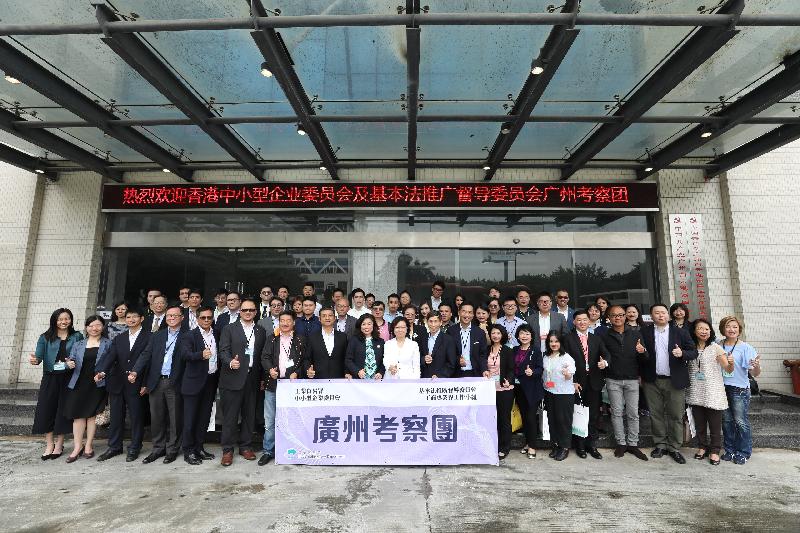
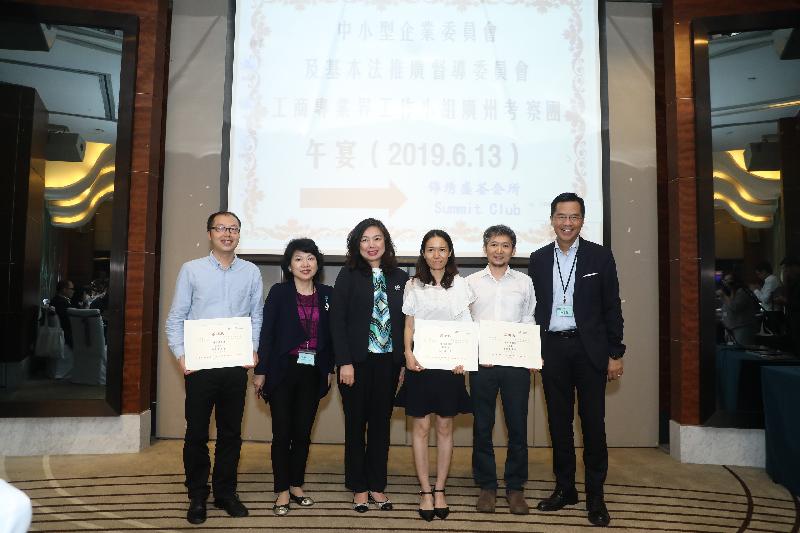
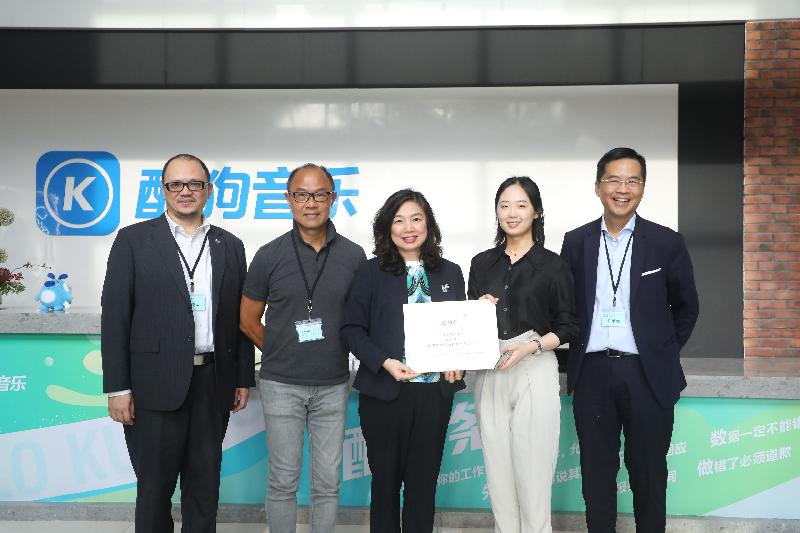
TID, Small and Medium Enterprises Committee and ICPWG under Basic Law Promotion Steering Committee visit Guangzhou (with photos)

     The Trade and Industry Department (TID), the Small and Medium Enterprises Committee (SMEC) and the Working Group on Industrial, Commercial and Professional Sectors (ICPWG) under the Basic Law Promotion Steering Committee (BLPSC) led a delegation to Guangzhou today (June 13) to help Hong Kong small and medium enterprises (SMEs) and professionals learn about the latest developments and investment opportunities in the Guangdong-Hong Kong-Macao Greater Bay Area, especially Guangzhou.

     The delegation visited the Guangzhou Baiyun Electric Equipment Company Limited to understand the operations of Mainland enterprises in the Greater Bay Area, and was briefed on the latest developments of the Baiyun District in Guangzhou.

     To gain a deeper understanding about the business environment in the Mainland, the delegation had a discussion session with local young entrepreneurs to learn about their experiences in starting businesses in Guangzhou. 

     The delegation also visited the Yangcheng Creative Industry Zone and the enterprises there to understand the operation of creative enterprises and the latest developments of creative industries there. 

     The delegation was led by the Director-General of Trade and Industry, Ms Salina Yan; the SMEC Chairman, Mr Michael Hui; and the ICPWG Convenor, Mrs Clarie Lo. Over 60 participants, including SMEC members, ICPWG members and representatives of Hong Kong's major trade and industrial organisations, professional bodies and SME associations, joined the visit.

     The SMEC is an advisory body set up by the Hong Kong Special Administrative Region Government to advise the Government on issues affecting the development of SMEs in Hong Kong and suggest measures to support and facilitate their development and growth. The ICPWG under the BLPSC is responsible for formulating and implementing action plans for the promotion of the Basic Law among the industrial, commercial and professional sectors.

Photo  Photo  Photo  Photo  


Speech by SLW at Hong Kong Myanmar Chamber of Commerce 6th Anniversary Dinner Banquet “Light Up Love” (English only)

     Following is the speech by the Secretary for Labour and Welfare, Dr Law Chi-kwong, at Hong Kong Myanmar Chamber of Commerce 6th Anniversary Dinner Banquet "Light Up Love" today (June 13):
      
Mr Albert Oung (Founding President of the Hong Kong Myanmar Chamber of Commerce), distinguished guests, ladies and gentlemen, 
        
     Good evening everyone. May I begin by saying how pleased I am to be here, to celebrate the sixth anniversary of the Hong Kong Myanmar Chamber of Commerce, and have the privilege of addressing a remarkable audience like your good selves – outstanding and successful businessmen and professionals.
      
     Hong Kong is truly a cosmopolitan city and one of Asia's leading financial hubs. Despite our lack of natural resources, we are blessed with a diligent and productive workforce, both domestic and from abroad. Together they serve as the engine and powerhouse for our booming economy.
      
     I have mentioned on many previous occasions, Hong Kong will soon face a major manpower shortage. In anticipation of a rapid surge in our ageing population within the next three to four decades, we expect to have a big proportion of workers nearing or reaching retirement age. With the acute shortage beginning to surface within the next 10 years, labour shortage presents a real and imminent challenge to us in the very near future.
      
     Currently, we have around 393 000 foreign domestic helpers (FDHs) (Note 1) working in Hong Kong, representing some 10 per cent of the SAR's (Special Administrative Region's) total work force. I cannot emphasise more how FDHs are benefitting our local families, with services ranging from household chores, to the care of young children and elderly family members. Such much-needed service effectively relieves the burdens of many stay-at-home-moms, unleashing their work potential, to the benefit of Hong Kong's labour market and with it, our economic development. 
      
     With the soon-to-peak manpower supply and ageing population, it comes as no surprise that the demand for FDHs will continue to surge (Note 2).  We could only hope that more domestic helpers could be coming our way from FDH-sending countries, Myanmar being one of them.
      
     To make the SAR an attractive work destination, our Government is committed to safeguarding and protecting the rights and interests of FDHs. Hong Kong is one of the few places that grant FDHs statutory labour protection that is on par with local workers. Among others, these include weekly rest days, statutory holidays, paid annual leave, sickness allowance, maternity protection, long service payment and severance payment. Additional protection and benefits are stipulated under the Government-prescribed Standard Employment Contract.  
      
     We were most delighted to learn from the Myanmarese Consulate-General in Hong Kong that their Government is contemplating plans to lift the export ban on domestic helpers working overseas, including Hong Kong. To expedite the process, the HKSAR Government is proactively following this up with the Consulate-General. And for this purpose, any advice and input the Hong Kong Myanmar Chamber of Commerce may have on this subject will be much appreciated.
      
     On this note, I would like to wish the Hong Kong Myanmar Chamber of Commerce every success in the coming years. With concerted efforts of the local community, international business organisations, private sector and the Government, we can most certainly make Hong Kong a harmonious and inclusive society for all, and a better place to live and work.
      
     Thank you very much.
      
Note 1: As at May 2019, there were 393 587 FDHs in Hong Kong.  85 were from Myanmar.
      
Note 2: According to the Hong Kong Population Projections 2015-2064 published by the Census and Statistics Department in September 2015, the number of FDHs was estimated to rise from 328 300 in 2014 to 629 300 in 2064.