CHP investigates case of severe paediatric influenza A infection

     The Centre for Health Protection (CHP) of the Department of Health is today (July 16) investigating a case of severe paediatric influenza A infection, and reminded members of the public who have not yet received a seasonal influenza vaccination in the 2018-19 season that they can still receive it for personal protection against seasonal influenza.
 
     The case involves an 11-year-old boy with an underlying illness, who has presented with a fever, cough and shortness of breath since July 14. He was taken to the Accident and Emergency Department at Kwong Wah Hospital for medical attention yesterday (July 15) and was admitted on the same day. He was subsequently transferred to the Paediatric Intensive Care Unit of the hospital for further management today.
 
     His respiratory specimen tested positive for influenza A virus upon laboratory testing. The clinical diagnosis was influenza A infection complicated with severe pneumonia. He is now in serious condition.
 
     Initial enquiries revealed that the patient had received a seasonal influenza vaccination for the current season and had no travel history during the incubation period. Her home contacts have remained asymptomatic so far.
 
     The CHP's investigations are ongoing.
 
     "The latest surveillance data showed that the local seasonal influenza activity in the past few weeks was higher than that in early May. Members of the public aged 6 months or above (except those with known contraindications) who have not yet received seasonal influenza vaccination in the 2018-19 season can still receive it for personal protection against seasonal influenza," a spokesman for the CHP said.
 
     "Meanwhile, the public should continue to adopt strict personal, hand and environmental hygiene practices against respiratory illnesses and other infectious diseases," the spokesman added.
 
     The public may visit the CHP's influenza page and weekly Flu Express for more information. 


Appeal for information on missing man in Tin Sum (with photo)

     Police today (July 16) appealed to the public for information on a man who went missing in Tin Sum.

     Ng Yau-fung, aged 53, went missing after he left his residence on Fung Shek Street on July 13 morning. His family made a report to Police last night (July 15).

     He is about 1.5 metres tall, 72 kilograms in weight and of medium build. He has a square face with yellow complexion and short black hair. He was last seen wearing a light colored T-shirt, dark colored shorts and dark-colored shoes.

     Anyone who knows the whereabouts of the missing man or may have seen him is urged to contact the Regional Missing Person Unit of New Territories South on 3661 1174 or 6025 6218, or email to rmpu-nts-2@police.gov.hk, or contact any police station.
     

Photo  


A closer look at technologies applied in smart lampposts

     The Assistant Government Chief Information Officer of the Office of the Government Chief Information Officer (OGCIO), Mr Tony Wong, held a technical briefing on multi-functional smart lampposts today (July 16), together with the Senior Engineer of the Highways Department, Mr Cheng Chung Shan, and the Assistant Director of the Logistics and Supply Chain MultiTech R&D Centre (LSCM), Mr Martin Lai. An on-site introduction to the operation of smart lampposts was conducted on Sheung Yuet Road after the briefing.
      
     Key points about smart lampposts are:
 

  • Provision is made for mobile network operators to install 5G base stations to facilitate the future development of fifth generation (5G) mobile network services in Hong Kong and to offer free Wi-Fi services.
  • Smart devices including traffic detectors, panoramic cameras, meteorological sensors and air quality sensors are installed to collect three types of real-time city data, including meteorological data, air quality data and traffic snapshot images with a view to enhancing city and traffic management.
  • All data collected will be uploaded as open data to the Public Sector Information (PSI) Portal (data.gov.hk) for sharing and to encourage the development of more innovation applications, thus driving smart city development in Hong Kong.
  • Appropriate privacy protection measures are in place, e.g. cameras are set to face and take pictures of public areas only, and notices are put up at prominent locations. Currently, the cameras only take snapshots of road conditions.
  • The traffic snapshot images are taken every two minutes. The process of lowering resolution of images is carried out in the lampposts. The images will be deleted immediately after transmission to the PSI Portal.
  • The images and videos recorded by the surveillance cameras will only be used by the Transport Department (TD) and the Environmental Protection Department (EPD) for monitoring traffic conditions and assisting law enforcement work against illegal dumping of construction waste. Relevant panels of the Legislative Council (LegCo) were consulted last year. The LegCo panels supported the two specific applications.
  • The lampposts do not carry any facial recognition function. Images taken will not be sent to any third party for facial recognition applications.
  • The Bluetooth traffic detectors will extract only part of the digits in Media Access Control (MAC) address for matching purposes, in order to assess the average traffic speed and travel time of vehicles passing by. The MAC address data will be deleted from the system right after completion of analytics.
  • The community has always had great concerns about privacy. The OGCIO has been in close contact with the Privacy Commissioner for Personal Data since the designing stage of the lampposts to ensure all applications fully comply with the Personal Data (Privacy) Ordinance.
  • The Bluetooth transmitters are only used to offer positioning services such as providing information to citizens and visitors on public facilities nearby.
  • The radio frequency identification (RFID) technology used in smart lampposts are developed by the LSCM. It is merely an electronic tag for transmitting signals. The tag does not carry any function of collecting data and cannot read any data in other devices. One of the applications is to pair up with the Blind Cane Navigation System and provide navigation for the visually impaired.

     In view of the public concern over some of the applications which may touch on privacy, some functions of the lampposts will not be activated at this stage. These include the monitoring of illegal dumping with the aid of cameras located near black spots by the EPD, the assessment of road use by different types of vehicles enabled by Bluetooth traffic detectors and cameras collecting car plate numbers by the TD. The OGCIO will conduct more extensive consultation and will only activate the relevant functions upon public consensus.

     The Multi-functional Smart Lampposts pilot scheme is a three-year programme in which some 400 smart lampposts will be installed in phases in four districts with higher pedestrian and traffic flow, namely Central/Admiralty, Causeway Bay/Wan Chai, Tsim Sha Tsui and Kwun Tong/Kai Tak Development Area, with a view to promoting smart city development in Hong Kong and supporting 5G mobile network implementation. Since the end of June, 50 smart lampposts have been put in place on Sheung Yuet Road in Kowloon Bay, Shing Kai Road in Kai Tak and in the Kwun Tong city centre to collect various types of real-time city data such as meteorological data, air quality data and traffic flow. The data collected will be released to the public as open data via data.gov.hk for development of innovative applications.



Suspected case tests negative for MERS-CoV

     The Centre for Health Protection of the Department of Health today (July 16) reported that the suspected case of Middle East Respiratory Syndrome (MERS) pending results on July 15 has tested negative upon preliminary testing for MERS Coronavirus.


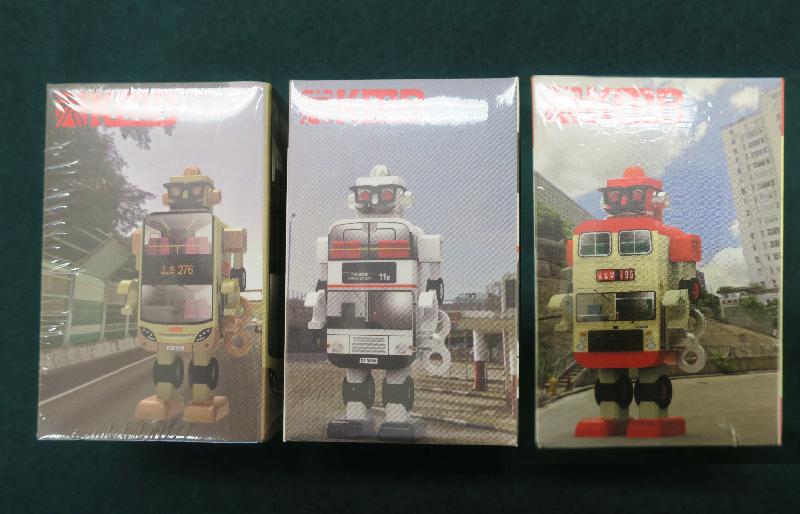
Hong Kong Customs alerts public on unsafe magnetic robot toy (with photo)

     Hong Kong Customs today (July 16) alerted members of the public to the potential hazards posed by a type of magnetic robot toy. They are advised not to let children play with this toy to ensure their safety. Test results indicate that the magnetic component parts of the toy could pose a potential risk of intestinal blockage to children.

     Customs officers earlier conducted a test-buy operation and purchased the toy from a souvenir shop for safety testing by the Government Laboratory. Results revealed that the magnetic strength of the toy's small magnetic component parts as well as small releasable magnets exceeded the upper limit as specified in related toy safety standards and would pose a potential risk of intestinal blockage if swallowed by children.

     Customs officers today seized a total of 200 pieces of the magnetic robot toy from the souvenir shop's retail spots and warehouse. Investigation is ongoing. 

     Under the Toys and Children's Products Safety Ordinance, it is an offence to manufacture, import or supply unsafe toys or children's products. The maximum penalty upon conviction is a fine of $100,000 and imprisonment for one year on first conviction, and a fine of $500,000 and imprisonment for two years on subsequent conviction.

     â€‹Members of the public may report information relating to unsafe toys or children's products suspected to be unsafe via Customs' 24-hour hotline 2545 6182, or its dedicated crime-reporting email account (crimereport@customs.gov.hk).

Photo