Recall of two ranitidine-containing products (with photos)

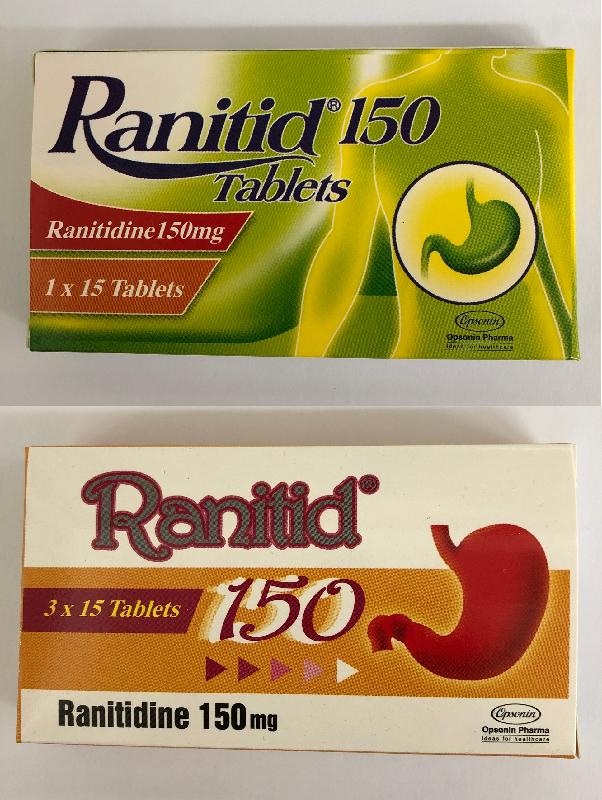
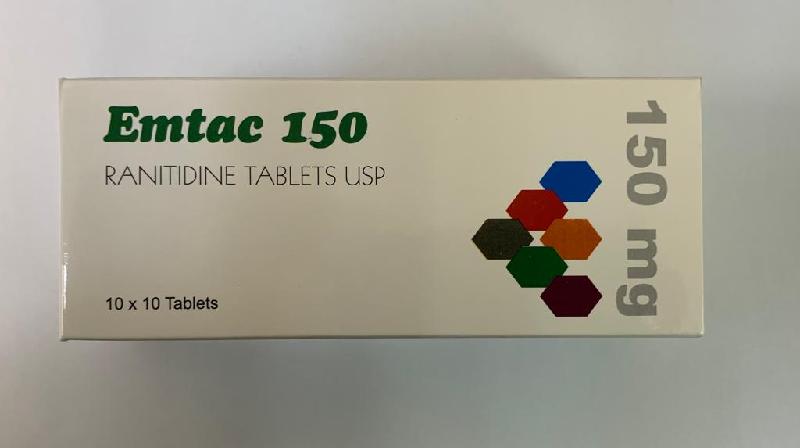
       The Department of Health (DH) today (November 27) endorsed two licensed drug suppliers, Cera Medical Limited (Cera) and Sincerity (Asia) Company Limited (Sincerity), to recall two ranitidine-containing products from the market as a precautionary measure due to the presence of an impurity in the products.
 
       The affected products are:
      

Supplier Product Hong Kong Registration Number
Cera Emtac 150 Tab 150mg HK-59353
Sincerity Ranitid 150 Tab 150mg HK-59429

 
       In view of the recent recall of ranitidine-containing products, the DH proactively collected samples of similar products from the market for analysis. Test results from the Government Laboratory revealed that the above products contain an impurity of N-nitrosodimethylamine (NDMA). NDMA is a probable human carcinogen based on results from laboratory tests. As a precautionary measure, the concerned suppliers are voluntarily recalling the affected products from the market.
 
      The DH noted that certain ranitidine-containing products were found to contain NDMA in other countries, therefore a letter was sent to healthcare professionals on September 18 notifying them about the issue. Since September 24, the DH has endorsed the recalls of a total of 23 ranitidine-containing products. The DH noted that overseas drug regulatory authorities have been reviewing the safety impact of the impurity found in the ranitidine-containing products. The DH will closely monitor the development of the issue and any safety updates of the drug issued by overseas drug regulatory authorities for consideration of action deemed necessary.
 
       The above products are over-the-counter medicines used for the treatment of gastric diseases. According to the suppliers, the affected products have been supplied to local private doctors, pharmacies and medicine companies.
     
       The companies have set up hotlines to answer related enquiries: Cera (2695 8587), and Sincerity (2544 1401).
 
       "So far, the DH has not received any adverse reaction reports in connection with the products. The DH will closely monitor the recall," a spokesman for the DH said.
 
       "Patients who are taking the above products should seek advice from their healthcare professionals for appropriate arrangements. There are alternative medicines available on the market with similar indications," the spokesman added.

Photo  Photo  


Rescheduling of LegCo Public Accounts Committee meeting

The following is issued on behalf of the Legislative Council Secretariat:

     The closed meeting of the Legislative Council (LegCo) Public Accounts Committee originally to be held tomorrow (November 28) has been rescheduled for next Monday (December 2) at 10am in Conference Room 4 of the LegCo Complex.


Alice Ho Miu Ling Nethersole Hospital announces sentinel event

The following is issued on behalf of the Hospital Authority:

     The spokesperson for Alice Ho Miu Ling Nethersole Hospital (AHNH) announced a sentinel event today (November 27):
 
     A patient with swallowing difficulties and desaturation was transferred to AHNH for treatment and feeding via nasogastric tube.
 
     In the afternoon on November 23, the patient pulled out the nasogastric tube. After the tube was reinserted, an X-ray examination was performed and the patient's gastric aspirates were also tested for acidity in accordance with the prevailing protocol. No abnormalities were detected. Nasogastric tube feeding with feeding formula and water was recommenced the same night and in the early hours of the next day. The patient subsequently developed cardiac arrest and was transferred to the Intensive Care Unit after resuscitation by clinical staff. The clinical team reviewed prior X-ray results and found that the nasogastric tube was inserted into the patient's left lung.
 
     The patient's condition deteriorated and he succumbed on November 26. The case has been referred to the Coroner for further follow-up. The hospital is deeply saddened by the incident. The hospital has met with the patient's family to offer its apologies and explain the incident.
 
     The hospital is highly concerned about the incident and has reported to the Hospital Authority Head Office via the Advance Incident Reporting System. A root cause analysis investigation will be conducted to look into the incident. The investigation report will be submitted to the Head Office in eight weeks.
 
     The hospital will maintain close communication with the patient's family, explain the investigation findings and provide them with available assistance.


LCQ 14: Police access into premises for law enforcement

     Following is a question by the Hon Wu Chi-wai and a written reply by the Secretary for Security, Mr John Lee, in the Legislative Council today (November 27):

Question:
 
  The Police have stated that under sections 50(3) and (4) of the Police Force Ordinance (Cap 232), if police officers have reasonable doubts that someone may have committed a criminal offence in any public or private place, police officers have the power to enter the place concerned to make arrests. Section 50(3) of Cap 232 provides that "[i]f any police officer has reason to believe that any person to be arrested has entered into or is in any place the person residing in or in charge of such place shall on demand of that police officer allow him free ingress thereto and afford all reasonable facilities for search therein". Regarding law enforcement by police officers on private premises (including various types of subsidised sale housing), will the Government inform this Council:
 
(1)  of the respective numbers of searches, conducted by police officers in each month since June this year under (a) sections 50(3) or (4) of Cap 232 and (b) search warrants issued by magistrates, involving entry into the following types of private premises: (i) shopping arcades, (ii) shops outside shopping arcades, (iii) common areas outside residential buildings in private housing estates (e.g. private roads and gardens), (iv) common areas of private residential buildings (e.g. lobbies and staircases), (v) private residential flats, and (vi) others (set out in the table below);
 

Month The power under which police officers entered the premises concerned (i) (ii) (iii) (iv) (v) (vi) Total
  (a)              
  (b)              
               
  Total              

 
(2)  of the number of persons arrested in each month since June this year by police officers on private premises, with a breakdown by the six types of premises mentioned in (1) (set out in a table of the same format as the table above);
 
(3)  as some members of the public are concerned that in recent months, some police officers, in the absence of any definite person(s) to be arrested, forced entry into private housing estates and shopping arcades, and conducted stop-and-searches on the residents and customers of shopping arcades in the form of fishing expedition, whether the Security Bureau and the Police Force have reviewed such mode of operation, and whether they have found cases in which police officers entered private premises to enforce the law without lawful authorisation under Cap 232; if they have found such cases, of the details;
 
(4)  whether it is mandatory for police officers, when entering private premises under section 50(3) of Cap 232, to provide, either proactively or on request, information to "the person residing in or in charge of such place" as referred to in that subsection to prove that there is/are "person(s) to be arrested" on the premises; if so, of the details of the relevant information; if not, the reasons for that;
 
(5)  of the number of occasions in each month since June this year on which police officers used weapons in the common areas in private housing estates (including various types of subsidised sale housing), with a breakdown of the quantities of the weapons used by name of estate and type of weapon (e.g. tear gas rounds, sponge rounds and bean bag rounds);
 
(6)  whether section 50 of Cap 232 authorises the Police to carry out dispersal operations on private premises; if not, of the provisions in Cap 232 under which the Police may carry out such operations on private premises;
 
(7)  of the pieces of legislation, apart from Cap 232, that authorise the Police to enforce the law and carry out dispersal operations by means of firing tear gas rounds, etc. on private premises; and
 
(8)  of the details of the guidelines and notices issued by the Police since June this year to the property management sector on issues relating to the entry of police officers into private premises to carry out law enforcement actions?
 
Reply:
 
President,
 
  The Hong Kong law applies to all places in the territory and nowhere is above the law.  Therefore, if anyone contravenes the law anywhere in Hong Kong, it is the statutory duty of the Police to take actions.
 
  Section 10 of the Police Force Ordinance (PFO) (Cap 232) stipulates that the duties of the police force include taking lawful measures for preserving the public safety, preventing and detecting crimes and offences, as well as preventing injury to life and property.
 
  Section 50(3) of PFO stipulates that if any police officer has reason to believe that any person to be arrested has entered into or is in any place, the person residing in or in charge of such place shall allow the police officer free ingress thereto and afford all reasonable facilities for search therein.  Section 50(4) of PFO also stipulates that "it shall be lawful in any case for a person acting under a warrant and in any case in which a warrant may issue but cannot be obtained without affording the person to be arrested an opportunity of escape from a police officer, to enter such place and search therein".
 
  My reply to various parts of the question is as follows:
 
(1), (2) and (5) There have been ongoing protests and clashes in Hong Kong since June, with violent conflicts breaking out in various districts across the territory.  Apart from illegally blocking roads and paralysing the traffic, a large number of protesters gathered in different shopping malls.  Some rioters repeatedly committed serious illegal acts, wantonly vandalising shops in shopping malls by spraying paints or graffiti, trashing shops, setting fires and sabotaging facilities in shops, vandalising escalators, fire service equipment and closed circuit televisions, madly assaulting people with different views, etc.  To stop the violence, the Police must take actions and deploy officers to the relevant shopping malls to apprehend rioters or disperse the gathering crowds and control the situation, with a view to restoring public safety and public order.
 
  Besides the violent incidents in shopping malls, some rioters also gathered outside private housing estates, engaging in illegal acts which breached the social peace, such as assaulting police officers by throwing hard objects at them.  In light of these illegal acts, it was lawful, reasonable and necessary for the Police to make arrests.
 
  The Police have strict guidelines on the use of force.Police officers may use appropriate force only when it is necessary. Since early June this year, over 900 demonstrations, processions and public meetings took place in Hong Kong. As at November 9, the Police used around 7 000 tear gas rounds, 2 700 rubber bullets, 600 bean bag rounds and 790 sponge rounds in the relevant operations.
 
  As at November 14, the Police arrested 4 319 people.  As for the other breakdown figures requested in the question, the Police do not maintain or are unable to disclose such lest it affects the Police’s operation.
 
(3), (6) and (7) Apart from PFO, section 17(2) of the Public Order Ordinance (Cap 245) also provides that any police officer of or above the rank of inspector may stop or disperse any gathering or procession whatsoever or wheresoever if he reasonably believes that the same is likely to cause or lead to a breach of the peace. 
 
  In the judgment handed down by the High Court in the recent injunction order application relating to the Chinese University of Hong Kong, the court has affirmed the following two important principles:
 
(a) It should be noted that it is part of the obligations and duties of a police officer to take all steps which appear to the officer to be necessary for keeping the peace, for preventing crime, or for protecting property from criminal injury.  The police has wide statutory duties and owes a duty to the public to enforce the law which he could be compelled to perform. (Note 1)

(b) At common law, where a police officer is off private premises, it would be within the officer’s duty to enter such premises to prevent a breach of the peace. (Note 2)
 
  Therefore, if a person is suspected to have committed a criminal offence or breached social peace in public or private premises, such as housing estates, shopping malls, Mass Transit Railway or schools, the Police have the power to enter into such premises to take appropriate actions to prevent a breach of social peace.  This is not confined to arrest operations.  We totally disagree with the biased allegation of "a fishing expedition" mentioned in the question.  As always, the Police will by all means ensure that any operations conducted by them are appropriate, lawful and reasonable.
 
(4) When police officers tender a request to the person residing in or in charge of a place under section 50(3) of PFO for entering that place to make arrest, they will, where practicable and without prejudice to the arrest operation, provide information as appropriate.  
 
  Nevertheless, the law does not require police officers to identify the specific person to be pursued and arrested before entry.  In paragraph 10 of the judgment handed down by the High Court in the injunction order application relating to the Chinese University of Hong Kong, the court clearly affirmed that:
 
  "Contextually, it is contrary to common sense to require the police to identify the specific person to be arrested before entry, in the situation where the police actually witnessed the commission of the crime in question and immediately took steps to apprehend the person who he reasonably suspects of being guilty of the offence."
 
(8) Since June this year, the Police have released twice information on the Police’s access into premises for law enforcement to the security and property management industries.  The relevant information is set out at Annex.
 
Note 1: §14 So Tsun Fung v CP [2019] HKCFI 2799
Note 2: §15 So Tsun Fung v CP [2019] HKCFI 2799


LCQ15: Police use tear gas to curb acts of violence and illegal acts

     Following is a question by the Professor Hon Joseph Lee and a written reply by the Secretary for Security, Mr John Lee, in the Legislative Council today (November 27):

Question:

     Since the eruption of the "anti-extradition to China" movement in June this year, the Police have fired thousands of tear gas rounds to disperse demonstrators. It has been reported that on the 2nd of this month, a volunteer first-aider was allegedly shot by a tear gas round made in China which resulted in serious burns on his back. Besides, as measured by some reporters at the scenes of conflicts, the temperature of the sparks discharged during combustion of tear gas rounds was as high as 252 degrees Celsius, which can set alight miscellaneous objects and cause second degree burns in human bodies. In this connection, will the Government inform this Council:
      
(1) of the total number of tear gas rounds fired by the Police since June this year, and in respect of the 10 days on which the largest quantities of tear gas rounds were fired, the (i) relevant dates, (ii) quantities of tear gas rounds fired and (iii) locations where they were fired;
 
(2) whether, at present, the Police have procured tear gas rounds which are not made in China; if so, (a) of the places of origin of such tear gas rounds, and (b) how such tear gas rounds compare with those which are made in China in the following aspects: (i) composition, (ii) velocity of explosion, (iii) power (including the functions, effects and the highest temperature during combustion), and (iv) possible impacts on human health (set out in a table); if not, the reasons for that;
 
(3) whether the Police have, before procurement, conducted tests for the tear gas rounds made in China on the various aspects mentioned in (2); if so, of the details of the test results; and
 
(4) whether the Police have issued guidelines to police officers, relevant government departments, public organisations and members of the public in respect of how to clean up tear gas residue at the scenes where tear gas rounds have been fired and how to deal with the aftermath; if so, of the details; if not, the reasons for that?
 
Reply:

President,

     The Police have a statutory duty to maintain public safety and public order.  When public order and public safety are severely threatened by situations such as illegal blockage of roads, paralysed traffic, unlawful assemblies and violent charging of police cordon lines, the Police must take appropriate actions to maintain law and order and safeguard public peace.  If the public express their views in a peaceful and lawful manner, there would be no need for the Police to use any force.
 
     Since early June 2019 up till now, more than 900 protests, processions and public assemblies have been staged in Hong Kong, and many of them ended up as violent illegal activities.  In the past five months or so, rioters repeatedly committed serious unlawful acts including wantonly blocking roads, paralysing the traffic, hurling petrol bombs and bricks and setting fire at different locations, vandalising and burning shops and MTR and Light Rail facilities with intent, and violently assaulting people holding different opinions.  These acts have seriously threatened personal safety, as well as public order and public safety.  To curb  violent illegal acts, the Police had to take actions to bring rioters to justice or disperse the crowds and control the situations so as to restore public safety and public order.
      
     My reply to Professor Hon Joseph Lee’s question is as follows:
      
(1) Tear gas is a crowd dispersal equipment, the purpose of which is to stop people from gathering or conducting illegal acts.  Since June up till now, the Police have used around 10 000 rounds of tear gas.  The use of tear gas by the Police is in response to the prevailing situation, the location and extent of using it depend on rioters’ violent acts and circumstances at the scene.  Details on the 10 days with the highest number of tear gas being used are at Annex.  According to police records, rioters committed acts of vandalism and violence in various parts of Hong Kong during the listed days.  As a result, the Police need to take appropriate action, including the use of tear gas for dispersal, in order to curb acts of violence and illegal acts.
 
(2) and (3) On the procurement of equipment and ammunitions, the Police have been sourcing globally for safe and suitable equipment and ammunitions in accordance with the established procedures to meet their operational needs.  The tear gas procured by the Police has passed safety tests for ensuring that the stability and safety of such ammunitions comply with relevant specifications.
 
     As the procurement details of the equipment used by the Police involve operational deployment, it would be inappropriate to disclose such details as it would affect the Police’s operational capability.  The Police will continue the safe use of tear gas in accordance with the manufacturer’s guidelines and internal ones.
 
(4) In general, post-exposure symptoms to tear gas may include burning sensation to the skin and eyes, coughing, sneezing and temporary breathing difficulty resulted from irritation to the nose and throat.  These symptoms will usually subside after a short period of time.
 
     I must reiterate that it is not for the Police to choose the location to use tear gas against violence or illegal acts, but depends on the rioters who committed violence or illegal acts and where they choose to commit such acts.
      
     The Police understand the community's concerns about the use of tear gas near residential area, and will take into account the safety and interests of the affected people as far as possible when using the tear gas.  Before the operation, the Police will, as far as possible, maintain close contact with the nearby building management offices, commercial tenants and elderly homes through various channels to remind them of the Police's possible actions in relation to the demonstrations so that they can make arrangements accordingly.  During the operation, the Police will also appeal to residents in the vicinity to pay attention to the situation through social media and press releases, and to close the windows and stay in a safe place indoors if necessary.
      
     The Government fully understands the community’s concern about the impacts of tear gas on the environment and physical health.  The Department of Health has uploaded health information on tear gas to the Centre for Health Protection webpage for public reference.  In general, health effects of tear gas depend on a number of factors such as specific chemical composition of the tear gas, duration and dose of exposure to tear gas, exposure route, health conditions of the individuals and the physical environment during exposure.  Individuals with persistent post-exposure symptoms to tear gas should promptly consult healthcare professionals.  The Food and Environmental Hygiene Department has also issued guidelines to its staff and cleansing contractors, which include matters for attention and personal protective gear in respect of removal of chemical residues.