SCMA inspects prevention and control measures at West Kowloon Station of Guangzhou-Shenzhen-Hong Kong Express Rail Link (with photos))

     The Secretary for Constitutional and Mainland Affairs, Mr Patrick Nip, today (January 9) inspected the prevention and control measures adopted at the boundary control point of the West Kowloon Station of the Guangzhou-Shenzhen-Hong Kong Express Rail Link in response to the cluster of pneumonia cases detected in Wuhan, before departing for Guangzhou.

      Mr Nip inspected the health surveillance measures at the boundary control point in response to the cluster of pneumonia cases detected in Wuhan. He said he was glad to learn that the health authorities had already stepped up preventive measures and arranged for all inbound travellers from the two high-speed trains that stop at Wuhan to have their body temperature checked with additional hand-held infrared thermometers with a view to taking timely action to follow up on any suspected cases. The Centre for Health Protection (CHP) of the Department of Health has also deployed additional manpower to enhance body temperature checks on other inbound travellers and hand out health information pamphlets and answer travellers' enquiries at the health counter set up in the Station's arrival hall.  

     He then proceeded to the ticketing concourse to meet with staff members of the MTR Corporation to learn more about their health surveillance measures. He learnt that cleaning and disinfection had been stepped up at the Station and for incoming express trains from Wuhan, and disinfection facilities have also been set up for travellers.

     Mr Nip expressed gratitude to all staff members of relevant departments and organisations for their commitment in work and for their dedication in safeguarding the health of the public and travellers.

     With regard to Hong Kong residents in the Mainland, Mr Nip said that the Office of the Government of the Hong Kong Special Administrative Region of the People's Republic of China in Beijing, the four economic and trade offices and the 11 liaison units in the Mainland have uploaded the relevant and latest health information on their websites and WeChat official accounts to facilitate their easy access to all relevant information. 

     Mr Nip stressed that relevant government bureaux and departments are well prepared and stand ready to quickly respond to rapid change of the virus and would provide the latest and accurate information to members of the public in an open and transparent way. He appealed to members of the public to maintain strict personal, food and environmental hygiene both locally and outside Hong Kong and to strengthen personal and environmental hygiene standards. A dedicated webpage (www.chp.gov.hk/en/features/102465.html) has been set up by the CHP to provide relevant information and health advice.
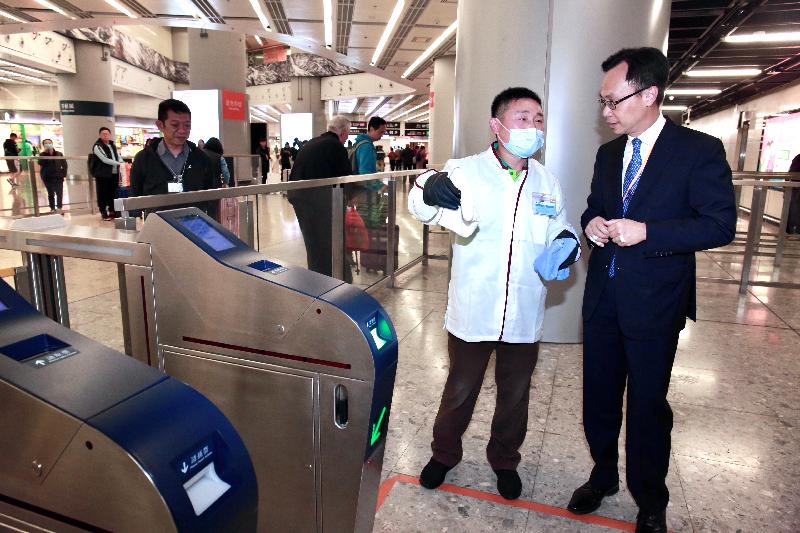
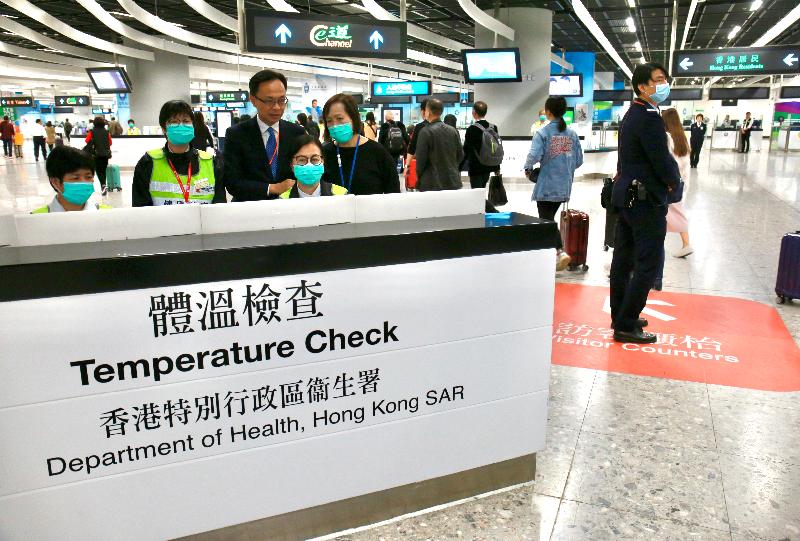
Photo  Photo  


Import of poultry meat and products from Korea District, Chhattisgarh State, India suspended

     The Centre for Food Safety (CFS) of the Food and Environmental Hygiene Department announced today (January 9) that in view of a notification from the World Organisation for Animal Health (OIE) about an outbreak of highly pathogenic H5N1 avian influenza in Korea District, Chhattisgarh State, India, the CFS has instructed the trade to suspend the import of poultry meat and products, including poultry eggs, from the district with immediate effect to protect public health in Hong Kong.
      
     A CFS spokesman said that Hong Kong has currently established a protocol with India for import of poultry eggs but not for poultry meat. In the first nine months of last year, no poultry eggs from India were imported into Hong Kong according to the Census and Statistics Department. 
      
     "The CFS has contacted the Indian authorities over the issue and will closely monitor information issued by the OIE on avian influenza outbreaks. Appropriate action will be taken in response to the development of the situation," the spokesman said.    


Hong Kong Customs takes disciplinary actions against 10 licensed money service operators for breaching licensing requirements

     The Customs and Excise Department (C&ED) today (January 9) took disciplinary actions, including issuing public reprimands and ordering remedial actions, against 10 licensed money service operators (MSOs) for breaching the licensing requirements as stipulated in the Anti-Money Laundering and Counter-Terrorist Financing Ordinance (the Ordinance).

     Officers of the C&ED earlier discovered five MSOs had failed to notify the C&ED of a change in particulars of bank accounts for provision of money service within a specified period of time.

     Also, four MSOs had changed their directors or added new premises to operate money service without prior approval from the C&ED. The remaining MSO had failed to display the original licence at the specified premises.

     With regard to the abovementioned contraventions, the C&ED has earlier issued written warnings to the 10 MSOs. The department today further took disciplinary actions against them in order to send a deterrent message to the industry. Copies of each Statement of Disciplinary Action are available on the website of the C&ED (eservices.customs.gov.hk/MSOS/common/enforcenew?request_locale=en).

     The C&ED reminds all MSOs to comply with the statutory requirements as stipulated in the Ordinance. The maximum penalty upon conviction is a fine of $1 million and imprisonment for seven years.

     In addition, the C&ED may take disciplinary action such as issuing a public reprimand, imposing a pecuniary penalty and ordering a remedial action. The pecuniary penalty would not exceed the amount that is the greater of $10 million or three times the amount of the profit gained or costs avoided.


Effective Exchange Rate Index

     The effective exchange rate index for the Hong Kong dollar on Thursday, January 9, 2020 is 105.9 (same as yesterday's index).


Update on latest MERS situation in United Arab Emirates

     The Centre for Health Protection (CHP) of the Department of Health is today (January 9) closely monitoring an additional case of Middle East Respiratory Syndrome (MERS), reported to the World Health Organization (WHO) by the United Arab Emirates (UAE), and again urged the public to pay special attention to safety during travel, taking due consideration of the health risks in the places they visit.
 
     According to the WHO, the patient is a 74-year-old male owner of a camel farm with underlying illnesses living in the UAE. Before the onset of symptoms, he had no history of recent travel and had not been involved in the slaughtering of animals, but had a history of close contact with camels. The patient is now receiving treatment in an intensive care unit. He is in a stable condition.
 
     According to the WHO, this is the second MERS case reported from the UAE since June 2018. Since 2012, the UAE has reported 89 MERS cases (including the patient reported above), among which 12 patients had passed away.

     "We will maintain close communication with the WHO and relevant health authorities," a spokesman for the CHP said.

     "As countries in the Middle East, particularly Saudi Arabia, continue to report MERS cases from time to time, travellers should refrain from going to farms, barns or markets with camels and avoid contact with sick persons and animals, especially camels, birds or poultry. Most of the cases reported in the Middle East had a history of exposure to camels, consumption of camel milk or contact with other MERS patients," the spokesman said.

     "Scientific evidence showed that camels are reservoirs for MERS Coronavirus (MERS-CoV). Camels infected with MERS-CoV may not show any signs of infection. Infected animals may shed MERS-CoV through nasal and eye discharge and faeces, and potentially in their milk and urine. The virus may also be found in the raw organs and meat of infected animals. Therefore, the best protection is to practise good hygiene and avoid direct contact with all of these," the spokesman added.
 
     From time to time, suspected MERS cases reported to the CHP for investigation involve patients with a history of contact with camels in the Middle East. The CHP strongly advises travel agents organising tours to the Middle East to abstain from arranging camel rides and activities involving direct contact with camels, which are known risk factors for acquiring MERS-CoV.

     Travellers to affected areas should maintain vigilance, adopt appropriate health precautions and take heed of personal, food and environmental hygiene. The public may visit the MERS page of the CHP and its Travel Health Service, MERS statistics in affected areas, the CHP's Facebook Page and YouTube Channel, and the WHO's latest news for more information and health advice. Tour leaders and tour guides operating overseas tours are advised to refer to the CHP's health advice on MERS.