CHP provides latest information on pneumonia cases of novel coronavirus infection in Wuhan

     The Centre for Health Protection (CHP) of the Department of Health (DH) today (January 18) received notification from the National Health Commission (NHC) on the latest information on the pneumonia cases of novel coronavirus infection detected in Wuhan, Hubei Province. The public is again urged to maintain strict personal, food and environmental hygiene both locally and during travel.
 
     According to the information from the NHC, as of January 16, four additional cases of the novel coronavirus infection in Wuhan were recorded after the expert group has made overall assessments of patients’ information on clinical picture, epidemiological information and laboratory testing results, etc. The patients are four men who developed symptoms during the period of January 5 to 8 this year. They are now in stable condition.
 
     As of January 16, the total number of novel coronavirus infections in Wuhan was 45 cases. Among them, 15 patients have been discharged, five patients are in serious condition and two died, while the remaining patients are in stable condition. A total of 763 close contacts have been identified. All have been put under medical surveillance with 665 of them having completed the surveillance, and no related cases have been detected so far.
 
    A spokesman for the CHP said, "The CHP will continue to maintain its liaison with the NHC, the World Health Organization and the relevant overseas health authorities, and closely monitor the situation for risk assessment."
 
   The spokesman reminded the public to avoid close contact with persons with fever or respiratory symptoms in countries/areas with possible transmission of novel coronavirus infection. If it is unavoidable to come into contact with them, put on a surgical mask and continue to do so until 14 days after returning to Hong Kong.
 
     A dedicated webpage (www.chp.gov.hk/en/features/102465.html) has been set up by the CHP to provide relevant information and health advice on Severe Respiratory Disease associated with a Novel Infectious Agent. Information on the affected countries/areas is available from the following webpage: www.chp.gov.hk/files/pdf/statistics_of_the_cases_novel_coronavirus_infection.pdf.
 
     To prevent pneumonia and respiratory tract infection, members of the public should always maintain good personal and environmental hygiene. They are advised to:
 
• Perform hand hygiene frequently, especially before touching the
mouth, nose or eyes; after touching public installations such as handrails or door knobs; or when hands are contaminated by respiratory secretions after coughing or sneezing;
• Maintain drainage pipes properly and regularly (about once a week) pour about half a liter of water into each drain outlet (U-traps) to ensure environmental hygiene;
• Wash hands with liquid soap and water, and rub for at least 20 seconds. Then rinse with water and dry with a disposable paper towel. If hand washing facilities are not available, or when hands are not visibly soiled, performing hand hygiene with 70 to 80 per cent alcohol-based handrub is an effective alternative;
• Cover your mouth and nose with tissue paper when sneezing or coughing. Dispose of soiled tissues into a lidded rubbish bin, then wash hands thoroughly; and
• When having respiratory symptoms, wear a surgical mask, refrain from work or attending class at school, avoid going to crowded places and seek medical advice promptly.
 
     The public should take heed of the health advice below when travelling outside Hong Kong:
 
• Avoid close contact with persons with fever or respiratory symptoms in countries/areas with possible transmission of novel coronavirus infection. If it is unavoidable to come into contact with them, put on a surgical mask and continue to do so until 14 days after returning to Hong Kong;
•Avoid visiting hospitals. If it is necessary to visit a hospital, put on a surgical mask and observe strict personal and hand hygiene;
• Avoid touching animals (including game), poultry/birds or their droppings;
• Avoid visiting wet markets, live poultry markets or farms;
• Avoid making close contact with patients, especially those with symptoms of acute respiratory infections;
• Do not consume game meat and do not patronise food premises where game meat is served;
• Adhere to food safety and hygiene rules such as avoiding consuming raw or undercooked animal products, including milk, eggs and meat, or foods which may be contaminated by animal secretions, excretions (such as urine) or contaminated products, unless they have been properly cooked, washed or peeled;
• If feeling unwell when outside Hong Kong, especially if having a fever or cough, wear a surgical mask, inform the hotel staff or tour escort and seek medical advice at once; and
• After returning to Hong Kong, consult a doctor promptly if having a fever or other symptoms, take the initiative to inform the doctor of any recent travel history and any exposure to animals, and wear a surgical mask to help prevent spread of the disease.
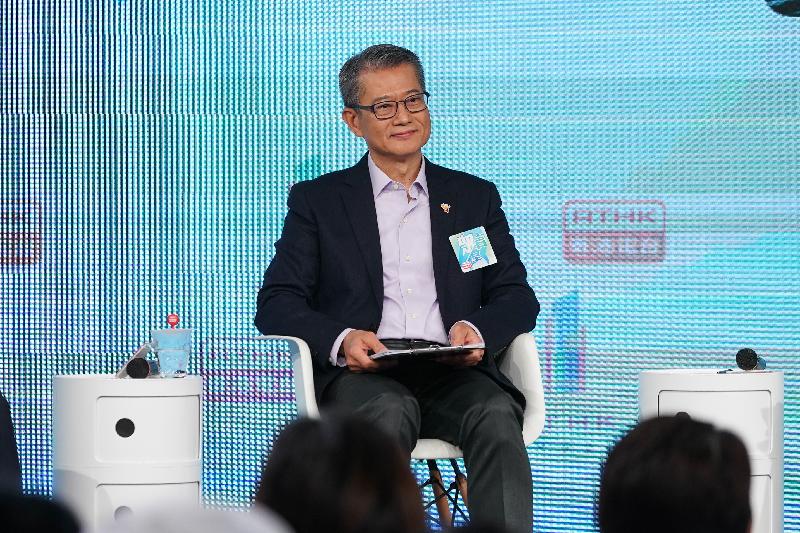
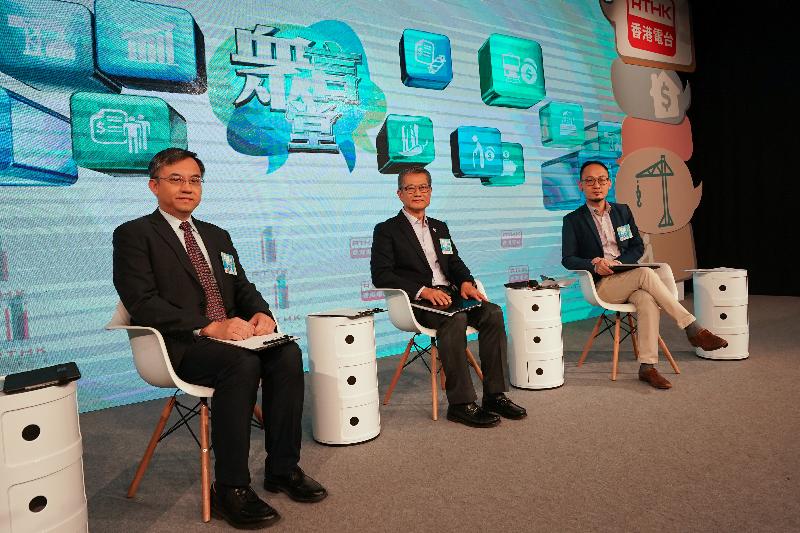

Transcript of remarks by FS at media session (with photos/video)

     Following is the transcript of remarks by the Financial Secretary, Mr Paul Chan, at a media session after attending the "Voices from the Hall – Budget Consultation" forum organised by Radio 1 of Radio Television Hong Kong (RTHK) this morning (January 18):

Reporter: For the cash handout, some say that even if it’s just a small amount, it would still be better than none at all. Will you consider this as a good move gesture from the government? And my second question is about the relief measures, will the ten new relief measures become a long term financial burden because they are not one-off? Thank you. 
 
Financial Secretary: Thank you. On the cash handout, the community has different expectations. We have heard the suggestion that even a smaller amount would be good because a handout from the government will make people happier. We have heard the views and we will consider it in totality along with other factors. As to the recently announced ten measures by the Chief Executive, those measures are welcomed by the community and we have to find resources to fund them. On the one hand, with a growing economy we will have better revenue income in terms of, say for example, profits tax. On the other hand, in terms of increasing revenue, there may be opportunities for the community to discuss whether we need or we want to broaden the tax base – this is on the revenue side. And on the expenditure side, over the years we have, year on year, rolled out one-off relief measures, be it salaries tax and profits tax rebate, rates rebates or other expenditure items. The total amount ranges from over $20 billion to over $60 billion, which is quite a substantial sum. Perhaps some of these may be adjusted to accommodate the funding requirements of some of these measures recently announced by the CE.

(Please also refer to the Chinese portion of the transcript.)

Photo  Photo  Photo  


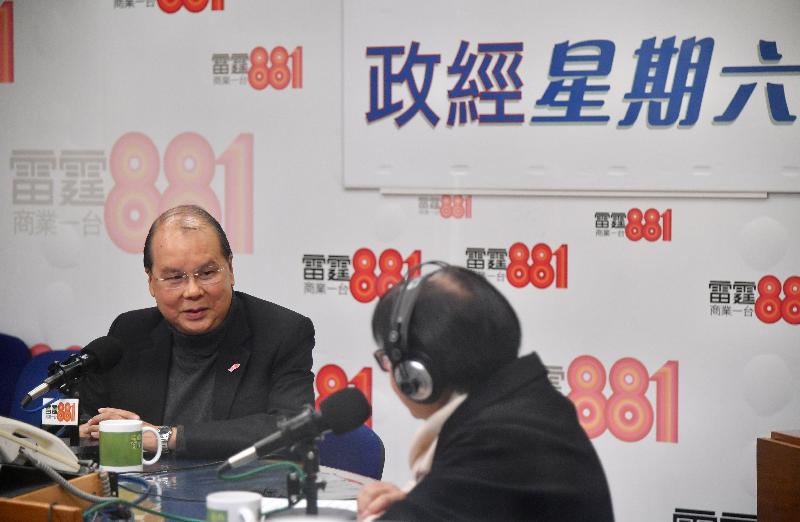
Transcript of remarks by CS at media session (with photo/video)

     Following is the transcript of remarks by the Chief Secretary for Administration, Mr Matthew Cheung Kin-chung, at a media session after attending a radio programme this morning (January 18):

Reporter: So what about the walkout by the DO, the District Officer in Central and Western District Council (DC), and do they violate the neutrality rules of civil servants? And my second question is, you mentioned the relief measures are actually not relief measures, they are like in-depth reforms, could you explain a little bit more?

Chief Secretary of Administration: Let me deal with the second question first. The ten measures proposed by the Chief Executive are meant to be institutional changes, not one-off relief measures. Unlike the Financial Secretary's relief package, which is meant to be one-off measures. It is really meant to tackle long-term problems, for example, in retirement protection, by making uniform for the higher rate for everybody – for the Old Age Living Allowance, is a major step forward in improving old age protection, particularly retirement protection on that score. So we are talking about also increasing substantially the asset limit for applicants under the Old Age Living Allowance, again another very important breakthrough, which will benefit, we reckon, 150 000 people eligible for these particular relaxation – very important step forward. Together with the annuity available in the market, if one, for example, buys annuity up to, say, half a million dollars of savings, keep the other half of million dollars, because the asset limit is up to half million dollars, he or she can get $2,900 extra per month in terms of annuity, on top of the $3,585 Old Age Living Allowance, the higher rate now applies across the board, he will get probably close to $7,000 a month – this is not bad at all for an old age, particularly old-aged pensioner. So we are talking about moving a big step forward in terms of retirement protection, not a one-off relief measure, not Panadol, we are talking about long-term solutions here.

     The concessionary public transport fare system (the two-dollar travel scheme) also benefits 600 000 more people aged between 60 and 64. This is very important, particularly facilitating them to widen their social circle, even work in this way, and also to be more active in their so-called retirement age – those retire in their 60s, so again another major step forward in terms of retirement protection and also in terms of enhancing the well-being of the elderly.

     The first question relates to the so-called response of the District Officer, in response to two cases – one is in Tai Po. In the Tai Po case, in fact the District Officer has sought advice from the Department of Justice, on the legality of the terms of reference of the proposed sub-committee, and the advice was quite clear that it was ultra vires, in other words, went beyond the ambit of the District Council. Therefore, it will be unreasonable, inappropriate for District Officers, and also government officials to participate in these sub-committee. It is a pretty clear question.

     The second issue relates to the Central and Western DC. Again, the Commissioner of Police (CP) spent over an hour answering questions from all fronts in very detailed fashion, and at the end, he made it quite clear a lot of the allegations are not correct, are not true, not substantiated, which means that the motion reprimanding him and the Police Force are totally unfounded. He therefore had to withdraw from the meeting. On that point, in fact, the DO also withdrew for very good reason, because we are one government, alright? You can't have a meaningful discussion when the facts are not substantiated. When the CP made it quite clear that it's not true, alright? He would not join the follow-up discussion. It was entirely reasonable and appropriate for the DO to take the step that she did.

(Please also refer to the Chinese portion of the transcript.)

Photo  


Transcript of remarks by STH

     Following is the transcript of remarks by the Secretary for Transport and Housing, Mr Frank Chan Fan, at a media session after attending radio programmes today (January 18):

Reporter: Is that a general direction for the rent control study because you said you have an open attitude towards the whole thing? My second question regarding the Tuen Ma Line, you said you are confident that the MTRC (MTR Corporation Limited) can prove on the first day of its operation which is a weekday, would you speak a little bit more, can Kwun Tong Line really cope with the extra passengers?

Secretary for Transport and Housing: As far as the tenancy control for subdivided units, we keep an open mind and we are looking forward to the formation of the working group on tenancy control on subdivided units. I would rather leave more latitude and freedom for the working group to work on because tenancy control is a very controversial subject in Hong Kong, and so far there is no consensus within the community. That is why we have to work in full scope and in full fledged to enable an agreeable approach in due course.

     As regards Tuen Ma Line Phase I, it's going to be commissioned on February 14, the MTRC and the colleagues are working very hard to prepare for it. In determining the date for opening, the MTRC has conducted comprehensive review and considered it's capable and competent to manage the traffic flow on that day.

(Please also refer to the Chinese portion of the transcript.)


Lantau Development Advisory Committee holds 14th meeting

     The Lantau Development Advisory Committee held its 14th meeting today (January 18), which was also the last meeting for the third term of the Committee.

     At the meeting, the Committee discussed the work of the Sustainable Lantau Office and the progress of the "Ecological Study for Pui O, Shui Hau, Tai O and Neighbouring Areas – Feasibility Study".

     During this term, the Committee convened three meetings and in conjunction with its three subcommittees, namely the Sustainable Development Subcommittee, the Traffic, Transport and District Improvement Subcommittee as well as the Public Relations and Promotion Subcommittee, it conducted two site visits to better understand the latest progress of the reclamation works under the Tung Chung New Town Extension as well as the habitat of Pui O and Shui Hau.

     The current term of the Committee will expire at the end of this month. At the meeting, the Secretary for Development and Chairman of the Committee, Mr Michael Wong, expressed his gratitude to members for their efforts and contributions in the past two years and hoped that the Committee would continue to provide advice on the sustainable development and conservation of Lantau.