Territory-wide flag-selling activity cancelled

     The Social Welfare Department (SWD) has been informed by Hong Kong Family Welfare Society that the territory-wide flag-selling activity in public places scheduled to be held today (February 8) has been cancelled, a spokesman for the SWD said.
 
     For enquiries, please contact Ms Chow of the organisation at 2527 3171.


Transcript of remarks of press conference (with photo/video)

     The Chief Secretary for Administration, Mr Matthew Cheung Kin-chung, held a press conference in the afternoon of February 7. Also joining were the Secretary for Justice, Ms Teresa Cheng, SC; the Secretary for Home Affairs, Mr Lau Kong-wah; the Secretary for Financial Services and the Treasury, Mr James Lau; the Secretary for the Civil Service, Mr Joshua Law; the Secretary for Security, Mr John Lee; the Secretary for Food and Health, Professor Sophia Chan; the Director of Health, Dr Constance Chan; and the Deputy Secretary for Food and Health (Food), Mr Daniel Cheng. Following is the transcript of remarks of the press conference.
     
Reporter: Just a few English questions first. First question regarding the quarantine measures. Are there any other measures other than spot checks and the possible legal consequences to make sure that people really are staying at home or staying in the hotels they're booked in? How should people behave when they are being quarantined in these places? And isn't that subjecting other people in the building or other hotel stayers to possible risk or higher risk even? Second question, regarding the people coming into Hong Kong these few days, I'm sure the officials are aware that Mainland visitors entering Hong Kong, particularly through Shenzhen Bay Port, have significantly increased since this mandatory quarantine is announced. With this buffer between the announcement and the actual implementation, have the Hong Kong Government actually already let a lot of potential cases, as some haven't shown symptoms yet, into Hong Kong? And has that increased the risk for the city and adding pressure for our medical system? Third area, regarding the Chief Secretary’s appeal to current and retired government workers to volunteer to help with quarantine efforts, some union leaders are saying that some government workers are being strong-armed or pressured into volunteering to take part, even though they're scared that they might be infected. So what's your response to that? Would there be any follow-up? And has this appeal actually come too late since the measure, like, the quarantine, is coming tomorrow, basically?
 
Chief Secretary for Administration: Let me deal with the third question because you specifically mentioned my name, and I will also answer in general terms the first question about quarantine and leave it to the experts, Professor Chan and also Secretary for Security, to deal with the second question. My appeal to civil servants is a sincere one. It's genuine. We are facing really challenging times and we are talking about social cohesion. It's time for solidarity. I think everybody in the civil service, everyone in the community, should exercise civic responsibility – it's time for us to stand together. Together we stand, divided we fall, right? So we must work hand in hand to tackle this crisis situation, the virus. I'm really making a personal, sincere appeal. I'm telling you that some heads of departments are responding in very positive terms already. I'm receiving very encouraging emails. So any suggestion of coercion is entirely untrue. On the other hand, it's really persuasion, appeal. I'm sure that a number of civil servants will respond to my appeal. So I just want to put the record straight: no question of coercion. It's on a voluntary basis. As the name implies, volunteer.
 
     The first question relates to quarantine. Now let me make an appeal here. The 14-day home quarantine we talked about, basically, the tier two, so-called the tier two quarantine, because these people are not carriers at all. They don't display any symptoms at all. First of all, they are not close contacts, all right? And also they are under close surveillance, close liaison with the Department of Health, the experts there every day – temperature checking and also make sure they wear a mask and all that. What they do is just to stay home. You know, if they've got any needs at all, they've got volunteers to help them. In fact, the Social Welfare Department and Home Affairs Department will stand ready to help them – anything that we can do for them, even childcare, all right? Even buying necessities, buying lunch, dinner, breakfast. And also there will be a hotline provided by Home Affairs Department, I will invite SHA (Secretary for Home Affairs) to supplement. But let me first hand the question to Professor Chan, all right? Then followed by Kong-wah, the SHA.
 
Secretary for Food and Health: First of all, regarding the objective of this mandatory quarantine, their legal backing is to reduce the cross boundary people flow, as well as to reduce the transmissibility of the virus within the community. The mandatory quarantine for 14 days, as the Chief Secretary alluded to earlier, there are checking and also medical surveillance as well as looking into the condition of the people at home. The whole idea is for this person to stay at home and not to go out. So that in case they carry any virus, it would not be transmitted to the rest of the community. That is the whole idea.
 
     Other than the information packs of health education and also telephone calls to the clients, there will be spot checks and random checks to see whether this person is at home. Of course the condition of these persons, for example, whether they have recorded high temperatures, whether they have any clinical symptoms, would be also checked and recorded by themselves.
      
     There will be periodic checking by the Department of Health colleagues to monitor the situation. Of course, self discipline is the most important because the whole idea is not to put the person at home, and then having a lot of guards outside. It is not for this. Self discipline and having everybody in Hong Kong together fighting this infectious disease is the most important.
      
Chief Secretary for Administration: It all boils down to civic responsibility here. Can I also invite Mr Lau, SHA, to talk a little about the support? Because the Social Welfare Department and also Home Affairs Department underpin the whole exercise as volunteers.
      
Secretary for Home Affairs: We’ll set up 37 hotlines to deal with those enquiries by the people under home quarantine. They will be running 24 hours by the staff of the HAD.
 
Reporter: My question about Shenzhen Bay entry?
 
Chief Secretary for Administration: Yes, I will hand the question to John, S for S.
 
Secretary for Security:  Since the Government introduced measures starting on January 30 to suspend the service of six control points and thereafter on February 4, another four control points, we can see the arrival figures have been dropping. On February 5, i.e. the day before yesterday, the total number of people arriving in Hong Kong was 58 800 roughly, that is a drop of 75 per cent compared with the figure before the introduction of the measures. For Hong Kong people arriving, the figure is a drop of 77 per cent; for Mainland visitors, a drop of 68 per cent; for other visitors, a drop of 50 per cent. Yesterday was the single day we saw an increase in the number of arrivals since the introduction of the measures. It is not unexpected because tomorrow we will be implementing the mandatory quarantine for 14 days and it is understandable (that) there are a lot people who either left Hong Kong or left Mainland to come back to Hong Kong or they travel across to sort out some of the businesses for their own arrangement. The key really is on risk management in regard to all these human movements across the border. By introducing the 14-day mandatory quarantine measure, we will be stopping a lot of people, so either today or yesterday, there would be people who would be making arrangements for themselves so as to arrange themselves daily routines to fit into the new arrangement. The question is the frequency will be severely stopped as a result of the measure. So the frequency of travel is the key factor in regard to risk management.
 
Reporter: So first of all I would like to ask that regarding we’re expecting a large amount of people that would require quarantine, has the Government actually identified new locations for quarantine apart from the three holiday camps, which could only provide 97 units? And you mentioned that for people who do not have residence in Hong Kong, they would, maybe, be quarantined in hotels. But what if hotels were filled, those people would be quarantined there, and if those hotel staff, do they have a duty or obligation to monitor those people in quarantine? And also I would like to follow up a question previously asked by a Chinese-speaking colleague saying that the advice from Professor Gabriel Leung saying that hotels are actually not suitable for quarantine because the ventilation system might allow the virus to be spread through the entire building even the new people they might …(inaudible) Why does the Government still choose hotels as one of the quarantine sites? Thank you.
 
Chief Secretary for Administration: Let me deal with the first question first. The people ordered to go into home quarantine, basically they are low risk – so-called tier two, all right? Tier two. They are not close contacts of confirmed cases. They do not display any symptoms at all, and also are under close surveillance and also close contact with the Department of Health and so on. So they are under regular surveillance all the time. All we have talked about is really for them to spend 14 days on their own, all right? In isolation as it were with full support rendered to them and their families as well, so we are talking about a special category of people under quarantine. Now as far as venues are concerned, the centres are concerned, we’re talking about home quarantine, the problem is solved. Basically we’re talking about staying home, all right? They’ve got their room, their place to live, to operate. For those without accommodation, we’ve got to provide them with accommodation. The challenge therefore is to find enough and suitable venues. That’s why we’re now doing our best. We’re doing our best, searching the right sites. That’s why we call on the community, citizens of Hong Kong exercise our civic responsibility. Time for solidarity, time for understanding, time for social cohesion particularly, as I always stress, it’s social cohesion, time for us to stand together to face the crisis, all right? So, is there anything you want to supplement?
 
Secretary for Food and Health: Perhaps I can invite the Director of Health to talk more about the places whereby we think whether it is suitable or not for quarantine. As I said earlier about different levels of risk, for example we now placed the close contacts of the confirmed cases in quarantine camps. They are of the highest risk because they are the close contacts of confirmed cases. We also have a quarantine category for people who come from Hubei. Now we are talking about people who are coming from any parts of China in the last 14 days. The risk level is different based on the assessment of the Department of Health.
 
Director of Health: Under the existing legislation, there are two types of order, namely the isolation order, and the second one is the quarantine order.  Isolation applies to patient, infected persons. If there is a case who is highly suspected to be infected by this novel coronavirus and also for confirmed cases, they will be managed in a hospital under isolation. Once confirmed, they will be held there and kept there until they are fully recovered. That’s for isolation. As for quarantine, there are several types of situation when quarantine order will be issued. In the past, we considered the close contact of confirmed cases. For close contact, I mean, for example, household family; if travelling on an airplane, the passengers sitting within a radius of two seats of the confirmed cases. These close contact, so defined, will be put in quarantine centres. The familiar one which you will know will be like Lady MacLehose Holiday Village. So those are the close contacts of confirmed cases. With the passing of the new emergency regulation, which takes effect tonight, it applies to anyone who has ever been to the Mainland in the past 14 days. So they do not fulfill the criteria of having been a close contact of a confirmed case. They are simply anyone who has ever been to the Mainland in the past 14 days. Because of the fact that we want to achieve two purposes, namely, reduce cross-boundary movement of people and secondly, ask those who have been to the Mainland to stay at home. In the past, we advised people to stay at home for 14 days if they have ever been to the Mainland. But with the recent appearance of more local cases, we think it is important and essential for these people to be applied a more stringent measure. By that, instead of just advising them to stay at home, we mandate them to stay at home. These people are relatively low risk and that is why we adopt a different level of quarantine having done the risk assessment.
 
(Please also refer to the Chinese portion of the transcript.)
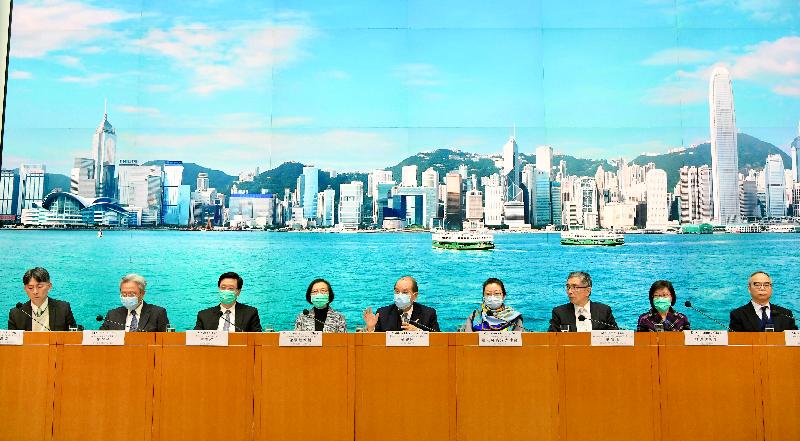
Photo  


People entering Hong Kong from Mainland should comply with compulsory quarantine

     Starting from tomorrow (February 8), the Department of Health (DH) will issue quarantine orders to all people entering Hong Kong from the Mainland, including Hong Kong residents, Mainland residents and visitors from other places. People concerned shall stay at home or other accommodation for a 14-day compulsory quarantine.

     Despite those exempted under the Compulsory Quarantine of Certain Persons Arriving at Hong Kong Regulation, people who have been to the Mainland in the past 14 days preceding arrival at Hong Kong, even if they enter Hong Kong via other places, are covered. They have not developed any symptoms and passed temperature checks upon entry. Those with symptoms will be referred to the DH for further handling. Arrivals holding a visa with validity of less than 14 days will be denied entry.
 
     In general, Hong Kong residents will stay at home for quarantine. For non Hong Kong residents who have arranged to stay at hotels or other dwelling places, they will conduct quarantine at the concerned hotels or dwelling places. If persons under compulsory quarantine are not able to arrange accommodation, they will conduct quarantine at temporary accommodation provided by the Government.
 
     The risk of the abovementioned type of persons requiring quarantine is relatively low.  They are not the close contacts of the confirmed cases or those who have visited Hubei within 14 days, and do not have any symptoms.  Therefore, they can conduct compulsory quarantine at home or the dwelling places for 14 days. Their family members are not required to conduct compulsory quarantine.
 
     Persons under quarantine have to stay at home or the dwelling places all day and wear masks. They are prohibited to leave Hong Kong. Persons under quarantine and those living with them have to check their body temperature every day and monitor their health condition. If they have fever or develop other symptoms, they have to inform the Centre for Health Protection about their health condition via dedicated hotline. After assessment, they will be sent to hospitals for treatment when necessary.
 
     During the quarantine period, those living with the persons under quarantine can supply them with food and necessities daily. The Home Affairs Department will also provide them with a hotline for enquiries. If the persons under quarantine are genuinely incapable of arranging their daily necessities, the Social Welfare Department will provide assistance.  
 
     The Government has to emphasise that self-discipline and community solidarity in fighting against the disease are of upmost importance. Any person concerned who leave the dwelling places without permission may commit a criminal offence. The maximum penalty upon conviction is imprisonment for six months and a fine of $25,000. The Government will ensure the persons under compulsory quarantine stay at homes by spot checks and telephone calls, etc.
 
     To ensure that the freight between Hong Kong and the Mainland would not be affected, the Government will exempt people in the relevant businesses and work who need to frequent between the two places. Categories of persons who are exempted from the compulsory quarantine requirement for 14 days are clearly stipulated in the Compulsory Quarantine of Certain Persons Arriving at Hong Kong Regulation under the Prevention and Control of Disease (Public Health Emergency) Regulation.
 
     The DH will arrange medical surveillance for persons under the above exempted categories during their stay in Hong Kong. Persons under medical surveillance are required to wear masks and check temperature daily for reporting to the DH. In addition, exempted persons are also subject to the temperature check and health declaration procedures carried out by the DH at various boundary control points during arrival and departure clearance.


CHP investigates two additional imported cases of novel coronavirus infection

     The Centre for Health Protection (CHP) of the Department of Health (DH) announced that as of 8pm today (February 7), the CHP is investigating two additional imported cases of novel coronavirus infection, taking to 26 the number of confirmed cases so far in Hong Kong.
 
     The first additional case involves a 58-year-old man with good past health who lives in Zhuhai. He developed fever and cough since February 4 and returned to Hong Kong on February 5. He consulted a private doctor on February 6 and sought treatment at North District Hospital (NDH) where he was admitted for isolation and management on the same day. His respiratory sample was tested positive for novel coronavirus. He is in serious condition.
 
     The CHP has immediately commenced epidemiological investigations and conducted relevant contact tracing. According to the patient's information, he travelled from Zhuhai to Macao back and forth for work during the incubation period. He returned to Hong Kong via the Hong Kong-Zhuhai-Macao Bridge boundary control point on February 5 and resided in Serenity Garden in Sheung Shui with his friend. Quarantine will be arranged for his friend who is asymptomatic.

     The taxi driver who drove the patient from Serenity Garden, Sheung Shui to Wah Ming Shopping Centre in Fanling at around 9am on February 6, as well as another taxi driver who drove him from Wah Ming Shopping Centre in Fanling to NDH at around 11am on February 6, are urged to call the CHP hotline.
 
     The other case involves a 42-year-old man with good past health who lives in The Palazzo, Fo Tan. He developed fever and cough since February 3 and sought treatment at Prince of Wales Hospital (PWH) where he was admitted for isolation and management on the same day. His respiratory sample was tested positive for novel coronavirus. He is in stable condition.
 
     According to the patient's information, he went to Shenzhen Bao'an International Airport from Hong Kong on January 22 before onset of symptoms for a flight to Hebei Province, and returned by air from Hebei Province to Guangzhou on January 26 and then visited Macao on the same day. He returned to Hong Kong from Macao by ferry on February 2. The domestic helper presented with symptoms who lived with him will be sent to PWH, and quarantine will be arranged for his friend who lived with him, who is asymptomatic.
      
     The taxi driver who drove the patient from The Palazzo to PWH at around 2pm on February 6 is urged to call the CHP hotline.
 
     A spokesman for the CHP said, "According to our preliminary epidemiological investigations, some of the confirmed cases are believed to be locally infected. The CHP strongly urged the public to maintain at all times strict personal and environmental hygiene which is key to personal protection against infection and prevention of the spread of the disease in the community."
 
     The spokesman said, "On the personal level, members of the public should wear a surgical mask when having respiratory symptoms, taking public transport or staying in crowded places. They should also perform hand hygiene frequently, especially before touching the mouth, nose or eyes. The public should go out less and reduce social activities, and maintain appropriate social distance with other people as far as possible."
 
     "As for household environmental hygiene, members of the public are advised to maintain drainage pipes properly and regularly pour water into drain outlets (U-traps); after using the toilet, they should put the toilet lid down before flushing to avoid spreading germs."
 
     The CHP will report the cases to the World Health Organization, National Health Commission, Health Commission of Guangdong Province, Health Bureau of Macao.
 
     The CHP has today received notification on two Taiwan confirmed cases, involving one female patient and one male patient. They took the flight CX292 by Cathay Pacific (CX) from Rome to Hong Kong on January 31, and took the flight CX450 by CX from Hong Kong to Taipei on February 1.
 
     The CHP's epidemiological investigations and relevant contact tracing on the confirmed cases are ongoing. The CHP is also closely monitoring and following up on the contact tracing of relevant confirmed cases in the Mainland and overseas. Quarantine will be arranged for close contacts while medical surveillance will be arranged for other contacts. For the progress on the contact tracing of the cases, please see annex.
 
     The CHP has set up a hotline (2125 1122) for public enquiries. The hotline operates from 8am to midnight daily. As at 4pm today, a total of 7 161 calls were received.
 
     A dedicated webpage (www.gov.hk/ncv) has been set up by the CHP. Information including the latest local situation, list of buildings and list of flights/trains/ships relevant to the confirmed cases, countries/areas with reported cases as well as health advice and a "Novel Coronavirus Infection Local Situation Interactive Map Dashboard" are available on the webpage to help the public grasp the latest updates.
 
     To prevent pneumonia and respiratory tract infection, members of the public should always maintain good personal and environmental hygiene. They are advised to:

• Wear a surgical mask when taking public transport or staying in crowded places. It is important to wear a mask properly, including hand hygiene before wearing and after removing a mask;
• Perform hand hygiene frequently, especially before touching the mouth, nose or eyes; after touching public installations such as handrails or door knobs; or when hands are contaminated by respiratory secretions after coughing or sneezing;
• Maintain drainage pipes properly and regularly (about once a week) pour about half a liter of water into each drain outlet (U-traps) to ensure environmental hygiene;
• After using the toilet, put the toilet lid down before flushing to avoid spreading germs;
• Wash hands with liquid soap and water, and rub for at least 20 seconds. Then rinse with water and dry with a disposable paper towel. If hand washing facilities are not available, or when hands are not visibly soiled, performing hand hygiene with 70 to 80 per cent alcohol-based handrub is an effective alternative;
• Cover your mouth and nose with tissue paper when sneezing or coughing. Dispose of soiled tissues into a lidded rubbish bin, then wash hands thoroughly; and
• When having respiratory symptoms, wear a surgical mask, refrain from work or attending class at school, avoid going to crowded places and seek medical advice promptly.

     The public should take heed of the health advice below when travelling outside Hong Kong:

• Do not travel to Hubei Province where community transmission of novel coronavirus is occurring;
• Avoid close contact with persons with fever or respiratory symptoms in countries/areas with possible community transmission of novel coronavirus infection. If it is unavoidable to come into contact with them, put on a surgical mask and continue to do so until 14 days after returning to Hong Kong;
• Avoid visiting hospitals. If it is necessary to visit a hospital, put on a surgical mask and observe strict personal and hand hygiene;
• Avoid touching animals (including game), poultry/birds or their droppings;
• Avoid visiting wet markets, live poultry markets or farms;
• Avoid making close contact with patients, especially those with symptoms of acute respiratory infections;
• Do not consume game meat and do not patronise food premises where game meat is served;
• Adhere to food safety and hygiene rules such as avoiding consuming raw or undercooked animal products, including milk, eggs and meat, or foods which may be contaminated by animal secretions, excretions (such as urine) or contaminated products, unless they have been properly cooked, washed or peeled;
• If feeling unwell when outside Hong Kong, especially if experiencing a fever or cough, wear a surgical mask, inform the hotel staff or tour escort and seek medical advice at once; and
• After returning to Hong Kong, consult a doctor promptly if experiencing a fever or other symptoms, take the initiative to inform the doctor of any recent travel history and any exposure to animals, and wear a surgical mask to help prevent spread of the disease.


Multi-pronged approach to procure masks worldwide

     To combat novel coronavirus infection, since January the Government Logistics Department (GLD) has resorted to all possible means and channels to make direct procurement of masks and other protective items, bypassing tendering procedures on account of the urgency. The objective is to secure such supplies as quickly as possible to meet the Government's operational requirements. As long as the items meet the technical specifications, the GLD will make immediate direct purchase. There is no question of "the lowest bid wins".
      
     The Secretary for Financial Services and the Treasury, Mr James Lau, said, "With the proactive assistance of the Economic and Trade Offices of the HKSAR Government and referrals by individuals, the GLD has got into contact with more than 400 suppliers from nearly 20 countries. To date, the department has already placed orders for over 48 million of masks, of which three million have been delivered. We hope that the remaining shipments will arrive in batches as scheduled."
      
     Mr Lau added, "As supply of masks is very tight throughout the globe, and some jurisdictions have imposed export controls, full and timely delivery of the ordered items remains a challenge. Against this background, we have to go extra miles to source masks globally."
      
     The GLD has a limited stock of 12 million masks at the moment (including the three million masks purchased directly and delivered) for meeting the needs of government departments and priority will be accorded to the medical and port health staff of the Department of Health, front-line staff providing direct services to the public, as well as people and working staff in quarantine centres.
      
     The open tender issued by the GLD in late January for procurement of masks is meant to supplement the above efforts. By global open tendering, the Government seeks to expand the pool of potential suppliers for these protective gears.
      
     Mr Lau said, "We should not give up any opportunity even though the open tender might not be very fruitful. In any case, open tender will not interfere with our efforts in direct purchases."