First batch of Hong Kong residents on board Diamond Princess cruise ship return to Hong Kong smoothly (with photos/video)

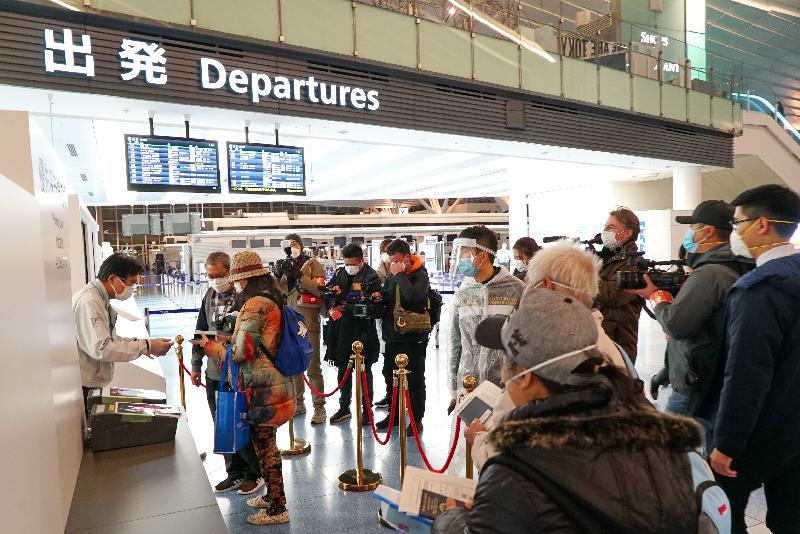
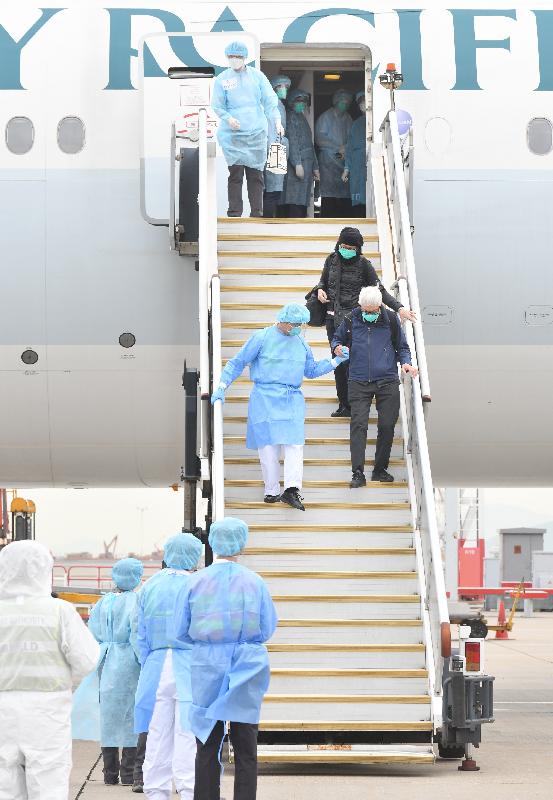
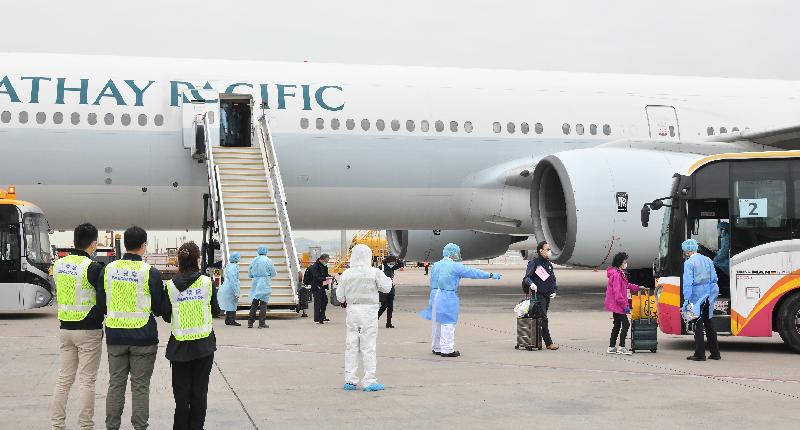
     A total of 106 Hong Kong residents on board the Diamond Princess cruise ship, including the six persons who had completed quarantine at a facility in Saitama Prefecture and were permitted to leave Japan, arrived in Hong Kong from Tokyo safely this morning (February 20) on a chartered flight arranged by the Hong Kong Special Administrative Region (HKSAR) Government.
 
     Before disembarkation from the plane, staff of the Port Health Division of the Department of Health (DH) briefed them about the quarantine arrangements and checked their body temperature. All passengers were taken to the quarantine centre in Chun Yeung Estate by pre-arranged coaches to undergo 14 days of quarantine observation.
 
     People who have been arranged to stay at quarantine centres, including these passengers returning Hong Kong, have not developed any symptoms and are not confirmed or suspected infected patients. The operation of the quarantine centre will adopt the mode of independent accommodation with security and healthcare staff on duty round the clock. Transport services for leaving and entering the centre will be provided to people under quarantine. Without written permission from a health officer, people under quarantine cannot leave the centre and will not move around in the community.
 
     A total of 364 Hong Kong residents were originally on board the Diamond Princess cruise ship, including 260 holding the HKSAR passport and around 100 holding a foreign passport. As of February 19, 55 Hong Kong residents on board had been confirmed to be infected with the novel coronavirus and they have to stay in Japan for medical treatment. Thirty-three Hong Kong residents who are close contacts of the confirmed cases have been put under quarantine for an extended period and are unable to return to Hong Kong for the time being. Officers from the Immigration Department will stay in Japan to continue to provide practicable assistance to the Hong Kong residents who are under extended quarantine or treatment.
 
     The task force of the HKSAR Government will today continue to maintain close liaison with the Japanese authority and the cruise operator, and will confirm the list of remaining Hong Kong residents and their test results. They aim to bring back all Hong Kong residents who are permitted to leave the cruise ship to Hong Kong today. A third chartered flight will be arranged as necessary to transfer the remaining Hong Kong residents back to Hong Kong tomorrow.
 
     Any individual who does not take one of the chartered flights to Hong Kong will be referred to the Port Health Division for assessment immediately on returning to Hong Kong and will still be subject to a maximum of 14 days' quarantine in a quarantine centre.
 
     The HKSAR Government expressed its heartfelt gratitude for the assistance of the Embassy of the People's Republic of China in Japan and the Office of the Commissioner of the Ministry of Foreign Affairs of the People's Republic of China in the HKSAR in the liaison work with the Japanese Government and the active facilitation by the Japanese authority, thereby enabling the HKSAR Government to bring back the first batch of Hong Kong residents on board the Diamond Princess cruise ship to Hong Kong smoothly.
 
     The HKSAR Government also expressed thanks to Cathay Pacific Airways, which accepted the commission to arrange the chartered flights and its crew members who voluntarily participated in the operation, as well as all participating officers of the Security Bureau, the Immigration Department, the DH, the Hospital Authority and the Hong Kong Economic and Trade Office in Tokyo.
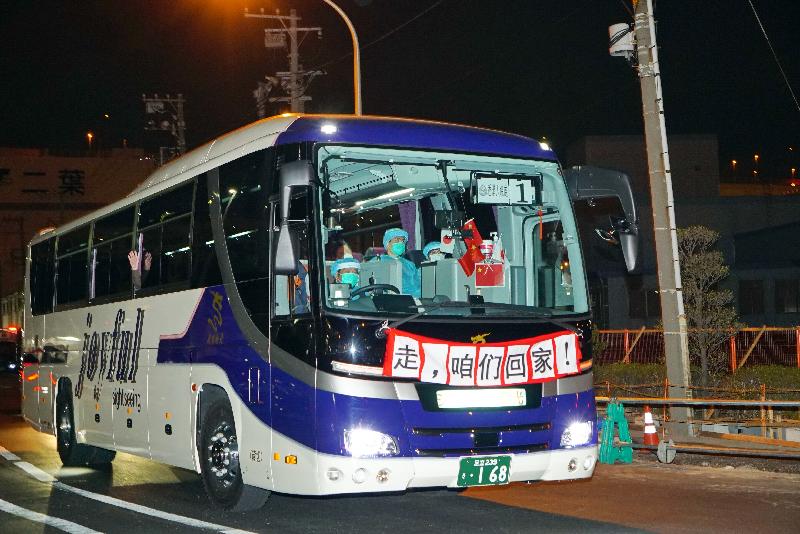
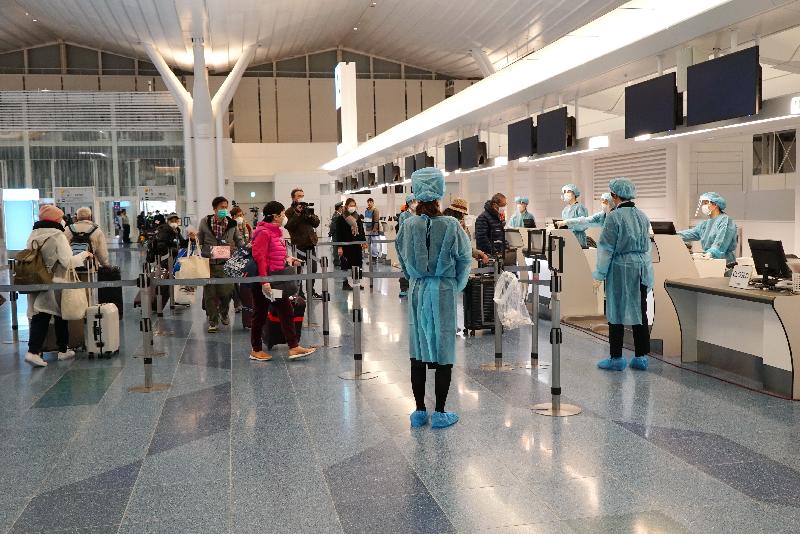
Photo  Photo  Photo  Photo  Photo  Photo  Photo  


Continuation of special arrangements for LegCo Secretariat

The following is issued on behalf of the Legislative Council Secretariat:

     The Legislative Council (LegCo) Secretariat announced today (February 20) that disease prevention measures and special arrangements for the LegCo Secretariat will continue to be implemented in order to reduce the risk of the spread of the novel coronavirus in the community.  Secretariat staff will work from home, except those who provide support services to the meetings of LegCo and its Committees, maintain basic operation of the Secretariat and who are on essential duties.

     Members of the public may refer to the "LegCo Calendar" on the LegCo Website (www.legco.gov.hk) or the "Calendar" on the LegCo Mobile App for the latest arrangements of meetings of LegCo and its Committees to be held from February 24 to 28. 

     For details of the disease prevention measures and special arrangements for the LegCo Secretariat, please refer to the announcement on the LegCo Website (www.legco.gov.hk/general/english/sec/corg_ser/whats_on_20200217-e.pdf).

     The aforementioned measures will be implemented tentatively until next Sunday (March 1).  The Secretariat will review these measures and make further announcements in due course.


Consumer Price Indices for January 2020

     The Census and Statistics Department (C&SD) released today (February 20) the Consumer Price Index (CPI) figures for January 2020. According to the Composite CPI, overall consumer prices rose by 1.4% in January 2020 over the same month a year earlier, smaller than the corresponding increase (2.9%) in December 2019. The smaller increase in the Composite CPI in January was mainly due to the Government’s payment of public housing rentals and waiver of two-thirds of rent for tenants of Group B estates by Hong Kong Housing Society in January 2020, as well as the additional Government’s provision of electricity charge subsidy starting from January 2020. Netting out the effects of all Government’s one-off relief measures, the year-on-year rate of increase in the Composite CPI (i.e. the underlying inflation rate) in January 2020 was 3.7%, larger than that in December 2019 (2.9%). The increase was mainly due to the enlarged increases in the charges for package tours and prices of pork around the Lunar New Year.

     On a seasonally adjusted basis, the average monthly rate of change in the Composite CPI for the 3-month period ending January 2020 was -0.5%, and the corresponding rate of change for the 3-month period ending December 2019 was 0.1%.  Netting out the effects of all Government’s one-off relief measures, the corresponding rates of increase were 0.3% and 0.1%.
  
     Analysed by sub-index, the year-on-year rates of change in the CPI(A), CPI(B) and CPI(C) were -2.0%, 2.8% and 3.4% respectively in January 2020, as compared to 3.4%, 2.9% and 2.5% respectively in December 2019. Netting out the effects of all Government’s one-off relief measures, the year-on-year rates of increase in the CPI(A), CPI(B) and CPI(C) were 4.3%, 3.5% and 3.4% respectively in January 2020, as compared to 3.5%, 2.7% and 2.4% respectively in December 2019.
  
     On a seasonally adjusted basis, for the 3-month period ending January 2020, the average monthly rates of change in the seasonally adjusted CPI(A), CPI(B) and CPI(C) were -1.8%, 0.0%  and 0.2% respectively. The corresponding rates of increase for the 3-month period ending December 2019 were all 0.1%. Netting out the effects of all Government’s one-off relief measures, the average monthly rates of increase in the seasonally adjusted CPI(A), CPI(B) and CPI(C) for the 3-month period ending January 2020 were all 0.3%, and the corresponding rates of increase for the 3-month period ending December 2019 were all 0.1%.
  
     Amongst the various components of the Composite CPI, year-on-year increases in prices were recorded in January 2020 for food (excluding meals bought away from home) (17.0%), miscellaneous services (4.8%), miscellaneous goods (3.6%), meals bought away from home (2.2%) and transport (1.8%).
  
     On the other hand, year-on-year decreases in the components of the Composite CPI were recorded in January 2020 for electricity, gas and water (-16.0%); clothing and footwear (-5.5%); housing (-3.0%); durable goods (-2.7%) as well as alcoholic drinks and tobacco (-1.5%).
 
     For the 3 months ending January 2020, the Composite CPI rose by 2.4% over a year earlier, while the CPI(A), CPI(B) and CPI(C) rose by 1.6%, 2.8% and 2.8% respectively. The corresponding increases after netting out the effects of all Government’s one-off relief measures were 3.2%, 3.8%, 3.0% and 2.7% respectively.
  
     For the 12 months ending January 2020, the Composite CPI was on average 2.8% higher than that in the preceding 12-month period.  The respective increases in the CPI(A), CPI(B) and CPI(C) were 2.9%, 2.8% and 2.7% respectively. The corresponding increases after netting out the effects of all Government’s one-off relief measures were 3.0%, 3.6%, 2.9% and 2.7% respectively.
  
Commentary

     A Government spokesman said that the underlying consumer price inflation rate went up to 3.7% in January, distorted by enlarged year-on-year increases in charges for package tours and prices of basic foodstuffs around the Lunar New Year (which fell in late January this year but early February last year). It would thus be more meaningful to examine the figures for January and February combined, when available, to assess the underlying inflation situation. On the other hand, the headline consumer price inflation rate eased to 1.4% in January, reflecting the impacts of the Government’s one-off relief measures.

     Looking ahead, overall inflationary pressures will likely be contained in the near term, given the mild external price pressures and subdued local economic conditions. While the threat of the novel coronavirus infection may cause prices of certain daily necessities to rise, any disruption should only be temporary. The Government will continue to monitor the inflation situation closely, particularly the impact on the lower-income people.

Further information

     The CPIs and year-on-year rates of change at section level for January 2020 are shown in Table 1. The time series on the year-on-year rates of change in the CPIs before and after netting out the effects of all Government’s one-off relief measures are shown in Table 2. For discerning the latest trend in consumer prices, it is also useful to look at the changes in the seasonally adjusted CPIs.  The corresponding time series on the average monthly rates of change during the latest 3 months for the seasonally adjusted CPIs are shown in Table 3. The rates of change in the original and the seasonally adjusted Composite CPI and the underlying inflation rate are presented graphically in Chart 1.

     More detailed CPI data (including year-on-year comparison, month-to-month comparison, seasonally adjusted data series and the CPIs by the Classification of Individual Consumption According to Purpose (COICOP)) are available in the monthly reports. Users can download the January 2020 issue of the "Monthly Report on the Consumer Price Index" (www.censtatd.gov.hk/hkstat/sub/sp270.jsp?productCode=B1060001), the time series of CPIs at detailed level (www.censtatd.gov.hk/hkstat/sub/sp270.jsp?productCode=D5600001), the time series of CPIs at COICOP division level (www.censtatd.gov.hk/hkstat/sub/sp270.jsp?productCode=D5600002) and the time series of CPIs after netting out the effects of all Government's one-off relief measures (www.censtatd.gov.hk/hkstat/sub/sp270.jsp?productCode=D5600003) free of charge at the website of the C&SD.

     For enquiries about the CPIs, please contact the Consumer Price Index Section of the C&SD (Tel: 3903 7374 or email: cpi@censtatd.gov.hk). 


Effective Exchange Rate Index

     The effective exchange rate index for the Hong Kong dollar on Thursday, February 20, 2020 is 107.6 (up 0.3 against yesterday's index).


Special work arrangement of Office of The Ombudsman to be extended

The following is issued on behalf of the Office of The Ombudsman:

     In view of the latest situation of the novel coronavirus, the Office of The Ombudsman today (February 20) announced that it will extend its special work arrangement until March 1, in order to reduce social contacts and the risk of the spread of the novel coronavirus in the community. The Office will review the situation before then.

     The Office will continue to provide basic and limited services. While the Reception Counter will remain closed, members of the public may contact the Office for enquiries or complaints through email, fax, hotline enquiry, voice message or online form. The Office will make adjustments where necessary in order to provide appropriate services to the public and prepare for resumption of normal services.