MD announcement

Attention duty announcers, radio and TV stations:

     Please broadcast the following as soon as possible and repeat it at suitable intervals:

     The Marine Department today (February 27) reminded masters, coxswains and persons-in-charge of vessels navigating in Hong Kong waters to proceed at a safe speed and exercise extreme caution because restricted visibility of less than 2 nautical miles has been reported.

     Appropriate sound signals shall be made when underway or at anchor. All vessels must comply with the International Regulations for Preventing Collision at Sea.

     Also, when radar is used without the benefit of adequate plotting facilities, the information obtained from the equipment is rather limited and should be construed accordingly.

     Visibility reports are broadcast by the Vessel Traffic Centre (VTC) on VHF channels 02, 12, 14, 63 and 67.

     In the event of an accident, a report shall be made immediately to the VTC at Tel: 2233 7801.


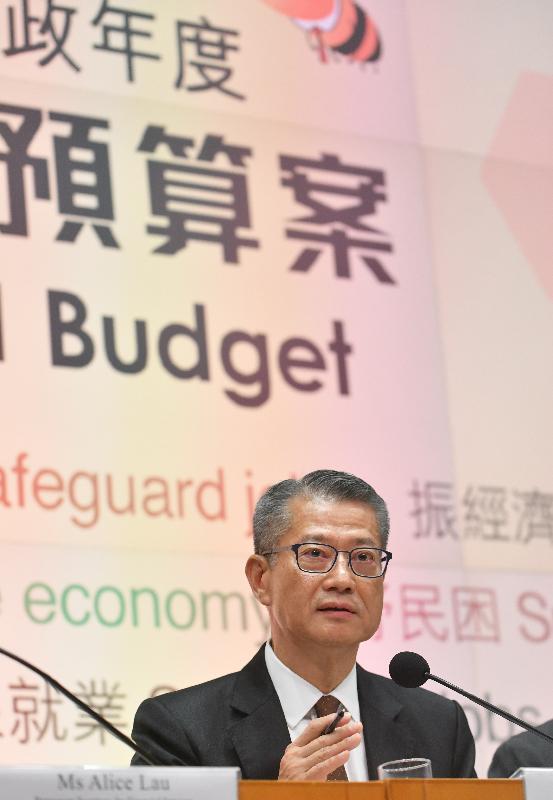
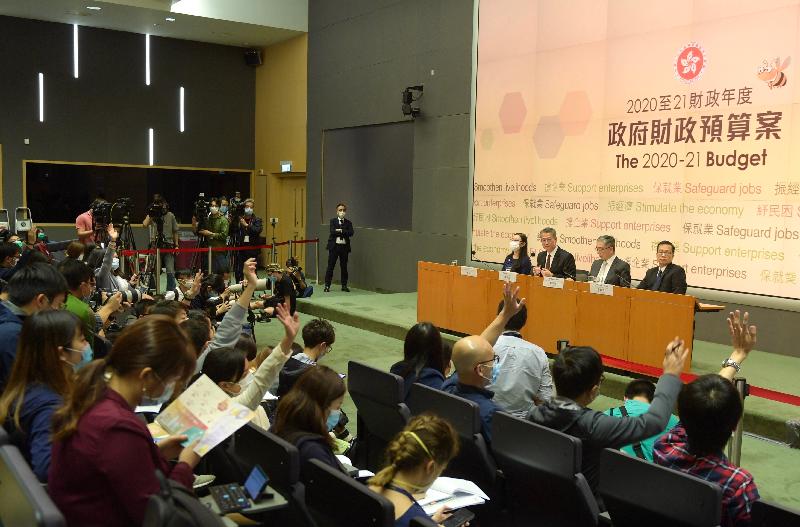
Transcript of remarks by FS at Budget press conference (with photos/video)

     Following is the transcript of remarks by the Financial Secretary, Mr Paul Chan; the Secretary for Financial Services and the Treasury, Mr James Lau; the Permanent Secretary for Financial Services and the Treasury (Treasury), Ms Alice Lau; and the Government Economist, Mr Andrew Au, at the Budget press conference at Central Government Offices, Tamar, today (February 26):
 
Reporter: Mr Chan, I have three questions on your medium-range forecast. Number one is that you've forecast an annual deficit in the coming five years, but is the Government reluctant to really call it a structural deficit because it will affect Hong Kong’s credit rating? How confident are you that Hong Kong is not heading to a structural deficit? And you mentioned the Government’s innovation and technology policies will help generate more revenue, but how confident are you that Hong Kong will really take off in this area, because the city's already so much lagging behind other competitors like Shenzhen? Question number two is that, in paragraph 178, you mention that we may need to consider seeking new revenue sources or revising tax rates and one-off relief measures will also need to be reduced. Can you elaborate on that? What are your considerations? Would you consider, like, a higher profits tax rate? Would it affect Hong Kong's competitiveness? Or how about salary tax and Hong Kong’s tax base? Number three, you just now explained that the deficit, the 4.8 per cent deficit, but in terms of public spending, it also accounts for 22.6 per cent of Hong Kong's GDP in 2019-20 and while the reserve dropped to 15 to 16 months of government spending. Are these two worrying trends for you, and how will you cope with that in the future? Thank you.
 
Financial Secretary:  On the annual deficit, if we look at the consolidated account, the deficit for the years after 2020-21, the following four years, the deficit will be in the order of about $10 billion-plus on average. In the context of a budget of about $600 billion, I would argue that it is kind of broadly balanced. And particularly 2020-21 is a very exceptional year. This is the first year we forecast a very conservative economic growth. At this stage, jumping into a conclusion of entering into a structural deficit may be too premature. That is my view.
 
     As to your second question about innovation and technology, we are trying very hard to grow this particular sector. In the past few years, different policies have been launched – resources to the order of over HK$100 billion have been committed. The ecosystem for innovation and technology is getting more and more vibrant. We are confident that with this investment and with the determination and consistency in terms of government policy to promote this sector, we will be able to succeed. You mentioned about our competitive advantage vis-à-vis neighbouring cities like Shenzhen. The way we see it is that in the context of innovation and technology we have to leverage the synergy of all the cities within the Greater Bay Area. For Hong Kong, we have our own competitive advantage in terms of research capabilities, in terms of intellectual property right protection, things like that. In Shenzhen, they have a number of tech giants and they are very good in terms of transforming research findings into application, in terms of commercialisation and manufacturing. If we can work together and leverage on each other’s respective advantages, we can grow together, driving the Greater Bay Area into an international innovation and technology centre.
      
     You mentioned about revenue, about tax rate. Yes, in face of the deficit in the operating account, we need to look into different ways of raising revenue. Adjusting tax rate is one option. Finding other revenue sources, having new types of tax is another. At this stage it would be premature for us to jump into the conclusion as to which one is the best or whether we should do a combination of both, but obviously this will be an agenda very high on our work.
      
     Finally, in terms of fiscal reserves, although in the coming few years we are seeing over $50 billion annually in the operating account in terms of deficit, but on a consolidated basis, as I mentioned earlier, it is in the order of about $10 billion. If we take into consideration that figure, the fiscal reserve of the Government towards the end of 2024-25 would still be in the order of about $900 billion, which is about 15 months' government expenditure. Yes, in face of this situation we have to be vigilant. We need to think hard how to increase revenue, how to rationalise ourselves in terms of containing expenditure. But at this level I still maintain the view that the fiscal reserve at this stage is safe.
 
Reporter: … (inaudible) government spending at no more than 20% of GDP …
 
Financial Secretary: Ever since the year before last we already mentioned about breaking the threshold of government expenditure setting at no more than 20 per cent of GDP, because in a way, looking back, that constrained our social investment. In the past few years we have been spending a lot in terms of catching up in a lot of areas, like social services, education, and medical and health. But there is an extent to which we can do this, and when reaching a certain stage it would not be possible for us to continue increasing the expenditure like that. It is more important for us to make good use of the resources and the policies and do it properly so that with those resources we can enhance the service to the benefit of our people. But on the other hand, future increase in expenditure has to be commensurate with our increase in revenue. Thank you.
 
Reporter: Secretary, you mentioned that you are targeting this summer to give out the $10,000 but looking back in 2011 it was late October for the first batch of people could get the $6,000 back then, so what makes you so confident that you can be quicker than last time? The second question is about, do you think this measure, and your whole budget, by spending $120 billion as well as the cash handout as relief measures and so on, do you think this can actually help lift the very low popularity across the board for the ministers and also the Government, or is it actually not really going to help because according to the DAB if you are slow in giving the cash handout it would actually turn out to be a disaster rather than a thing that can help the popularity of the Government? Thank you.
 
Financial Secretary: In the last round back in 2011, when the $6,000 scheme was implemented, enrolment started in late August and payment was first made in November. So that was the enrolment day and payment day back then. This time, we are trying very hard to pull out all the stops. We are receiving great support from the Hong Kong Monetary Authority, the Office of Government Chief Information Office, the Treasury, the Post Office and other related departments. A task force has started to work on this particular project because we want to revive our economy, we want to stimulate consumption. It is important for us to be able to get this money into the hands of our people in summer when the current epidemic disease may be over. We are quite confident that we will be able to start payment in summer.
 
Reporter: But how can you be quicker than nine years ago? How can you be actually quicker?
 
Financial Secretary: Further details will be announced. I think in the past few years, electronic banking has become a lot more popular and also the use of electronic wallets and different fin-tech technology is more mature. I’m relying on my professional team to give me support in order to ensure a smooth implementation of this project.
 
Reporter: Sorry, the second question – popularity.
 
Financial Secretary: Sorry would you mind repeat, perhaps maybe because of the mask.
 
Reporter: Sorry, the DAB was saying that even if you give a cash handout, it might not help the popularity of the Government if you kinda mess it up, if you are slow in giving out the money. So my question is, do you think you are spending $120 billion and this $10,000 cash handout, is it actually going to help the very low popularity of the current government?
  
Financial Secretary: I think it is very important for us to do the right thing. Whether they help our popularity or not is irrelevant.
 
 (Please also refer to the Chinese portion of the transcript.)

Photo  Photo  Photo  


CHP investigates six additional cases of COVID-19

     The Centre for Health Protection (CHP) of the Department of Health (DH) announced that as of 8pm today (February 26), the CHP is investigating six additional cases of COVID-19, taking the number of confirmed cases to 91 in Hong Kong so far.
 
     Three of the confirmed cases today are associated with the cluster related to a Buddhist temple named Fook Wai Ching She. One of the patients involves a 49-year-old woman (the 86th case) with good past health who lives in Block B, Healthy Gardens, 560 King's Road, North Point. She developed cough with sputum and sore throat since February 18. She called the CHP hotline and was arranged to be taken to Pamela Youde Nethersole Eastern Hospital (PYNEH) by ambulance on February 22. She was admitted to the hospital for treatment on February 23. Her respiratory sample was tested positive for COVID-19 virus and is now in a stable condition. The patient had no travel history during the incubation period. Her husband and son who live with her are asymptomatic and will be arranged for quarantine.

     Another patient is an 80-year-old male (the 89th case) who is the husband of the 74th case confirmed on February 23. The patient has underlying illness who lives in Maylun Apartments, 1-25 Shu Kuk Street, North Point. The patient developed fever and cough yesterday (February 25) and was admitted to PYNEH for treatment on the same day. His respiratory sample was tested positive for COVID-19 virus and is now in a stable condition. The patient had no travel history during the incubation period and did not visit Fook Wai Ching She. His daughter who lives with him and presented with symptoms was transferred to PYNEH for treatment while his grand-daughter and domestic helper are asymptomatic and have been arranged for quarantine. 
 
     The third case involves a 26-year-old male (the 91st case) who is the son of the 76th case confirmed on February 24. The patient has good past health who lives in Phase 1 of Redhill Peninsula in Tai Tam. He developed fever and cough since February 20 and sought medical advice at the Outpatient Department at the Hong Kong Sanitorium and Hospital on February 21. He attended Ruttonjee Hospital (RH) and was admitted for treatment on February 24. His respiratory sample was tested positive for COVID-19 virus and is now in a stable condition. The patient had no travel history during the incubation period and did not visit Fook Wai Ching She. His father, second brother and domestic helper who live with him are all asymptomatic and have been arranged for quarantine.
 
     The CHP's epidemiological investigations revealed that the 86th, 89th and 91st cases together with the patients of the 65th, 70th, 73rd, 74th, 76th, 77th and 83rd cases announced earlier (10 patients in total) had all visited Fook Wai Ching She in Maylun Apartments in January or February or had association with confirmed cases who had been to the temple. Those who also had visited the temple during the above period and developed relevant symptoms later, are urged to call the CHP hotline.
 
     The other two confirmed cases involve two passengers of Diamond Princess cruise, namely a 21-year-old woman (the 87th case) and her 16-year-old brother (the 88th case). Both with good past health, the two patients stayed on the cruise from January 25 to February 22, and returned to Hong Kong by a chartered flight arranged by the Hong Kong Government on February 23. Their samples were preliminary tested positive for COVID-19 virus, hence they were transferred from Chun Yeung Estate Quarantine camp to Queen Mary Hospital for further treatment yesterday. Their respiratory samples were tested positive for COVID-19 virus by further testing today. They are now in a stable condition. The patient of the 87th case had fever on February 12 while the patient of the 88th case had on and off runny nose since February 17. Regarding other relatives who travelled with them on the cruise, their parents and maternal grandfather were confirmed cases diagnosed in Japan and are currently staying in Japan for treatment, while their younger sister has no symptoms and is currently under quarantine in Chun Yeung Estate Quarantine camp.
 
     The sixth case involves a 29-year-old female (the 90th case) who is the domestic helper of the 85th case confirmed yesterday. The patient has good past health who lives at Block 4, Swiss Towers at 113 Tai Hang Road, Tai Hang. She developed fever on February 16 and consulted the same private doctor on February 20 and 24. She was arranged to be admitted to RH by the CHP yesterday. Her respiratory sample was tested positive for COVID-19 virus and is now in a stable condition. The patient had no travel history during the incubation period. Her employer's husband and son, as well as another domestic helper are all asymptomatic and have been arranged for quarantine.

    The CHP's epidemiological investigations and relevant contact tracing on the confirmed cases are ongoing. Quarantine will be arranged for close contacts while medical surveillance will be arranged for other contacts. For the progress on the contact tracing of the cases, please see annex.
 
     A spokesman for the CHP said, "According to our preliminary epidemiological investigations, clusters are observed in local community involving large meal gatherings and other gatherings. Members of the public are urged to go out less and reduce social activities such as meals gatherings or other gatherings, and maintain appropriate social distance with other people as far as possible."
 
     The spokesman said, "The CHP strongly urged the public to maintain at all times strict personal and environmental hygiene which is key to personal protection against infection and prevention of the spread of the disease in the community. On the personal level, members of the public should wear a surgical mask when having respiratory symptoms, taking public transport or staying in crowded places. They should also perform hand hygiene frequently, especially before touching the mouth, nose or eyes."
 
     "As for household environmental hygiene, members of the public are advised to maintain drainage pipes properly and regularly pour water into drain outlets (U-traps); after using the toilet, they should put the toilet lid down before flushing to avoid spreading germs."
 
     The CHP will report the cases to the World Health Organization, National Health Commission, Japan health authority, Health Commission of Guangdong Province, Health Bureau of Macao and the Hospital Authority.
      
     The CHP has set up a hotline (2125 1122) for public enquiries. The hotline operates from 8am to midnight daily. As at 4pm today, a total of 21 818 calls were received.
 
     Moreover, the Government has launched the website "COVID-19 Thematic Website" (www.coronavirus.gov.hk/eng/index.html) for announcing the latest updates on various news on COVID-19 infection and health advice to help the public grasp the latest updates.
 
     To prevent pneumonia and respiratory tract infection, members of the public should always maintain good personal and environmental hygiene. They are advised to:
 
• Wear a surgical mask when taking public transport or staying in crowded places. It is important to wear a mask properly, including hand hygiene before wearing and after removing a mask;
• Perform hand hygiene frequently, especially before touching the mouth, nose or eyes; after touching public installations such as handrails or door knobs; or when hands are contaminated by respiratory secretions after coughing or sneezing;
• Maintain drainage pipes properly and regularly (about once a week) pour about half a liter of water into each drain outlet (U-traps) to ensure environmental hygiene;
• After using the toilet, put the toilet lid down before flushing to avoid spreading germs;
• Wash hands with liquid soap and water, and rub for at least 20 seconds. Then rinse with water and dry with a disposable paper towel. If hand washing facilities are not available, or when hands are not visibly soiled, performing hand hygiene with 70 to 80 per cent alcohol-based handrub is an effective alternative;
• Cover your mouth and nose with tissue paper when sneezing or coughing. Dispose of soiled tissues into a lidded rubbish bin, then wash hands thoroughly; and
• When having respiratory symptoms, wear a surgical mask, refrain from work or attending class at school, avoid going to crowded places and seek medical advice promptly.
 
     The public should take heed of the health advice below when travelling outside Hong Kong:
 
• Do not travel to Hubei Province of Mainland where there is widespread community transmission of COVID-19 virus;
• Avoid unnecessary travel to Korea (especially Daegu and Gyeongsangbuk-do where the majority of the cases were reported);
• When travelling to countries/areas with active community transmission of COVID-19 virus, the public should avoid close contact with persons with fever or respiratory symptoms. If it is unavoidable to come into contact with them, put on a surgical mask and continue to do so until 14 days after returning to Hong Kong;
• Avoid visiting hospitals. If it is necessary to visit a hospital, put on a surgical mask and observe strict personal and hand hygiene;
• Avoid touching animals (including game), poultry/birds or their droppings;
• Avoid visiting wet markets, live poultry markets or farms;
• Avoid making close contact with patients, especially those with symptoms of acute respiratory infections;
• Do not consume game meat and do not patronise food premises where game meat is served;
• Adhere to food safety and hygiene rules such as avoiding consuming raw or undercooked animal products, including milk, eggs and meat, or foods which may be contaminated by animal secretions, excretions (such as urine) or contaminated products, unless they have been properly cooked, washed or peeled;
• If feeling unwell when outside Hong Kong, especially if experiencing a fever or cough, wear a surgical mask, inform the hotel staff or tour escort and seek medical advice at once; and
• After returning to Hong Kong, consult a doctor promptly if experiencing a fever or other symptoms, take the initiative to inform the doctor of any recent travel history and any exposure to animals, and wear a surgical mask to help prevent spread of the disease.


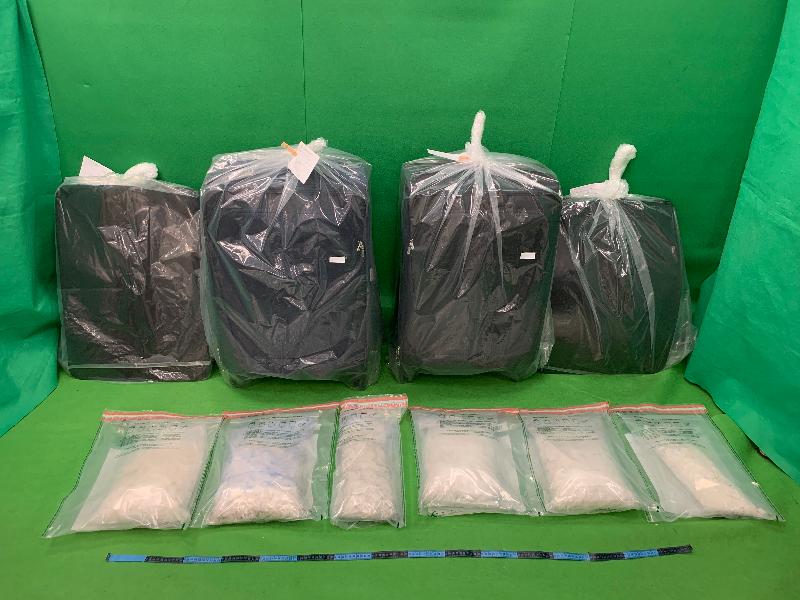
Hong Kong Customs seizes suspected ketamine (with photo)

     â€‹Hong Kong Customs today (February 26) seized about 15 kilograms of suspected ketamine with an estimated market value of about $8.2 million at Hong Kong International Airport.

     A 30-year-old male passenger arrived in Hong Kong from Paris, France today. During customs clearance, the batch of suspected ketamine was found concealed inside the false compartments of his two check-in suitcases. The man was then arrested.

     Investigation is ongoing.

     Customs will continue to apply risk assessment strategy to select outbound, inbound and transit passengers for clearance to intercept different kinds of drug trafficking activities.

     Under the Dangerous Drugs Ordinance, trafficking in a dangerous drug is a serious offence. The maximum penalty upon conviction is a fine of $5 million and life imprisonment.

     Members of the public may report any suspected drug trafficking activities to Customs' 24-hour hotline 2545 6182 or its dedicated crime-reporting email account (crimereport@customs.gov.hk).

Photo  


Cluster of Methicillin-resistant Staphylococcus aureus cases in Princess Margaret Hospital

The following is issued on behalf of the Hospital Authority:

     The spokesperson for Princess Margaret Hospital (PMH) made the following announcement today (February 26):
 
     A 41-day-old baby boy of the Neonatal Intensive Care Unit (NICU) of PMH was confirmed to be carrier of Methicillin-resistant Staphylococcus aureus (MRSA) without clinical symptoms on February 22. In accordance with the prevailing guidelines, PMH has commenced contact tracing for the patient. Three more baby boys (aged 35 days to 55 days) in the ward were confirmed to be carriers of MRSA without clinical symptoms. These four babies are still being hospitalised under medical surveillance and isolation with stable condition. 
 
     Infection control measures of the ward have already been stepped up according to prevailing guidelines. All other infants in the ward are under close medical surveillance.
 
     The cases have been reported to the Hospital Authority Head Office and the Centre for Health Protection for necessary follow up.