Applications for Food Licence Holders Subsidy Scheme and Licensed Hawkers Subsidy Scheme to start on March 5

     The Government has established the Food Licence Holders Subsidy Scheme and Licensed Hawkers Subsidy Scheme under the Anti-epidemic Fund to provide financial support to the food business sector and licensed hawkers hard-hit by the COVID-19 outbreak. The Food and Environmental Hygiene Department (FEHD) today (March 4) announced that applications for the schemes will start from tomorrow (March 5) at 9am. The deadline for applications will be on May 4 at 5pm.   
 
     The Food Licence Holders Subsidy Scheme aims to provide financial subsidies to eight types of food business licence holders. A one-off subsidy of $200,000 will be provided to eligible licence holders of the premises in operation including general restaurants, marine restaurants and factory canteens; and a subsidy of $80,000 will be provided to eligible licence holders of the premises in operation including light refreshment restaurants, fresh provision shops, food factories, bakeries and siu mei and lo mei shops.
 
     The Licensed Hawkers Subsidy Scheme will offer a subsidy of $5,000 to each eligible licensee of a hawker licence, which remains valid when the application is approved. The Subsidy Scheme shall not apply to persons newly issued with a hawker licence under the "2019 Re-allocation of Vacant Fixed Hawker Pitches and Issue of New Licences" exercise.
 
     The Food Licence Holders Subsidy Scheme and the Licensed Hawkers Subsidy Scheme are expected to benefit about 28 000 licensees and 5 500 licensees respectively.
 
     Applicants can download application forms of the schemes from the FEHD website (www.fehd.gov.hk) or obtain from District Environmental Hygiene Offices of the FEHD starting from 9am tomorrow (March 5). Applicants can submit their applications in person, by mail or online. Processing work is expected to be completed within about two weeks from receiving eligible applications from applicants. After the applications are approved, the subsidies will be sent out by crossed cheques to the corresponding licensed food premises or the correspondence address of licensed hawkers registered with the FEHD.


Hong Kong Customs again seizes disinfectant alcohol with toxic methanol (with photos)

     Hong Kong Customs searched four pharmacies in Fanling, Sheung Shui and Yuen Long on Monday (March 2) and seized a total of 110 bottles of disinfectant alcohol with suspected false descriptions of composition and contained toxic methanol. Customs further searched a trading company in Kwun Tong today (March 4). During the operations, a director, three pharmacy salespersons and a person-in-charge of the trading company were arrested for violation of the Trade Descriptions Ordinance (TDO) and the Consumer Goods Safety Ordinance (CGSO). The sale of suspected illegal products in the market was stopped in time by a series of operations. This is the second case of its kind in 10 days following Customs' seizure of 174 bottles of disinfectant alcohol with suspected false descriptions of composition and toxic methanol content on February 21. Customs appeals to members of the public to stop using the disinfectant alcohol concerned. Traders should also take off these products off their shelves.

     Customs earlier received information alleging the sale of disinfectant alcohol with suspected false descriptions of composition at a pharmacy in Fanling. Customs officers were then deployed for immediate action to test-purchase a type of antibacterial disinfectant in plastic bottles labelled as containing "75% ethanol" and complying with the relevant national standard at a pharmacy in Fanling. The product was put on sale in transparent plastic bottles labelled as 500 millilitres and was sold at $75 per bottle. Samples were sent to the Government Laboratory to establish its composition and safety.

     Customs received the test results on March 2 which revealed that the antibacterial disinfectant concerned consists of 69 per cent of ethanol and 8.2 per cent of methanol. The test also revealed that the net volume of the bottle of antibacterial disinfectant was only 478 ml.

     The composition and volume of the disinfectant alcohol were different from the product descriptions according to the test results. It also failed to comply with the relevant national standard as stated, as it contained toxic methanol. The product was therefore suspected to be in contravention of the TDO and CGSO.

     Noting the test results, Customs conducted immediate enforcement action and searched the pharmacy in connection with the case on the same day. In addition, three pharmacies in Fanling, Sheung Shui and Yuen Long were also found selling the same type of disinfectant alcohol during inspections, with the selling price ranging from $55 to $68. A total of 110 bottles of disinfectant alcohol suspected of violating relevant ordinances were seized, and four men including a director and three pharmacy salespersons aged between 31 and 52 were arrested in the operation. Customs officers also inspected a total of 314 retail spots in various districts and no such product was found for sale.

     After a follow-up investigation, Customs today arrested a 39-year-old person-in-charge of the trading company in Kwun Tong who supplied the disinfectant alcohol concerned for sale to the pharmacies in connection with the cases. The five arrested persons were released on bail pending further investigation.

     Customs searched an office of a pharmacy group and its 20 branches in various districts across the territory on February 21 and seized 174 bottles of disinfectant alcohol with suspected false descriptions on composition and with toxic methanol content. A director and six pharmacy salespersons were arrested. Including this case, Customs has inspected over 570 spots and seized 284 bottles of disinfectant alcohol products violating relevant ordinances, with arrests of 12 persons in two operations.

     Investigations of the two cases are ongoing.

     Methanol is a type of toxic organic solvent and cannot be used for general cleaning and disinfection. It can be absorbed into the body through the skin and cause poisoning, hepatic damage, blindness or even death. Customs reminds members of the public to observe the following safety tips when purchasing disinfectant alcohol:
 

  • Pay attention to the product descriptions shown on labels, including the manufacturing date and validity period;
  • Avoid choosing disinfectant alcohol with unknown sources and information; and
  • Purchase recognised brands from reputable shops.

     The following should also be observed when using disinfectant alcohol:
 

  • Do not get close to heat or fire sources; 
  • Do not smoke; 
  • Do not use under high temperature conditions; and
  • Cover the container immediately after use.

     This undertaking is part of the "Guardian" operation, which has been running for 36 days as of yesterday (March 3) since its launch on January 27. More than 2 700 officers have been mobilised to conduct over 18 000 inspections at retail spots in various districts to ensure that common protective items sold in the market comply with the TDO and the CGSO.

     The "Guardian" operation will continue and Customs will carry on stepping up enforcement actions to combat activities in violation of the relevant ordinances. The department will continue to make prompt public updates if irregularities are detected.

     Customs reminds traders again not to take advantage of the current situation and not to sell products using unfair trade practices. They must also not sell products with false origins or false trademarks, nor must they sell unsafe consumer goods. Immediate law enforcement actions will be taken against the contravention of relevant ordinances and prosecutions will be made with sufficient evidence.

     Under the TDO, any person who supplies goods with a false trade description in the course of trade or business, or is in possession of any goods for sale with a false trade description, or sells or possesses for sale any goods with a forged trademark, commits an offence. The maximum penalty upon conviction is a fine of $500,000 and imprisonment for five years.

     Under the CGSO, it is an offence to import, manufacture or supply consumer goods unless the goods comply with the general safety requirements for consumer goods. The maximum penalty upon conviction is a fine of $100,000 and imprisonment for one year on first conviction, and $500,000 and imprisonment for two years on a subsequent conviction.

     Members of the public may report any suspected violation of the TDO or the CGSO to Customs' 24-hour hotline 2545 6182 or its dedicated crime-reporting email account (crimereport@customs.gov.hk). Customs will look into every complaint received and take any necessary follow-up action.
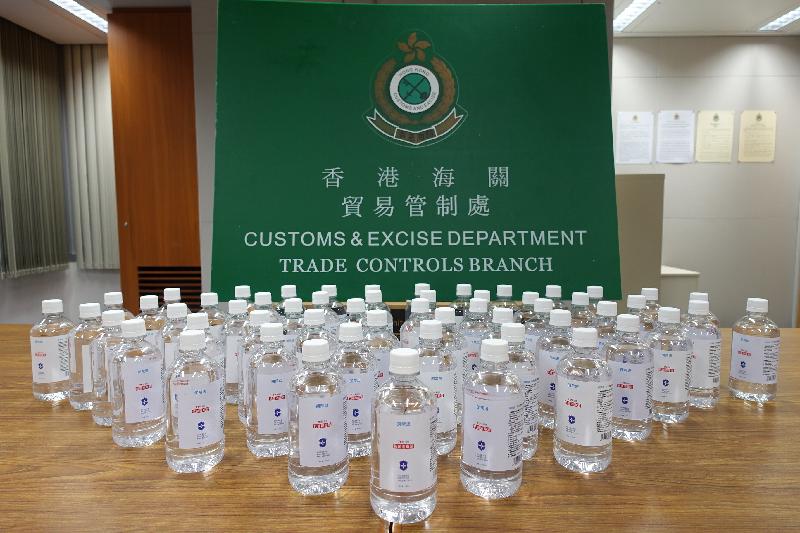
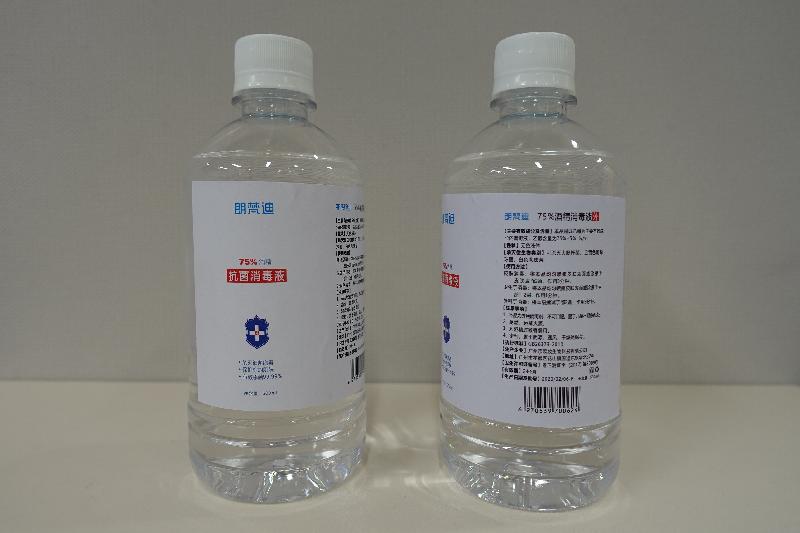
Photo  Photo  


Special traffic and transport arrangements in Chai Wan for Ching Ming Festival

     The Transport Department (TD) today (March 4) reminded the public that in view of the large number of grave sweepers travelling to the cemeteries in Chai Wan during the Ching Ming Festival, special traffic and transport arrangements will be implemented to ensure members of the public can visit the cemeteries in a safe and orderly manner.

     The special traffic and transport arrangements will include:

A. Traffic control/road closures
————————————

March 7 (Saturday), 14 (Saturday), 21 (Saturday) and 28 (Saturday); April 18 (Saturday), 19 (Sunday), 25 (Saturday), 26 (Sunday) and 30 (public holiday); and May 2 (Saturday) and 3 (Sunday)
————————————————————————————————–

     During the implementation of Level I traffic control by the Police, vehicles will continue to be allowed to use the section of Cape Collinson Road east of Lin Shing Road (that is, the left-turning movement from Lin Shing Road to Cape Collinson Road leading to the vicinity of the Chinese Permanent Cemetery). Should traffic conditions worsen, the Police may consider escalating the road closures to Level II.

March 8 (Sunday), 15 (Sunday), 22 (Sunday) and 29 (Sunday); April 10 (public holiday), 11 (public holiday), 12 (Sunday) and 13 (public holiday); and May 1 (public holiday)
————————————————————————————————–

     In connection with the implementation of Level II road closures by the Police, the left turn from Lin Shing Road to Cape Collinson Road leading to the vicinity of the Chinese Permanent Cemetery will be closed to all vehicular traffic (except for green minibus (GMB) route 18M, hearses, funeral vehicles and vehicles with permits) from 7am to 7pm daily.
 
     Lin Shing Road and Cape Collinson Road will be closed to all vehicular traffic from 7am to 7pm daily (except for franchised buses, GMB routes 16A, 16M, 16X and 18M, hearses, funeral vehicles and vehicles with permits). The Police may allow taxis and public light buses to enter Lin Shing Road and turn right onto Cape Collinson Road depending on the traffic conditions in the vicinity of the Chai Wan cemeteries.

April 4 (Ching Ming Festival) and 5 (Sunday)
—————————————————

     In connection with the implementation of Level III road closures by the Police, Lin Shing Road and Cape Collinson Road will be closed to all vehicular traffic from 7am to 7pm daily (except for franchised buses, GMB routes 16A, 16M and 16X, hearses, funeral vehicles and vehicles with permits).

B. Public transport services
——————————-

     New World First Bus (NWFB) route 388 (Circular) between Chai Wan Station Bus Terminus and Chai Wan Cemeteries will be operated from 9am to 2pm on March 8, 15 and 21 and April 10, 13 and 19; from 9am to 4pm on March 28; from 8am to 5pm on March 22 and 29 and April 11 and 12; and from 7am to 6pm on April 4 and 5. When necessary, the service will be strengthened depending on the traffic conditions and passenger demand.
 
     NWFB route 389 (Circular) between Shau Kei Wan Bus Terminus and Chai Wan Cemeteries will be operated from 9am to 2pm on March 8 and 15 and April 10 and 13; from 9am to 4pm on March 28; from 8am to 5pm on March 22 and 29 and April 11 and 12; and from 7am to 6pm on April 4 and 5. When necessary, the service will be strengthened depending on the traffic conditions and passenger demand.

     NWFB route 9C from Shau Kei Wan Bus Terminus to Chai Wan Cemeteries will be operated from 9am to 1pm on April 4. When necessary, the service will be strengthened depending on the traffic conditions and passenger demand.

     Depending on actual traffic conditions in the areas, implementation of and adjustments to the extent of road closures, traffic control measures and public transport diversions will be made by the Police whenever necessary.

     Members of the public are advised to be alert to the latest traffic news on television and radio. They may also visit the TD's website (www.td.gov.hk) or call 1823 for the latest traffic and transport information.


Requirements for free TV licensees to broadcast RTHK programmes lifted

The following is issued on behalf of the Communications Authority:

     The Communications Authority (CA) announced today (March 4) the revocation of directions issued to domestic free television programme service (free TV) licensees on the requirements to broadcast programmes of Radio Television Hong Kong (RTHK).  

     Pursuant to the relevant licence condition in the free TV licences, the CA may direct a licensee to include in its service such television programmes and other material in the public interest provided by the Government. At present, Television Broadcasts Limited (TVB) and HK Television Entertainment Company Limited (HKTVE) are required to broadcast 3.5 hours and 2.5 hours of RTHK programmes per week respectively on their integrated Chinese channels according to the directions issued by the CA. 

     On January 9, 2020, the CA received a request from TVB for lifting the requirements on the broadcasting of RTHK programmes. In the course of processing the request, the CA has consulted the relevant policy bureau, i.e. the Commerce and Economic Development Bureau (CEDB). 

     The requirements for free TV licensees to broadcast RTHK programmes were first introduced in 1990 when RTHK did not operate its own TV channels. Subsequently, RTHK started operating three digital terrestrial television channels (Channel Nos. 31 to 33) in 2014 and with the gradual increase in the number of transmitting stations, their population coverage reached 99 per cent last year, which was on a par with that of commercial TV broadcasters which also provide free TV service via airwaves.  Furthermore, some of RTHK's TV channels are currently accessible through its website and mobile application. Some regular RTHK programmes are also being rerun on RTHK's channels after their first run on free TV channels. 

     After considering the free TV licensee's request and the views of the CEDB, the CA concurs that there is no justifiable case to continue to require commercial broadcasters to broadcast RTHK programmes. Furthermore, lifting the requirements enables free TV licensees to put the spectrum and airtime released to more efficient use. The timeslots vacated could be used to broadcast other programmes, thereby providing more diversified TV programme choices to the public. This could also allow commercial broadcasters to generate more advertising/sponsorship income, thereby facilitating their business amidst the increasing challenges faced by the broadcasting industry. This decision would be consistent with the policy objective to facilitate innovation and sustainable development of the broadcasting industry. There would be no impact on the public as viewers could continue to view RTHK programmes through its own TV channels.

     The CA notes that RTHK has no objection to the request. The CA has informed TVB and HKTVE of the decision to revoke the directions. The free TV licensees may decide whether and, if so, when to cease broadcasting RTHK programmes on their channels, taking into account their commercial, operational and programme scheduling considerations.


Preliminary report on Etihad Airways Boeing 787 serious incident released

     The Air Accident Investigation Authority (AAIA) today (March 4) released Serious Incident Investigation Preliminary Report 1/2020 concerning a serious incident involving an Etihad Airlines Boeing 787 (registration mark A6-BLF) that deviated from its course while conducting an Instrument Landing System approach to Hong Kong International Airport on September 7, 2019.
      
     A spokesperson for the AAIA said that the preliminary report contains information relating to the serious incident at the time of issue, and should be regarded as tentative.
           
     "The AAIA investigation team is conducting detailed analysis of the data and information collected in order to determine the circumstances and causes of this occurrence in conjunction with identifying areas for further investigation or lines of inquiry to follow up," the spokesperson said.

     The full Serious Incident Investigation Preliminary Report 1/2020 is available for download from the AAIA webpage (www.thb.gov.hk/aaia/eng/investigation_reports/index.htm).