Ombudsman probes arrangements for production, distribution and stocktaking of surgical masks manufactured by Correctional Services Department

The following is issued on behalf of the Office of The Ombudsman:

     The Ombudsman, Ms Winnie Chiu, today (March 5) announced the launch of a direct investigation to examine the arrangements for production, distribution and stocktaking of surgical masks manufactured by the Correctional Services Department (CSD). 

     The CSD-manufactured surgical masks (commonly referred to as "CSI masks ") are mainly supplied to the Government Logistics Department (GLD) for distribution to various departments in need. Amid the epidemic of COVID-19 infection in recent months, there is a spike in public demand for surgical masks. The media and members of the public have reported that CSI masks are available on the market, calling into question whether CSI masks have been misused or resold without authorisation.

     In this connection, The Ombudsman decided to launch a direct investigation into the system and procedures regulating the production, distribution and stocktaking of CSI masks and the implementation of such a system and procedures by the CSD and GLD.

     Ms Chiu said, "According to information released by the Government, CSI masks are mainly supplied to various departments for daily and contingency use. In 2019, the CSD supplied an average of 1.1 million surgical masks to GLD monthly, with a small quantity being sold to non-governmental organisations, including social welfare organisations and schools. Given the recent media reports that CSI masks are available on the market, the community is concerned about the possible misuse of CSI masks. Our office has also received complaints about the issue. I have, therefore, decided to probe into the issue by examining whether there are inadequacies in the arrangements of the CSD and GLD in the production, distribution and stocktaking of CSI masks. Where inadequacies are identified, I will make improvement recommendations to the departments concerned for closing any loopholes at source and avoiding any abuse of CSI masks."

     The Ombudsman invites members of the public to send in information and/or views on the above topic to the Office of The Ombudsman by April 6, 2020: 

Address: 30/F, China Merchants Tower, Shun Tak Centre
              168-200 Connaught Road Central, Hong Kong
Fax: 2882 8149
Email: complaints@ombudsman.hk


Office of The Ombudsman announces results of direct investigation into the issue of idle flyovers and “bridges to nowhere” (with photo)

The following is issued on behalf of the Office of The Ombudsman:

     The Ombudsman, Ms Winnie Chiu, today (March 5) announced the completion of a direct investigation into the issue of idle flyovers and "bridges to nowhere".

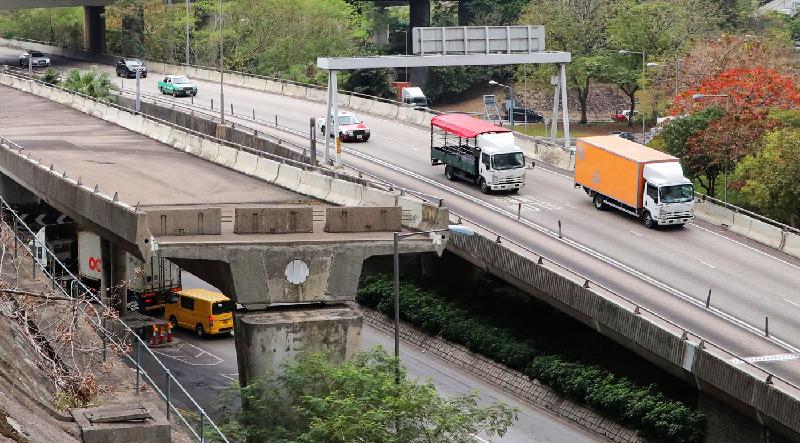
     In constructing a flyover, stub ends may remain on the flyover to facilitate the future expansion of the road network. In addition, where a development project is implemented in stages, adjacent sections of flyovers or stub ends for future extensions may also be built in advance to enable the connection with a new road during the next stage of the project.

     According to the information provided by the Transport Department (TD), the Highways Department (HyD) and the Civil Engineering and Development Department (CEDD), there are currently 29 idle flyover sections or stub ends on 13 distributors/roads in different districts (see Annex).

     The Office of The Ombudsman's investigation has revealed that in those road sections, one was completed as early as 1981. All of those road sections and stub ends have been left idle for more than 10 years, with some over 30 years. This would give an impression that the Government has not taken proactive steps in planning and developing those road sections, resulting in those flyover sections and stub ends being under-utilised.

     The Office considers that the Government should regularly review the planning and development of idle road sections or stub ends to avoid them being idle for a long time. Yet, the Government currently has no mechanism to regularly conduct such review. This may result in missing the opportune time to construct new roads from the stub ends because of the changes and developments that the areas surrounding them have undergone over the past several decades.

     On the other hand, the Government often receives views or objections from different stakeholders when implementing various road-work projects. It has been noted that public concerns are mainly focused on the impacts of the works project(s) on the scenery of the surrounding areas and property prices, and probably would not fully address the necessity for constructing new roads until traffic congestion occurs. If the Government delays or even shelves the construction of new roads due to the concerns and objections raised by some people, pending reconsideration when traffic congestion occurs, then the best time for its construction may have been missed. Traffic congestion in the district concerned would only be prolonged for decades or longer.

     Also, the Government lacks an integrated platform for the public to easily check such information as the planning, progress and current status of all proposed road works. When a road works is a joint-department endeavour, it is even more difficult for the public to know which department they should turn to for the latest information. The Government should consider setting up an integrated information platform to facilitate public enquiries of the latest information and status of the various major road works proposed for different districts.

     The Office of The Ombudsman is of the view that those idle flyover sections or stub ends do not pose any major problem per se. Yet, a stub end left idle for decades means that a road that has undergone years of planning is still awaiting construction, and that the best time for its construction might have been missed, while residents in the vicinity will continue to endure traffic congestion every day.

     With the above, The Ombudsman has made three improvement recommendations to the TD, HyD and CEDD:
 

  • convene joint-departmental meetings regularly to review the development status of all idle flyover sections or stub ends. Where warranted, the local District Councils should be consulted;
  • step up lobbying efforts with the local residents and the District Councils concerned, respond specifically to the objections raised by stakeholders (in particular for those projects with stronger objections), and make recommendations and proposals for improvements or revisions promptly in a bid to gain public support for constructing the new road network; and
  • set up an integrated information platform to facilitate public enquiries of information on the planning, progress and latest status of the proposed road works in various districts, and to publicise the platform.

     The investigation report has been uploaded to the website of the Office of The Ombudsman at www.ombudsman.hk for public information.

Photo  


HKSAR Government sends two flights to bring back Hong Kong residents stranded in Hubei Province to Hong Kong (with photos/videos)

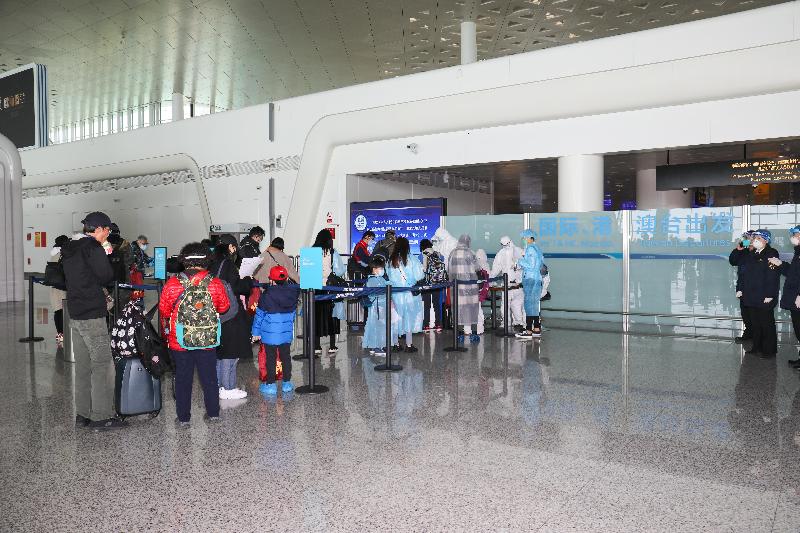
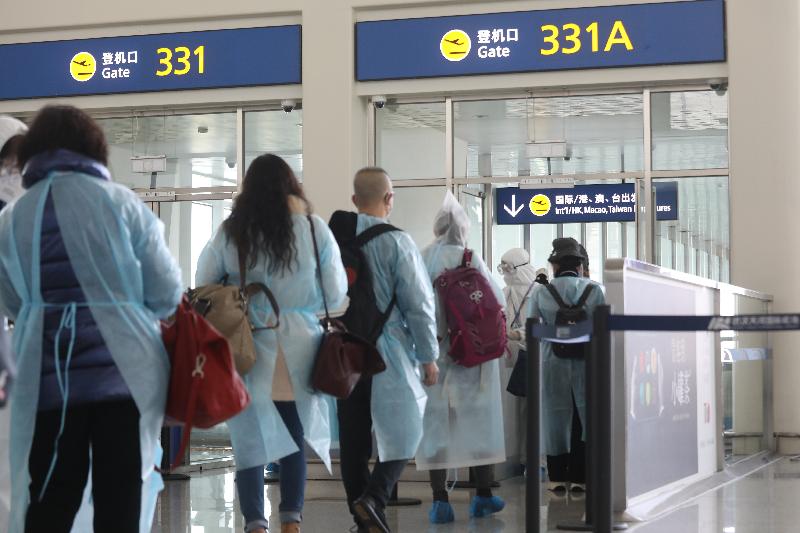
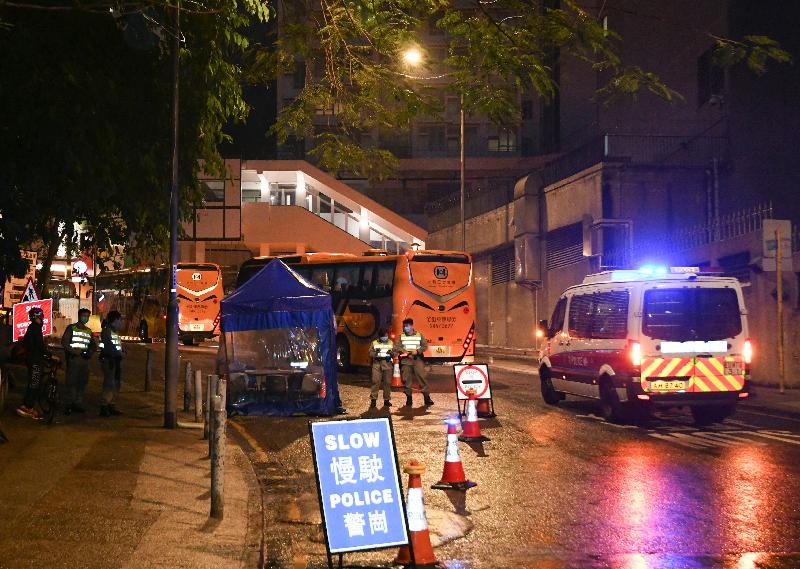
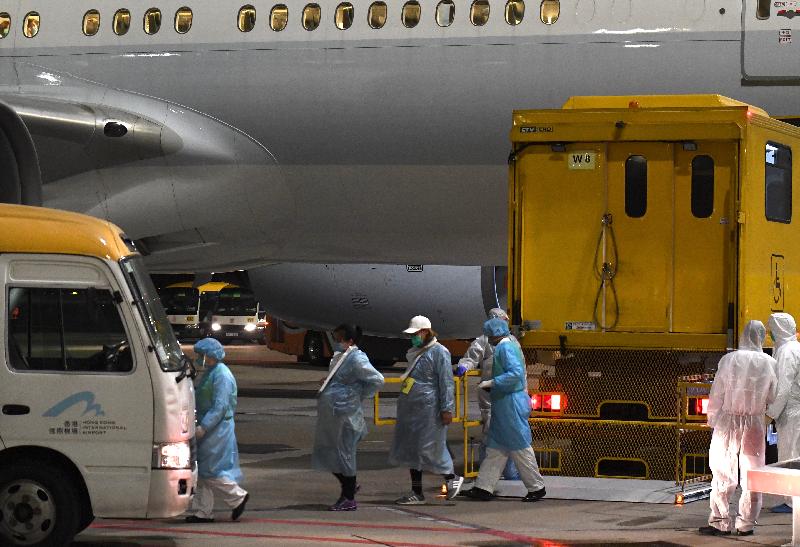
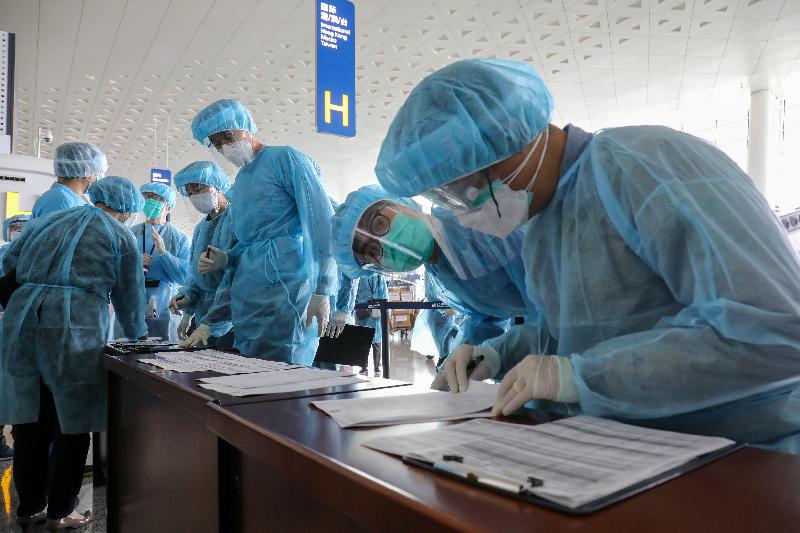
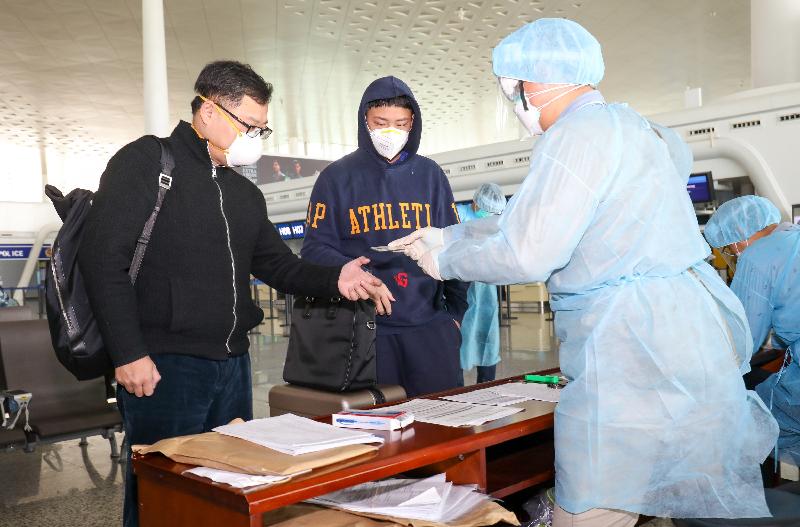
     The Hong Kong Special Administrative Region (HKSAR) Government today (March 4) sent the first batch of chartered flights Wuhan to bring back Hong Kong residents stranded in Hubei Province to Hong Kong. The first batch of chartered flights landed in Hong Kong at around 5pm and 10pm respectively, and successfully brought back 244 Hong Kong residents in Hubei Province.

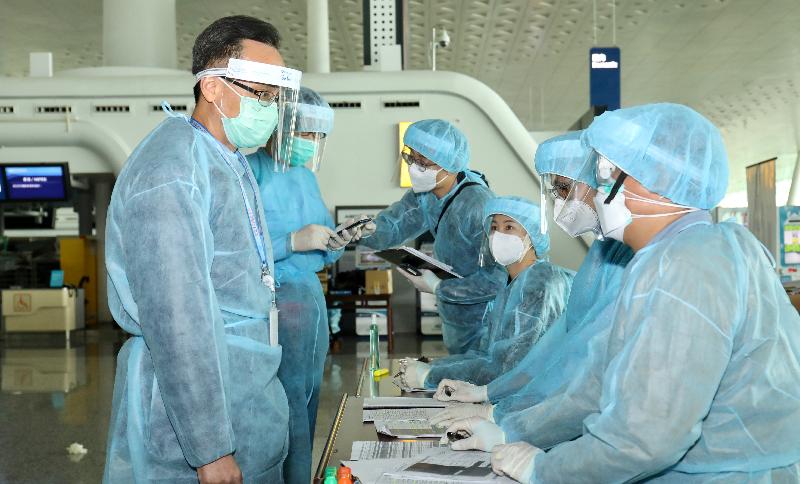
     The Secretary for Constitutional and Mainland Affairs, Mr Patrick Nip, and the Director of Immigration, Mr Erick Tsang, led the Hong Kong team this morning to the Wuhan Tianhe International Airport to co-ordinate the mission, and took the second chartered flight back to Hong Kong. Members of the Hong Kong team include staff from the Constitutional and Mainland Affairs Bureau, the Immigration Department, the Department of Health (DH) and the Hospital Authority.

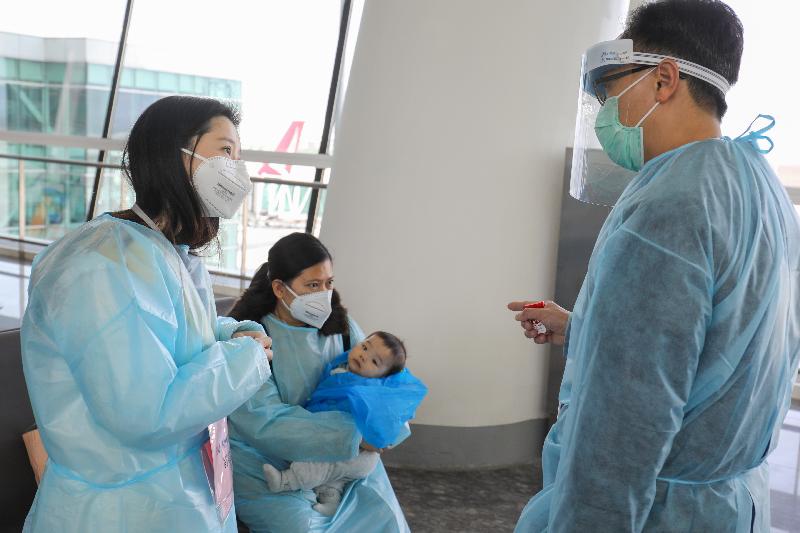
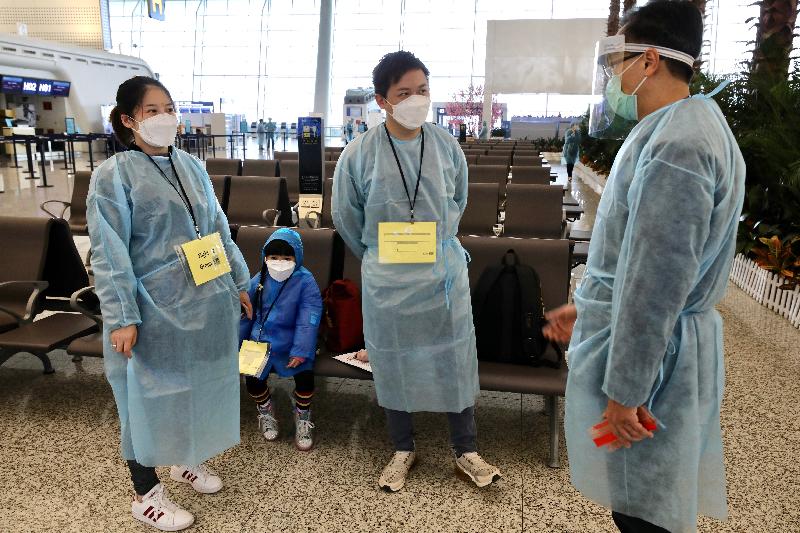
     Taking the first two chartered flights to Hong Kong include 200 Hong Kong people stranded in Wuhan, including two Hong Kong Diploma of Secondary Education candidates, and 44 people in other parts of Hubei Province who have an urgent need to return to Hong Kong, including 13 pregnant women, and ten people suffering from serious illnesses or urgent cases in need for medical treatments in Hong Kong. To cater for operational needs, the Government deployed nine medical staff to board on the flights, including doctors and nurses in the obstetrics and gynaecology specialty.

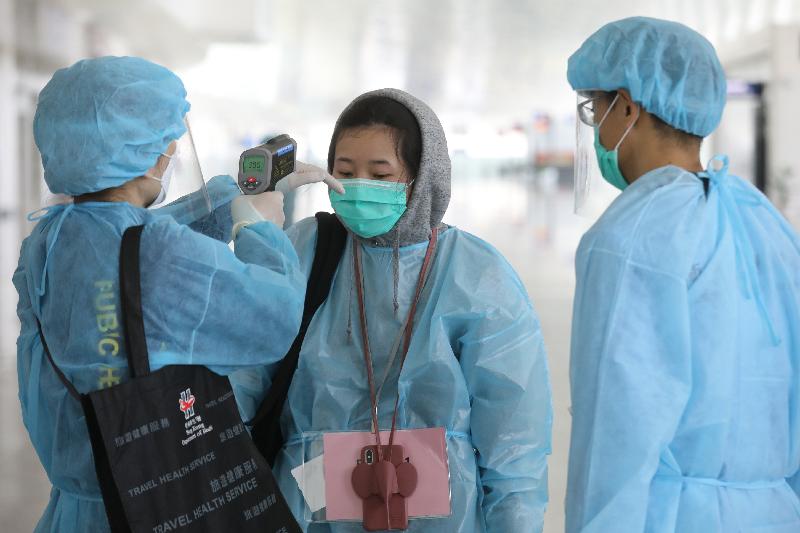
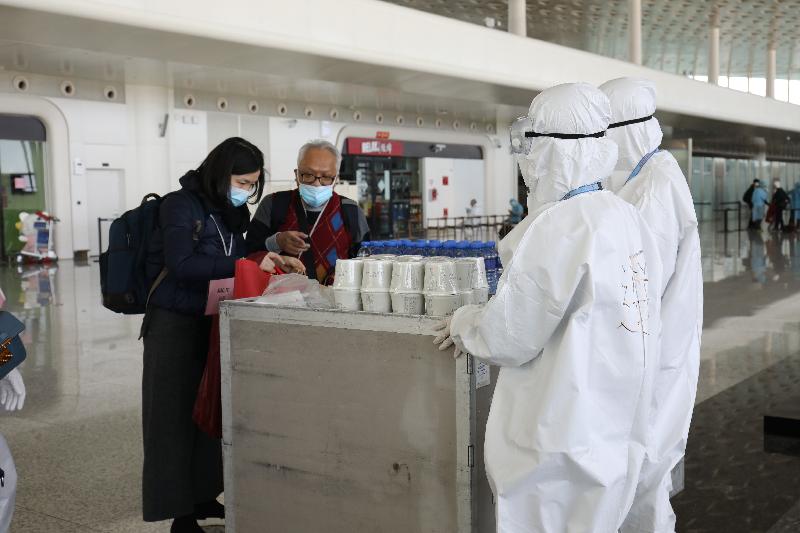
     All people who were taking the chartered flights back to Hong Kong have undergone health assessment by the DH staff in an early stage to check whether they have developed symptoms such as fever. The Hubei Provincial Government also conducted verification to ascertain that all who were allowed to board the flight were not confirmed cases or suspected cases of COVID-19, and were not close contacts of confirmed patients. Before boarding, the people concerned had undergone multiple temperature checks at various checkpoints to ensure that they were not having fever, or developing abnormal vital signs, respiratory tract symptoms and other signs of infectious diseases, and they were also required to put on protective gears.

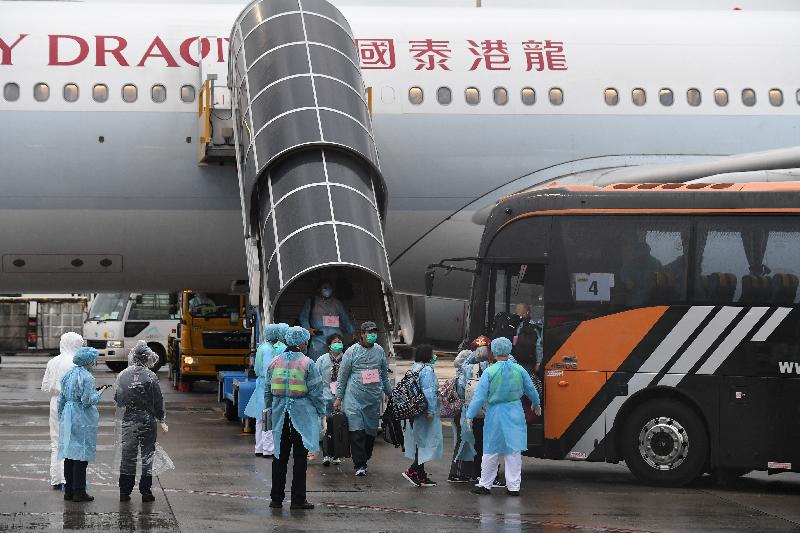
     Upon the arrival of the chartered flights, the DH staff briefed the returnees about the quarantine arrangements and checked their body temperature. They were then taken to the quarantine centre in Chun Yeung Estate by pre-arranged coaches to undergo 14 days of quarantine observation. Upon their arrival at the quarantine centre, they will also undergo laboratory test to ascertain whether they are infected with COVID-19 virus.

     The security and healthcare staff are on duty round-the-clock at the quarantine centre. Transport services for leaving and entering the centre will be provided to people under quarantine. Without written permission from a health officer, people under quarantine cannot leave the centre and will not move around in the community.

     The HKSAR team will depart for Wuhan tomorrow morning to bring back another batch of about 240 Hong Kong people home.

Photo  Photo  Photo  Photo  Photo  Photo  Photo  Photo  Photo  Photo  Photo  Photo  Photo  Photo  Photo  


CHP investigates four additional cases of COVID-19

     The Centre for Health Protection (CHP) of the Department of Health (DH) announced that as of 8pm today (March 4), the CHP is investigating four additional confirmed cases of COVID-19, taking the number of cases to 105 in Hong Kong so far (comprising 104 confirmed cases and one probable case).
 
​     Two of the confirmed cases today are associated with the cluster related to a Buddhist temple named Fook Wai Ching She. One of the patients is a 43-year-old man (the 102nd case) with good past health. He is the person-in-charge of Fook Wai Ching She and lives there alone. He was asymptomatic all along and earlier sent to the quarantine centre as a close contact. His respiratory sample was tested positive for COVID-19 virus today. He is now under treatment at Pamela Youde Nethersole Eastern Hospital and is in a stable condition. The patient did not have recent travel history but had visited Emeishan City in Sichuan Province from January 17 to 20.
 
​     The other case involves a 57-year-old female (the 103rd case) who is the domestic helper of the patients of the 76th (who had visited Fook Wai Ching She) and 91st cases confirmed respectively on February 24 and 26. The patient has good past health and lives in Phase 1 of Redhill Peninsula in Tai Tam. She was asymptomatic and was earlier sent to the quarantine centre as a close contact. Her respiratory sample was tested positive for COVID-19 virus today. She is now under treatment at Queen Mary Hospital and is in a stable condition. The patient had no recent travel history and had not visit Fook Wai Ching She. Her close contacts (except the two confirmed patients), namely her employer and employer’s son have earlier been arranged for quarantine.
 
​     The CHP's epidemiological investigations revealed that the 102nd and 103rd cases together with the patients of the 64th, 65th, 70th, 73rd, 74th, 76th, 77th, 83rd, 84th, 86th, 89th, 91st, 92nd, 93rd, 95th and 98th cases announced earlier (18 patients in total) had either visited Fook Wai Ching She in Maylun Apartments in North Point in January or February or had association with confirmed cases who had been to the temple. People who had visited the temple on January 25 onwards are again urged to call the CHP hotline and those who developed relevant symptoms will be arranged to hospitals for treatment.
 
     The third case involves a 62-year-old female patient (the 104th case) who is the wife of the 63-year-old male patient (the 101st case) confirmed on March 2. The patient, with good past heath, lives at 8 Tai Hang Road. She is asymptomatic and has earlier been sent to the quarantine centre as a close contact of case 85. Her respiratory specimen was tested positive for COVID-19 virus today. She is now under treatment at Pamela Youde Nethersole Eastern Hospital and is in a stable condition.
 
     The patient had no recent travel history. She attended her daughter's wedding banquet on February 22 where her husband (the 101st case) and sister-in-law (the 85th case) were also present.
 
​     The fourth case is an imported case which involves a 69-year-old female patient (the 105th case) with underlying illness who lives in Landwood Court, Villa Lotto, Happy Valley. The patient had visited India from January 31 to February 24.  She developed diarrhoea since February 23 while in India. After returning to Hong Kong, she developed fever since February 28 and consulted a Chinese medical practitioner twice. She attended the Violet Peel General Out-patient Clinic on March 3. Her deep throat saliva specimen was tested positive for COVID-19 virus today.  She was arranged to be admitted to Ruttonjee Hospital by the CHP. She is now in a stable condition. Her husband and domestic helper who live with her are asymptomatic and will be arranged for quarantine.
 
​     The patient took the flight CX694 by Cathay Pacific from New Delhi, India to Hong Kong and arrived on February 24. Passengers on board the returning flight concerned are urged to call the CHP hotline.
 
    The CHP's epidemiological investigations and relevant contact tracing on the confirmed cases are ongoing. Quarantine will be arranged for close contacts while medical surveillance will be arranged for other contacts. For the progress on the contact tracing of the cases, please see annex.
 
     A spokesman for the CHP said, "According to our preliminary epidemiological investigations, clusters are observed in local community involving large meal gatherings and other gatherings. Members of the public are urged to go out less and reduce social activities such as meals gatherings or other gatherings, and maintain appropriate social distance with other people as far as possible."
 
     The spokesman said, "The CHP strongly urged the public to maintain at all times strict personal and environmental hygiene which is key to personal protection against infection and prevention of the spread of the disease in the community. On the personal level, members of the public should wear a surgical mask when having respiratory symptoms, taking public transport or staying in crowded places. They should also perform hand hygiene frequently, especially before touching the mouth, nose or eyes."
 
     "As for household environmental hygiene, members of the public are advised to maintain drainage pipes properly and regularly pour water into drain outlets (U-traps); cover all floor drain outlets when they are not in use; after using the toilet, they should put the toilet lid down before flushing to avoid spreading germs."
 
     The CHP will report the cases to the World Health Organization, National Health Commission, Health Commission of Guangdong Province and the Hospital Authority.
 
     The CHP has set up a hotline (2125 1122) for public enquiries. The hotline operates from 8am to midnight daily. As at 4pm today, a total of 27 159 calls were received.
 
     Moreover, the Government has launched the website "COVID-19 Thematic Website" (www.coronavirus.gov.hk/eng/index.html) for announcing the latest updates on various news on COVID-19 infection and health advice to help the public grasp the latest updates.
 
     To prevent pneumonia and respiratory tract infection, members of the public should always maintain good personal and environmental hygiene. They are advised to:
 
• Wear a surgical mask when taking public transport or staying in crowded places. It is important to wear a mask properly, including hand hygiene before wearing and after removing a mask;
• Perform hand hygiene frequently, especially before touching the mouth, nose or eyes; after touching public installations such as handrails or door knobs; or when hands are contaminated by respiratory secretions after coughing or sneezing;
• Maintain drainage pipes properly and regularly (about once a week) pour about half a liter of water into each drain outlet (U-traps) to ensure environmental hygiene;
• Cover all floor drain outlets when they are not in use;
• After using the toilet, put the toilet lid down before flushing to avoid spreading germs;
• Wash hands with liquid soap and water, and rub for at least 20 seconds. Then rinse with water and dry with a disposable paper towel. If hand washing facilities are not available, or when hands are not visibly soiled, performing hand hygiene with 70 to 80 per cent alcohol-based handrub is an effective alternative;
• Cover your mouth and nose with tissue paper when sneezing or coughing. Dispose of soiled tissues into a lidded rubbish bin, then wash hands thoroughly; and
• When having respiratory symptoms, wear a surgical mask, refrain from work or attending class at school, avoid going to crowded places and seek medical advice promptly.
 
     The public should take heed of the health advice below when travelling outside Hong Kong:
 
• Do not travel to Hubei Province of Mainland where there is widespread community transmission of COVID-19 virus;
• Avoid unnecessary travel to Korea (especially Daegu and Gyeongsangbuk-do where the majority of the cases were reported); Emilia-Romagna, Lombardy and Veneto regions in Italy which cover Bologna, Milan, Venice and Verona, as well as Iran;
• When travelling to countries/areas with active community transmission of COVID-19 virus, the public should avoid close contact with persons with fever or respiratory symptoms. If it is unavoidable to come into contact with them, put on a surgical mask and continue to do so until 14 days after returning to Hong Kong;
• Avoid visiting hospitals. If it is necessary to visit a hospital, put on a surgical mask and observe strict personal and hand hygiene;
• Avoid touching animals (including game), poultry/birds or their droppings;
• Avoid visiting wet markets, live poultry markets or farms;
• Avoid making close contact with patients, especially those with symptoms of acute respiratory infections;
• Do not consume game meat and do not patronise food premises where game meat is served;
• Adhere to food safety and hygiene rules such as avoiding consuming raw or undercooked animal products, including milk, eggs and meat, or foods which may be contaminated by animal secretions, excretions (such as urine) or contaminated products, unless they have been properly cooked, washed or peeled;
• If feeling unwell when outside Hong Kong, especially if experiencing a fever or cough, wear a surgical mask, inform the hotel staff or tour escort and seek medical advice at once; and
• After returning to Hong Kong, consult a doctor promptly if experiencing a fever or other symptoms, take the initiative to inform the doctor of any recent travel history and any exposure to animals, and wear a surgical mask to help prevent spread of the disease.

Police stringently follow up on suspected criminal damage by police officer

     Police are highly concerned about an incident in which a police officer was suspected to have damaged some articles at scene during an anti-crime patrol operation at Tung Chau Street Park in Sham Shui Po on February 24. The case has now been taken up by the Regional Crime Unit of Kowloon West for criminal investigation. An officer in suspected connection with the case has been immediately interdicted.

     Police reiterate that any breach of law or offence against discipline by police officers is not tolerated. Police will follow up on the case in a fair, just and impartial manner.

     Police also appeal to anyone who has any information on the case to contact the Regional Crime Unit of Kowloon West at 3661 8257.