News story: Minister for Human Rights Ramadan message
Minister for Human Rights, Lord Tariq Ahmad of Wimbledon said:
As Minister for human rights and freedom of religion and belief, I want to extend my best wishes to Muslims around the world for a peaceful and blessed Ramadan.
Tomorrow Muslims embark upon a month-long journey of fasting, prayer and reflection to remember the revealing of the Quran to the holy Prophet Muhammad, peace be upon him.
Ramadan is a time for spiritual renewal and physical reflection.
As we fast as individuals, we can take comfort in the fact that Muslims across the world find strength through devotion to fulfil one of the five pillars of our religion.
It is also an incredible time to recognise how we should all do more for the service of humanity. Indeed in previous years British Muslims have raised a staggering £100m in charitable donations.
This Ramadan, let us celebrate the diversity of our great country and take the opportunity to come together, remember the less fortunate and commit to playing our part towards a peaceful world.
Ramadan Mubarak.
Further information
Follow Foreign Office Minister Lord Ahmad of Wimbledon on Twitter @tariqahmadbt
Press release: Boris Johnson pursues global figures to ensure girls’ education around the world
Political heavyweights Boris Johnson and Gordon Brown today (Wed 16th) joined forces to discuss improving education for the world’s most marginalised girls.
The Foreign Secretary met the former Prime Minister as part of his campaign to deliver 12 years of quality education for women and girls around the world.
The meeting with Mr Brown – now the UN’s Global Education envoy – is the latest in a series of high profile engagements Mr Johnson has held as part of his #LeaveNoGirlBehind campaign.
In recent weeks, Mr Johnson has discussed his campaign with girls’ education activist and Nobel Prize Laureate Malala Yousafzai, senior adviser to President Trump, Ivanka Trump and philanthropist Melinda Gates.
The Foreign Secretary has also spoken to HRH Prince Harry and Ms Meghan Markle about his campaign during a star-studded launch at last month’s Commonwealth Summit.
Mr Johnson hopes that his drive will build a coalition of political heavyweights and cultural icons that will lobby the world’s leaders to prioritise girls’ education.
Speaking after the meeting the Foreign Secretary said:
Girls’ education is manifestly in the global interest. It is the Swiss Army knife, the Rosetta Stone, the Black and Decker toolkit that solves a multitude of the world’s problems.
If we fail to educate girls, we store up huge problems for the future and wilfully miss out on boosting economic growth, managing population pressures and creating stable, prosperous societies – and most importantly, it is the right thing to do.
Gordon understands this, which is why he is a passionate advocate of improving education for women and girls around the world.
It was a pleasure to listen to his ideas and exchange views on the ways which the UK can become the global leader in ending the gross sexism behind attitudes which shut 130 million girls out of the classroom.
Appallingly 90 per cent of world’s poorest children leave school unable to read and write. Mr Johnson believes that one of the root causes of girls’ illiteracy and poor schooling is sexism masquerading as ‘tradition’, which is holding millions of the world’s poorest girls back. Britain is leading by example by providing £212 million through the Department for International Development to ensure one million vulnerable girls across the Commonwealth get 12 years of quality education by 2030.
The Foreign Secretary believes that the single biggest thing that can be done to improve stability and reduce conflict in the world is to make sure that every girl gets 12 years of quality education.
During last month’s Commonwealth Summit, Mr Johnson pushed for firm commitments from Foreign Ministers to make girls’ education a priority. He will also use the UK’s Presidency of the UN Security Council in August, to influence General Assembly members on the need to remove barriers to education.
News story: British army officer killed during WW1 is honoured as he is laid to rest
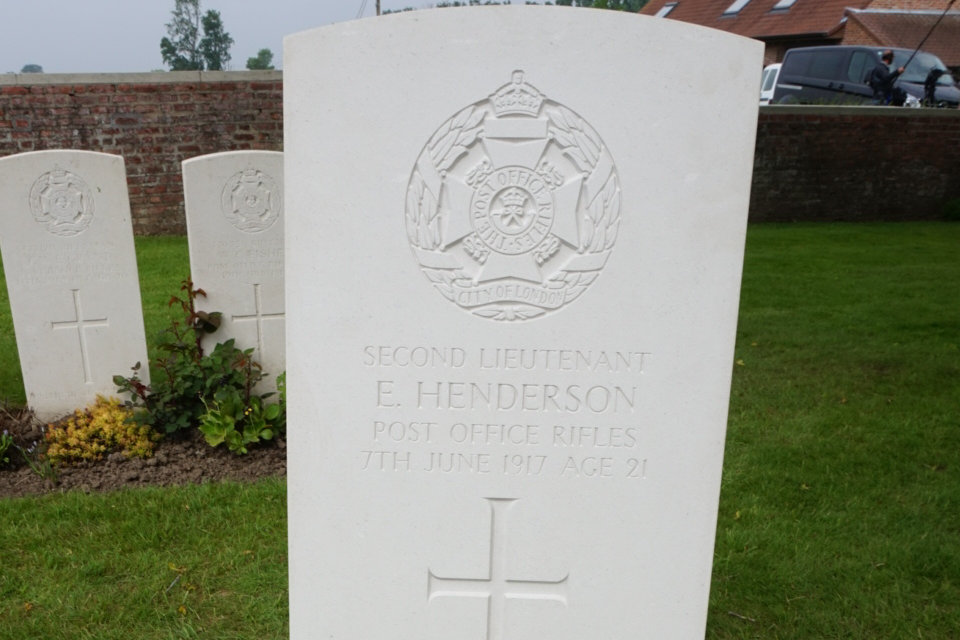
2nd Lieutenant (Lt) Eric Henderson who served with the 8th (City of London) London Regiment ‘Post Office Rifles’, has finally been laid to rest after he was killed on the first day of the Battle of Messines during WW1. 2nd Lt Henderson was buried during a moving ceremony at the Commonwealth War Graves Commission (CWGC) Oak Dump Cemetery, near Ypres in Belgium.
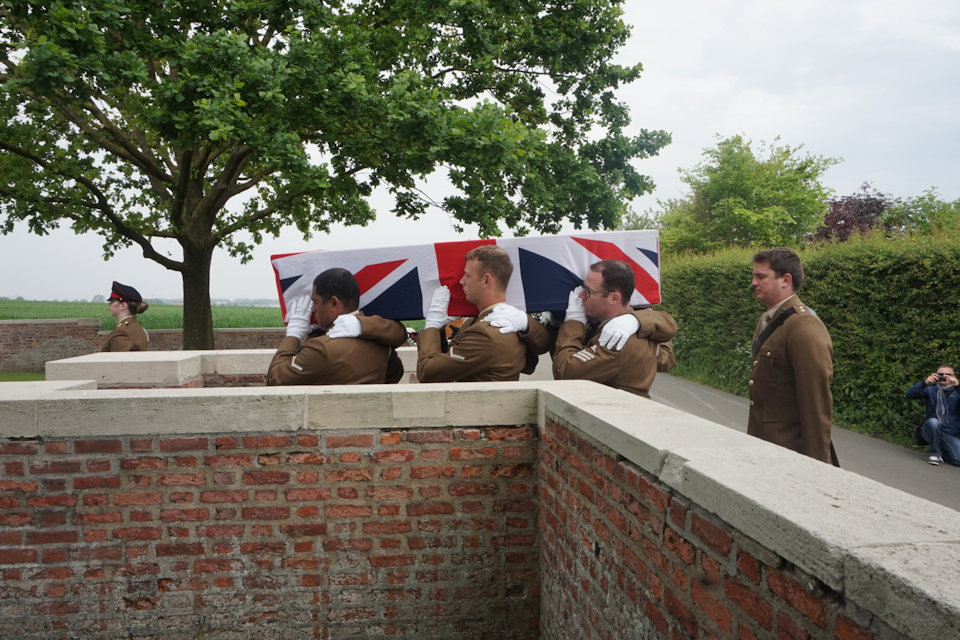
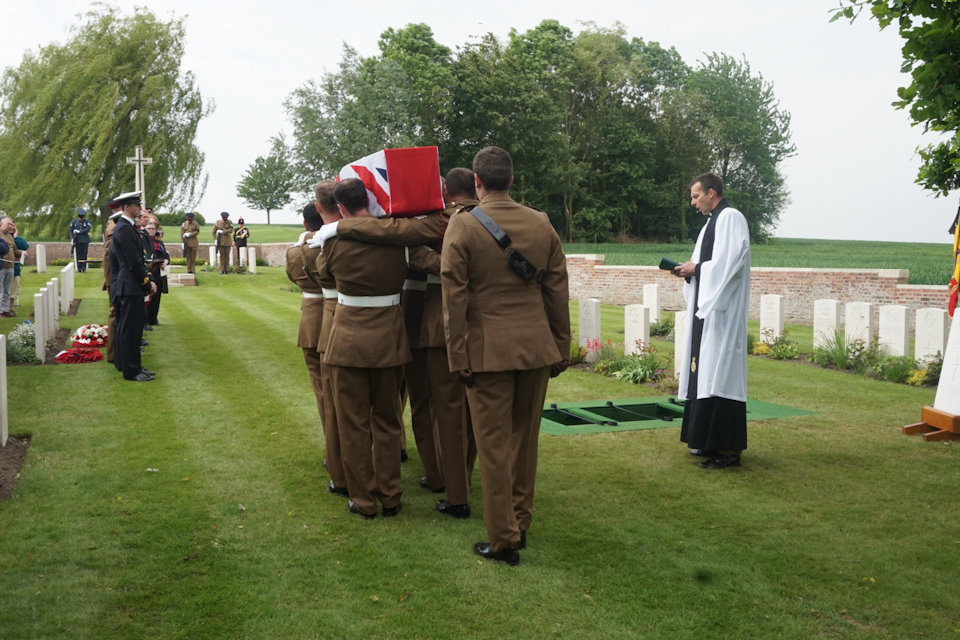
The Royal Artillery Regiment bearer party carry the coffin of 2nd Lt. Henderson (Crown Copyright), all rights reserved
The service, organised by the MOD’s Joint Casualty and Compassionate Centre (JCCC), part of Defence Business Services, was held on Wednesday 16 May 2018 and was conducted by the Reverend Thomas Hiney CF, Chaplain to the 19 Royal Artillery Regiment.
The Royal Artillery Regiment bearer party take 2nd Lt. Henderson to his final resting place (Crown Copyright), all rights reserved
Nicola Nash, JCCC said:
It’s a great honour to be here today to lay this brave man to rest, who fought so courageously alongside his comrades. I am particularly grateful that Eric’s family were able to be here to witness him being finally laid to rest after so many years.
Although over 100 years have passed since Eric’s death, we passionately believe in continuing to honour his sacrifice and the sacrifice of all members of the Armed Forces who are lost in battle.
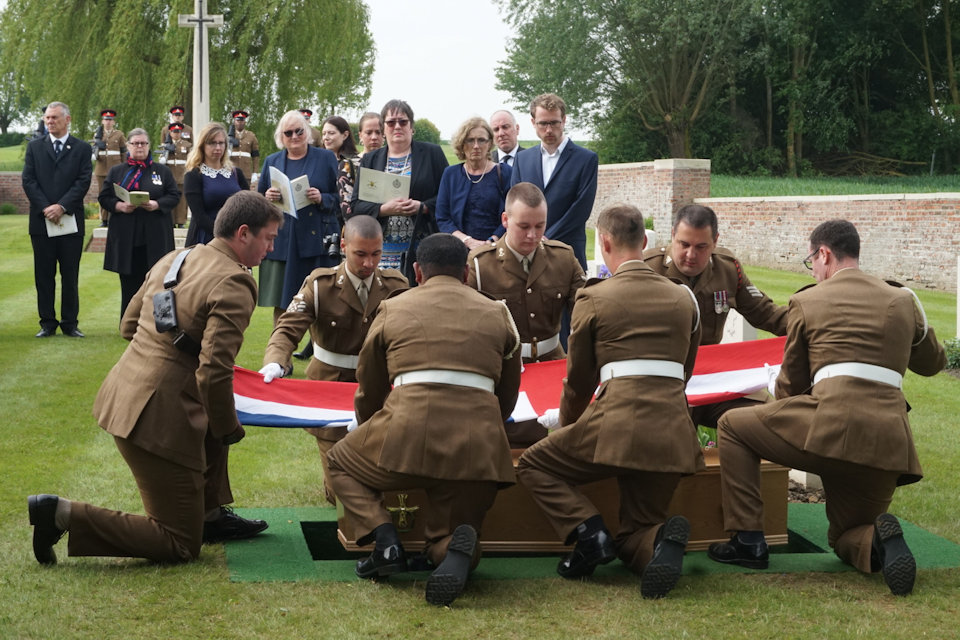
The Royal Artillery Regiment bearer party ceremonially fold the Union Flag during the service (Crown Copyright), all rights reserved
2nd Lt Henderson initially joined the 28th Battalion London Regiment in July 1915 as a Private. He was soon commissioned as a 2ndLieutenant and eventually joined the 8th Battalion London Regiment, also known as the Post Office Rifles.
2nd Lt Henderson was killed in action on 7 June 1917 aged 21 years old, near the village of Messines in West Flanders, Belgium. He was found a century later during road works in the area of Eekhofstraat, near Voormezele in Belgium. He was found with several artefacts including a silver coin that was engraved with ‘2nd Lt. Eric Henderson, London Regiment’. Further research, conducted by the JCCC, showed that the location of the soldier was exactly where the Oak Reserve Line was during the Battle of Messines, which corresponded with the location of Eric’s regiment on the day of his death.
The beginning of the Battle of Messines was signalled by the explosion of 19 mines that had been laid under German lines. The shock of the explosion was overwhelming and devastating to the enemy. The objectives of the Post Office Rifles on the day were to capture portions of the four lines known as Oak Trench, Oak Support, Oak Reserve and Oak Switch as well as a formidable strongpoint known as the ‘Dammstrasse’. Many of the causalities of the Battalion were due to machine-gun fire from the White Chateau, one of the objectives of the 7th Battalion. Some of the 1/8th took part in the attack on this Chateau, and materially assisted in its capture.
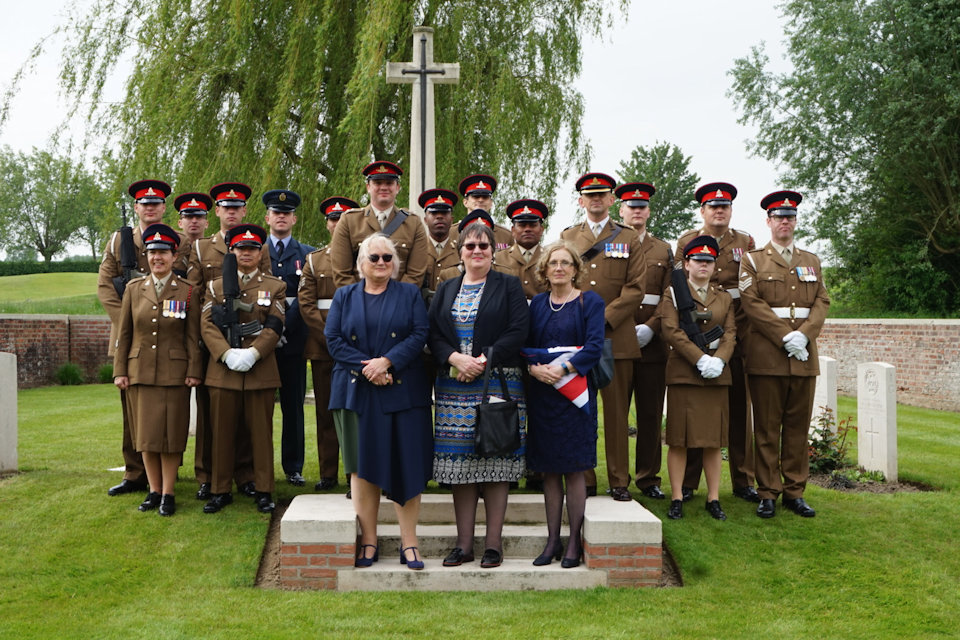
2nd Lt. Henderson’s great nieces (l to r) Judith Leyman, Sarah Foot and Lucy Cocup stand with the Royal Artillery Regiment and military representatives (Crown Copyright), all rights reserved
Family members who paid their respects to 2nd Lt Henderson included his three great nieces, Lucy Cocup, Sarah Foot and Judith Leyman, as well as members of their own families.
Mrs Judith Leyman, Eric’s great niece, said on behalf of the family:
Being here in Ypres, and knowing Eric’s resting place, means an awful lot to us. He wasn’t a dusty memory in our family, but part of our mental landscape.
Reverend Thomas Hiney CF said:
These war cemeteries of northern France and Belgium are one of the wonders of the modern world. To add to one is of course poignant. These stories still feel very alive to our national memory.
Sub Lieutenant Harry Lewis from the British Embassy in The Hague was also in attendance. Current members of the Royal Artillery Regiment paid their own tribute by providing the bearer and firing party.
Mel Donnelly, CWGC Commemorations Manager said:
For almost a century, 2nd Lieutenant Eric Henderson was remembered with honour on the CWGC’s Ypres (Menin Gate) Memorial to the Missing – one of tens of thousands of young men whom the fortune of war denied a known grave. When the memorial was unveiled in 1927, the assembled mourners were told ‘He is not missing. He is here’. Today, thanks to the efforts of many, that statement has new meaning for Eric and his family.
2nd Lt. Henderson’s headstone bearing a poignant message (Crown Copyright), all rights reserved
A new headstone bearing 2nd Lt Henderson’s name has been provided by the CWGC, who will now care for his final resting place in perpetuity.
Press release: Response to the Big Brother Watch report
I welcome the publication of the Big Brother Watch report as in my view it adds value to a much needed debate on a matter of growing public interest, the public interest which demands clear legislation, transparency in governance and approach and a coherent and effective regulatory framework in which they can derive confidence whenever and wherever their civil liberties are at risk from the state. I shall consider the report carefully.
The effective regulation of use of face identification technology (commonly referred to as Automated Face Recognition or AFR) by the police is a priority of the National Surveillance Camera Strategy and a matter which I have been addressing as a priority for some time now, engaging with the National Police Chief’s Council, the Home Office, fellow regulators and Ministers alike.
The police have to abide by the Surveillance Camera Code of Practice which I regulate under the terms of Section 33(1) Protection of Freedoms Act 2012. Those familiar with the content of the code will know that it is explicit in that face identification technologies used by the police in England and Wales will be regulated by it. That is not to say that I consider existing or indeed anticipated legislation as being wholly sufficient in these matters. I do not. My fellow regulators, the Biometrics Commissioner and in recent times the Information Commissioner have added welcome contributions to the debate.
I do think that the police are genuinely doing their best with AFR and to work within the current and anticipated legal regulatory framework governing overt surveillance. That framework is far less robust than that which governs covert surveillance, yet arguably the evolving technological capabilities of overt surveillance is the equal in terms of intrusion, to that which is conducted covertly. It is inescapable that AFR capabilities can be an aid to public safety particularly from terrorist threats in crowded or highly populated places. Andrew Parker, the DG of the Security Service rather eloquently set out the threat context to our society only recently. It is understandable that there is an appetite within law enforcement agencies to exploit face identification capabilities, an appetite which is doubtlessly borne out of a duty and determination to keep us safe. This technology already exist in society for our convenience and therefore it is arguable that the public will have something of an expectation that those technologies are so used by agents of the state to keep us safe from serious threats, but only in justifiable circumstances where their use is lawful, ethical, proportionate and transparent.
In the context of safety, the public also need to be safe from unlawful, disproportionate and illegitimate state intrusion, and they must have confidence that those technologies have integrity. In my view, the challenge is arriving at a balance and for that to happen there need to be a clear framework of legitimacy and transparency which guides the state, holds it to account and delivers confidence and security amongst the public. I have yet to have confidence that government has a satisfactory approach to the issue in delivering a framework upon which the police and others can rely and upon and which the public can have confidence, but I do believe that we are on a journey to that destination and a journey is fuelled by constructive and challenging debate.