Speech: PM’s speech at Farnborough International Airshow: 16 July 2018

I am delighted to be here today. First of all, I want to congratulate Farnborough on this brand new exhibition hall. This is an outstanding building – and it is befitting for a world-leading air-show. A world-leading industry. And world-leading innovation, talent and skills.

Every day – in every part of the world – people are flying in planes powered by British built engines. They take off and land in planes with wings built in Wales and Northern Ireland. And our military is supported by some of the most advanced British built unmanned vehicles.

Our capability in some of the most complex parts of aircraft – including wings, engines and advanced systems – is first rate. Outside of the US, Rolls-Royce is the only company with real capability to design and build large civil aerospace engines.

This expertise is nothing new. It is built on a proud tradition of innovative aerospace technology – from Farnborough, Brooklands, Bristol, Broughton, Derby, Belfast, Southampton, Yeovil, Prestwick – to name but a few. Nowhere do we recognise that terrific history more this year than in our celebrations for the 100th anniversary of the RAF.

We can all feel incredibly proud of our position as a leading aerospace nation. By working closely together, government and industry have ensured we remain at the forefront of civil aviation and that our air power is second to none. Today I want us to build on that, and ensure not only that we retain our prominence, but that in an increasingly competitive industry we make the most of the opportunities that lie ahead.

Opportunities that arise not only from the measures I have set out in our comprehensive and ambitious proposal for our future relationship with the EU – but in our plans for an open, outward facing Britain that acts as a global champion for free trade.

On Thursday, the government published its White Paper detailing our plans for an economic and security partnership with the EU.

Our proposal sets out the right deal for the UK – honouring the democratic decision of the British people, protecting the integrity of our precious union, supporting growth, maintaining security and safeguarding British jobs.

We will take back control of our borders, our laws and our money. But we will do so in a way that is good for business and good for our future prosperity.

We know from our discussions with you, and other industries, how friction at the border would not just jeopardise the uniquely integrated supply chains and just-in-time processes on which millions of jobs and livelihoods depend – but how divergence in regulations could result in complex and expensive multiple tests for different markets.

Companies such as Rolls Royce export 80% of their products. Parts for other products – such as Airbus wings – can have multiple journeys before finally being assembled and sold around the world.

We know too just how vital precision engineering is in aerospace – where the “error” rate for parts and their performance must be practically zero – and that it is the harmonisation of regulatory standards that has been such an important factor in air safety and the astonishing reduction of deaths on commercial flights.

The frictionless free trade of goods, an independent trade policy, the avoidance of a hard border between Northern Ireland and Ireland and between Northern Ireland and Great Britain – these are conditions we seek. To do anything else risks the integrity of the United Kingdom, reneges on the Belfast Agreement and simply will not deliver for Britain as a global trading nation.

So at the heart of our proposal is the creation of UK-EU free trade area for goods, supported by an up-front commitment to ongoing harmonisation with EU rules on goods and agricultural products.

A new business friendly customs model – a facilitated customs arrangement – which would operate as if we were a combined customs territory, removing the need for customs checks and controls between the UK and the EU, while at the same time allowing us to set our own tariffs for other countries outside of the EU.

The partnership would be underpinned by reciprocal commitments to ensure open and fair trade and a joint institutional framework to ensure consistent interpretation of the agreement and the resolution of disputes.

And we will also, as I set out in my Mansion House speech, explore with the EU on what terms the UK could remain part of EU agencies such as those that are critical for the aerospace chemicals and medicines industries: the European Aviation Safety Agency, the European Chemicals Agency, and the European Medicines Agency.

Because the UK has been a key contributor of expertise to these agencies – and it is our manufactured products circulating throughout Europe and around the world keeping people safe, flying safely, providing essential medicines, enabling everyday activities.

What we are proposing is a solution that respects the referendum result and puts forward what is best for British industry in line with our modern industrial strategy, and what is best for our global trading ambitions.

We are leaving the European Union, and forging a new future for our country. And as we do so, I want to ensure that the UK remains one of the best places in the world for aerospace companies to do business.

To continue as world leaders in innovation. To make the most of the huge opportunities that exist.

Because this is an incredibly exciting time for aerospace. Not only is there huge growth potential, but many of the developments taking place have the potential to transform the way we fly.

Other countries around the world are racing to develop their industries – and respond to the demand for cleaner, greener aircraft and technological advances such as automation, and unmanned air systems.

The UK already has a leading edge. We are home to some of the biggest names in the industry – and our small and medium sized companies demonstrate phenomenal skill, energy and innovation.

Many of those companies are here at Farnborough.

Poeton, who apply ceramic and metallic coatings to aerospace components to protect them from melting, corroding or wearing.

Produmax, whose critical parts can be found in aeroplanes such as Boeing’s Dreamliner – where they play an essential role moving wing flaps. And Aeromet, whose highly complex alloy castings are used in the structural components and casings in aircraft.

But I want us to do more. Already we are backing industry through our £1.9 billion investment for aerospace research, the Industrial Strategy Challenge Fund and our commitment to a third runway at Heathrow. We are also today revealing the UK’s first spaceport – in Sutherland Scotland – which will see vertically launched space rockets and satellites take off from the site.

But today I want to announce a series of further measures to boost British aerospace companies – large and small, up and down the country – and ensure that Britain remains at the cutting edge of the industry.

Along with industry we are jointly providing £343 million pounds of investment for research and development projects and to boost productivity. From developing the most technologically advanced aircraft, creating newer more efficient engines, to the manufacture of cleaner, quieter aircraft that will help cut emissions – this funding will support some of the most innovative projects being advanced today.

This includes £255 million of joint investment research and development projects supported by the Aerospace Technology Institute and UKRI. This will fund 18 projects, involving 20 companies, including 13 small and medium sized businesses, and 12 research organisations and universities spread across the breadth of the UK.

It includes £68.2 million of joint funding with industry for R&D, specifically targeting small and medium sized businesses to help them increase their competitiveness.
And a further £20 million of Government and industry match funding will go towards a productivity improvement programme.

Some of the projects this money will support are exploring truly exciting aviation developments, such as the electrification of flight, which could lead towards the cleaner, greener air power of the future. I want Britain to be at the forefront of such innovation.

Building on this, we will start working with industry on a potential Aerospace Sector Deal – capitalising on our work together to tackle barriers to growth, increase productivity and competitiveness. In this, we will look to you to demonstrate how the aerospace sector can further support the industrial strategy’s Grand Challenges, regional prosperity and the delivery of the government’s skills priorities. We will also seek to embed a Women in Aviation and Aerospace Charter, to build a more balanced and fair industry for women.

Finally, today, I want to announce the publication of the UK’s Combat Air Strategy – which confirms our commitment to maintaining our world-class air power capabilities, and will boost an industry which generates billions in revenue for our economy and supports thousands of jobs in every part of the UK.

We will invest in new technologies, support cutting edge innovation, collaborate internationally and initiate the programme which will deliver the next generation capability. And crucially, we will work in partnership with industry to achieve this. So today I can announce that the government will join with BAE Systems, Leonardo, MBDA and Rolls Royce to fund the next phase of the Future Combat Air System Technology Initiative through a ground-breaking partnership known as ‘Team Tempest.’

This will deliver over £2 billion pounds of investment up to 2025, and help secure the long-term future of our Combat Air industry as we lay the groundwork for the Typhoon successor programme.

Taken together, these measures amount to a significant boost for industry, promoting jobs, innovation and skills.

Elsewhere we have seen just what can be achieved when government and industry work together. The successful collaboration between Bombardier and Airbus on the A220 was originally supported by over £100 million pounds of investment from the UK. This will sustain jobs in Northern Ireland well into the future, and I was pleased to hear that JetBlue will be acquiring at least 60 of the aircraft, which could deliver billions to the UK economy.

So just as government will back you, I want you to work with us – particularly through organisations such as the Aerospace Growth Partnership.

Let us work together to build a leading aerospace nation.

A nation where, post Brexit, we are considered the best place in the world for the aerospace industry to base its business.

A nation more innovative than anywhere else in the world, where we nurture the next generation of designers, innovators and engineers.

Last week we saw the spectacular RAF flypast over Buckingham Palace – a demonstration of our impressive historic RAF planes – alongside those that use some of the most advanced technology in the world.

It is a history of aviation we can all be proud of. Together, along with this proud history, I want to ensure that we can have a bright and proud future.


News story: Programme: EU-UK Article 50 negotiations Brussels, 16-19 July 2018

Monday, 16 July 2018

  • Future relationship
  • Northern Ireland/Ireland
  • Withdrawal Agreement – remaining issues

Tuesday, 17 July 2018

  • Withdrawal Agreement – remaining issues

Wednesday, 18 July 2018

  • Withdrawal Agreement – remaining issues

Thursday, 19 July 2018

  • Principals’ meeting


Speech: China celebrates 35 years of Chevening

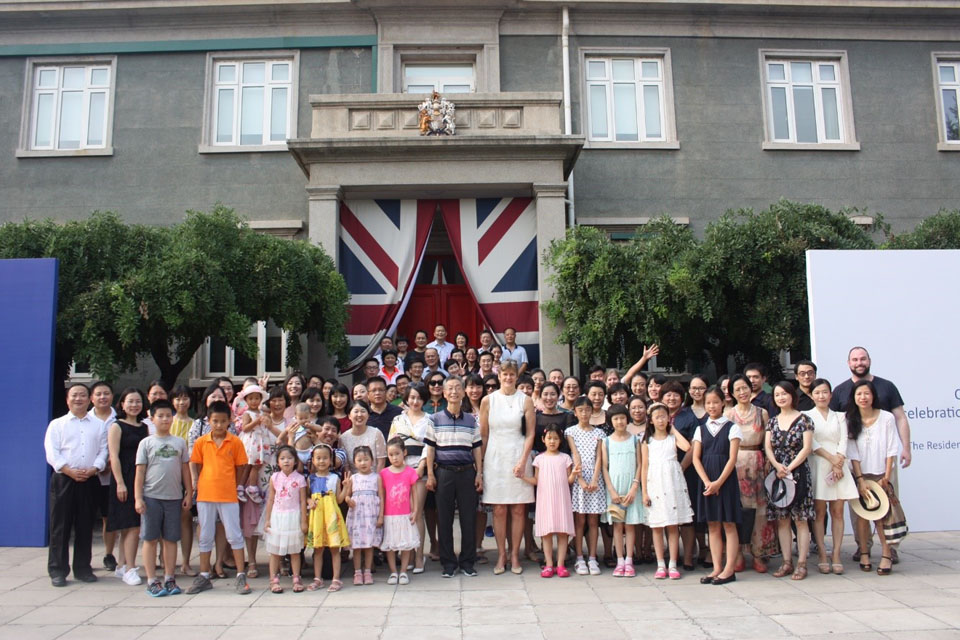
It is absolutely wonderful to welcome you all in celebration of the 35th Anniversary of the Chevening Programme in China and around the world. Today, we welcome members of the Chevening alumni community, friends and colleagues from across the Embassy to meet one another, share memories and achievements, and to celebrate the successes of the UK government’s flagship scholarship scheme – Chevening.

Last Wednesday, 1,647 scholars from 138 countries including around 70 from China gathered in Alexandra Palace in London to attend the 2017/18 Chevening Farewell Event, having reached the end of their time in the UK as a Chevening Scholar. During this event, it was announced that the global Chevening alumni community has reached quite incredible heights – this year, Chevening welcomes its 50,000th scholar.

Almost 4,000 of these individuals come from China, consisting of passionate individuals who are engaged in world issues, respondent to global challenges, intent on deepening knowledge and understanding between the UK and China, and who contribute towards the future successes and strengthening of our bilateral relationship.

Ambassador Woodward together with Mr. Lu Qinfang – China’s first recipient of the Chevening Scholarship, and families of the Chevening China Alumni Community.

This is a network to treasure and to be proud of, consisting of individuals from every walk of life and region across China. All of you have studied in universities across the United Kingdom. All of you have completed a dissertation. All of you have contributed towards building your own academic communities of thinkers and believers, and all of you continue to contribute to the wider international community of Chevening alumni. All of you are inspiring role models for current and future Chevening scholars and fellows, encouraging them to aspire to the highest levels in their chosen fields. For that, I offer my sincerest and most earnest congratulations and very best wishes for the future.

On August 6, we open applications for the 2019/20 Chevening Scholarship Programme, and on August 24 we celebrate with recently-selected 2018/19 Chevening Scholars before their departure for the UK. For these events and others, we commission your support as recipients of this award, encouraging and empowering exceptional individuals around you to do something special and apply for Chevening.

You will always act as an inspiration for all young people across China, and we welcome your participation in promotional events held all across China. For more information, please speak directly with representatives of our Chevening Team.

Today, it is our hope that all of you will look back on the last three and half decades with warmth and happiness. We hope that you enjoy your time with friends old and new, and share thoughts and ideas inspired by your time as a Chevening Scholar or Fellow. In reflecting your past triumphs, we may enjoy a collective sense of satisfaction for all the good you have done and continue to do, looking firmly towards a bright future for China and for our bilateral relationship during this Golden Era for UK-China relations.

The Chevening Programme continues to sow the seeds for a Global Partnership that works for all, creating a global community of future leaders that are able to respond to the greatest challenges of our time.

I hope that your experience with Chevening has given, and continues to give you, great experiences, wisdom and knowledge, meaningful and lifelong friendships, and inspiration for a wonderful future.

I would like to finish with a poem that was read to scholars during the 2017 Chevening Orientation by Michael Hastings, Lord Hastings of Scarisbrick CBE, Global Head of Citizenship at KPMG.

What is success?

To laugh often and much; to win the respect of intelligent people and the affection of children; to earn the appreciation of honest critics and endure the betrayal of false friends; to appreciate the beauty; to find the best in others; to leave the world a bit better, whether by a healthy child, a garden patch or a redeemed social condition; to know even one life has breathed easier because you have lived. This is to have succeeded!

Applications for 2019/20 Chevening Scholarships open on August 6 2018 and close on November 6 2018 – applicants can be of any background, representative of any sector and from any region across Mainland China. To learn more, visit www.chevening.org/apply or contact representatives of the Chevening Team in China by emailing chevening.beijing@fco.gov.uk.


Press release: Lockheed Martin and Orbex to launch UK into new space age

  • Lockheed Martin to establish vertical launch operations in Sutherland, Scotland and develop innovative technologies in Reading, Berkshire with support from two UK Space Agency grants totalling £23.5 million
  • A further £5.5 million will go to British company Orbex to build an innovative new rocket for launch from Sutherland, as part of Government’s modern Industrial Strategy
  • This builds on awards of £2.5m to Highlands and Islands Enterprise to develop a vertical launch spaceport in Sutherland and a £2m development fund for horizontal spaceports such as those planned in Cornwall, Glasgow Prestwick and Snowdonia
  • Government support for launch is the first step towards a potential Space Sector Deal and the development of a national space programme

Lockheed Martin: UK spaceflight programme

Under the plans, global space leader Lockheed Martin and innovative spaceflight company Orbex will launch rockets into space from the north coast of Scotland.

The grants from the UK Space Agency consist of:

  • Two separate grants worth a combined £23.5 million to Lockheed Martin to establish vertical launch operations at Sutherland using proven technology and to develop an innovative new system in Reading for deploying small satellites. Known as an orbital manoeuvring vehicle, this will be the upper stage of Lockheed Martin’s rocket and will deploy up to six small satellites to separate orbits.

  • £5.5 million to UK-based Orbex to build an innovative new rocket for launch from Sutherland, with the support of British manufacturing operations and supply chains. Their orbital launch vehicle, called Prime, will deliver small satellites into Earth’s orbit, using a single renewable fuel, bio-propane, that cuts carbon emissions by 90% compared to hydrocarbon fuels.

The companies will work together with Highlands and Islands Enterprise, which has been awarded £2.5 million to develop a vertical launch site in Sutherland.

Business Secretary Greg Clark said:

“As a nation of innovators and entrepreneurs, we want Britain to be the first place in mainland Europe to launch satellites as part of our Industrial Strategy. The UK’s thriving space industry, research community and aerospace supply chain put the UK in a leading position to develop both vertical and horizontal launch sites.

“This will build on our global reputation for manufacturing small satellites and help the whole country capitalise on the huge potential of the commercial space age.”

Horizontal launch sites have significant potential in a future UK spaceflight market, which could attract companies from all over the world to invest in Britain. Sites such as Newquay, Glasgow Prestwick and Snowdonia will be boosted by a new £2m fund to grow their sub-orbital flight, satellite launch and spaceplane ambitions.

Chris Grayling, Secretary of State for Transport, said:

“The UK’s space sector is thriving and satellite benefits our lives every day, from banking to transport, and agriculture to entertainment.

“Our Space Industry Act will allow the UK to tap into and develop new commercial space opportunities, with the potential for hundreds of new regional jobs and billions of revenue for British business across the country.

“Today’s announcement is not only exciting for Sutherland, but with industry expertise up and down the country it will drive growth and further regional opportunities in England, Scotland and Wales.”

Britain’s Space Sector has set out ambitious plans to build on its global leadership in satellites and applications using space data to create a hub in the UK for new commercial space services, as set out in the Prosperity from Space report published in May. 

The Government’s modern Industrial Strategy identified spaceports as a key economic opportunity and a priority for the UK’s space strategy. The UK is an attractive destination for space businesses and the north of Scotland is well-placed to reach in-demand satellite orbits.

Patrick Wood, Lockheed Martin’s UK Country Executive for Space, said:

“The UK Space Agency’s strategic vision for a world-class launch market will position the nation for a very bright future in space. Lockheed Martin will apply its 50 years of experience in small satellite engineering, launch services and ground operations, as well as a network of UK-based and international teammates, to deliver new technologies, new capabilities and new economic opportunities.”

Chris Larmour, CEO of Orbex, said:

“We’re delighted to have been selected after a highly competitive and detailed process. Orbex is one of the very few private spaceflight companies with credible practical experience in the development of launch vehicles and rocket engines. With the support of this grant from the UK Space Agency, we will soon be launching small satellites into orbit from British soil and helping to transform the UK into an important hub for commercial space launch operations.”

Following its call for grant proposals in Spring 2017, the UK Space Agency assessed 26 proposals to determine what would deliver the best value for money and strategic opportunity for the growth of the UK space sector.

A number of sites across the UK are developing their spaceport plans and engaging with regulators, demonstrating the scale of the industry’s ambition and confidence in a future UK spaceflight market, which could attract companies from all over the world to invest in Britain. Launches will be regulated under the Space Industry Act 2018.

The UK and US will also soon begin formal negotiations towards a Technology Safeguards Agreement, which will establish the legal and technical safeguards that can support U.S. space launch vehicles to operate from UK launch sites. Attracting US operators to the UK will enhance our space capabilities and boost the whole market.


Press release: One giant leap: Vertical launch spaceport to bring UK into new space age

  • Industrial Strategy funding awarded to proposed vertical launch spaceport in Sutherland, Scotland
  • Horizontal launch sites such as those planned in Cornwall, Glasgow Prestwick and Snowdonia to be boosted by new £2 million development fund
  • Commercial vertical and horizontal launch demand is worth a potential £3.8 billion to the UK economy over the next decade and will support further growth of Britain’s space sector
  • Additional grants to be announced at next week’s Farnborough International Airshow will see leading commercial spaceflight operators launching from Sutherland

UK spaceports

The UK Space Agency has selected the first vertical launch site in Sutherland on the north coast of Scotland and is making available a new £2 million fund to boost horizontal spaceport development across Britain, Business Secretary Greg Clark will announce today (Monday 16 July).

Scotland is the best place in the UK to reach in-demand satellite orbits with vertically launched rockets. Initial funding of £2.5 million will go to Highlands and Islands Enterprise to develop the vertical launch site in Sutherland which will use a combination of proven and innovative rocket technologies to pave the way for a world-leading spaceflight market.

This will grow the UK space economy through regular, reliable and responsible access to space.

Business Secretary Greg Clark said:

“As a nation of innovators and entrepreneurs, we want Britain to be the first place in mainland Europe to launch satellites as part of our Industrial Strategy.The UK’s thriving space industry, research community and aerospace supply chain put the UK in a leading position to develop both vertical and horizontal launch sites.

“This will build on our global reputation for manufacturing small satellites and help the whole country capitalise on the huge potential of the commercial space age.”

Horizontal launch sites have significant potential in a future UK spaceflight market, which could attract companies from all over the world to invest in Britain. Sites such as Newquay, Glasgow Prestwick and Snowdonia will be boosted by a new £2m fund to grow their sub-orbital flight, satellite launch and spaceplane ambitions.

Secretary of State for Transport Chris Grayling said:

“The space sector is an important player in the UK’s economy and our recent Space Industry Act has unlocked the potential for hundreds of new jobs and billions of revenue for British business across the country.

“Today’s announcement is exciting for places like Newquay in Cornwall too, paving the way for further potential space ports in the future.”

The £50 million UK Spaceflight Programme is also considering leading proposals for horizontal spaceplane operations from across Britain, submitted as part of its call on low cost access to space.

Secretary of State for Scotland David Mundell said:

“The UK Government is driving the commercial space age and Scotland is leading the way. We are investing £2.5 million in a vertical launch site in Sutherland which will create hundreds of new jobs. And we will invest a further £2 million in horizontal launch sites – Prestwick is in the running for that and I wish them well.

“Scotland is uniquely positioned to pilot the UK’s commercial space sector and the UK Government recognises this pot.”

Secretary of State for Wales Alun Cairns said:

“The UK Government has an exciting ambition to take the UK into the commercial space age by enabling small satellite launch and spaceflight from UK spaceports. Wales now has an exciting window of opportunity to take a leading role in shaping that future.

“We have the right geography and a skilled engineering base in aerospace, electronics and the software industries, standing ready to diversify and to flourish in the fast-developing space market. The opportunities are vast – for Britain’s strategic capabilities and for Wales in terms of job creation, cross border synergies through the Northern Powerhouse, linking to our strong academic institutions and the potential economic impact. We must now stand ready to grasp them.”

The UK has a thriving space sector with significant capability in manufacturing satellites and using the information they collect to drive innovation in other sectors ranging from healthcare to finance.

Graham Turnock, Chief Executive of the UK Space Agency, said:

“This spaceport grant will help to kick-start an exciting new era for the UK space industry, and this is only the beginning of our LaunchUK campaign. We are committed to supporting a commercial market for access to space in the UK, and we will continue to engage with any company who seeks to operate here.”

A number of sites across the UK are developing their spaceport plans and engaging with regulators, demonstrating the scale of the industry’s ambition and confidence in a future UK spaceflight market, which could attract companies from all over the world to invest in Britain.

Low cost access to space is important for the UK’s thriving space sector which builds more small satellites than any other country, with Glasgow building more than any other city in Europe.

Will Whitehorn, Non-Executive Chairman of Clyde Space said:

“From designing and building the very first satellite in Scotland, Clyde Space has grown and become a front runner in small-satellite manufacturing. Having a spaceport located in Scotland will bring about a whole host of commercial advantages and not only to our operations in Glasgow, but to the entire space sector in the whole of the UK.”

Peter Platzer, CEO of Spire Global, said:

“A spaceport in Scotland and the UK is fantastic news! Launch continues to be the most unpredictable part of the overall supply chain, with delays, often for months and sometimes years, being the norm. In Spire, Scotland already sports Europe’s most advanced and prolific satellite manufacturing capability, and with a space port right next door, enabling clockwork like launches, we can finally get our space sector supply chain to be truly integrated!”

The UK’s thriving space industry, research community and aerospace supply chain also put the UK in a strong position to further develop horizontal launch sites. The Government’s decision to make available a £2 million strategic development fund, subject to business case, will help accelerate this early-stage market further.

Small-satellite launch and sub-orbital flight from the UK will support organisations across the country to remain at the forefront of commercial space services. It will drive new highly skilled jobs and boost local economies – not only in the communities around spaceport sites, but in the UK’s space sector as a whole.

Charlotte Wright, Chief Executive of Highlands and Islands Enterprise (HIE), said:

“The decision to support the UK’s first spaceport in Sutherland is tremendous news for our region and for Scotland as a whole. The international space sector is growing and we want to ensure the region is ready to reap the economic benefits that will be generated from this fantastic opportunity.”