Palestinian-designed, self-build homes seen as key to Gaza’s recovery

Thu, 2021-06-10 21:03

DUBAI: For Palestinians living in the Gaza Strip, “home” is a concept that rarely conjures images of safety and stability.

Israel and Hamas have fought four short but savage wars since the militant group seized control of this sliver of territory in 2007.

With each wave of violence comes a fresh cycle of destruction and reconstruction, a “recycling of pain,” as Mohamed Abusal, an artist based in Gaza, told Arab News.

At the end of May, tens of thousands of Palestinians returned to their homes in Gaza to inspect the damage following 11 days of fighting — the gravest escalation in hostilities since the 2014 war.
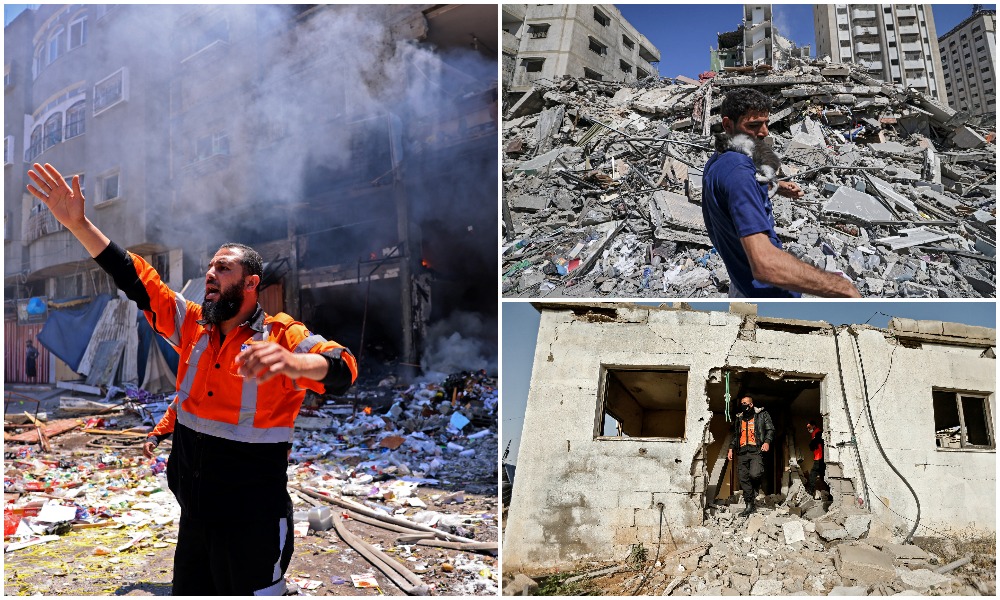

Tens of thousands of Palestinians returned to their homes in Gaza to inspect the damage following 11 days of fighting and bombardment by Israeli forces. (AFP/File Photos)

According to Palestinian officials, at least 2,000 housing units were destroyed and 15,000 damaged by the latest bout of violence, further degrading the already fragile humanitarian situation in Gaza, long squeezed by an Israeli and Egyptian blockade.

Gaza had not yet recovered from the 2014 war when the fighting resumed on May 10. Older buildings now stand like crumbling tombstones alongside newly shattered edifices. It is a sight all too familiar to residents of the territory.

To help redefine Gaza’s ravaged urban topography, Palestinian architect Salem Al-Qudwa has developed a series of designs for self-build homes, which are flexible, green and affordable.

The innovative design means the units can be built on sand or rubble and easily slotted together, allowing extended families to live under one roof — a potential lifeline for those widowed or orphaned by the recent fighting.

“These are homes that can empower the Gazan community,” said Al-Qudwa, a fellow of the Conflict and Peace with Religion and Public Life program at Harvard Divinity School.
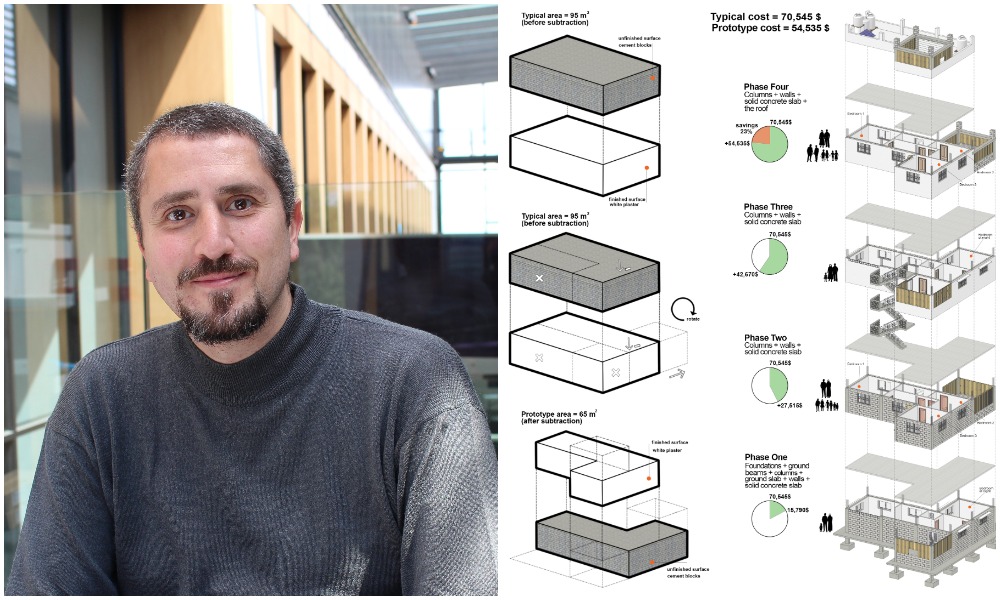

House Design Prototype for the Gaza Strip, designed by Palestinian architect Salem Al-Qudwa (L), which allow future vertical incremental expansion for families affected by the conflict. (Supplied)

“The Israelis destroyed multi-story buildings and threw their inhabitants into poverty. They have lost everything. This is the problem right now, this endless cycle of destruction and reconstruction, but, more importantly, destroying the physical as well as social fabric of Gazan society.”

Al-Qudwa was appalled to see a repeat of the havoc wreaked on Gaza in 2014.

“Those attacks pushed Gaza back by several decades, destroying the infrastructure of many parts of the city and also the social fabric, which is crucial in relation to housing,” he said. “Now the conflict in 2021 is pushing Gaza back 50 years.”

The 2014 war destroyed around 18,000 homes, leaving around 100,000 Gazans homeless. However, the temporary wooden structures built by international aid agencies involved in post-war reconstruction were not conducive to the needs of large families and did not provide adequate temperature controls.

Instead of consulting with locals on how to proceed with Gaza’s reconstruction, aid agencies turned to foreign architects, “coming to replace our social structure with a mud house, a sandbag or a wooden shelter,” Al-Qudwa said.

COST OF GAZA WAR

* 77,000 – Gazans internally displaced by May conflict.

* 2,000 – Number of housing units destroyed.

As governments and relief agencies once again pour money into Gaza’s reconstruction effort, Al-Qudwa fears the same flimsy structures will be built, preventing residents from obtaining long-lasting homes that represent stability, permanence and hope for the future.

Al-Qudwa, who was born in 1976 to a Palestinian family in Benghazi, Libya, returned to Gaza at the age of 21 to study architectural engineering at the Islamic University of Gaza. He went on to obtain a Ph.D. from the Oxford School of Architecture at Oxford Brookes University in the UK.

In 2020 he moved to the US with his Palestinian-American family after being awarded a fellowship at Harvard Divinity School.

While working for Islamic Relief Worldwide, Al-Qudwa established the Rehabilitation of Poor and Damaged Houses Project, which designed homes ranging from modest single-room units to spacious houses with shared courtyards, for more than 160 low-income families.

“I helped them build a kitchen, a bathroom and a bedroom and for them it was as if they had a castle,” he said.
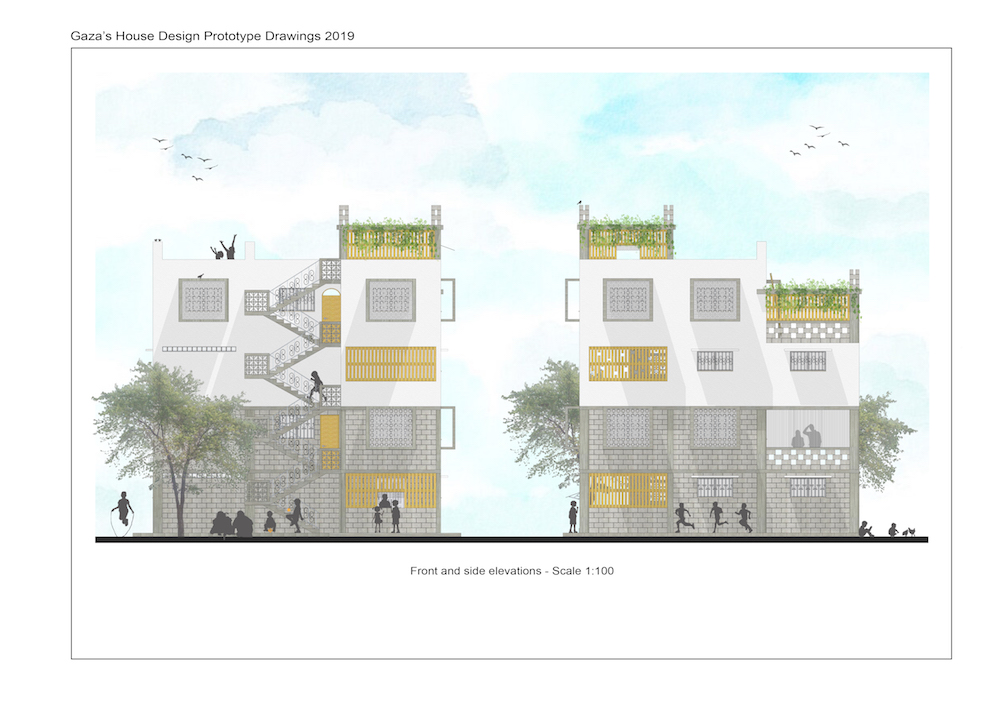

House Design Prototype for the Gaza Strip allowing future vertical incremental expansion for families affected by the conflict. (Supplied)

The project was so transformative that it was shortlisted for the World Habitat Award and in 2018 was granted a commendation.

“The project undertaken with Islamic Relief allowed me to work towards characterizing reconstruction projects in terms of their feasibility,” Al-Qudwa said. It also taught him the value of taking into account what communities really want in the form of long-lasting, sustainable housing.

“It led me to ascertain the need for a simple architecture as well as a revaluation of traditional techniques for construction, in line with the participation of inhabitants in the process of designing and building their houses.”

Gaza’s minimalist architecture is a product of its dire circumstances. But Al-Qudwa views his homeland’s simplistic urban landscape, and even its shortage of building materials, as an opportunity for a more positive social transformation.

Part of the challenge in Gaza stems from the Israeli blockade in place since 2007, which limits access to certain building materials.
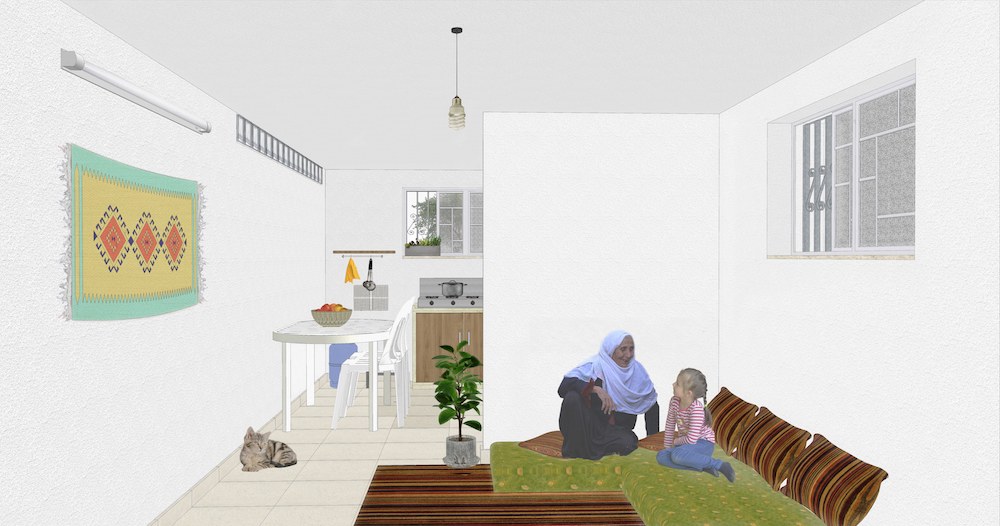

Al-Qudwa views his homeland’s simplistic urban landscape, and even its shortage of building materials, as an opportunity for a more positive social transformation. (Supplied)

Before the occupation, limestone was a common material used in local architecture. It is now far too expensive to import from the West Bank, making concrete from Israel the most popular material of choice.

Al-Qudwa is putting together designs for three five-story homes made of concrete, each with proper insulation and built on strong foundations — in marked contrast with the emergency and transitional structures on offer from aid agencies.

Unlike the monotonous block structures usually wrought from concrete, Al-Qudwa uses the material creatively, enlivening his designs with nods to traditional Arabic motifs, incorporating lattice screens, brick patterns, and even shared courtyards.

Each structure features a row of columns, which allow for additional floors to be added at a later date. “These are ‘columns of hopes’ because with columns you have the idea that something will be added to the structure within a certain period of time,” Al-Qudwa said.

As he has shown through his designs, there are many ways to create low-cost homes that are attractive and also preserve a sense of community, even when resources are scarce.


As Palestinians pick up the pieces from the latest carnage, Al-Qudwa’s work offers a glimmer of hope for a future that is more permanent, both structurally and psychologically. (Supplied)

Moreover, his new prototypes use solar water-heating units, gray-water recycling, and rainwater harvesting systems — all design elements crucial in a region that has long suffered from power cuts and water scarcity.

Al-Qudwa’s sustainable designs run against the grain of other local reconstruction strategies, most notably Rawabi, meaning “The Hills” in Arabic, the first city planned for and by Palestinians in the West Bank near Birzeit and Ramallah.

Stretched across 6.3 square kilometers, the monotonous, block-style structures are arranged in rows, similar to those found in Israeli settlements thrown up in the West Bank.

As Palestinians pick up the pieces from the latest carnage, Al-Qudwa’s work offers a glimmer of hope for a future that is more permanent, both structurally and psychologically.

——————–

Twitter: @rebeccaaproctor
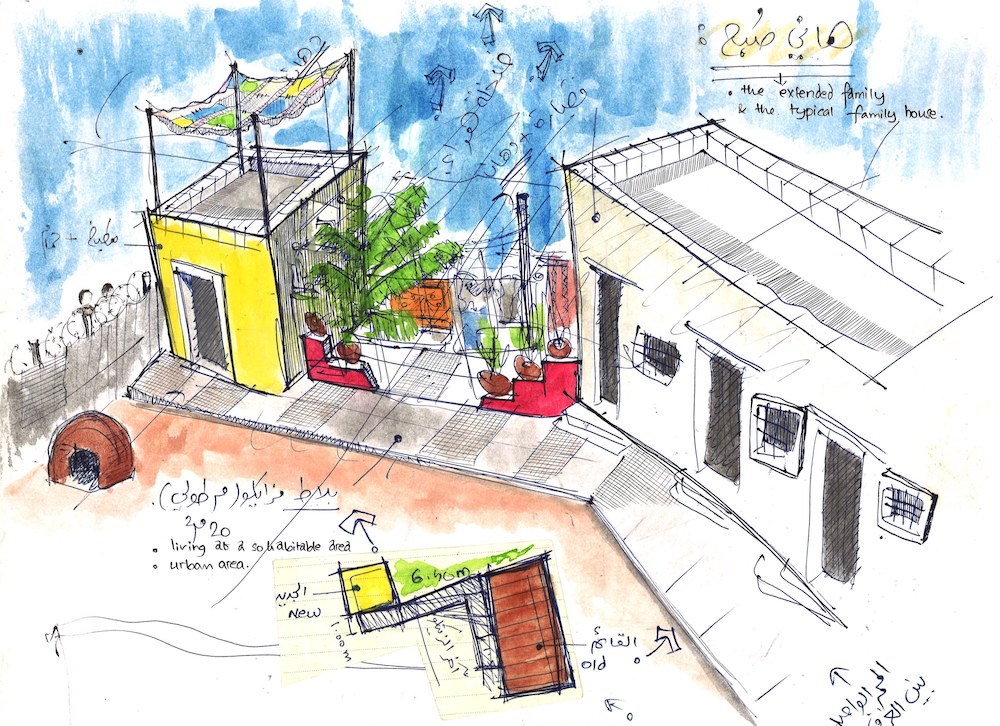
From a project with Islamic Relief where new housing units were added to allow horizontal expansion for extended families in rural and marginalized areas in the Gaza Strip. (Supplied)
Main category: 

Gaza receives engineering equipment from Egypt to rebuild strip‘She screams when someone comes near’: Gaza children in trauma


8 killed, 27 wounded after Houthis launch missile, drone strikes on Marib

Thu, 2021-06-10 19:27

ALEXANDRIA: Eight people were killed and 27 wounded after ballistic missiles and explosive-rigged drones launched by Iran-backed Houthis struck several locations across Marib, officials told Arab News.

Thunderous explosions rocked the city in central Yemen late on Thursday.

Abdul Aziz Al-Shadadi, director of Marib’s office of the Ministry of Health, said that ambulances were still treating people in the targeted areas. 

“Explosions occurred at different residential areas in Marib,” Al-Shadadi said. 

Residents said that they heard large explosions caused by the missiles and the Yemeni army’s air defense targeting drones. 

The Yemeni army said in a statement that the Houthis targeted Marib with two ballistic missiles and two explosive drones.

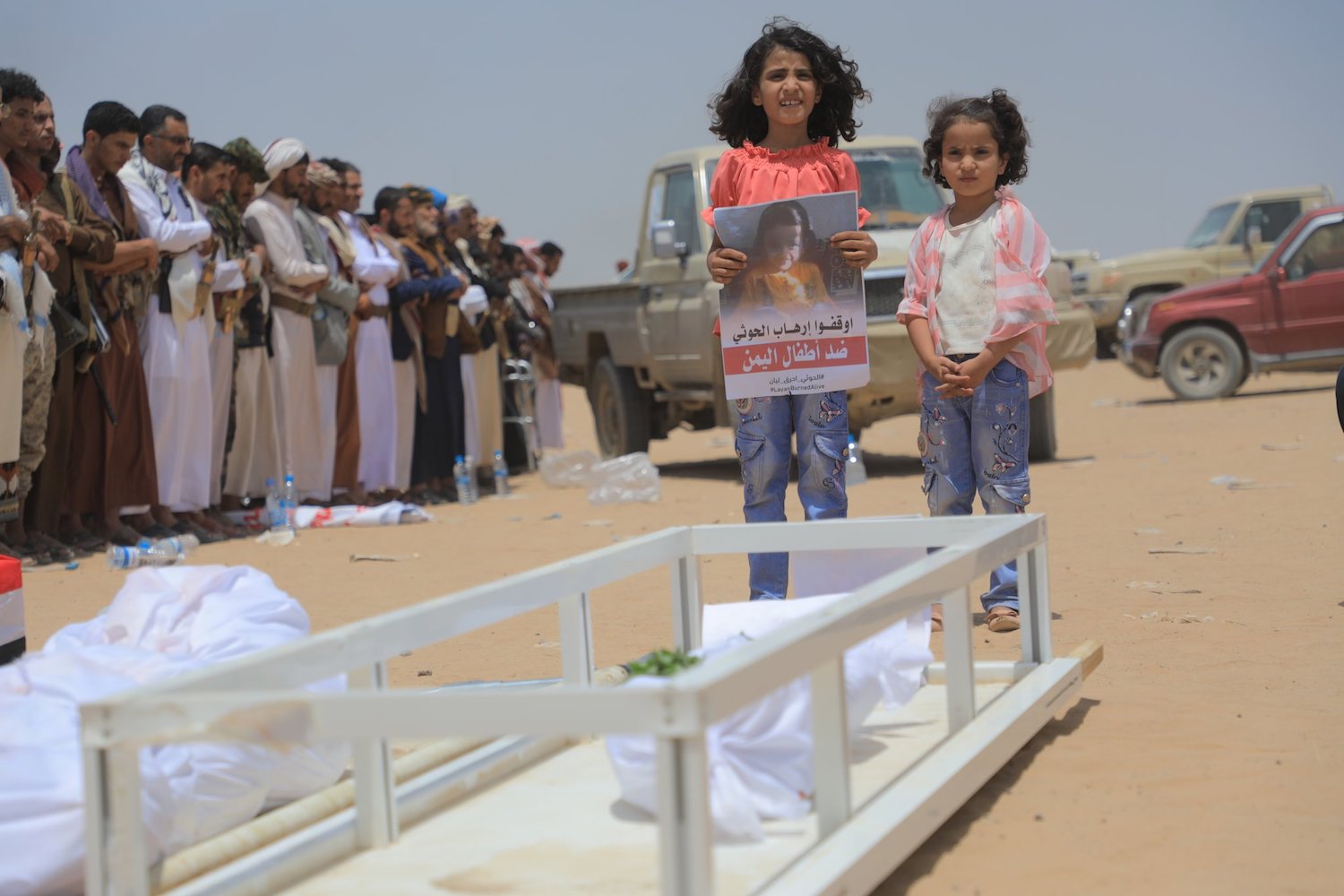
The latest Houthi attack on the city comes shortly after hundreds of people attended the funeral procession for Lian, a five-year-old girl, and her father, who were among 21 civilians killed in a Houthi missile strike on Saturday.

Main category: 
Tags: 

US condemns Houthis for truce failure, Marib offensiveHouthi blamed for deadly Marib gas station attack, killing 21, jeopardizing Yemen peace-making efforts


US sanctions network charged with funding Yemen’s Houthis

Thu, 2021-06-10 19:17

WASHINGTON: The United States on Thursday announced sanctions on what it called members of a smuggling network that generates tens millions of dollars for Yemen’s Houthis, pressuring the Iran-aligned movement to accept a ceasefire and peace talks.
US President Joe Biden’s administration has sought to advance a UN effort to ease Yemen’s dire humanitarian crisis and end the war pitting the Houthis against the government and the Arab coalition.
US Secretary of State Antony Blinken reiterated a call for the Houthis to accept a nationwide ceasefire and a resumption of talks on a political settlement to the seven-year-old conflict.
“The United States will continue to apply pressure to the Houthis, including through targeted sanctions, to advance those goals,” he said in a statement.
Twelve individuals and entities were slapped with terrorism-related sanctions blocking any US property they hold, and barring Americans from doing business with them. Foreign financial institutions that deal with them could be blacklisted.
The network works with Iran’s Quds Force, the elite arm of the Islamic Revolutionary Guard Corps, to generate “tens of millions of dollars in revenue from the sale of commodities, like Iranian petroleum,” a US Treasury statement said.
A “significant portion” of the funds are “directed through a complex network of intermediaries and exchange houses in multiple countries to the Houthis in Yemen,” it continued.
Funds also underwrite “destabilizing regional activities” of the Quds Force and Lebanon’s Hezbollah movement, it said.
The network, it said, is headed by Said Ahmad Muhammad Al-Jamal, an Iran-based Yemeni who oversees the smuggling “of Iranian fuel, petroleum products, and other commodities to customers throughout the Middle East, Africa, and Asia.”

Main category: 

8 killed, 27 wounded after Houthis launch missile, drone strikes on MaribWorld media’s failure to cover Houthi terror in Yemen fuels more attacks: correspondent


Cairo Construction Hub inaugurated 

Thu, 2021-06-10 18:43

CAIRO: The first Cairo Construction Hub (CCH) was inaugurated on Thursday under the auspices of Prime Minister Mostafa Madbouly.

The CCH is an exhibition and an educational conference. Its main goal is to boost development and construction projects in Egypt.

It offers a platform for the construction community to come together through live product showcases, business networking and knowledge-sharing experiences.

The inauguration was attended by ministers, ambassadors, and representatives of major companies from the construction and real estate development sectors.

CCH organizer Ahmed Hashem said several events were being lined up under one roof, the most prominent of which was the Urban Development & Sustainable Construction Summit, headed by Neveen Abdel Khaleq.

It will be attended by all officials and institutions linked with the CCH. Palestine’s ambassador in Cairo, Diab Al-Louh, will attend the opening session.

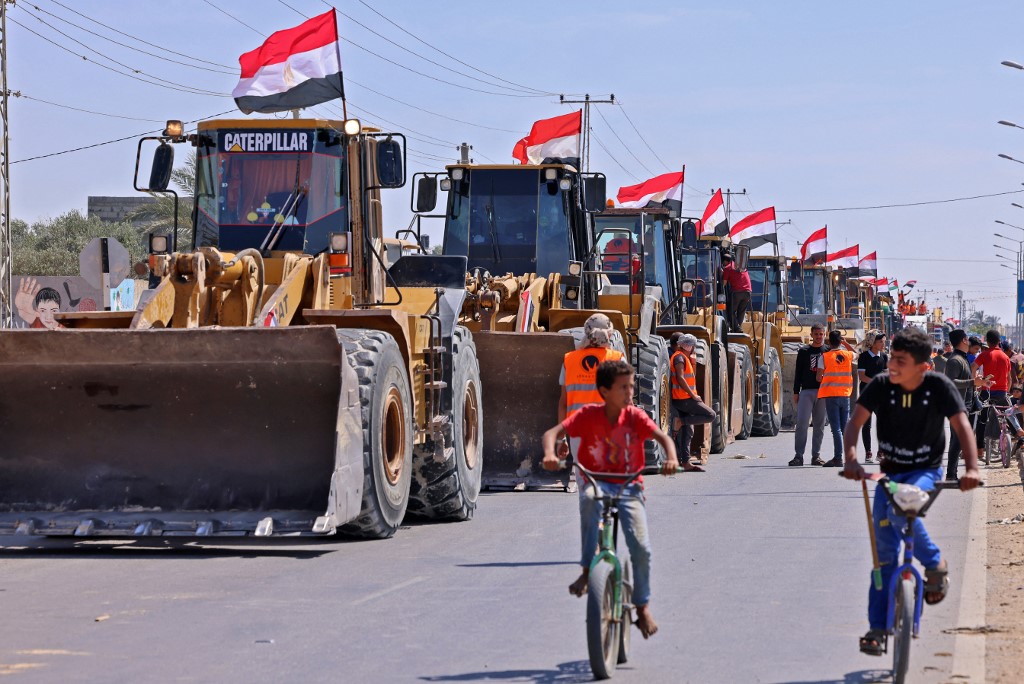
Last Friday, Egypt sent engineers and building equipment to Gaza to begin reconstruction work after Israeli airstrikes left a trail of destruction in the Palestinian enclave.

Egypt brokered a ceasefire between Israel and Gaza rulers Hamas, following which President Abdel Fattah El-Sisi allocated $500 million to fund the rebuilding of devastated areas in Gaza. Egypt also took care of the treatment of those injured in the attacks.

There will be meetings in Cairo on Saturday and Sunday between Palestinian factions. These will focus on pending issues to achieve reconciliation and agree on the mechanisms for the reconstruction of Gaza.

Sources said the meetings would also discuss urgent issues including easing Gaza’s siege and the ceasefire.

Main category: 

Egypt FM: Gaza reconstruction to be ‘carried out with PA’St. Regis Cairo: A new beacon of luxury on the Nile


US offers $3 million for information on Iraq attacks

Thu, 2021-06-10 18:34

WASHINGTON: The US Department of State’s Rewards for Justice programme said Thursday it was offering a reward of up to $3 million for information on attacks against Americans in Iraq.
The announcement comes a day after an attack was carried out with three “explosive-laden” drones on Baghdad airport, where US troops are deployed.
“O faithful people of Iraq, cowardly terrorists are attacking US diplomatic missions in Iraq, then they are fleeing to hide among civilians,” said a statement in Arabic on the Twitter account of Rewards for Justice.
“America is offering a reward of up to $3 million for information on planned attacks or past ones against American diplomatic installations,” said the statement, which was accompanied by a video.
It provided a US telephone number, and said the information could be sent via the messaging apps Whatsapp, Telegram or Signal.
US interests in Iraq have come under repeated attacks since October 2019, including with rockets, with the United States routinely blaming them on Iran-backed factions.
Since the beginning of the year, a total of 42 attacks have targeted the US embassy in Baghdad, Iraqi bases housing US troops or Iraqi convoys carrying logistical support.
The latest attack on Wednesday was carried out with three drones packed with explosives, the Iraqi army said on Thursday.
It said one of the drones had been intercepted by air defences Wednesday evening, the fourth such drone attack in less than two months.
Experts say the use of such drones marks an escalation in attacks against American interests by pro-Iranian forces.
The techniques are similar to those deployed by the Houthis in Yemen against Saudi Arabia.
Wednesday’s attack was the first such attack on targets in the Iraqi capital, the Arab world’s second-most populated city.
On Wednesday, five rockets also landed at Balad, an airbase further north where American contractors are based, a security source said.
They did not cause any casualties or damage, the source said.
The Balad base has been targeted so regularly that US weapons firm Lockheed Martin withdrew last month, citing concerns about the safety of its personnel.
Pro-Iran groups on Wednesday had hailed what they described as “one more victory” for the state-affiliated Hashed Al-Shaabi paramilitary coalition, as commander Qassem Muslah was released.
Muslah had been arrested in May by police intelligence on suspicion of ordering the killing of Ihab al-Wazni, a pro-democracy activist shot dead earlier that month by unidentified gunmen on motorbikes.
Iraqi authorities have repeatedly blamed “outlaws” of carrying out “terrorist” attacks with rockets or explosive-laded drones but have struggled to identify those behind these assaults.

Main category: 

Five rockets target Iraq base housing US contractors: security sourceAnger in Iraq as ‘assassin’ militia leader is released