Iran votes in presidential poll tipped in hard-liner’s favor

Author: 
By JON GAMBRELL | AP
ID: 
1624038068066449800
Fri, 2021-06-18 17:02

DUBAI: Iranians voted Friday in a presidential election dominated by a hard-line protege of Supreme Leader Ayatollah Ali Khamenei after authorities disqualified nearly all of his strongest competition, leading to what appeared to be a low turnout fueled by apathy and calls for a boycott.
Opinion polling by state-linked organizations along with analysts indicated that judiciary chief Ebrahim Raisi — who is already under US sanctions — was the front-runner in a field of just four candidates. Former Central Bank chief, Abdolnasser Hemmati, is running as the race’s moderate candidate but hasn’t inspired the same support as outgoing President Hassan Rouhani, who is term-limited from seeking the office again.
By late afternoon, turnout appeared far lower than in Iran’s last presidential election in 2017. State television offered tight shots of polling places, several of which seemed to have only a handful of voters in the election’s early hours.
Those passing by several polling places in Tehran said they similarly saw few voters. In addition to the disqualifications, voter apathy has also been fed by the devastated state of the economy and subdued campaigning amid a monthslong surge in coronavirus cases. In images on state TV, poll workers wore gloves and masks, and some wiped down ballot boxes with disinfectants.
If elected, Raisi would be the first serving Iranian president sanctioned by the US government even before entering office over his involvement in the mass execution of political prisoners in 1988, as well as his time as the head of Iran’s internationally criticized judiciary — one of the world’s top executioners.
It also would put hard-liners firmly in control across the Iranian government as negotiations in Vienna continue to try to save a tattered deal meant to limit Iran’s nuclear program at a time when Tehran is enriching uranium at its highest levels ever, though still remains short of weapons-grade levels. Tensions remain high with both the US and Israel, which is believed to have carried out a series of attacks targeting Iranian nuclear sites as well as assassinating the scientist who created its military atomic program decades earlier.
Whoever wins will likely serve two four-year terms and thus may be at the helm at what could be one of the most crucial moments for the country in decades — the death of the 82-year-old Khamenei. Already, speculation has mounted that Raisi may be a contender for the position, along with Khamenei’s son, Mojtaba.
Polls opened at 7 a.m. local time for the vote, which has seen widespread public apathy after a panel overseen by Khamenei barred hundreds of candidates, including reformists and those aligned with Rouhani. Some, including former hard-line President Mahmoud Ahmadinejad who had been barred from this election, urged voters to boycott the poll.
Khamenei cast the first vote from Tehran, urging the public to take part.
“Through the participation of the people the country and the Islamic ruling system will win great points in the international arena, but the ones who benefit first are the people themselves,” Khamenei said. “Go ahead, choose and vote.”
Raisi, wearing a black turban that identifies him in Shiite tradition as a direct descendant of Islam’s Prophet Muhammad, voted from a mosque in southern Tehran, waving to those gathered to cast their own ballots. The cleric acknowledged in comments afterward that some may be “so upset that they don’t want to vote.”
“I beg everyone, the lovely youths, and all Iranian men and women speaking in any accent or language from any region and with any political views, to go and vote and cast their ballots,” Raisi said.
But few appeared to heed the call. There are more than 59 million eligible voters in Iran, a nation home to over 80 million people. However, the state-linked Iranian Student Polling Agency has estimated a turnout will be just 44 percent, which would be the lowest ever since the country’s 1979 Islamic Revolution.
Fears about a low turnout have some warning Iran may be turning away from being an Islamic Republic — a government with elected civilian leadership overseen by a supreme leader from its Shiite clergy — to a country more tightly governed by its supreme leader, who already has final say on all matters of state and oversees its defense and atomic program.
“This is not acceptable,” said former President Mohammad Khatami, a reformist who sought to change the theocracy from the inside during his eight years in office. “How would this conform to being a republic or Islamic?”
As Hemmati voted in Tehran, he was mobbed by journalists and told them that the Iranian people have the “right to have a peaceful and good life.”
For his part, Khamenei warned of “foreign plots” seeking to depress turnout in a speech Wednesday. A flyer handed out Wednesday on the streets of Tehran by hard-liners echoed that and bore the image of Revolutionary Guard Gen. Qassem Soleimani, who was killed in a US drone strike in 2020. A polling station was set up by Soleimani’s grave on Friday.
“If we do not vote: Sanctions will be heavier, the US and Israel will be encouraged to attack Iran,” the leaflet warned. “Iran will be under shadow of a Syrian-style civil war and the ground will be ready for assassination of scientists and important figures.”
Some voters appeared to echo that call.
“We cannot leave our destiny in the hands of foreigners and let them decide for us and create conditions that will be absolutely harmful for us,” Tehran voter Shahla Pazouki said.
Yet the disqualification of candidates seemed aimed at preventing anyone other than Raisi from winning the election. Also hurting a moderate like Hemmati is the public anger aimed at Rouhani, whose signature 2015 nuclear deal collapsed after then-President Donald Trump unilaterally withdrew America from the accord in 2018. Iran’s already-ailing economy has suffered since, with double-digit inflation and mass unemployment.
The vote “is set to be the least competitive election in the Islamic Republic’s history,” wrote Torbjorn Soltvedt, an analyst at the risk consultancy firm Verisk Maplecroft. “There will be little need for the more overt forms of election fraud that characterized the turbulent reelection of Mahmoud Ahmadinejad in 2009.”

Main category: 
Tags: 

Ahmadinejad abstains from Iran election, slams processIranians nonchalant as regime opens poll


EU sets out potential criteria for Lebanese sanctions — document

Author: 
Reuters
ID: 
1624035976526150600
Fri, 2021-06-18 20:25

PARIS/BRUSSELS: Criteria for European Union sanctions being prepared for Lebanese politicians are likely to be corruption, obstructing efforts to form a government, financial mishandling and human rights abuses, according to a diplomatic note seen by Reuters.
Led by France, the EU is seeking to ramp up pressure on Lebanon’s squabbling politicians after 11 months of a crisis that has left Lebanon facing financial collapse, hyperinflation, electricity blackouts, and fuel and food shortages.
The bloc, which has been holding technical discussions on possible measures for the last month, has yet to decide on which approach to take, but foreign policy chief Josep Borrell is due in Lebanon this weekend and will report back to foreign ministers on Monday.
As many senior Lebanese politicians have homes, bank accounts and investments in the EU, and send their children to universities there, a withdrawal of that access could help focus minds.
Paris says it has already taken measures to restrict entry for some Lebanese officials it sees as blocking efforts to tackle the crisis, which is rooted in decades of state corruption and debt, although it has not named anybody publicly.
The EU first needs to set up a sanctions regime that could then see individuals hit by travel bans and asset freezes, although it may also decide to not list anybody immediately.
The note, which also outlines the strengths and weaknesses of taking such a measure, focuses on four criteria. It begins with obstructing the establishment of a government, the political process or the successful completion of the political transition and then turns to obstructing the implementation of urgent reforms needed to overcome the political, economic and social crisis.
Financial mishandling, which would target people, entities or bodies believed to be responsible for the mismanagement of public finances and the banking sector, is also a core criteria as is the violation of human rights as a result of the economic and social crisis.
“It might be argued that the lack of political responsibility of the leadership in Lebanon is at the core of a massive implosion of the economy,” the note reads, referring to the possible human rights criteria.
“This has led to significant suffering and has affected the human rights of the population in Lebanon.”
Such diplomatic notes are common in EU policymaking, circulated among EU diplomats and officials, although they are not made public.
The note also says an “exit strategy” proposing benchmarks for establishing whether the sanctions regime has served its purpose as well as for renewing or lifting individual designations should also be put in place.
How quickly sanctions could be imposed is still unclear, but with political divisions continuing to worsen, the bloc is likely to press ahead before the summer holiday period.
There are divisions among the 27 EU states over the wisdom of EU sanctions, but the bloc’s two main powers, France and Germany are in favor, which is likely to prove pivotal. A larger group of nations has yet to specify their approach.
Hungary has publicly denounced EU efforts to pressure Lebanese politicians.
A senior European official told Reuters Paris had set its sights on sanctioning powerful Christian politician Gebran Bassil, who is already under US sanctions.

Main category: 

Lebanon workers go on strike over escalating crisis


UN human rights office demands end to Houthi offensive in Marib

Fri, 2021-06-18 18:25

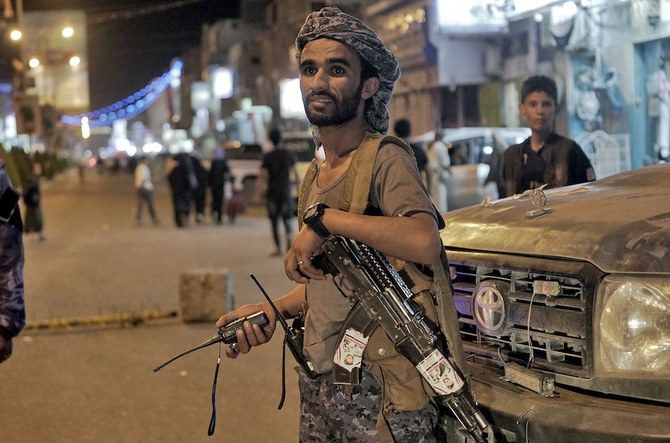
LONDON: The UN High Commissioner for Human Rights (UNCHR) has demanded an end to the Iran-backed Houthis’ assault on Marib in Yemen and criticized their cross-border missile and drone attacks on Saudi Arabia.

“We are seriously concerned at the continuing impact of fighting on civilians and the targeting of civilian objects in Marib Governorate in Yemen,” UNCHR spokesperson Liz Throssell told Arab News in a human rights briefing on Friday.

“Houthi forces, also known as Ansar Allah, have been trying to seize from the Yemeni government for several months.”

She highlighted a recent missile and drone attack on a compound, which housed civilian infrastructure and a mosque. The attack left eight dead and injured 30 more. Ambulances were also targeted during the attack as first responders were among the injured.

Throssell also pointed to another Houthi atrocity in Marib — the June 5 missile attack on a petrol station — which killed 21 people, including two children under the age of 13.

“Victims of arbitrary killings, including those amounting to war crimes, have a right to justice, and perpetrators of such acts, regardless of affiliation, must be held accountable,” Throssell said.

“We call on all parties in the conflict to respect their obligations under international humanitarian law, including their obligation to respect the principles of distinction. It prohibits the targeting of civilians and civilian objects and infrastructure, as well as the principles of proportionality and precautions in attack.”

The UN representative also addressed the Houthis’ sustained assault on neighboring Saudi Arabia.

“Cross-border attacks by Ansar Allah into the territory of Saudi Arabia have also been continuing,” Throssell said.

“To date, since January, Ansar Allah has launched some 128 drone strikes and 31 ballistic missiles into Saudi Arabia. While the majority of the targets have been of a military nature, civilian infrastructure, including civilian airports and industrial facilities, have been hit.”

Yemen, the poorest country in the Arab world, has been embroiled in a bitter civil war since the Iran-backed Houthi rebels seized power in a 2014 coup. A Saudi-led coalition then intervened in the conflict on behalf of the UN-recognized government.

The Kingdom proposed a comprehensive peace plan, which is backed by its regional and Western partners. The coalition sees an end to the fighting, supports the delivery of humanitarian aid, and the implementation of a political solution to the conflict.

However, the Houthis have flouted the agreement and pushed forward in an attempt to capture the government-held city of Marib — an assault that has claimed the lives of many civilians.

“We urge all parties in the conflict to go back to the negotiating table and agree on a nationwide ceasefire,” Throssell said. “As has been repeated time and again, only a political solution can end this conflict.”

Main category: 
Tags: 

Houthis fired 55 Iranian-made ballistic missiles at Marib since start of 2021: Yemen information minister8 killed, 27 wounded after Houthis launch missile, drone strikes on Marib


Israel arrests 10 Palestinians after Jerusalem clashes

Author: 
AFP
ID: 
1624030297885445200
Fri, 2021-06-18 14:48

JERUSALEM: Israeli police Friday arrested 10 Palestinians during clashes at Jerusalem’s Al-Aqsa mosque compound, with nine people injured as protesters hurled rocks and officers fired rubber bullets, police and medics said.
An AFP reporter said about 1,000 people gathered in the compound after weekly prayers crying “God is great” and some hoisting Palestinian flags.
Some demonstrators threw stones at police, who raided the site, an AFP reporter said.
“Several dozen youths began disturbing the order and throwing stones toward police,” police said in a statement, adding that “10 suspects were arrested.”
The Palestinian Red Crescent said nine people were hurt, including three hospitalized in the confrontation, with injuries due to “beatings, rubber and sound bombs.”
The confrontation came after Palestinians protested against Jewish nationalists who had marched through Israel-annexed east Jerusalem on Tuesday, chanting insults to Islam and shouting “Death to Arabs.”
Al-Aqsa is the third holiest site in Islam, and is also revered by Jews as the Temple Mount, where two temples stood in antiquity.
Police confrontations with Muslim worshippers in early May escalated into the bloodiest fighting in years, with conflict erupting between Israel and Palestinian militants in Gaza.
A fragile cease-fire between Israel and Gaza’s Hamas rulers came into place on May 21, ending 11 days of deadly fighting.
The Al-Aqsa compound lies in east Jerusalem, which Israel annexed in 1967, in a move most of the international community does not recognize.
Friday marked the second day of Palestinian protests.
A day earlier, police said they arrested eight people who demonstrated at the Damascus Gate, an entrance to Jerusalem’s Old City, where the nationalist Jewish march had congregated.
Also on Friday, Palestinians protested near Nablus in the occupied West Bank against the expansion of a Jewish settlement on the lands of Beita village.
The Red Crescent said 47 people were injured when security forces fired tear gas canisters and rubber bullets.

Main category: 

Israeli nationalists march in East Jerusalem under heavy police presenceIsrael strikes Gaza in retaliation for fire balloons


Oman, slowest vaccinator in the Gulf, pushes campaign amid COVID-19 surge

Author: 
Reuters
ID: 
1624027181215056000
Fri, 2021-06-18 14:31

DUBAI: Fresh COVID-19 vaccine supplies are accelerating inoculations in Oman, which has had the slowest rollout in the Gulf due to procurement difficulties, a government health official said, as a surge in cases puts hospitals under pressure.
“The situation is now changing, we are regularly now receiving stocks of vaccine … the campaign again has started,” Zahir Ghassan Al-Abri, of the General Directorate of Primary Health Care at Oman’s Ministry of Health, told Reuters.
Since it began vaccinating in May, Oman has given at least one dose to around 15 percent of the eligible population, said Abri. Ministry of health data on Tuesday shows 720,199 doses have been given in the country of around 4.5 million people, with 184,621 people having received two doses.
Reuters analysis, based on the number of vaccinations administered per total population assuming every person needs two doses, shows Oman to be lagging far behind its neighbors.
The United Arab Emirates’ more than 14 million administered doses is enough to have vaccinated about 72.6 percent of the country of around 9.8 million. Oman by comparison has administered enough to have vaccinated about 6.1 percent of the country.
Kuwait, which also experienced some procurement delays, has administered enough to have vaccinated about 21.6 percent of the country.
Abri said the slow campaign was due to supply difficulties.
“As with other countries the delivery of these vaccines has not been met through the agreed timeline for different reasons.”
Oman offers the Pfizer-BioNTech and AstraZeneca vaccines. It has not approved the shot produced by China’s state-owned Sinopharm, which the UAE used in its early, rapid rollout after hosting Phase III clinical trials.
Asked whether Oman plans to introduce other vaccines, including Sinopharm, Abri said they would be considered as long as they met government standards.
“The strategy adopted by the ministry of health since the beginning is selecting vaccines based on reports of efficacy and safety, as approved by research and guidelines published by different international organizations.”
Cases in Oman have trended upwards since January, with a pronounced surge since a dip in early May.
It has recorded 242,723 cases and 2,626 deaths in total. On Thursday it reported 2,015 new cases.
Oman’s media this week said hospitals nationwide were straining under rising cases. A main field hospital in the capital Muscat was at more than 90 percent capacity, state media said.
Aiming to vaccinate everyone 12 and over by the end of the year, Oman will on Sunday offer shots to people over 45.

Main category: 

Oman reports spike in COVID-19 cases amid mass vaccination campaignOman COVID-19 fatalities rise in February