Lebanon parliament approves ration cards for needy

Author: 
Thu, 2021-06-24 22:38

BEIRUT: Lebanon’s parliamentary committees on Thursday approved a ration card for the needy population, which is increasing at an alarming rate, as the country is teetering on the edge of economic collapse. 

According to the World Bank, the national currency has lost a majority of its value since the end of 2019, resulting in more than half the population falling into poverty.

Ration cards would help struggling families with basic essentials such as petrol and groceries. But they have not been referred to parliament and funding for such a program has not been found.

The MPs of the Lebanese Forces Party voiced their rejection of “the randomness and the electoral accounts” in studying the ration card.

In this same context, Progressive Socialist Party leader Walid Jumblatt said: “The ration card would have no value without coordination with the World Bank and without a government that adopts a reform policy.”

Meanwhile, the country mourned the deaths of a southern family killed in a car accident, caused by petrol queues, earlier in the week in Saadiyat.

Fatima Koubeissi and her four daughters — Zahraa, Aya, Lia, and Tia — were killed in the accident. Their widowed father, Imad Hawile, was in Africa at the time of the accident looking for work and has since returned to Lebanon.

Frustrated citizens took to the streets again on Thursday to protest the deplorable conditions in the country. 

Protesters blocked roads in Akkar and prevented a truck carrying milk and diapers from getting through. The truck was looted as the supplies were distributed to people in the area.

On Wednesday, a similar scene played out as protesters seized a fuel tank in Minieh, north of Lebanon, and distributed the fuel to the people.

Calls on social media were issued to “close roads and protest over the shortages of gasoline, diesel, and medicine along with the dramatic increase of food prices.”

Roads in the southern city of Sidon, and those leading to Tyre were closed, along with the Jal El-Dib road and the high road leading to Tripoli. The army re-opened the roads without clashing with protestors.

On Wednesday night, roads were closed in other areas while there were reports of protesters throwing flammable materials at the Lebanon Energy Ministry building in Beirut. A large number of truck drivers also parked their vehicles on the Zouk highway leading to the capital while protestors in Sidon took to the streets to express their anger at the ruling class.

In an attempt to quell the fuel shortage situation, President Michel Aoun chaired a meeting that included Finance Minister Ghazi Wazni, Energy Minister Raymond Ghajar, and Riad Salameh, the governor of the Banque Du Liban (BDL).

They decided to enable BDL to make the necessary arrangements to contain the crisis until more legislation being studied by parliament is passed.

Following the meeting, BDL announced that it will grant loans for the state “due to the exceptional and dangerous circumstances that Lebanon is going through and the state’s failure to pay off its debts.”

This decision requires the signature of Lebanon’s caretaker Prime Minister Hassan Diab, who will reportedly refuse to sign because he represents a resigned government that has no power to take such decisions.

If it gets signed, the BDL proposal will help fund the import of gasoline based on the dollar exchange rate set at 3,900 Lebanese pounds, which means that a gas tank would cost between 65,000 and 70,000 pounds.

Main category: 

Lebanon again raises price of bread amid crippling crisisMore blackouts ahead as Lebanon generators starved of fuel


Foreign fighters must leave Libya: US official

Author: 
Thu, 2021-06-24 22:26

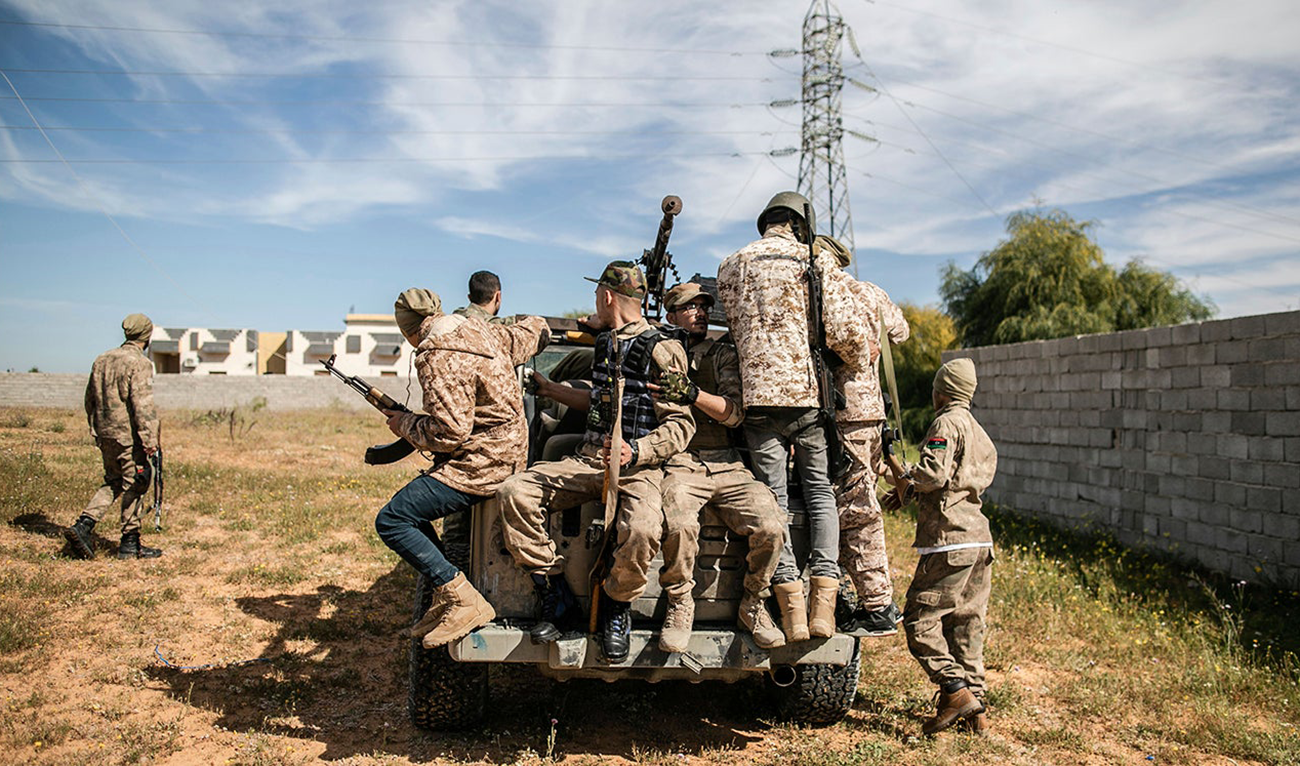
LONDON: The remaining “thousands” of foreign fighters and mercenaries in Libya must leave the country urgently, US Acting Assistant Secretary of State for Near Eastern Affairs Joey Hood said on Thursday at a press briefing attended by Arab News.

Hood was speaking from Berlin, where he was attending a conference on Libya alongside international allies and partners.

The US will “continue to work with our allies to operationalize their (foreign fighters’) departure. Progress on this was made here in Berlin, but obviously there’s much more work to do,” he said.

“The Libyan ceasefire agreement calls for the withdrawal of all foreign fighters and mercenaries, no exceptions … The Libyans are clear: They want everybody out.”

The conference was organized amid plans to hold Libyan elections this December to select a new government. The Libyan state is currently controlled by a government of national unity.

Hood said Prime Minister Abdul Hamid Dbeibeh “represents an effort by the Libyan people and the major political actors to come together and form a government of national unity on an interim basis to bring them toward elections. If you’d asked them a year-and-a-half ago if that was possible, they’d say no.”

He added: “We’ve seen remarkable progress among political actors to stop fighting, to start various committees … and to make important decisions, which has ended the fighting and brought the political actors together to form a government.”

Hood said the conference was aimed at producing a unified, stable and peaceful Libya, and the US has “had contact on the sidelines … with all the major players, including Russia.”

He added that Washington wants to pursue opportunities for cooperation with Moscow and the other influential nations.

“I think there’s space for cooperation here, not just on the humanitarian side but on the security side as well,” he said. “I think we all have an interest in making sure Libya isn’t an exporter of instability.”

Main category: 

Libya sees progress on removal of foreign mercenaries at Berlin talksGermany hosts conference to push for progress in Libya


Suspected Iranian nuclear production plant hit by drones, Tehran claims ‘sabotage attack’

Thu, 2021-06-24 22:21

LONDON: A drone attack on a building in Iran, thought to be a nuclear facility, has caused considerable damage, it was claimed Thursday, despite Tehran stating on Wednesday it had foiled the “sabotage” attempt on the building.

At least one small rotor-powered drone hit a factory owned by the Iran Centrifuge Technology Co. in Karaj, according to a US intelligence tip off published by the New York Times.

The factory, just outside Tehran, is believed to produce aluminium blades for use in Iran’s two uranium enrichment facilities at Natanz and Fordow, UK paper The Times reported.

Israeli media also said the building had been hit in an attack, with some reports saying it had involved “several” drones.

There was no immediate comment or attribution of blame from either Israel or Iran.

The incident “left no casualties or damages and was unable to disrupt the Iranian nuclear program,” Iranian state television said, before adding that authorities were now working to identify the perpetrators.

The International Atomic Energy Agency (IAEA), the UN body that monitors Tehran’s nuclear program, did not immediately respond to a request for comment.

The factory was allegedly on a list of targets presented to the administration of former US President Donald Trump last year by Israel, which regards the Iranian nuclear program as a cover for developing nuclear warheads, a claim denied by Tehran.

The incident follows several sother uspected attacks targeting Iran’s nuclear program that have heightened regional tensions in recent months, amid diplomatic efforts to resurrect Tehran’s tattered nuclear deal, the Joint Comprehensive Plan of Action (JCPOA), with world powers.

Trump’s decision to withdraw from the deal in 2018 has seen Iran, over time, abandon all limitations on uranium enrichment. The country is now enriching uranium to 60 percent, its highest ever levels, although still short of those required to develop weapons. 

Iran has said that its nuclear ambitions are peaceful and that it will return to its commitments once the US lifts sanctions imposed after Trump withdrew from the JCPOA.

Earlier this week, Iran’s sole nuclear power plant at Bushehr underwent an unexplained temporary emergency shutdown. Authorities had warned earlier this year of the plant’s possible closure because of US sanctions that supposedly prevented Iran procuring equipment for repairs.

In April, Iran’s underground Natanz nuclear facility experienced a mysterious blackout that damaged some of its centrifuges. Last July, unexplained fires struck the advanced centrifuge assembly plant at Natanz, which authorities later also described as sabotage. Iran now is rebuilding that facility deep inside a nearby mountain.

* With AP

Iran's southern Bushehr nuclear power plant has been temporarily shut down over a
Main category: 

Iran says US websites seizure unhelpful for nuclear talksIranian media: ‘sabotage attack’ on nuclear building foiled


Iran now has ‘international criminal’ as president: Panel

Thu, 2021-06-24 22:03

LONDON: Iran now has an “international criminal” as its president, according to a panel of experts who warned that this could mean he faces arrest if he leaves the country and may be unable to attend the UN.

At an event on Thursday hosted by the National Council of Resistance of Iran and attended by Arab News, a panel of diplomats and human rights experts said Ebrahim Raisi’s role in the 1988 massacres of political prisoners means he is guilty of crimes against humanity — a label that could seriously harm his global diplomatic standing.

“We now have an international criminal as president … He’s guilty of crimes against humanity, committed in late 1988 by the slaughter of thousands of prisoners,” said Geoffrey Robertson, a former UN appeal judge and former president of the war crimes court in Sierra Leone.

Robertson, who has conducted an extensive investigation into the 1988 massacres, added that Raisi and his Justice Department henchmen sent prisoners to their deaths in “two waves.”

First killed, Robertson said, were members, allies and sympathizers of the Mujahedin-e Khalq (MEK), a political group that participated in the 1979 revolution but was later turned upon by the regime following a political disagreement.

“Most of them had actually already completed their sentences. They were executed without pity,” said Robertson.

“The second wave was of theocratic dissidents: Communists, atheists, left-wingers. They were executed for being opposed to the theocratic state of Ayatollah (Ruhollah) Khomeini. There we have a crime against humanity.”

Most of the people killed were detained for participating in protests in the early 1980s, said Robertson. They were then subjected to what Amnesty International has called “death commissions,” in which judiciary officials led by Raisi, who was then a prosecutor in Tehran, asked them apparently innocuous questions.

“They didn’t know it, but on their answers their lives depended,” said Robertson. Those who gave answers indicating an MEK or atheist affiliation were blindfolded and “ordered to join a conga line that led straight to the gallows,” he added.

“They were hung from cranes four at a time … Some were taken to army barracks at night, directed to make their wills and then shot by firing squad.”

Raisi’s direct involvement in these crimes could come back to bite Iran in an unexpected way, Robertson said.

“The UN will have to grapple with the fact that one of its members is led by an international criminal,” he added.

“If ever he ventures out of Iran, any democratic country would be entitled under its law — universal jurisdiction as we call it — to arrest him and put him on trial,” said Robertson

Nick Fluck, president emeritus of the law society of England and Wales, pointed out that Raisi has said in press conferences that he is “proud” of his role in the 1988 massacres.

This “serves as an important wakeup call that we can’t just sit silently on the sidelines. Silence and inaction don’t produce change, and in this case it’s clear that change is radically needed,” Fluck said.

“This is a leader who’ll be widely, I hope, shunned. There will be a lack of credibility about anything he may say.”

Fluck said Raisi’s domestic legitimacy is also seriously lacking, following an election that saw heavy state involvement, with hundreds of candidates barred from running and millions of Iranians boycotting the poll.

“Dissidents and reformists urged voters to boycott the poll. That’s perhaps why, although he inevitably won the election, he did so with a very low turnout,” Fluck added.

Main category: 

Continuity of aggressive Iranian policies assured with Raisi’s election: Former senior CIA official Norman RouleIsrael army chief says cooperation with US against Iran ‘unprecedented’


300 migrants may have died in recent capsizing of ship off Yemen coast: UN

Author: 
Thu, 2021-06-24 19:09

DUBAI: A UN official said on Thursday that as many as 300 migrants may have died after a ship capsized recently off Yemen’s coast, highlighting the risks of a longstanding migration route from the Horn of Africa to Gulf states in search of work.

UN resident and humanitarian coordinator David Gressly said the migrants crisis is adding more pressure on an already dire humanitarian situation in Yemen.

A number of bodies washed up at Ras Al-Arah on Yemen’s Red Sea coast earlier this month after a migrant boat sank offshore.

A UN official said on Thursday that as many as 300 migrants may have died after a ship capsized recently off Yemen's Red Sea coast. (Shutterstock)
Main category: 

Drowned migrants get ‘dignified’ burial in Tunisia cemeteryAt least 57 migrants drown in shipwreck off Tunisia