Lebanon’s drug trade booms on the back of Hezbollah’s Captagon connection

Mon, 2021-07-05 21:43

BEIRUT: Lebanese security forces say they have launched dozens of operations in recent months in search of laboratories manufacturing Captagon pills, while closely monitoring coastal and land borders with Syria in an effort to identify smuggling routes.

The country’s fight against drugs, though, is an uphill battle, amid multiple overlapping crises, notably its economic collapse and political paralysis.

And the elephant in the room is Hezbollah: Many suspect the Iran-backed Lebanese militant group facilitates the illicit drug trade to finance its operations while maintaining plausible deniability.

Captagon is an amphetamine, and one of the most commonly used drugs on Middle East battlefields.

Combatants addicted to the narcotic say it helps them stay awake for days and numbs their senses, giving them stamina for long battles and allowing them to kill with abandon.

Owing to its ability to make users energetic and happy, Captagon is known to have also become a popular recreational drug in the wider region.

Since Saudi Arabia’s customs authorities thwarted an attempt in April to smuggle more than five million Captagon pills from Lebanon into the Kingdom, hidden inside a shipment of pomegranates, officials say criminal syndicates have become even more “brazen.”

It was after this consignment of Captagon was discovered that Saudi Arabia suspended shipments of Lebanese fruit and vegetables entering the Kingdom or transiting through its territory.
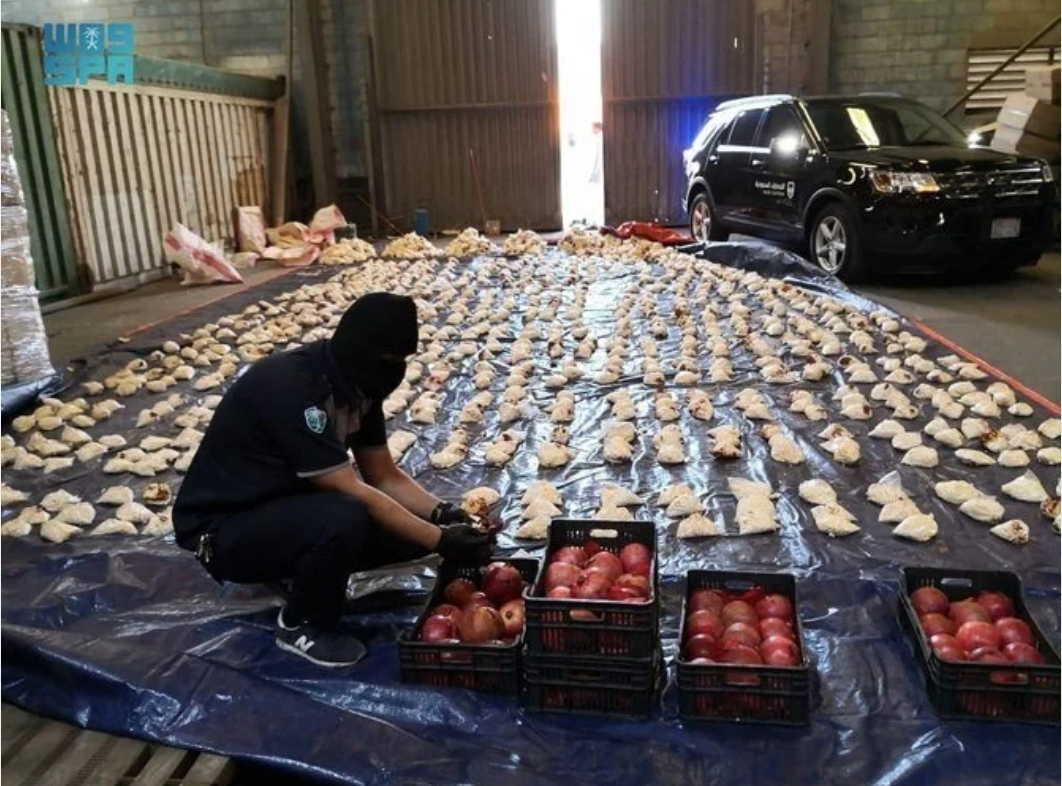

Saudi Arabia’s customs authorities thwarted an attempt in April to smuggle more than five million Captagon pills from Lebanon into the Kingdom, hidden inside a shipment of pomegranates. (SPA)

At the time, Lebanese authorities said “the drug-stuffed shipment entered Lebanon from Syria and was repackaged in an area of the Bekaa Valley before being shipped to the port of Jeddah.”

Two Syrian brothers were arrested in Lebanon soon after the discovery, accused of repackaging the shipment at an abandoned warehouse in Bekaa. But even this major bust was not enough to put the smugglers out of business.

On June 15, Lebanon’s Internal Security Forces (ISF) thwarted another attempt to smuggle 37.2 kg of Captagon pills into Saudi Arabia via Beirut’s Rafic Hariri International Airport, hidden inside a consignment of electric water pumps.

READ PART ONE

Explained: How Hezbollah built a drug empire via its ‘narcoterrorist strategy.’ Click here for more.

Three people were arrested, including the alleged ringleader, a stateless person with a history of drug smuggling, along with a Syrian and a Lebanese.

The trio reportedly confessed to setting up a smuggling network and claimed they had received the shipment from Syria before transporting it to Beirut.

The ISF’s best efforts, though, were not enough. Saudi authorities at the port of Jeddah announced another major drug bust on June 26, seizing an estimated 14 million Captagon pills hidden inside iron plates sent from Lebanon.
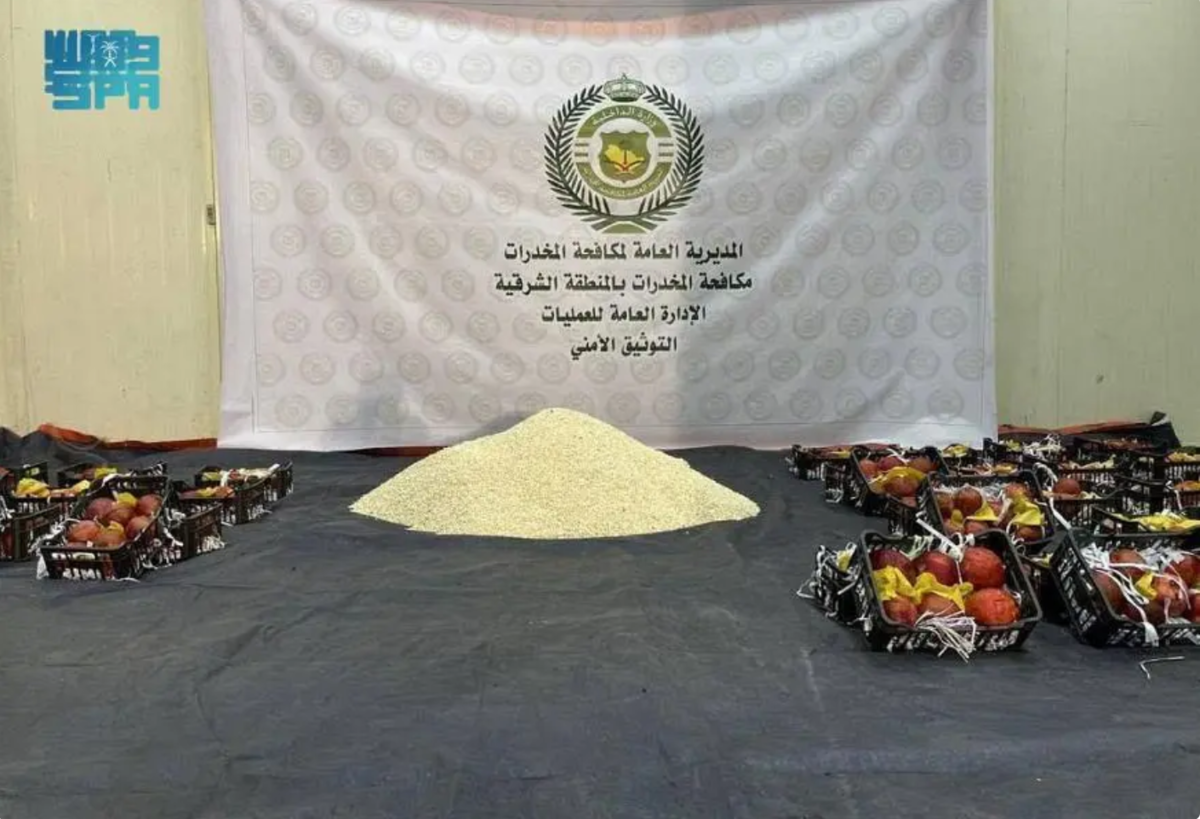

Saudi officials say criminal syndicates have become even more “brazen” in their attempts to smuggle drugs. (SPA/File Photo)

Mohammed Al-Nujaidi, spokesperson for the Kingdom’s General Directorate of Narcotics Control, confirmed the arrest of a Saudi citizen in the Riyadh area in connection with the shipment.

On June 29, Lebanese authorities seized another haul of Captagon pills also destined for Saudi Arabia. In a statement, the ISF said 17.4 kg, the equivalent of 100,000 pills, were seized. “They were expertly hidden inside medical equipment sterilization machines,” the statement added. Two Lebanese and one Syrian national were reportedly arrested.

In July 2020, Italian police and customs agents at the port of Salerno found 84 million Captagon tablets in shipping trailers that appeared to contain only paper rolls.

Intelligence officials concluded the drugs, worth an estimated $1.1 billion, originated in factories located in parts of Syria controlled by President Bashar Assad’s government.

“The amphetamines departed Syria from Latakia, a coastal city with dedicated Iranian port facilities and a known hub for smuggling operations by Tehran’s ally, Hezbollah,” the Washington Post said.
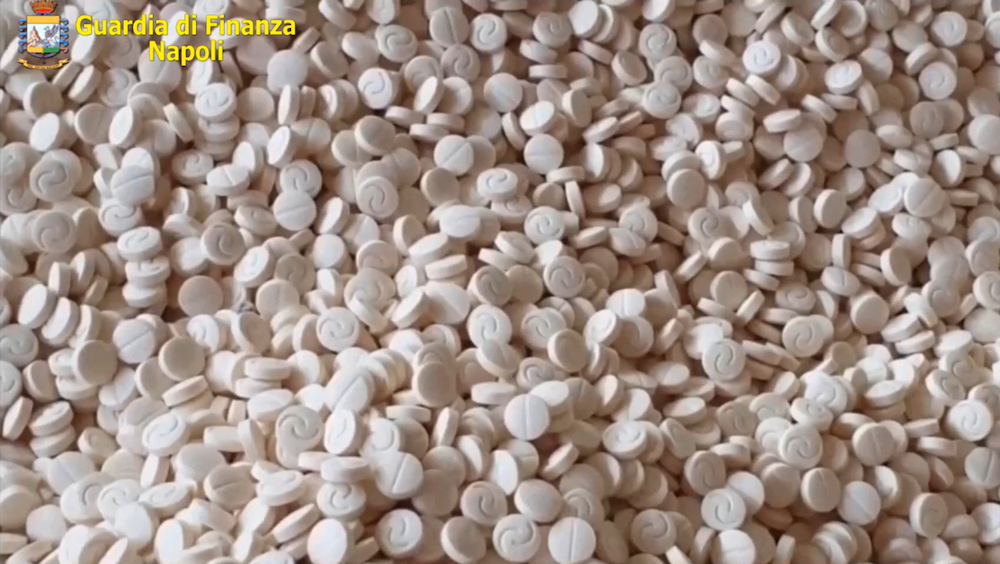

In July 2020, Italian police and customs agents at the port of Salerno found 84 million Captagon tablets in shipping trailers that appeared to contain only paper rolls. (AFP/Guardia di Finanza Handout/File Photo)

Hezbollah strenuously denies the charge that it is involved in drug trafficking, but the Post report quoted US and Middle East analysts as saying: “Facing extreme financial pressures because of US sanctions, the coronavirus pandemic and Lebanon’s economic collapse, Hezbollah appears to be growing increasingly reliant on criminal enterprises, including drug smuggling, to finance its operations.”

Hatem Madi, a former Lebanese public prosecutor, told Arab News: “The Captagon pill trade became active because it is easier to smuggle, and faster.

“It is subject to supply and demand. There is no doubt that the war in Syria has left the door open for smugglers and drug traffickers.”

Indeed, Lebanon has become a major conduit for smuggling of Captagon pills manufactured in Syria. Even before the country’s descent into civil war in 2011, its territory was used by Lebanese militias to cultivate and smuggle marijuana, generating millions of dollars.

“Captagon is manufactured in Syria, especially in the regions of Homs and Aleppo,” Brig. Gen. Anwar Yahya, a former head of Lebanon’s judicial police, told Arab News.

“In light of the events taking place in Syria, some of the factories have relocated to the villages found between Lebanon and Syria on the Anti-Lebanon Mountain Range and in the areas of Qusair and Tufail.”
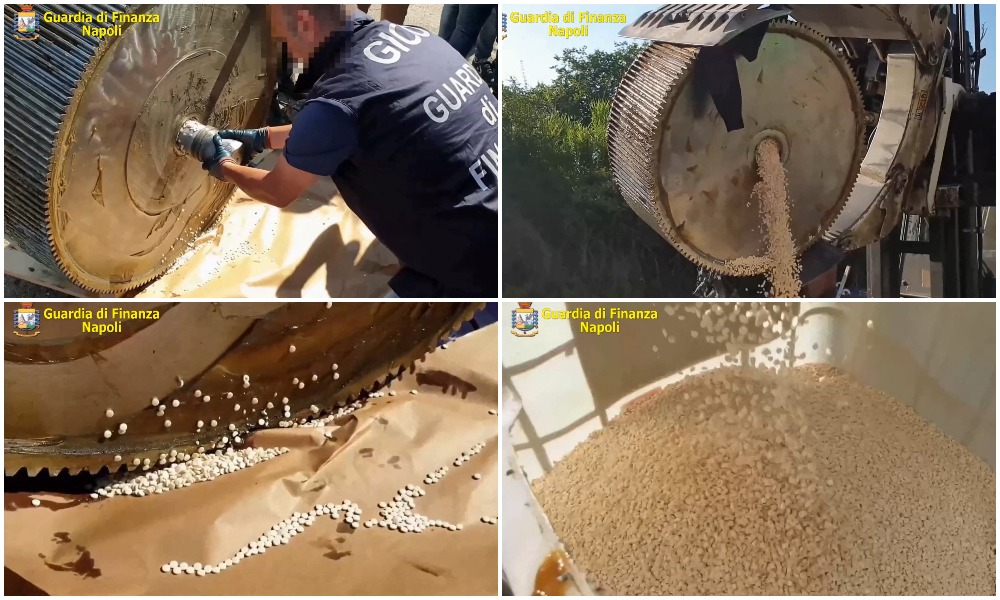

The Daesh drugs, in the form of 84 million Captagon tablets, were worth about €1 billion, police said in a statement, describing the operation as “the biggest seizure of amphetamines in the world.” (AFP/Guardia di Finanza Handout/File Photo)

Western intelligence analysts claim Hezbollah operatives began manufacturing Captagon more than a decade ago but the drug began to gain prominence in tandem with the militia’s expanding commitments in Middle East conflicts.

“Is Hezbollah involved in manufacturing Captagon pills? This issue requires a judicial or security source,” Yahya told Arab News.

“However, the judiciary in Lebanon is silent. Is it out of fear or is the judiciary hiding something? I have no idea, but we are aware of the investigations and know who is involved.”

What is beyond doubt is that the Bekaa Valley, bordering Syria, is a Hezbollah hotbed. It has training camps in the region’s highlands and controls its own border crossings with Syria, where it has intervened in support of the Assad regime.

The most prominent person to be arrested by Lebanese authorities in Bekaa in connection with Captagon is Hassan Daqou. Dubbed the “King of Captagon,” Daqou had several business interests in Tufail, a town that overlaps the border with Syria and is controlled by Hezbollah.

However, following a local land dispute, Daqou was turned over to the Lebanese army, accused of establishing a Captagon laboratory in the area and overseeing a smuggling network sending pills to Greece and Saudi Arabia.

Opinion

This section contains relevant reference points, placed in (Opinion field)

“Daqou has ties with Hezbollah and the Fourth Division, which is headed by Maher Assad, the Syrian president’s brother,” Mohammed Al-Hujairi, a Future Movement MP, told Arab News.

Since the beginning of 2020, counterfeit Captagon and other illicit drugs have been seized in Egypt, Greece and Jordan besides Saudi Arabia, the UAE and Italy. Western law enforcement officials have specifically linked Hezbollah to drug seizures from the Syria-Jordan border to central and southern Europe.

But what interest might Hezbollah have in the production and trafficking of drugs?

“There are unusual smugglers that have a political or ideological background,” Ashraf Rifi, a former ISF director general who later served as Lebanon’s justice minister, told Arab News. “They do not work according to profit or loss considerations. Instead, they have political goals, namely targeting the opponent’s society.”

US and European drug agencies are convinced that Hezbollah profits from the drug trade. Europol issued a report in 2020 cautioning that Hezbollah members were using European cities as a base for trading in “drugs and diamonds” and to launder the profits. In 2018, the US State Department named Hezbollah among the top five global criminal organizations.
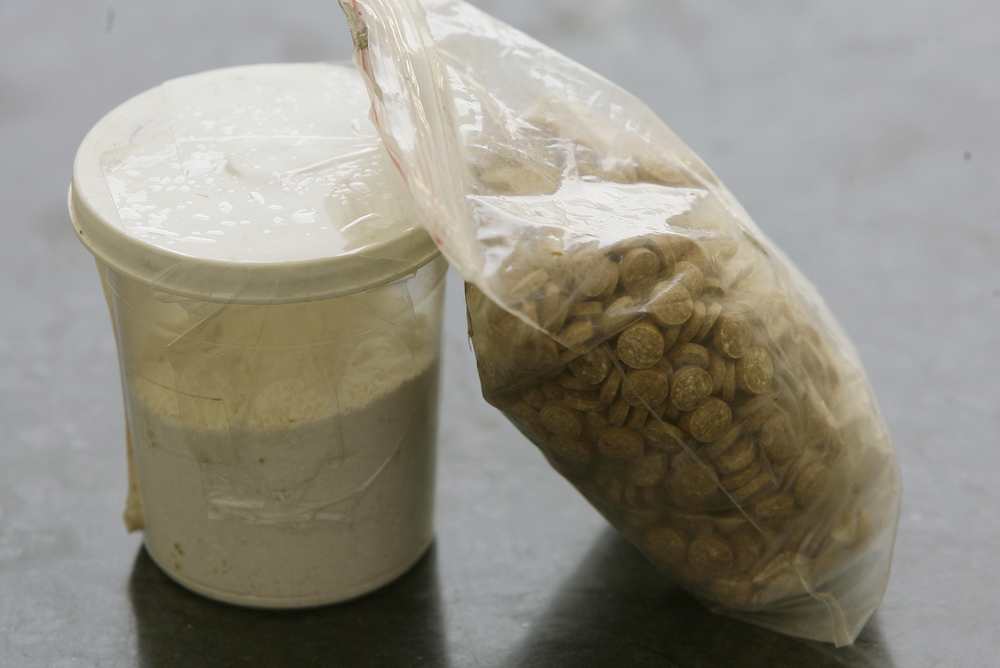

Captagon pills are displayed along with a cup of cocaine at an office of the Lebanese Internal Security Forces (ISF), Anti-Narcotics Division in Beirut. (AFP/File Photo)

Whether or not the drugs trade has been weaponized, it is certainly consuming a lot of the Lebanese government’s time and resources. According to one security source, measures taken by the security forces in recent years have led to the arrest of over 15,000 people.

Rifi said there had been seizures “unprecedented in the history of Interpol in regards to the quantities of narcotics being smuggled and the level of brazenness when it comes to smuggling and targeting.

“There is a partnership between Hezbollah and the Syrian side in terms of manufacturing and smuggling, while smuggling may also be undertaken unilaterally by one of the sides,” he said.

“The efforts aimed at countering drug smuggling from Lebanon require a wise administration. A corrupt administration that is subservient to Hezbollah makes a show of addressing the problem, but it does not actually defend the people or the interests of the country,” Rifi added.

Yahya believes Lebanon’s counternarcotics unit, a badly under-resourced and poorly utilized force, is fighting with one hand tied behind its back.
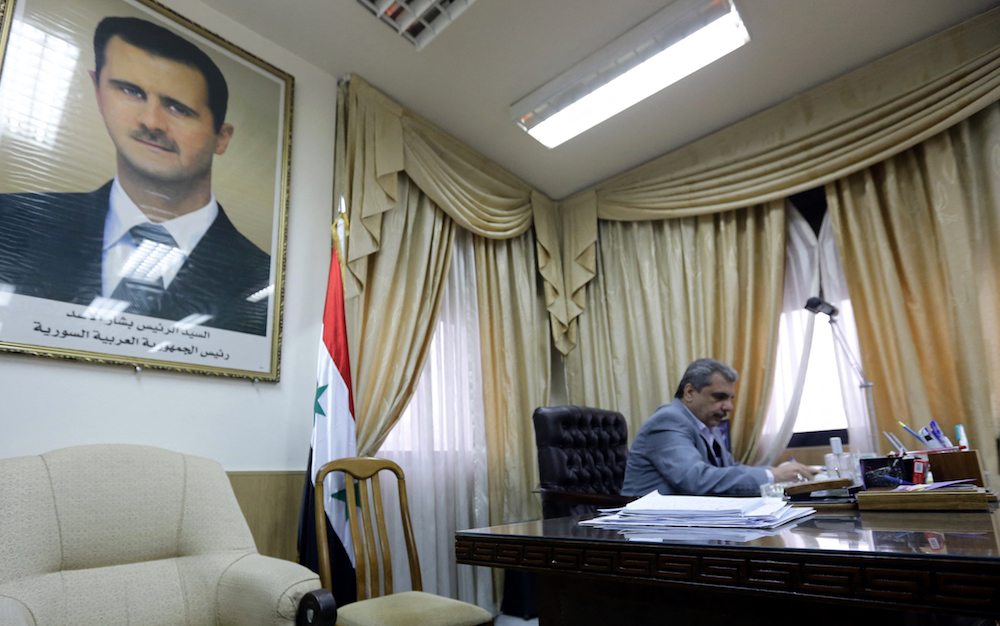

A string of major drug busts in Syria and Lebanon has drawn new attention to the trade in captagon, an illegal substance that has flourished in the chaos of Syria’s war. (AFP/File Photo)

“Unfortunately, the judicial police anti-drug office, which has files that date back dozens of years and include photos and fingerprints of the people and networks involved, is being sidelined,” he told Arab News.

“Instead, we see that the bodies handling these cases are the ISF Information Division, the customs, the army or people that have no jurisdiction over such issues.”

Yahya wants Lebanese authorities to tighten control along the borders, at the airport and seaports; equip border control personnel with scanners; activate the work of the anti-drug office and provide it with the necessary tools and staff.

More broadly, Lebanon must address its economic collapse and its ability to support its security personnel, who need to provide for their families.

“The delay in the government’s formation,” he said, “is a major, and possibly the main, obstacle standing in the way of activating the security apparatus and the role of the army.”

Main category: 

Lebanon seizes 5m captagon pills at Beirut portSaudi authorities thwart attempt to smuggle millions of Captagon pills hidden in boxes of oranges Lebanon arrests Captagon drug kingpinAssad business figures linked to record Captagon pill seizure


Medicine shortage in Lebanon puts patients on brink of death

Mon, 2021-07-05 21:41

BEIRUT: Doctors and pharmacists raised their voices on Monday in protest against the lack of medicine amid the deteriorating Lebanese currency crisis.

In a growing spate of crises, shortages of fuel and medicine continued over the weekend.

These materials, as well as the food supply, are imported.

Food prices have soared. The price of sunflower oil has jumped by over 1,100 percent since the summer of 2019. The price of beef and rice has risen by 627 percent and 545 percent respectively over the same period.

The price of eggs has shot up by 450 percent, with labneh (Strained yogurt) costs jumping 275 percent.

Lebanese TV and social media circulated images of people screaming in the streets for milk and medicine, and electricity to save seriously ill children, who need oxygen devices in their homes.

Pharmacist Samer Soubra told Arab News: “People come to the pharmacy to ask for simple medicines, such as ear drops, but I do not have them.”

Soubra added: “I think that importers have a stockpile of medicines, but they refrain from distributing them to put pressure on the Banque du Liban to continue subsidizing medicine.

“There is no political decision yet to lift subsidies on medicine. It’s chaos.

“I expect within 10 days the scream will rise because sick people will get worse without treatment.”

Dr. Ismail Sukkarieh, a gastroenterologist, told Arab News: “A colleague of mine, a cardiologist, was not able to install a spring into a patient’s artery because there was no blood thinner and left him at the mercy of those who trade in people’s health.”

Dr. Sukkarieh pointed out that “the most missing medicines are those related to arterial hypertension and blood clots, and we do not know the reason.”

He asked: “How can I believe the importers who say that their drug stores are empty? It is a blackmail operation against the Banque du Liban.”

Dr. Sukkarieh held “those concerned with resolving the drug crisis responsible for any harm to, or death of any patient.”

The Syndicate of Pharmaceutical Importers had warned of running out of its “stocks of hundreds of essential medicines that treat chronic and incurable diseases.”

It suggested that “the stocks of hundreds of other medicines are likely to run out during July if we do not re-import as soon as possible.”

The syndicate indicated that “the import process has been almost completely halted for more than a month due to the accumulation of dues in favor of the exporting companies, whose value exceeded $600 million, and importing companies not obtaining prior approvals from the Banque du Liban to re-import.”

Meanwhile, the Lebanese continue to struggle with an energy crisis, as they endure contradictory statements from those responsible for securing fuel.

A member of the Syndicate of Gas Station Owners, George Brax, said that “things are heading toward a temporary solution after a ship loaded with gasoline began unloading its cargo. This will comfort the market and allow some closed stations to reopen their doors.”

Meanwhile, the Crisis Observatory at the American University of Beirut expected that “the Lebanese family will spend about LBP 2,130,000, or $1,420 at the official exchange rate, on one main meal within one month, which is equivalent to almost three times the minimum wage.”

The observatory followed the repercussions of the collapse of the Lebanese pound and monitored the inflation of basic food prices during June.

It said that “72 percent of families in Lebanon, whose income does not exceed LBP 2,400,000 per month, will find it difficult to secure their livelihood at the minimum, based on the household income figures stated in the Central Statistics Administration 2019 report and in light of the national currency losing about 99 percent of its value in less than two years.”

The Crisis Observatory report, a copy of which was obtained by Arab News on Monday, suggested that “this inflation will continue, with the expectation of a greater decline in the value of the Lebanese pound in the coming months.”

It added that if this trend continues, then the “food insecurity of the Lebanese population becomes a difficult reality, knowing that Lebanon has not yet reached the maximum effects of the deep crisis.”


A woman buys medicine at a pharmacy in the Lebanese capital Beirut. (AFP file photo)
Main category: 

Lebanon central bank says will pay up to $400 mln to finance imports of essential medicine and flourMired in crises, Lebanon hopes summer arrivals bring relief


Ever Given to leave Egypt on Wednesday after final settlement contract signed

Author: 
Mon, 2021-07-05 21:27

CAIRO: Egypt’s Suez Canal Authority (SCA) said a final settlement contract would be signed on Wednesday with the company that owns the Ever Given ship, and that participants would be able to watch the ship leaving on the same day.

The owners and insurers of the container ship that blocked the Suez Canal in March said on Sunday that a formal settlement had been agreed in a compensation dispute, and the canal authority said the vessel would be allowed to sail on July 7.

The authority has held the giant ship and its crew in a lake between two stretches of the waterway since it was dislodged on March 29 amid a dispute over a demand for compensation by the SCA. 

A statement from SCA said the contract will be signed in the new Marina building, east of the canal, at 11 a.m. in the presence of its Chairman Lt. Gen. Osama Rabie, a representative of the ship-owning company and several ambassadors and international partners. 

The Japanese-owned Ever Given had become stuck in high winds and remained wedged across the canal for six days, disrupting global trade.

Rabie confirmed that the Ever Given’s owners will present the authority with a gift of a 75-ton locomotive at Wednesday’s ceremony. 

The chairman added in televised statements that the world is now talking about the achievement of the SCA for saving and floating the ship within a week.

The crisis alerted Egypt and the world to the importance of the canal, he added.

The canal earned revenue of $3 billion in the first six months of 2021, up 8.8 percent compared with the same period last year, despite the Ever Given accident, Rabie said.

In the first half of this year, 9,760 ships passed through the canal, an increase of 2 percent from the same period in 2020.

Main category: 

Suez Canal says deal reached to free seized vesselEarly agreement reached in dispute over Suez Canal ship


Egyptian army official confirms readiness of forces to face regional challenges

Mon, 2021-07-05 21:23

CAIRO: A spokesman for the Egyptian Armed Forces has said that they are aware of the challenges facing the region and are prepared to deal with them.

“It is not wise, in light of our capabilities and high deterrence power, to test the reaction of the Egyptian Armed Forces,” added Gharib Abdel Hafez.

Hafez explained that the Egyptian Navy has undergone significant modernization, increasing its ability to secure the maritime domain along the coasts of the Mediterranean and Red seas.

“Over the past few years, we have established multiple military bases, including the Mohammed Naguib Military Base in July 2017 — which is the largest military base in the Middle East — and the Sidi Barani Military Base,” he said.

A third base, the Berenice Military Base, includes an air and naval base, which secures both the coast of the Red Sea and the strategic south to confront any threats that might affect Egypt’s national security.

On Saturday, the July 3 Naval Base was opened, also an extension of the modernization efforts of the armed forces, which include supplying them with the latest weapons and equipment.

“We had about 47 naval vessels at the opening of the July 3 Naval Base, which included frigates and launchers,” Hafez said.

The Supreme Commander of the Armed Forces, Egyptian President Abdel Fattah El-Sisi, authorized the flag to be raised, indicating permission for the base to begin operations.

The base, strategically located in the Gargoub area on Egypt’s northwest coast near Libya, is an integrated facility, bringing together training and high combat ability.

The military spokesman indicated that the location of the base allows the naval forces to carry out their tasks in all strategic directions, whether north or west, to serve the current and future goals of the armed forces, also maximizing their ability to prevent smuggling across the Egyptian coasts.

In addition to securing the vital goals of the Egyptian state and its economic gains, the base is also involved in research work, rescue operations and the prevention of illegal immigration.

The Qader 2021 Maneuver, one of Egypt’s largest military exercises, coincided with the opening of the base.

Hafez said that the maneuver reflects the readiness of the Egyptian forces to carry out all combat missions.

“Keeping up with rapid developments in methods of combat and diversifying sources of armament is crucial,” he added.

Egyptian Army's Armoured Vehicles are seen on a highway to North Sinai during a launch of a major assault against militants, in Ismailia, Egypt. (REUTERS file photo)
Main category: 

Egypt to begin initial handover of New Administrative Capital towers at year-endSaudi Arabia allocates $17.25m to support Egyptian SMEs


Egypt to begin initial handover of New Administrative Capital towers at year-end

Mon, 2021-07-05 21:17

CAIRO: Glass facades featured on a number of towers in the central business district of Egypt’s New Administrative Capital will soon be completed, Housing Minister Assem El-Gazzar has said.

The construction will be completed in parallel with the implementation of internal finishing works, he added.

El-Gazzar also said that the initial delivery of some towers will start at the end of 2021. The deliveries of the rest of the towers will follow soon after.

He said the central business district of the New Administrative Capital will consist of 20 towers with various uses, including the Iconic Tower, which is the highest tower in Africa with a height of about 400 meters.

The total investment in the area will be about $3 billion, he said.

Projects are being implemented in cooperation between the Ministry of Housing, represented by the New Urban Communities Authority, and the China State Construction Engineering Corporation (CSCEC), El-Gazzar added.

CSCEC one of the largest contracting companies in the world.

The minister said that 53 percent of the work had been implemented in one of the three sectors in the central parks project within the New Administrative Capital.

He added that the central park in the New Administrative Capital will the largest in the Middle East and second largest in the world, with a length of more than 10 kilometers.

It will contain recreational areas according to international standards. They will be easily accessible through an integrated network of pedestrian and bicycle paths.

The project includes green spaces, lakes, playgrounds, bike lanes, restaurant complexes, recreational areas and an area designated for setting up future investment projects, said El-Gazzar.

He added that the project includes a reading and science lake, an educational park for children, a ceremonial arena, an arts lake, a heritage garden, a country club, a sports club, a central square, a restaurants complex, an open cinema, an interactive garden, an artwork park, a boating lake, a luxury oasis and an Islamic-themed garden.

The area of the third residential neighborhood, the Capital Residence, in the New Administrative Capital, falls on an area of 1,016 feddans.

It has eight neighborhoods, and 24,130 housing units are being constructed. They are distributed among 697 residential buildings, covering 19,944 housing units and 328 villas.

The area will include 157 townhouse buildings, with 624 housing units; 64 mixed residential buildings, with 2,560 housing units covering 151,360 square meters, both commercial and administrative; and nine mixed-use buildings, with 674 housing units.

The area of the fifth residential neighborhood — New Garden City — falls on an area of 885 feddans. It includes 295 residential buildings, 105 villas, 175 townhouses and twin houses, 11 mixed housing towers and 96 mixed housing buildings.

Egyptian police guard in front of the new government district in the New Administrative Capital (NAC) east of Cairo, Egypt May 2, 2019. (REUTERS)
Main category: 
Tags: 

Egypt improves transparency to attract private investments, says ministerEgyptian painter Riham El-Adl wins prestigious Italian art award