US calls on all parties in Ethiopia dam to refrain from unilateral actions

Tue, 2021-07-06 21:26

WASHINGTON: The US on Tuesday called on all parties in the Ethiopia dam issue to refrain from any unilateral actions, a day after Ethiopia began filling the dam’s reservoir.
US State Department spokesman Ned Price said Ethiopia’s announcement that it has started to fill the Grand Renaissance Dam has the potential to raise tensions.
The United Nations called on Ethiopia, Sudan and Egypt on Tuesday to recommit to talks on the operation of the giant hydropower dam, urging them to avoid any unilateral action.
The UN Security Council will likely discuss the Grand Ethiopian Renaissance Dam this week after Arab states requested the 15-member body address the issue.
UN Secretary-General Antonio Guterres backs the role of the African Union in mediating between the countries, Guterres’ spokesman Stephane Dujarric told reporters in New York.
“What is also important, that there be no unilateral action that would undermine any search for solutions. So, it’s important that people recommit themselves to engage in good faith in a genuine process,” Dujarric said on Tuesday.
Ethiopia said the dam on its Blue Nile is crucial to its economic development and providing power to its population.
Egypt views the dam as a grave threat to its Nile water supplies, on which it is almost entirely dependent. Sudan, another downstream country, has expressed concern about the dam’s safety and the impact on its own dams and water stations.
“Solutions to this need to be guided by example … by solutions that have been found for others who share waterways, who share rivers, and that is based on the principle of equitable and reasonable utilization and the obligation not to cause significant harm,” Dujarric said.
Egypt’s irrigation minister said on Monday he had received official notice from Ethiopia that it had begun filling the reservoir behind the dam for a second year. Egypt said it rejected the measure as a threat to regional stability.

A view of northwestern Ethiopia that focuses on the status of the Grand Ethiopian Renaissance Dam and the Blue Nile River. (File/AFP/Satellite image ©2020 Maxar Technologies)
Main category: 

Ethiopia tells Egypt it has resumed filling giant Nile dam Egyptian minister accuses Ethiopia of intransigence over GERD



Song Day brings Yemenis together despite war

Tue, 2021-07-06 21:26

ALEXANDIRIA: If war and politics have divided Yemen, songs and music have brought its people together.  

A group of Yemeni singers, musicians and activists have called upon Yemenis to mark July 1 as Yemeni Song Day to bring to life and protect traditional and modern Yemeni music.

“Following our keen interest in the Yemeni identity, heritage and culture, a group of friends, artists, poets, composers, activists and influencers decided to launch what we called Yemeni Song Day,” Yahya Anbah, a Yemeni singer said, calling on people from all walks of life to join the campaign.

The initiative drew positive responses as artists, celebrities, politicians and ordinary people shared their songs, turning social media into a massive online concert.

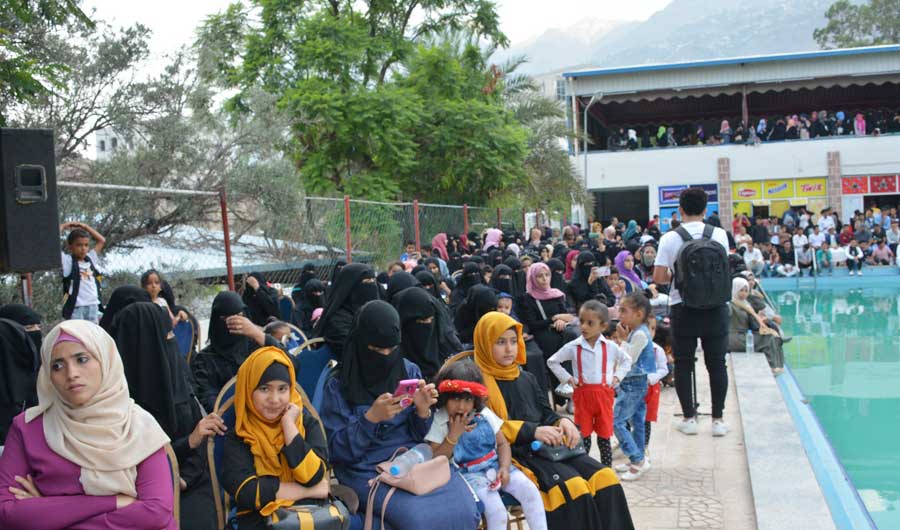
From the Houthi-held Sanaa to the government-controlled parts of Taiz, Yemenis arranged musical activities that attracted large gatherings. Local artists sang famous songs as their delighted fans danced.

In Sanaa, wearing traditional dress, Fatima Muthanna, a young singer, sang patriotic songs. On her Facebook page, which has more than 83,000 followers, she urged Yemenis to use music as a “weapon” to bring about peace in the war-torn country.

“Singing is our only outlet in this life. This microphone is my weapon and the weapon of every artist carrying the message of peace, love and affection,” she said.

In the southern city of Taiz, not far from the battlefield, the local office of the Ministry of Culture arranged a concert to celebrate, which brought together local singers to entertain the public.

Some Yemenis celebrated by sharing short clips of themselves singing and dancing while doing their daily household chores.

Alfat Al-Dubae, an activist, sang local songs while cooking food. “My voice is not beautiful, but this festival forces even those who cannot sing to sing,” she said on Facebook.

Some shared photos with famous singers, while others remembered dead singers such as the Yemeni-born Saudi national Abu Bakr Salem Belfkih.

Ahmed Fatehi, a Yemeni singer, composer and oud player, performed duets with others. Fatehi called upon Yemeni officials to honor veteran musicians and help poor families of dead singers.  

“The officials should express their gratitude to the pioneers of Yemeni music by visiting their families and giving them moral and financial assistance,” the singer told Arab News, adding that some old-timers died because they couldn’t afford medical treatment.

International cultural, educational and heritage organizations also participated in the campaign by sharing their funded programs for reviving Yemeni musical heritage.

The UNESCO office for the Gulf Cooperation Council and Yemen said on Twitter that the song “Al-Ghana Al-Sanaani” was listed as part of the world’s heritage in 2008, and that it was working with Yemen’s authorities to add more songs to the list.

The Saudi Development and Reconstruction Program for Yemen posted on Twitter: “Yemeni songs reflect the musical heritage and are a cultural marker of the people of Yemen. On #YemeniSongDay, we celebrate the melodies of the past and present-day Yemen.”

In addition to the war, Yemenis attributed the massive response to the festival to the growing moral policing of people by the Iran-backed Houthis.

The rebels have banned people from hiring singers for weddings and launched a crackdown on arts, models and actors.  

Tweeting from Sanaa, Khaled Al-Ruwaishan, a former minister of culture, said Yemenis challenged the Houthi’s repressive rules on arts and music by singing and observing Yemeni Song Day.

“They tried to ban singing in the countryside of Sanaa. The people responded by singing, and making a festival for it. What a response. Our people are alive and our soul is glowing despite all the sorrows,” the former minister said.

Yemen’s Ministry of Information, Tourism and Culture gave the campaign official recognition by announcing that July 1 would be recognized as the official Yemeni Song Day, and announced it would establish a museum for Yemeni music in the southern port city of Aden.


In war-torn Taiz, people responded to the call for celebrating the Yemeni song by arranging a musical concert that brought together singers and jubilant fans. (Photos by Hamza Mustafa)
Main category: 
Tags: 

Yemen government seizes control of new areas in Al-Bayda provinceHouthis taking advantage of Stockholm Agreement for terror activities, minister says


World is not to blame for crisis in Lebanon, the nation’s politicians are says French envoy

Tue, 2021-07-06 21:06

BEIRUT: Anne Grillo, the French ambassador to Lebanon, on Tuesday said that the blame for the crisis in the country lies squarely with a succession of ruling authorities. She was responding to comments by caretaker Prime Minister Hassan Diab, who accused the international community of “punishing the Lebanese and turning its back on Lebanon, while pressuring and besieging the country.”

Grillo said: “The current situation in Lebanon is the result of mismanagement by the successive officials, who are still making mistakes; it is not the result of an external blockade.

“The world is already helping the Lebanese and not waiting for an invitation to a meeting to help them.”

Earlier in the day Diab called the ambassadors and other representatives of diplomatic missions and international organizations to a meeting at his Grand Serail offices and delivered a speech in which he called on “the world to save Lebanon.”

He said: “The severe crises experienced by the Lebanese people at various levels are pushing toward a major catastrophe whose repercussions cannot be contained. The Lebanese are facing a dark fate. The picture has become clear: Lebanon and the Lebanese are on the brink of a disaster.

“The danger that threatens the Lebanese will not be limited to them. When we hit rock bottom, the repercussions will resonate outside Lebanon’s geography. No one will be able to isolate themselves from the risk of Lebanon’s collapse.

“Lebanese stability is the basis for regional stability. With the presence of about 1.5 million Syrian refugees and hundreds of thousands of Palestinian refugees, it will be difficult to predict the consequences of Lebanon’s stability falling apart.”

Diab added: “Continuing to punish the Lebanese will inevitably lead to serious repercussions, as things will get out of control. Linking assistance for Lebanon to the formation of the government has become a threat to the lives of the Lebanese and the Lebanese entity. The pressures that are being exerted and the blockade imposed on Lebanon do not affect the corrupt; rather, the Lebanese people alone pay a heavy price that threatens their lives and their future.”

He said that neither his government, which resigned in August last year amid the outrage over the devastating explosion at Beirut’s port, nor any other government can save Lebanon from its predicament without the help of friendly countries and international institutions.

He added: “This government does not have the right to resume negotiations with the International Monetary Fund to implement the recovery plan set by the cabinet, for this entails obligations on the next government that it may not endorse. The absolute priority is thus to form a government. Staying trapped in this vicious cycle that has lasted for 11 months now is no longer acceptable.”

Diab’s speech was broadcast live on Lebanese TV but when Grillo began to respond, the coverage was cut off. The French envoy said the meeting was a little too late.

“The Lebanese crisis is the result of mismanagement that lasted for decades,” said Grillo. “Paris and its partners have been providing support to Lebanon for months without waiting for Diab to ask them to save Lebanon.

“The resigned government is able, even in a caretaker position, to negotiate with international financial institutions to address the dangerously deteriorating situation that Lebanon has reached.”

Several other ambassadors responded to Diab’s comments with similar strong words but the PM’s media office chose only to convey his speech and not the comments that followed.

The accusations in Diab’s speech were consistent with those in a speech by Hezbollah Secretary-General Hassan Nasrallah on Monday, in which he blamed the US “for the suffering of the Lebanese people.”

He said: “The main reason for the crisis is the US policy that wants to besiege, punish and prevent any aid that comes to Lebanon, be it in the form of deposits in the Central Bank or in the form of donations or loans … the US is the one preventing this.”

Meanwhile, the Lebanese people on Tuesday witnessed yet another fiasco involving state institutions amid the economic collapse. At noon, the members of two patrols from the state security got into a fistfight at a gas station in Furn El-Chebbak, an eastern suburb of Beirut.

A fuel shortage has caused clashes among people armed with sticks and knives, and even shootings at gas stations in several areas, especially in southern Lebanon and Bekaa.

All negotiations to form a new government have ground to a halt in light of the ongoing dispute between President Michel Aoun and Prime Minister-designate Saad Hariri.

Anne Grillo. (Photo/Twitter)
Main category: 
Tags: 

Iran accuses Israel of June attack on civilian nuclear siteLebanon’s PM Diab warns country is a few days away from social explosion


Rescue boat with hundreds of migrants on board asks EU to find it a port

Author: 
Reuters
ID: 
1625594155481002500
Tue, 2021-07-06 10:34

ROME: A charity group asked the European Union on Tuesday to find a port where it can dock to disembark hundreds of migrants it has rescued in the central Mediterranean over recent days.
Some 572 people, including 183 minors, are currently onboard the Ocean Viking vessel, the SOS Mediterranee organization said after it picked them up in six operations in Maltese and Libyan search and rescue areas.
The group said maritime authorities had not helped in the operations and urged the European Union to intervene.
“We are calling upon the EU to at least coordinate the disembarkation of the 572 survivors currently aboard our ship,” it said in a statement.
The statement did not give details of where the vessel was, but the marinetraffic.com website gave its position as between Malta and Sicily.
Migrant boat departures from north Africa toward Europe have picked up in 2021 after a decline in the previous few years.
Scores of migrants have died in recent days following shipwrecks as they tried to cross the Mediterranean to reach Italy, one of the main routes into Europe.

Main category: 

Migrants welcomed in Tunisia’s impoverished southTunisian coastguard retrieves 21 bodies after migrant boat capsizes


After protests, Iran’s president apologizes over power blackouts

Author: 
Reuters
ID: 
1625594186981007200
Tue, 2021-07-06 13:01

DUBAI: President Hassan Rouhani apologized to Iranians on Tuesday over massive power outages during a heatwave that have drawn widespread criticism and triggered street protests.
Officials have blamed the blackouts on surging demand for power, along with low rainfall cutting hydroelectric output and illegal cryptocurrency mining farms accessing subsidised electricity.
“I apologize to our dear people who have faced problems and suffering in the past few days and I urge them to cooperate (by curbing power use). People complain about power outages and they are right,” Rouhani said in remarks carried by state TV.
“The Energy Ministry is not at fault… but the minister should come and explain to the people what the problem is and we have to find a solution.”
Angry residents gathered in several cities to protest against the outages, which often did not follow blackout schedules announced by the state-run electricity companies, according to Iranian news outlets and postings on social media.
Protests turned political is some areas, with people chanting “Death to the dictator” and “Death to (Supreme Leader Ayatollah Ali) Khamenei” and other slogans during blackouts, according to videos posted on social media.
Reuters could not independently verify the videos’ authenticity.
“Protesters said the frequent power outages had caused many problems, including water cuts in apartments, spoilage of meat and poultry and other items in refrigerators, and damage to household appliances,” the semi-official ISNA news agency reported from the northeastern town of Kordkuy.

Main category: 

Iran gives IAEA notice of escalating uranium metal workIran accuses Israel of June attack on civilian nuclear site