Freed Guantanamo inmate reunites with Moroccan family after 19 years
Wed, 2021-07-21 01:01
RABAT: A Moroccan held for 19 years without charges at the US detention facility for terror suspects at Guantanamo Bay has rejoined his family after questioning by police in this North African kingdom, his lawyer said on Tuesday.
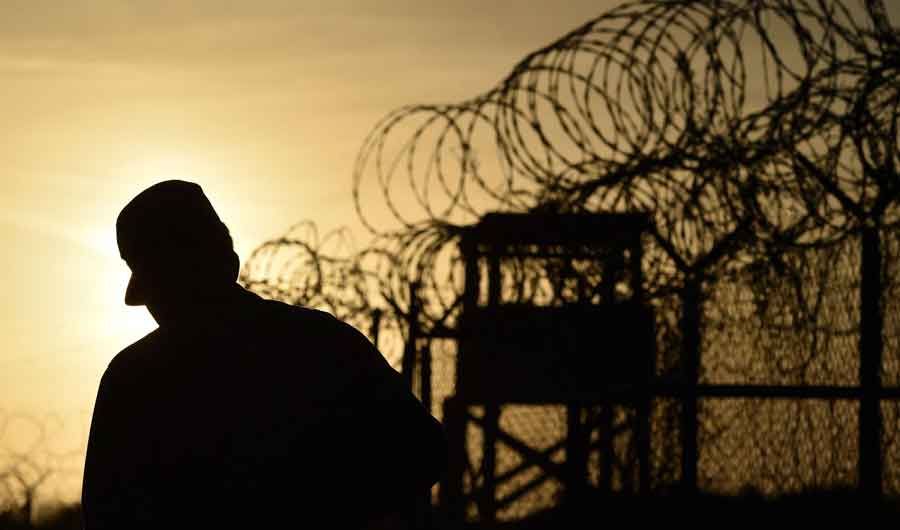
Abdullatif Nasser, now 56, is the first detainee at the Guantanamo Bay center to be transferred into the custody of his home country under the administration of President Joe Biden. Upon his arrival on Monday, he was questioned by the National Division of the Judicial Police in Casablanca “on suspicion of committing terrorist acts” before being set free.
“He is now with his family whom he hadn’t seen in almost two decades,” Nasser’s Moroccan attorney, Khalil Idrissi, said.
Nasser, who was not available for comment, wants only to catch up with his old life, his attorney said.
Abdullatif Nasser. (AP)
No further action against his client is expected, he added. Nasser had been a member of a nonviolent but illegal Moroccan group in the 1980s, according to his Pentagon file.
He had been recruited to fight in Chechnya but ended up in Afghanistan, training at an Al-Qaeda camp. He was captured after fighting US forces and sent to Guantanamo in May 2002.
A review board had recommended repatriation for Nasser in July 2016, but he remained in the detention center at a US naval base in Cuba throughout the presidency of Donald Trump, who opposed closing the site.
In announcing Nasser’s transfer home, the Pentagon cited the board’s determination that his detention was no longer necessary to protect US national security.
Almost 800 detainees have passed through Guantanamo. Of the 39 remaining, 10 are eligible for transfers out. They are from Yemen, Pakistan, Tunisia and Algeria.
Morocco to investigate Guantanamo Bay returnee over extremismBlinken says Guantanamo prison should close
Muslims mark Eid Al-Adha holiday in pandemic’s shadow
Wed, 2021-07-21 00:42
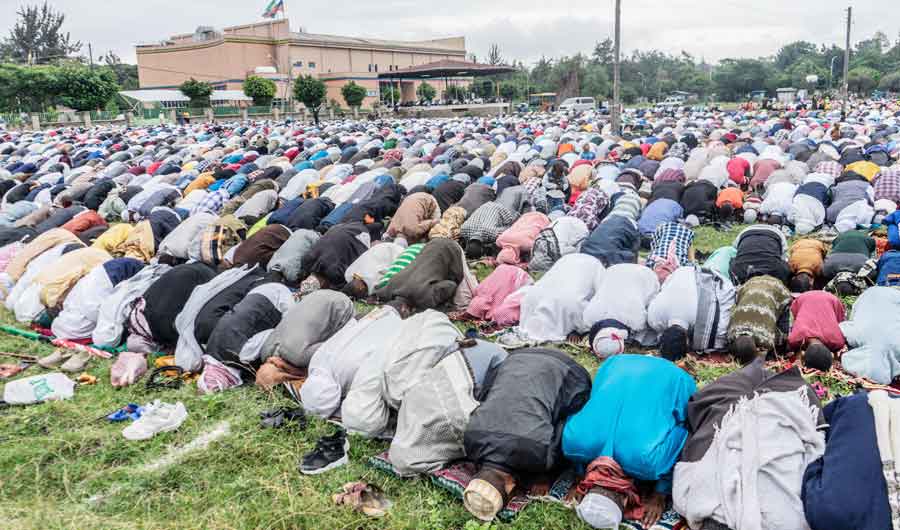
CAIRO: Muslims around the world were observing on Tuesday yet another major holiday in the shadow of the pandemic and amid growing concerns about the highly infectious delta variant of the coronavirus.
This year, the Eid Al-Adha holiday comes as many countries battle the delta variant first identified in India, prompting some to impose new restrictions or appeal for people to avoid congregating and follow safety protocols.
Indonesia marked a grim Eid Al-Adha amid a devastating new wave of coronavirus cases in the nation.
Vice President Ma’ruf Amin, also an influential religious leader, appealed to people to perform holiday prayers at home with their families.
“Don’t do crowds,” Amin said in televised remarks ahead of the start of the holiday.
“Protecting oneself from the COVID-19 pandemic is obligatory.”
The surge is believed to have been fueled by travel during another holiday — the Eid Al-Fitr festival in May — and by the rapid spread of the delta variant.
In Malaysia, measures have been tightened after a sharp spike in infections despite a national lockdown since June 1 — people are banned from traveling back to their hometowns or crossing districts to celebrate. House visits and customary trips to graveyards are also banned.
Healthy worshippers are allowed to gather for prayers in mosques, with strict social distancing and no physical contact. Ritual animal sacrifice is limited to mosques and other approved areas.
Health Director-General Noor Hisham Abdullah has urged Malaysians not to “repeat irresponsible behavior,” adding that travel and celebrations during Eid Al-Fitr and another festival on the island of Borneo led to new clusters of cases.
A girl smiles as she takes part in the Eid Al-Adha prayer on Tuesday in Al-Madras neighborhood of Sudan’s capital Khartoum. (AFP)
“Let us not in the excitement of celebrating the Feast of Sacrifice cause us all to perish because of COVID-19,” he said in a statement.
Prime Minister Muhyiddin Yassin urged Muslims to stay home.
“I appeal to you all to be patient and abide by the rules,” he said in a televised speech on the eve of the festival.
The World Health Organization has reported that globally, COVID-19 deaths had climbed after a period of decline. The reversal has been attributed to low vaccination rates, relaxed mask rules and other precautions, and the delta variant.
Lockdowns severely curtailed Eid Al-Adha festivities in Sydney and Melbourne, Australia’s two largest cities.
Sydney resident Jihad Dib, a New South Wales state government lawmaker, said the city’s Muslims were sad but understood why they would be confined to their homes with no visitors allowed.
“It’s going to be the first Eid in my life I don’t hug and kiss my mum and dad,” Dib told Australian Broadcasting Corp.
Iran on Monday imposed a week-long lockdown on the capital, Tehran, and the surrounding region as the country struggles with another surge in the coronavirus pandemic, state media reported. The lockdown begins on Tuesday.
Not everyone is imposing new restrictions. In Bangladesh, authorities have allowed an eight-day pause in the country’s strict lockdown for the holiday that health experts say could be dangerous.
In Egypt, Essam Shaban traveled to the southern province of Sohag to spend Eid Al-Adha with his family.
He said ahead of the start of the holiday that he planned to pray at a mosque there on Tuesday while taking precautions such as bringing his own prayer rug and wearing a mask.
“We want this Eid to pass by peacefully without any infections,” he said. “We must follow instructions.”
Shaban had been looking forward to pitching in with his brothers to buy a buffalo for slaughtering, going door-to-door to give some of the meat to the poor and to the traditional festive meal later in the day with his extended family.
“It’s usually boisterous with laughter and bickering with the kids,” he said. “It’s great.”
But others will be without loved ones.
In India, where Eid Al-Adha starts on Wednesday, Tahir Qureshi would always go with his father for prayers and then to visit family and friends. His father died in June after contracting the virus during a surge that devastated the country, and the thought of having to spend the holiday without him is heartbreaking.
“It will be difficult without him,” he said.
India’s religious scholars have been urging people to exercise restraint and adhere to health protocols.
Some states have restricted large gatherings and are asking people to observe the holiday at home.
Meanwhile, the pandemic’s economic fallout, which threw millions of Indians into financial hardship, has many saying they cannot afford to buy sacrificial livestock.
In Kashmir, a disputed, businessman Ghulam Hassan Wani is among those cutting back.
“I used to sacrifice three or four sheep, but this year we can hardly afford one,” Wani said.
End of England’s COVID-19 rules sees Muslims gather for Eid Al-Adha
Jordan should continue with economic reforms, US Treasury’s Yellen tells king
Author:
Reuters
ID:
1626814683459481500
Tue, 2021-07-20 20:54
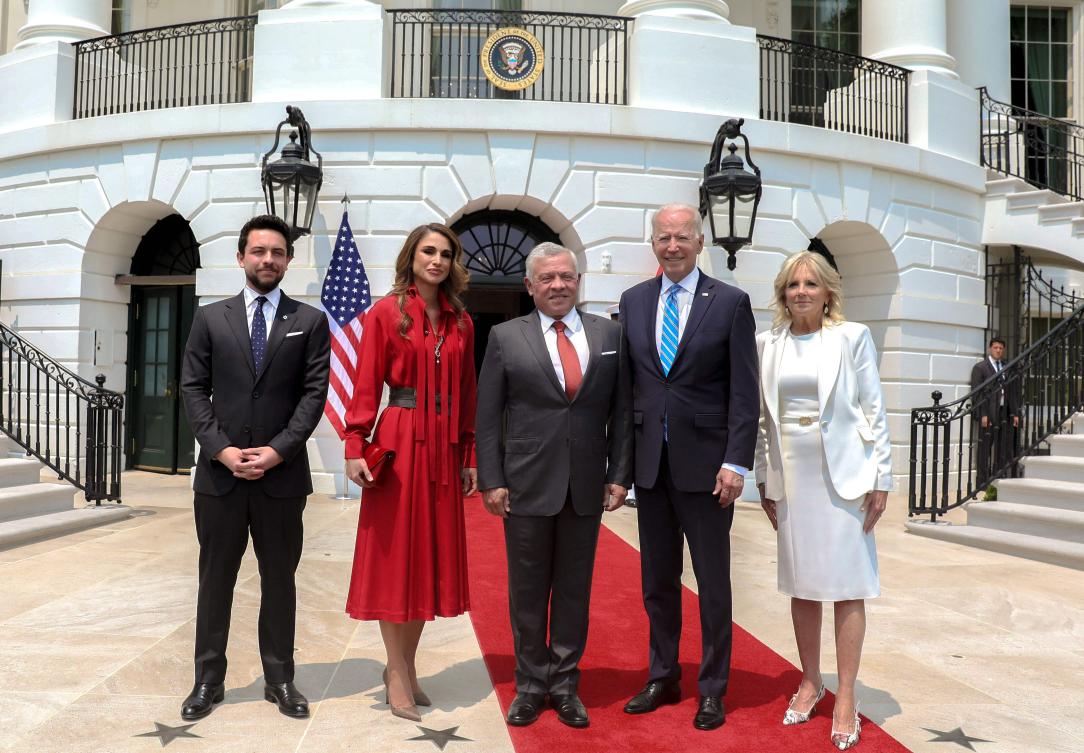
WASHINGTON: US Treasury Secretary Janet Yellen encouraged Jordan’s King Abdullah on Tuesday to continue to implement economic reforms to boost sustainable growth and job creation, the Treasury said in a statement.
During a meeting with King Abdullah in Washington, Yellen noted the challenges that Jordan faces, complicated by the COVID-19 pandemic and “underscored the broad partnership between the United States and Jordan” including efforts to combat the financing of Middle East terrorism, the Treasury said.
US ‘always there for Jordan,’ Biden tells King Abdullah
Hezbollah’s Iranian weapons undermine Lebanon, US national security: Joe Biden
Tue, 2021-07-20 23:52
LONDON: The supply of weapons from Iran to Hezbollah undermines Lebanon’s national security and poses a threat to the security of the US, President Joe Biden said Tuesday.
The president served notice to Congress to extend the national emergency with respect to Lebanon, in place since 2007, beyond its termination date of Aug. 1, 2021.
“Certain ongoing activities, such as Iran’s continuing arms transfers to Hezbollah — which include increasingly sophisticated weapons systems — serve to undermine Lebanese sovereignty, contribute to political and economic instability in the region,” Biden’s message to the Federal Register said.
The Iranian supply of weapons to Hezbollah continued to “constitute an unusual and extraordinary threat to the national security and foreign policy of the United States,” he added.
“For this reason, I have determined that it is necessary to continue the national emergency declared in Executive Order 13441 with respect to Lebanon.”
US offers $7 million reward for information leading to Hezbollah operative How Hezbollah has permeated the Lebanese state
UK’s Boris Johnson, Egypt’s El-Sisi discuss need for Renaissance Dam negotiations
Tue, 2021-07-20 21:20
LONDON: Egyptian President Abdel Fattah El-Sisi discussed the ongoing Renaissance Dam issue with British Prime Minister Boris Johnson on Tuesday.
During a telephone call, El-Sisi reiterated Egypt’s position of wanting to ensure its water security and upholding its “historic rights of Nile water,” while also calling on the international community to continue supporting the negotiation process on the issue, the president’s spokesman said.
Johnson gave the Egyptian president assurances of British support for the resumption of negotiations and reaching a fair solution to the crisis.
The two leaders also discussed developments in Palestine and the importance of maintaining the cease-fire between Israel and Palestinian factions, with Johnson praising the role Egypt plays in mediating between the parties, and the need for “serious and constructive negotiations between the two sides,” the spokesman’s statement said.
The British prime minister also praised Egypt’s allocation of $500 million for reconstruction projects in the Gaza Strip.
El-Sisi and Johnson also talked about the importance of Libya moving forward with its political process with a view to settling its ongoing crisis once and for all, and ending foreign intervention in the country.
They also discussed closer collaboration on climate change, with the upcoming COP26 conference in Glasgow at the end of the year, and the need to support developing countries in obtaining funding, as well as technological and technical support, to tackle the issue.
Battle for the Nile
How will Egypt be impacted by Ethiopia filling its GERD reservoir ?