Advances in artificial rainfall hold big promise for water-scarce Arab region

Sun, 2021-08-08 21:22

DUBAI: Drone technology has more applications than most people imagine, including manipulating the weather. In the UAE, scientists are planning to deploy unmanned aerial vehicles to penetrate clouds and generate rainfall using electrical charges — a process that builds on the success of “cloud seeding.”

In common with other Gulf countries, heat and aridity are the bane of life in the UAE, where just 1.2 mm of rain fell in the first three months of 2021 and where summer temperatures often hit 50 C. Scientists are therefore exploring innovative solutions to the interrelated problems of extreme temperatures, heat waves, water scarcity and poor air quality.

The results of their efforts could bring benefits not only to the UAE but also to other Middle East and Central Asian countries with water-scarce environments.
“This is a very important and interesting initiative for the UAE, not only as a scientific or research experiment, but to make the country a global hub in cloud-seeding knowledge,” Dr. Mohamed Shamrukh, a civil engineer who participated in cloud-seeding feasibility studies in the Kingdom in 2007-2008, told Arab News. “Such an initiative is urgently needed in our region.”

As one of the driest countries on earth, the UAE has precious few freshwater resources of its own. As a result, its economy is highly reliant on imports and desalination — the process of removing salt from seawater — to irrigate crops and meet the demands of its growing population.

In fact, the UAE accounts for some 14 percent of the world’s desalinated water, second only to Saudi Arabia, which has also tapped cloud-seeding technology as a potential way of addressing its freshwater shortage.

Riyadh last year approved a cloud-seeding program aimed at increasing rainfall in the Kingdom by almost 20 percent. In the UAE, that work began earlier, in 2017, when the government invested $15 million in nine rain-enhancement projects.

Using experimental drone technology, scientists can create man-made downpours by delivering electric shocks to cumulus clouds, causing them to clump together and produce precipitation.
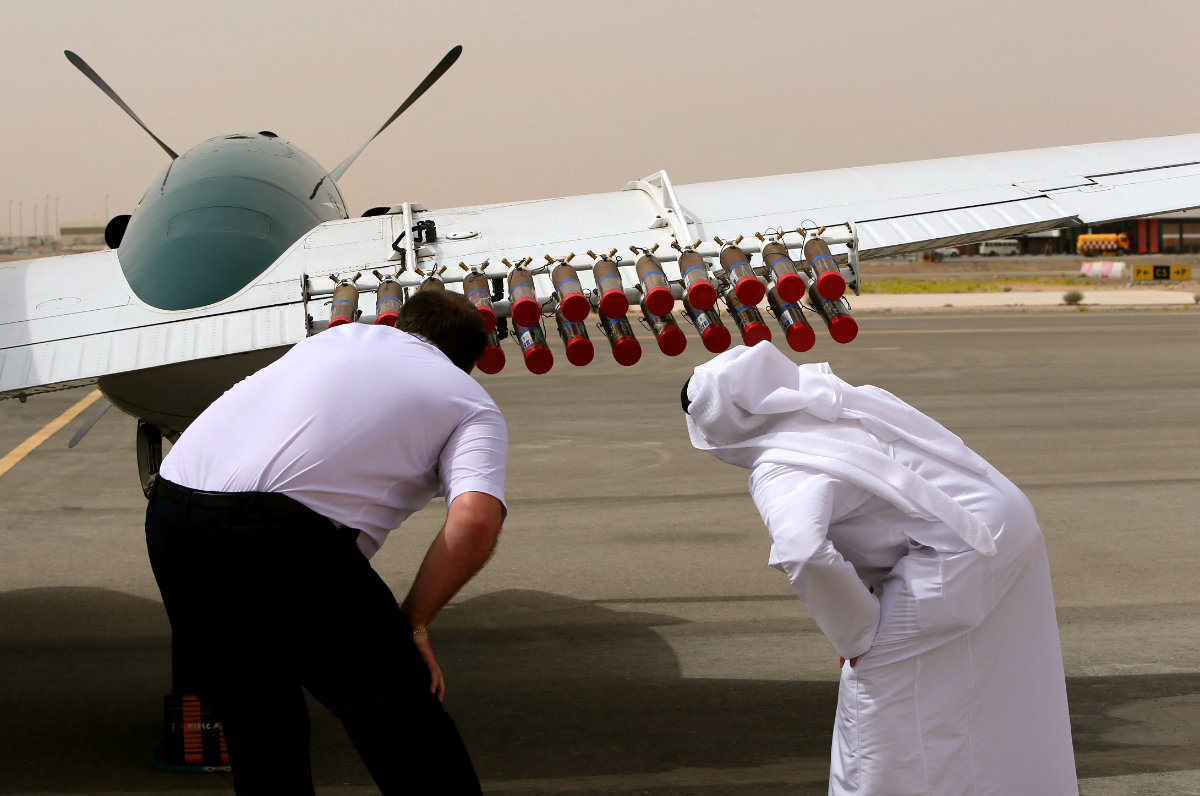

A pilot and a UAE official from the National Center for Meteorology and Seismology inspect a Beechcraft plane at the Al-Ain airport before another cloud-seeding sortie. (AFP/file photo)

The small, remote-controlled gliders, equipped with a payload of electric-charge emission instruments and customized sensors, fly at low altitudes to deliver an electric charge to air molecules.

Clouds naturally carry positive and negative charges, but by altering the balance of these charges, these electric shocks enable water droplets to merge into larger raindrops and fall from the sky.

Of course, once the rain has fallen, the next challenge is to prevent it from evaporating or simply flowing off into the sea. To this end the UAE has built around 130 dams and levees with a storage capacity of about 120 million cubic meters.

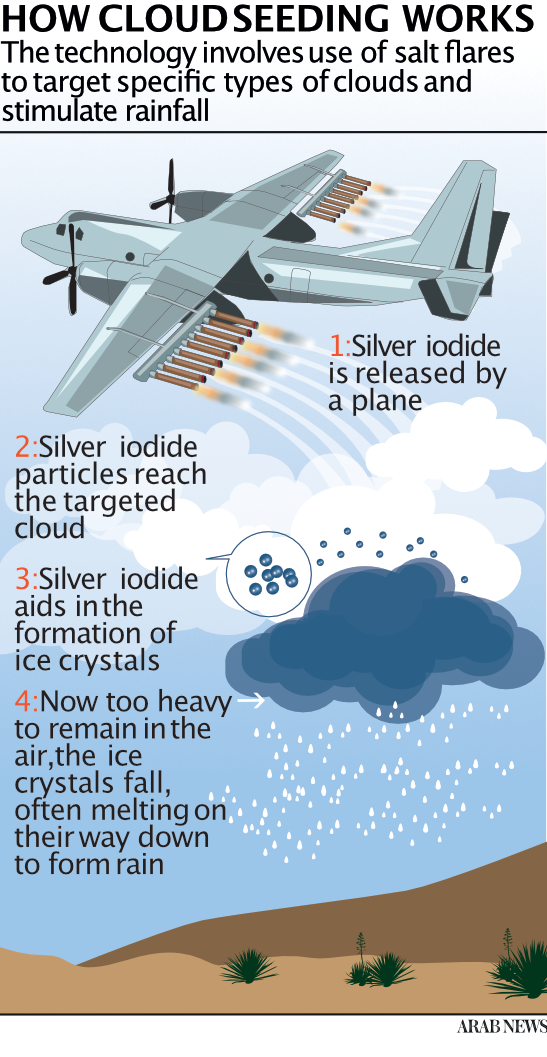
There are several methods of triggering rainfall that scientists are exploring, including the spraying of salt compounds, silver iodide and dry ice into the atmosphere.

If the drone technique proves successful in the long run, cloud seeding could play a major role in enhancing the wider region’s sustainable water supply for years to come. Rain-enhancement projects could help to mitigate drought conditions without the environmental, cost and efficacy concerns associated with methods involving salt flares.

“The UAE has similar weather and climate to the other Gulf countries and this leading experiment in the UAE is very useful to them,” Shamrukh said.

INNUMBERS

• 50 Countries looking to establish rain enhancement programs. 

20% Targeted increase in KSA’s rainfall through cloud seeding.

18% KSA’s share of global production of desalinated seawater.

80-85% KSA’s water demand currently met by groundwater sources.

Earth’s surface is 71 percent water, but the Middle East and North Africa (MENA) region sees precious little of this life-giving resource. According to the UN, it is the world’s most water-scarce region, with 17 countries considered below the water poverty line.

Matters are made worse by rapid population growth, poor infrastructure and overexploitation of limited resources. Agriculture alone accounts for around 80 percent of water usage in the MENA region, according to the World Bank.

This overuse means the region’s natural groundwater reserves are not replenishing fast enough to keep pace with demand. Desalination of seawater and major dam projects have been the favored solutions, but these come with their own environmental downsides.

Shortages could have wide-reaching humanitarian consequences. Droughts destroy livelihoods, displace populations from rural to urban areas, and can result in conflict and unrest.


The cloud-seeing technology was first tried in the 1940s and was put into widespread use in the 1970s. (Shutterstock photo)

Around 1.1 billion people worldwide already lack reliable access to water, and 2.7 billion endure scarcity for at least one month of the year. By 2025, an estimated two-thirds of the world’s population may face water shortages.

Forecasts suggest water supplies will drop dramatically by 2030 and that rationing could become the new normal unless sustainable solutions are implemented.

Along with ground-based seeding generators, cloud seeding is perhaps one way to help top up dwindling reserves. Last year, the UAE conducted more than 200 cloud-seeding operations, led by its National Center of Meteorology and Seismology (NCMS).

A team of pilots and technicians at NCMS’s dedicated operations room analyzed data based on their observation of 150 cumulus clouds to identify those considered “seedable.”

These detached, cauliflower-shaped clouds are usually spotted in fair weather conditions, and often hug highland areas such as the UAE’s eastern Al-Hajar mountains, which deflect the warm air blowing in from the Gulf of Oman. They tend to develop as a result of convection and stay at base heights of 1,000 meters, with a width of up to one kilometer.
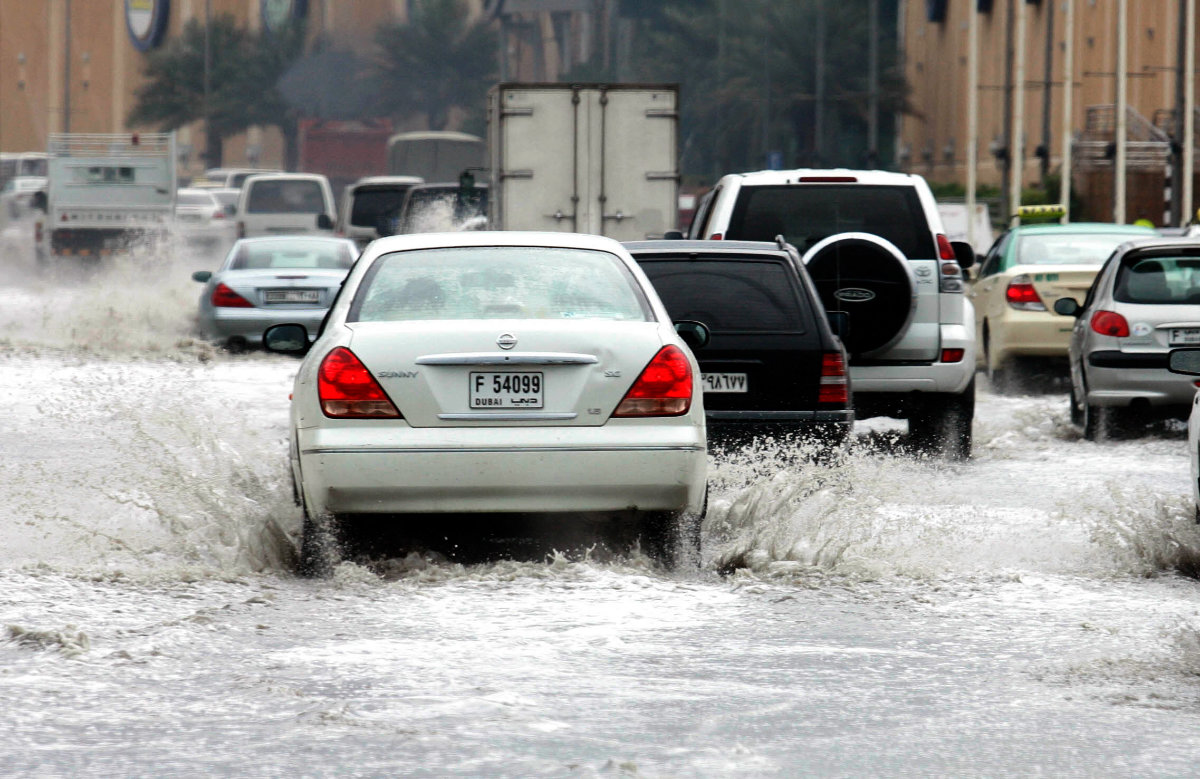

The UAE, which suffered from rare heavy rains in 2006, is normally arid for most of the year — and climate change is putting real pressure on where it and its neighbors will source water from in future. (AFP)

“Based on the previous experience the UAE has gained, they know and understand more of how to use their system of monitoring every drop of water that falls,” Dr Khalil Ammar, principal scientist in hydrogeology and water resources management at the International Center for Biosaline Agriculture in Dubai (ICBA), said. “They know which type of cloud they can use certain technologies on to avoid any risk of floods or damage on the ground.”

Cloud seeding is a rapidly growing science that the UAE is well placed to capitalize on. Being able to predict the distribution and intensity of rainfall in the Gulf and wider MENA region could prove critical in the years to come as climate change makes droughts more common.

“It’s very important to keep investigating and using leading technologies to enhance rainfall and increase opportunities for its occurrence,” Ammar said.

However, scientists must be cautious about the possible environmental side effects and other risks while generating rainfall artificially, including the potential for pollution and flash flooding.

“The UAE avoids certain types of clouds with huge quantities of water,” Ammar said. “We need to work more on showing evidence on what’s happening in this program and what implications and gains there are. Whatever drop of water you can bring in ultimately has high value because it adds to the water system of the country and region.”

For Shamrukh, there is still a long way to go, both in the development of seeding technology and in scientific understanding of the best processes. “Nowadays, there are many cloud-seeding techniques,” he said.

He and Ammar would both like to see more investment in rain-making technologies and much more regional cooperation to address the shared dangers posed by climate change and water shortages.

“Cloud seeding is a must, not a choice,” Ammar said. “Scientists should keep developing new ideas and innovations from all over the world and bring them here, if they are affordable and technically feasible to scale up.

“Maybe a joint program for the whole GCC is possible, as it will help improve their performance instead of working separately on monitoring.

“All this rain is valuable,” he said. “Countries can’t survive without this valuable resource.”

___________________

Twitter: @CalineMalek

An airport employee signals to a twin-propeller Beechcraft plane as it prepares to take off on a cloud-seeding mission at the UAE's al-Ain airport on April 23, 2015. (AFP)
A big challenge after the rain has fallen is to prevent it from evaporating or simply flowing off into the sea. (Supplied)
The UAE, which suffered from rare heavy rains in 2006, is normally arid for most of the year — and climate change is putting real pressure on where it and its neighbors will source water from in future. (AFP)
A big challenge after the rain has fallen is to prevent it from evaporating or simply flowing off into the sea. (Supplied)
A pilot and a UAE official from the National Center for Meteorology and Seismology inspect a Beechcraft plane at the Al-Ain airport before another cloud-seeding sortie. (AFP/file photo)
The cloud-seeing technology was first tried in the 1940s and was put into widespread use in the 1970s. (Shutterstock photo)
Main category: 

Saudi Arabia throws its support behind cloud-seeding technologyCloud-seeding plan aims to increase rainfall in Saudi Arabia by 20 percent



Beirut blast bereaved hold symbolic funeral to demand justice

Author: 
AFP
ID: 
1628452668991698200
Sun, 2021-08-08 19:05

BEIRUT: Lebanese protesters carried imitation coffins in a symbolic funeral procession from Beirut port Sunday to demand justice, days after the first anniversary of a vast dockside explosion that killed more than 200 people.
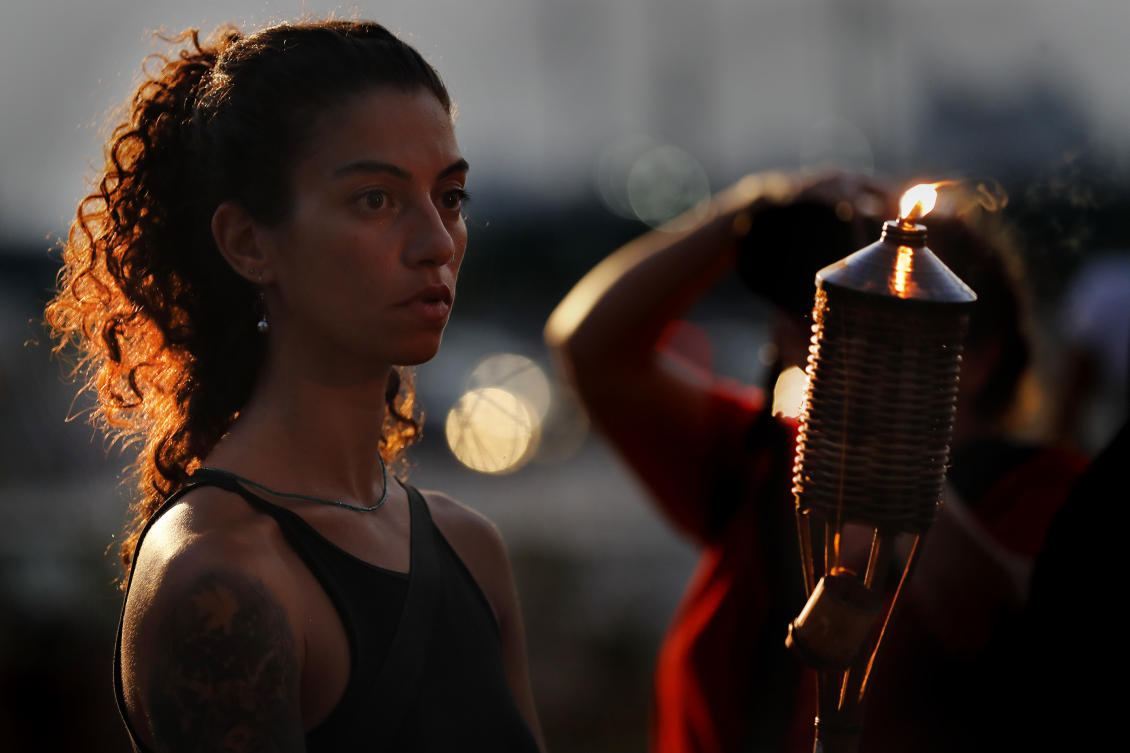
Families of the victims were joined by dozens of supporters, some wearing black and carrying burning torches, at an entrance to the port where a warehouse fire on Aug. 4 last year ignited a vast stash of ammonium nitrate, causing one of the biggest peacetime blasts in history.
Wives, sisters and mothers of those killed held portraits of their loved ones and marched ahead of three symbolic coffins covered in flowers, an AFP reporter said.
“Ammonium nitrate did this,” read one sign.
Accompanied by drumming from a marching band, the demonstrators marched through the nearby districts of Gemmayzeh and Mar Mikhail, which were heavily damaged by the blast.
“These coffins are symbols to remind people that we carried the coffins of our martyrs,” said Ibrahim Hteit, spokesman for a bereaved families’ association.
“We deserve the truth and we deserve justice for our loved ones. We’re not going to give up,” he said.
On Wednesday, thousands of people demonstrated in Beirut to mark the anniversary of the blast, voicing outrage that nobody has been held responsible for the disaster which left 214 people dead.
The ammonium nitrate, a highly explosive fertilizer, had been stored for years at the port with no safety precautions, according to the government itself.
The explosion wounded 6,500 people and caused billions of dollars-worth of damage.
Yet a judicial enquiry into the disaster has made little progress.
Former ministers are suspected of complicity in the negligence which culminated in the explosion.
Lebanon’s deeply unpopular ruling class have been accused of making every effort to torpedo the investigation and avoid prosecutions.
“The crime goes on, lift immunity!” read one placard at Sunday’s rally.
Helene Ata, a psychologist who lost her twin brother Abdo, 38, called on Lebanese citizens to hit the streets every day until justice is served.
“The pain gets worse every day, under the shadow of injustice around this affair, officials’ inaction, their avoiding justice,” she said.
“A year later, it’s as if nothing happened,” she said.

Main category: 

Beirut blast survivors lose hope as Lebanon lurches from one crisis to another


Egyptian president and Iraqi defense minister discuss issues of common interest

Sun, 2021-08-08 22:45

CAIRO: Egyptian President Abdel Fattah El-Sisi met Iraqi Defense Minister Juma Inad Saadoun and discussed issues of common interest with him.

The official spokesman for the presidency said the minister conveyed a message from Iraqi Prime Minister Mustafa Al-Kadhimi and that the message included appreciation for Egyptian efforts in support of Iraqi issues.

Iraq was looking forward to strengthening cooperation with Egypt and considered its role a “strategic depth for the Arab nation,” the message said.

Al-Kadhimi stressed that the main challenges were combating terrorism and achieving security, stability and development.

According to the spokesman, El-Sisi affirmed Egypt’s keenness to cooperate with Iraq in all fields and pledged to continue working on issues that would achieve the interests of Iraq and its people at various levels, help it overcome all challenges, combat terrorism, and maintain its security and stability.

The meeting also dealt with bilateral military cooperation, including joint training programs, exchanging experiences and raising capabilities, said the spokesman.

The meeting between Egyptian President Abdel Fattah El-Sisi and Iraqi Defense Minister Juma Inad Saadoun dealt with bilateral military cooperation, including joint training programs. (Supplied)
Egyptian President Abdel Fattah al-Sisi. (AFP file photo)
Main category: 
Tags: 

Egypt’s El-Sisi extends services of financial regulator, Suez canal headsEgypt FM delivers message from El-Sisi to Bahrain’s king during official visit


Tunisia launches vaccine ‘open day’ against Delta-driven spike

Author: 
AFP
ID: 
1628445115909990800
Sun, 2021-08-08 15:51

TUNIS: Tunisia on Sunday launched a Covid-19 vaccination drive for the over-40s, after receiving more than six million doses from abroad to combat surging infections.
More than 300 centers across the country held an “open day” for vaccinations, drawing large crowds, AFP correspondents said.
Tunisia, in the thick of political and economic crises, has received more than six million doses from Western and Arab countries, and the same number of additional vaccines are on the way, President Kais Saied said Thursday.
Saied, who last month dismissed the government — in part due to its alleged bungling of the Covid crisis — and suspended parliament, has announced the establishment of a coronavirus crisis unit supervised by a high-level military official.
Tunisian authorities now aim to have vaccinated 50 percent of the country’s 12-million population with a first jab by mid-October.
A first “open day” of inoculations held in July was abandoned when the vaccination centers were overwhelmed by high demand and lack of organization.
The World Health Organization said last week that Tunisia, which has the world’s worst officially declared Covid-19 death toll, may be over the peak of the latest wave but the government must still speed up inoculations.
“The epidemiological data are going in the right direction,” the WHO representative in Tunisia, Yves Souteyrand, told a press conference.
The Delta variant is responsible for “more than 90 percent” of cases in Tunisia, which on Sunday registered 2,546 new cases, raising infections to a total of 610,660 with almost 21,000 deaths.

Main category: 

Gold medal success at Tokyo 2020 gave Tunisia ‘hope’: swimmer Ahmed HafnaouiTunisia’s president says there is ‘no turning back’


Iran’s Raisi names US-sanctioned Mokhber as first VP

Author: 
AFP
ID: 
1628437650647755000
Sun, 2021-08-08 14:28

TEHRAN: Iran’s new ultraconservative President Ebrahim Raisi on Sunday named the chairman of a powerful state-owned foundation sanctioned by the United States as his first vice president, the president’s official website said.
Mohammad Mokhber, long rumored by local media to be top pick for the position, has for years headed the foundation known as Setad, or the Execution of Imam Khomeini’s order, in reference to the Islamic republic’s founder Ruhollah Khomeini.
Mokhber was appointed to the position by the supreme leader Ayatollah Ali Khamenei in 2007, following a string of official positions at the southwestern province of Khuzestan.
The Setad was originally founded in the late 1980s to manage confiscated properties following the 1979 Islamic Revolution.
It has since turned into a sprawling conglomerate with stakes in various industries, including health, and its Barekat Foundation produced out Iran’s first local Covid-19 vaccine project.
The vaccine received emergency approval in June from health authorities in the Middle East’s worst-hit country.
The Setad and Mokhber were blacklisted by the US Treasury in January. Washington had said that Setad “has a stake in nearly every sector of the Iranian economy, including energy, telecommunications, and financial services.”
Raisi, who won a June 18 election marked by record abstention, takes over from moderate Hassan Rouhani.
On Thursday, Raisi took the oath of office before parliament, to which he must present a list of ministers within two weeks.
A former judiciary chief, Raisi has been criticized by the West for his human rights record and sanctioned by the US since 2019.
Raisi also picked Gholamhossein Esmaili, the judiciary’s spokesman during his tenure, as his chief of staff.
A former prosecutor, Esmaili is under sanctions by the European Union.
He was first blacklisted in 2011 as Iran’s prisons’ organization chief over “serious human rights violations.”
Raisi’s presidency is due to consolidate power in the hands of conservatives following their 2020 parliamentary election victory, which was marked by the disqualification of thousands of reformist or moderate candidates.
Also on Sunday, ultraconservative MP and 2021 presidential candidate Alireza Zakani was elected as mayor of Tehran, state news agency IRNA reported.
He won the majority of conservative-dominated city council votes, but he cannot take over before resigning from the parliament, it said.
He succeeds Pirouz Hanachi, a veteran public servant with a background in urban development seen as close to the reformist camp.
Zakani has served in parliament between 2004 and 2016, and won a seat again last year.
A doctor in nuclear medicine, aged 55, he dropped out of the June presidential race in favor of Raisi.

Main category: 

Iran sees highest daily virus case, death counts in pandemicUAE minister meets Iran’s newly elected president in Tehran