Qatar election exclusions spark controversy, arrests: BBC

Author: 
Arab News
ID: 
1628553688405912400
Tue, 2021-08-10 03:00

Candidacy requirements to take part in Qatar’s Shoura Council elections have sparked widespread controversy on social media in the emirate, the BBC has reported

The Emir of Qatar, Sheikh Tamim bin Hamad Al-Thani, recently ratified an electoral law for the first legislative elections in the country, due to be held in October.

Under the new law, “anyone whose original nationality is Qatari and is 18 years of age and above shall have the right to elect members of the Shoura Council. Those who have acquired Qatari nationality, provided that their grandfather is Qatari and was born in Qatar, shall be excluded from the original nationality condition.”

The law also stipulates that candidates’ “original nationality must be Qatari” and they must also be over 30 years of age.

#Shura_Council_Elections

The conditions for candidacy and election sparked controversy on social media in the country, with the requirement that the candidate must “originally be Qatari” provoking widespread anger.

Some members of the Al-Murrah tribe, who do not meet the required conditions, posted several videos in protest at what they described as the “arbitrary law that prevents them from running for the Shoura Council elections.”

Activists launched the hashtag #Al_Murrah_Qatari_People_Before_the_Government, highlighting that the tribe was in Qatar before a government was ever formed.

Who are the “original Qataris”?

According to Article 1 of the Qatari Nationality Law, the original Qataris are:

• Those who settled in Qatar before 1930, maintained their normal residence there and held on to their Qatari citizenship until the effective date of Law No. 2 of 1961.

• Anyone who is proven to be of Qatari origin, even if they do not meet the conditions stipulated in the previous clause and royally decreed as a Qatari.

• Those to whom the Qatari citizenship has been restored in accordance with the provisions of the law.

• Anyone born in Qatar or abroad to a Qatari father under the previous clauses.

The Ministry of Interior later said that seven people had been referred to the Public Prosecution after “using social media as a tool to spread false news and stir up racial and tribal strife.”

The ministry said in a tweet: “The concerned authorities found that the content published in their accounts is connected to the subject of the accusation. They were then referred to the Public Prosecution to fulfil its procedures in this regard.”

However, many rejected “the method of threats, veiled threats and incitement to tribal tension, which was issued by some.”

Lulwa bint Jassim Al-Thani said that “objectors should have resorted to the grievance authority of the Elections Committee before choosing to put their tribe in a confrontation with the state.”

Hamad Mubarak Al-Shafi said that “three years ago, some people repeated the slogan ‘my tribe is Qatar and my emir is Tamim.’ Now, with the #elections of the Shoura Council, the situation has changed among hypocrites who have changed their slogan to ‘my tribe is only mine’.”

Anwar Al-Rasheed said that “the Qatari election law may not meet the ambitions of many and has loopholes, but I am completely with it and if some have other views, please give us an alternative.”

He added: “Qatar and Kuwait are being subjected to an unprecedented smear campaign.”

Some hoped “that everyone would stop for a minute, and review some of the causes of objections and differences to nip sedition in the bud”.

Legislative elections

Elections will be held to select two-thirds of the Shoura Council’s members, or 30 members of the 45 seats. The emir will appoint the remaining members.

The country will be divided into 30 electoral districts, with one candidate elected to represent each.

In a 2003 referendum, Qataris, who make up only 10 percent of the population, approved a new constitution that provided for partial elections to the council, of which all members are currently appointed.

Main category: 
Tags: 

Qatar approves electoral law for first legislative pollsQatar sovereign fund discloses 4.69% stake in Gates-backed battery startup Quantumscape


Egypt receives first shipments of Johnson & Johnson vaccine

Mon, 2021-08-09 23:29

CAIRO: Egyptian Health Minister Dr. Hala Zayed has announced the arrival of the first shipments of the Johnson & Johnson (J&J) vaccine against coronavirus disease (COVID-19).

The Ministry of Health stated that 261,600 doses of the J&J vaccine were received at Cairo International Airport, in cooperation with the African Union.

The receipt of the vaccine shipments comes within the ministry’s plan to diversify and expand the provision of anti-COVID-19 vaccines. The ministry has confirmed it will continue to receive other shipments of the vaccine during the coming period.

Ministry Spokesman Dr. Khaled Megahed stressed the importance of cooperating with international organizations to address the pandemic and provide vaccines to citizens.

Monday’s doses will be distributed to the 126 centers designated to vaccinate people wanting to travel abroad, he said.

BACKGROUND

The Egyptian government said in June its aim was to vaccinate 40 percent of the population of more than 100 million against COVID-19 by the end of this year.

The shipment will be subject to analysis in the laboratories of the Egyptian Drug Authority.

The J&J vaccine has proven effective in preventing COVID-19 infection and is a single-dose vaccine that does not require boosters, the spokesman said, adding that Egypt will receive 2.5 million doses of the Pfizer and AstraZeneca vaccines within days, followed by 1.7 million doses from the Covax Alliance.

Megahed stressed the need to obtain two doses of the same vaccine even if the date of the second dose is delayed.

On Aug. 14, a large number of Sinovac vaccines manufactured in Egypt will also be released to the local market and will be distributed to vaccine centers in the country.

Egypt has reported 284,641 infections and 16,566 COVID-19-related deaths since the pandemic began.

The government said in June its aim was to vaccinate 40 percent of the population of more than 100 million against COVID-19 by the end of this year.

The shipment will be subject to analysis in the laboratories of the Egyptian Drug Authority. (AFP)
Main category: 

Egypt ramps up spending on health, education in new budgetMohamed Kheir’s ‘Slipping’ uncovers the magic of Egypt 


Hezbollah under fire as Lebanese political, economic crises continue 

Author: 
Mon, 2021-08-09 23:08

BEIRUT: Hezbollah drew fresh criticism on Monday from the streets and the political class over the crisis in Lebanon. 

Angry residents blocked several roads in protest against the economic crisis. As the Lebanese pound’s value plummets, the country is also experiencing a major medicines shortage.

The process of forming a government headed by Prime Minister-designate Najib Mikati is slowly coming to a stalemate. 

Meanwhile, Hezbollah launched a broadside against the Maronite Patriarch Bechara Boutros Al-Rai, accusing him of taking stances that are no different than Israel’s.

In his Sunday sermon, Al-Rai stressed that “the decision of war or peace should be in the hands of the state exclusively,” calling for “a return to the 1949 Armistice Agreements and Lebanon’s neutrality.”

Hezbollah’s campaign against Al-Rai elicited counter-reactions from various political figures and numerous Christian religious and political entities.

Druze leader Walid Jumblatt tweeted on Monday: “What crime did Al-Rai commit when he mentioned the armistice agreement? It seems that it is forbidden to discuss anything outside of the opposition group’s discourse,” sarcastically adding: “A democratic atmosphere par excellence.”

Resigned MP Marwan Hamade accused Hezbollah of igniting tension on the southern border with Israel and slammed the group for its attack on the judicial investigator in the Beirut port explosion crime Judge Tarek Bitar.

Hamade addressed Hezbollah Secretary-General Hassan Nasrallah: “Your graciousness has set us back 50 years.

“The balance of deterrence advocated by Hezbollah is a pretext for controlling Lebanon.”

Saydet Al-Jabal Gathering warned that “if this campaign (against Al-Rai) does not stop immediately, we will take action in several cities.”

Former MP Ahmed Fatfat told Arab News: “The Lebanese state is collapsing because there is a parallel state — the state of Hezbollah. It seems that we are now experiencing the Iraqi scenario, and even more.

“Hezbollah suggests that it has the ability to replace the state, but in fact, it has so far failed to do so. Its entourage suffers like all the Lebanese, due to Hezbollah’s practices that destroyed the state.”

He added: “Iran will not allow the formation of the government in Lebanon as long as the Iranian-US negotiations are ongoing.

“Nasrallah has, for the first time, admitted that there is no consensus over the resistance in Lebanon.

“This means that Hezbollah has lost supporters and stature, and its intimidation policy no longer works on people.

“The biggest evidence is that the families of the Beirut port victims carried a banner that read Iran Out on Aug. 4. People have other priorities now.”

Fatfat said that Hezbollah’s stances regarding medicine and fuel imports from Iran are mere propaganda.

“The Iranians did it once in Venezuela, but they took gold in exchange. Do they want to get their hands on the gold that is in the Lebanese Central Bank?”

Elsewhere, caretaker Health Minister Hamad Hassan — affiliated with Hezbollah — criticized “financial and political decision-makers.”

Hassan said in an interview on Sunday: “The Central Bank and drug importing companies are responsible for exposing the health system in Lebanon to grave danger.”

Hassan defended medicine imports from Iran.

“The Central Bank and the importing companies are responsible for every missing medicine,” said the minister.

“A decision to urgently import and register missing medicines has been taken; any medicine that meets the conditions and standards will be imported.”

Hezbollah MP Hassan Fadlallah also tried to pressure the Central Bank on Monday, saying that the latter “is insisting on controlling the decision to lift subsidies on oil derivatives and medicines.”

Fadlallah said Hezbollah “is exerting efforts to expedite the import of fuel from Iran.”

Sidon, the third major Lebanese coastal city after Beirut and Tripoli, sank into complete darkness on Monday, amid demands to secure diesel fuel as soon as possible.

Lebanese cities continue to fall into darkness as private generator owners announce that they are running out of fuel in light of strict rationing by the Electricite du Liban.

The Lebanese are being supplied with an average of one hour a day of fuel, as the Central Bank has used up most of the foreign currency it needs to purchase fuel for state electricity.

There are over 3,500 private generators in Lebanon, with monthly bills for subscribers raised to more than 1.5 million Lebanese pounds ($992).

MP Michel Daher complained on Monday that he “receives hundreds of visits daily from patients who need missing medicines. When importers are asked, they say that the Ministry of Health prices unsubsidized medicines at the rate of 12,000 Lebanese pounds to the dollar, half the actual value of the black market rate, which prompted them to stop importing.”

Main category: 

Support to Hezbollah dented after rocket attack on IsraelHezbollah rocket attack on Israel brings Lebanon to the brink of war


Egypt ramps up spending on health, education in new budget

Mon, 2021-08-09 23:14

CAIRO: Egypt’s Cabinet has denied reports that it reduced funding for the country’s health and education sectors in the state’s general budget for 2021/2022.

It came following the publication of claims on several major websites and social media pages.

The Cabinet’s Media Center subsequently contacted the Egyptian Ministry of Finance, which denied the claims.

In a statement, the media center said that there was “no truth to the news” regarding a reduction of funding for the health and education sectors in the state’s budget.

It added that funding of the health and education sectors were instead raised in the new general budget, exceeding constitutional entitlement rates.

Allocation to the health sector increased by 6.6 percent to reach 275.6 billion Egyptian pounds ($17.5 billion), compared to 258.5 billion Egyptian pounds in the 2020/2021 budget.

The increase in education funding also rose by 6.8 percent to reach 388.2 billion Egyptian pounds, compared to 363.6 billion Egyptian pounds in the previous budget.

The total expenditure of the state’s general budget for administrative apparatus, local administrations, and public service bodies also amounted to about 1.8 trillion Egyptian pounds.

Financial allocation for public investments saw an unprecedented increase, reaching 358.1 billion Egyptian pounds in the new budget — a 27.6 percent increase — compared to a previous 280.7 billion Egyptian pounds.

The increase in funding aims to ensure improvements in services provided to citizens, authorities said.

Spending on development projects is being maximized to speed up the progress of Egypt’s Vision 2030 national agenda.

 Egyptian President Abdel Fattah al-Sisi (C) meeting with Prime Minister Moustafa Madbouly (C-L) and members of his cabinet at the presidential palace in the capital Cairo. (AFP file photo)
Main category: 
Tags: 

Russia resumes flights to Egyptian resorts after 6 yearsMohamed Kheir’s ‘Slipping’ uncovers the magic of Egypt 


Iran ‘will pay price’ for attack on tanker, US warns

Author: 
Mon, 2021-08-09 22:46

NEW YORK: International pressure mounted on Iran on Monday over a deadly attack on an Israeli-operated tanker off the coast of Oman.

A special UN Security Council session on maritime security was told that Iran was responsible for the attack, and would be held to account.

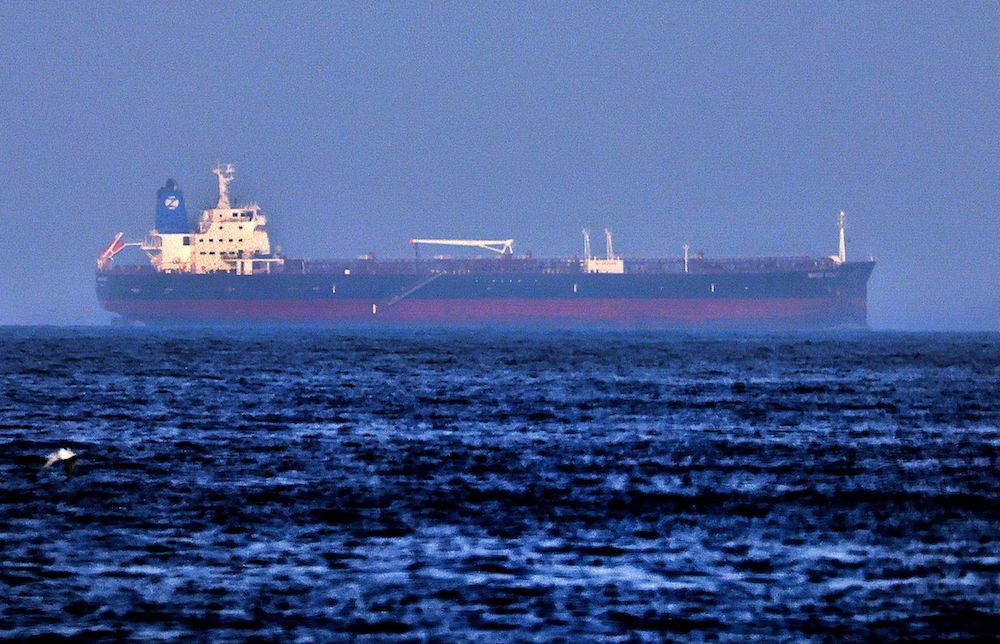
The tanker, the MT Mercer Street, was on its way from Tanzania to the UAE on July 29 when it was targeted by three Iranian-made drones laden with explosives. The attack killed the vessel’s Romanian captain and a British security guard.

The vessel is Liberian flagged, Japanese owned, and operated by Zodiac Maritime, a ship management company based in London and run by billionaire Israeli shipping magnate Eyal Ofer.

The attack caused international outrage. Iran denied responsibility, but a report by US military experts concluded that the drones were Iranian.

The US investigation found that the Mercer Street was targeted unsuccessfully on July 29 by two drones, both of which were reported by the crew via distress calls. A third drone attack, on July 30, significantly damaged the ship and caused the two deaths. The investigation found the third drone was loaded with military-grade explosives, which created a 2-meter hole in the vessel’s crew accommodation.

The attack was “part of a pattern of attacks and other provocative behavior by Iran that threaten freedom of navigation, international shipping and commerce in addition to the cost in human lives,” US Secretary of State Antony Blinken told the Security Council on Monday.

“It is on all of our nations to hold accountable those responsible. Failing to do so will only fuel their sense of impunity and embolden others inclined to disregard the maritime order.”

Russian President Vladimir Putin called for a new “special structure” within the UN system to fight maritime piracy, armed robbery, and terrorism.

British Defence Secretary Ben Wallace said the attack was “a clear violation of international law by Iran that not only threatens maritime security and the lives of seafarers, but is also a threat to the rules-based system the world depends upon for its maritime security. amid so much anxiety the international community needs to shore up that system.”

Main category: 

UK, Iran summon envoys after British slam ‘unlawful’ Oman tanker attack