How scientists are drawing a genetic portrait of modern-day Middle Easterners

Sat, 2021-08-28 21:36

DUBAI: Genetic analysis has become immensely popular in recent years, with a proliferation of commercial home testing kits allowing families to trace their ancestry back over generations and to map out their genetic origins with remarkable accuracy.

However, to pinpoint an individual’s genetic roots, these services require a huge DNA dataset. And while ancestry testing continues to grow in the West, contributing to an ever more accurate genetic portrait, it is yet to catch on in a big way in the East.

The genetic origins of modern day Middle Easterners have always been something of a mystery. Until now, more was probably known about the region’s migratory routes and ethnic mixing down the ages from cuneiform tablets than from the double helix. 

Yet, beyond satisfying the public’s anthropological appetites, genetic analysis has important medical applications, chief among them the treatment and prevention of inherited genetic diseases.

Three years ago, for the first time ever, scientists from Saudi Arabia, the UAE and the UK teamed up to map the Middle East’s genetic heritage and health stretching back 125,000 years.

The researchers uncovered millions of novel genetic variants that are common to the region but considered rare elsewhere in the world. The knowledge gained in the process enabled the analysis of local genomic structures in immense detail for the first time.


German and Kurdish archaeologists uncover the skeleton remains of a woman thought to date from the Hellenistic period (323 BC to 31 BC) near the northern Iraqi city of Duhok. (AN Photo/Robert Edwards)

The project’s findings, which were published in the scientific journal Cell on August 4, represent the first comprehensive open-access dataset in the Middle East mapping the whole human genome. 

“The Middle East was always underrepresented in these studies,” said Saeed Al-Turki, a Saudi consultant in clinical genomics at Anwa Labs in Riyadh, who took part in “The Genomic History of the Middle East” study. 

“We started to feel that huge discoveries were being made that could actually have a population-specific impact, and the Middle East was always missing, so this was the major drive for the study.”

Launched in partnership with the UK’s University of Birmingham and the Wellcome Sanger Institute, a British non-profit genomics and genetics research institute based near Cambridge, the study marked a crucial first step in filling the blanks in the region’s genetic history. 

“The Middle East is a very important region that has a unique history compared to other local populations,” Dr Mohamed Almarri, the study’s lead author and a Wellcome Sanger Institute alumnus based in the UAE, told Arab News.

“The underrepresentation limits our understanding of the genomics and the implications of disease on these populations, so we wanted to fill those gaps that we see in the literature.”


A lab worker prepares liquids for DNA extraction. (AFP)

Researchers analyzed DNA from hundreds of people across the region to reconstruct their genetic heritage. What they found was that many people in the modern-day Arabian Peninsula draw their genetic ancestry from ancient hunter-gatherers and from regional Bronze Age civilizations. 

Going back even further, this ethnic lineage draws its origins from an enigmatic population that left Africa around 60,000 years ago and which differs in significant ways from all other Eurasian genomes. 

The findings hold intrinsic historical and medical value, allowing experts to understand the effects of migration on the Arabian Peninsula, and what genetic traits its peoples hold in common. 

“For the medical impact, the more data we have from populations, the more we understand why some populations are more at risk to common diseases, such as hypertension, diabetes and others,” Al-Turki told Arab News. 


Saeed Al-Turki, a Saudi consultant in clinical genomics at Anwa Labs in Riyadh, taking part in “The Genomic History of the Middle East” study. (Supplied)

One of the most significant findings of the study was the discovery of a quarter of a million single nucleotide polymorphisms, or SNPs, that were highly specific to the people of the Middle East.

“So all those previous studies that involved someone from the Middle East could have a bit of an incomplete picture,” Al-Turki said. “By adding another quarter of a million SNPs from just 130 individuals — imagine if we had 1,000 or 2,000. 

“We are actually enriching the biomarkers, and that’s what leads to the discovery of what gives some populations a higher risk of contracting a certain disease.”

FASTFACTS

* Populations all over the Middle East grew at a similar rate until around 15,000 to 20,000 years ago.

* Aridification linked to climate change events coincided with a reduction in Arabian populations 6,000 years ago.

* A mutation that allowed people to digest lactose was found in genomes local to Saudi Arabia, Yemen and the UAE.

The study uncovered genetic variations associated with type 2 diabetes, challenging earlier assumptions that high rates of the condition in the Middle East were caused solely by the shift towards sedentary lifestyles. 

Another mutation related to body mass index and the proclivity of hypertension was also found in 60 percent of Saudis and Yemenis — a figure that has long been missing from global health datasets. 

“Without this project, we would not be able to understand why some of these populations are more prone to having one of the highest rates of type 2 diabetes in the world,” Al-Turki said. 

“Yes, it’s related to the environment, fitness and a sedentary lifestyle, but there is also evidence of very strong genetic components that come with it, which means we should work out and be more health conscious than other populations. 

“We inherited some genetic components. It’s not all bad nor good, but it’s good to be conscious about what extra steps are needed once we understand what we have.”


The study uncovered genetic variations associated with type 2 diabetes, challenging earlier assumptions that high rates of the condition in the Middle East were caused solely by the shift towards sedentary lifestyles. (Shutterstock)

Based on a mapping of genomic movement, the study concluded that Bronze Age peoples from the Levant or Mesopotamia likely spread Semitic languages to Arabia and East Africa. 

Moreover, they discovered that populations all over the Middle East grew at a similar rate until around 15,000 to 20,000 years ago, when the Arabian population growth stalled while Levantine populations continued to grow. 

This trend was attributed to the emergence of agriculture in the Fertile Crescent, leading to settled societies supporting much larger populations. 

The study also noted that aridification linked to climate change events coincided with a reduction in Arabian populations 6,000 years ago and a fall in Levantine populations 4,200 years ago.

A distinct mutation which allowed people to digest lactose was found in genomes local to modern-day Saudi Arabia, Yemen and the UAE, with a probable attribution to the domestication of animals providing a source of dairy. 

Although they have merely scratched the surface of the Middle East’s genetic heritage, the findings of the project are critical to understanding the present-day gene pool and what regional nations can do to plan for future health needs. 


Famous prehistoric rock paintings of Tassili N’Ajjer, Algeria. (Shutterstock)

Almarri, the study’s lead author, hopes to delve even deeper into the region’s genetic past. 

“Our region remains to be understood,” he told Arab News. “Every person in the future will have a tailored treatment for any disease that they have, and we need researchers from the region to investigate this in our populations.”

More regional collaboration will be needed, drawing together hospitals and universities, to identify the link between genetic mutations and specific diseases and to usher the Middle East toward an age of genetics-informed medicine. 

“There is so much work done in separate organizations in the Gulf and in the Middle East,” Al-Turki said. “They’re usually not published in high-ranking journals like Cell because they are a single population. 

“This is an example of how much higher we can go in the quality of research once we collaborate with different countries. We cannot do it alone. 

“It is only when we collaborate with others that we can actually be a part of the bigger picture.”

——————-

Twitter: @CalineMalek 

A woman looks at a bronze age skull from Jericho, dated to between 2200 and 2000 BCE, showing the ancient surgical procedure of trephination. (AFP)
Main category: 

Genes that helped our Arabian ancestors to survive could now be killing usGenetics lab at KFSHRC attracts attention of global researchers



UAE resumes issuing tourist visas to vaccinated travellers

Sat, 2021-08-28 21:40

DUBAI: The United Arab Emirates said it will resume issuing tourist visas to vaccinated travellers from Aug. 30, Emirates News Agency (WAM) reported on Saturday.

The decision also covered people coming in from countries from which the UAE had previously barred entry, WAM reported.

In those cases, visitors would have to take a COVID-19 test on arrival, it added. 

UAE has currently recorded 715,394 cases of the virus, with 2,036 deaths as of Saturday.

Main category: 

UAE condemns Kabul attacks as it starts hosting refugees UAE daily COVID-19 cases hover under 1,000


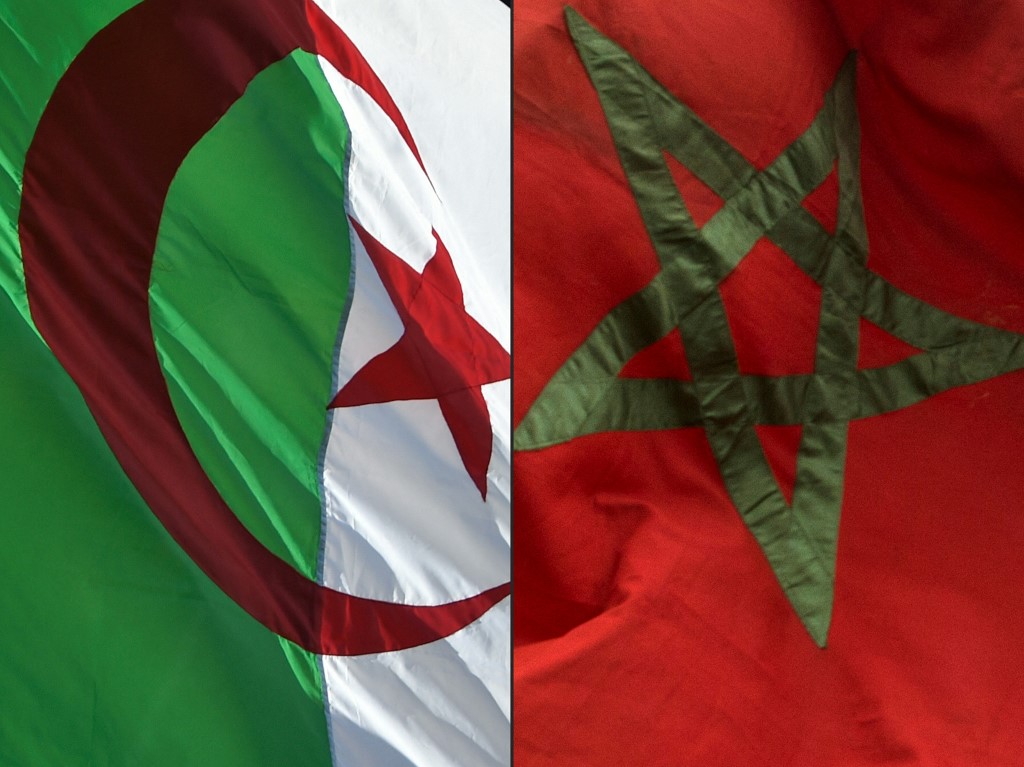
Egypt urges dialogue to settle Morocco-Algeria dispute

Sat, 2021-08-28 17:09

CAIRO: Egypt has called on Algeria and Morocco to use diplomatic solutions and dialogue in order to resolve their diplomatic rift.

Egyptian Foreign Minister Sameh Shoukry made the appeal in phone calls to his Algerian and Moroccan counterparts, Ramtane Lamamra and Nasser Bourita, on Friday.

Ahmed Hafez, spokesman for the Egyptian foreign ministry, said that Shoukry discussed recent developments between the two countries and “ways to move forward by overcoming these circumstances.”

On Wednesday, the Organization of Islamic Cooperation, Arab League and Saudi Arabia called for dialogue to resolve arguments between the two North African rivals.

Algeria said on Tuesday that it had cut diplomatic relations with Morocco because of “hostile actions,” following months of resurgent tensions.

Morocco called the decision “completely unjustified,” and said that it was based on “false, even absurd pretexts.”

In response, it announced on Friday that it would close its embassy in Algiers. It said that the ambassador and all staff would be repatriated to Rabat.

Shoukry urged diplomatic solutions and dialogue in the interest of promoting joint Arab action, in which “the two brotherly countries play a pivotal role.”

Morocco’s King Mohammed VI previously called on Algeria to “build a bilateral relationship based on trust and good neighborliness, because the current situation of these relations is not in the interest of their peoples, and is not acceptable to many countries.”

Main category: 

Algeria to divert Spain gas supplies away from Morocco pipelineAlgeria says cutting diplomatic ties with Morocco


Arab American group demands protected status for Lebanese nationals in the US

Sat, 2021-08-28 16:31

ATLANTA: The American-Arab Anti-Discrimination Committee (ADC) has requested that the US government designate Lebanon for Temporary Protected Status (TPS) due to its political instability and looming economic meltdown.

The move was co-sponsored by more than 70 civic, legal and religious organizations in the US seeking to protect Lebanese nationals who are presently in the US on non-immigrant visas but would face dire circumstances should they go back to Lebanon under the current conditions.

The letter was sent to Secretary of Homeland Security Alejandro Mayorkas and Secretary of State Antony Blinken earlier this week, who would take such a decision.

It requested the designation status fearing that further escalations and tensions in Lebanon’s fractious and dysfunctional political system might escalate into a regional armed conflict.

Lebanon’s political and economic problems became more acute in the aftermath of Beirut port explosion last year that killed at least 200 people and injured thousands more and devastated the country’s fragile economy.

TPS is a temporary protection that allows people from a designated country to remain in the US while conditions in their home country make safe return impossible. The Secretary of Homeland Security can designate a country for TPS if the country is experiencing armed conflict, natural disaster or other extraordinary and temporary conditions.

The designation lasts 18 months and can be renewed several times. If granted, TPS would allow Lebanese nationals to stay in the United States during the designation period and to legally work.

The letter estimates the number of Lebanese nationals who could benefit from the TPS designation at around 28,500 people.

Among the groups that co-sponsored in this effort are Amnesty International USA, the Arab American Institute, Jewish Voice for Peace, Atlanta Chapter and the National Council of Churches.

Commenting on the deteriorating situation in Lebanon, ADC president Samer Khalaf said: “The conditions in Lebanon are grim. The circumstances and facts on the ground make it abundantly clear that Lebanon is not in a position to safely accept the return of its citizens at this time. We call on the Biden administration to quickly designate TPS protections for Lebanon.”

Addressing concerns over immigration issues that might arise, the letter said that there is no real risk that such a designation would result in an immigration influx into the US from Lebanon.

“There has also been no indication that TPS designation has encouraged greater, irregular numbers of migration from the designated areas, including when Lebanon has been designated in the past,” the letter said.

“The US has already invested billions of dollars over the past 10 years in Lebanon’s recovery. TPS would strengthen that investment. Lebanon’s stability is also key to the stability of the region, which is within US foreign policy interests,” it added.

Abed Ayoub, ADC’s legal director, told the Arab News that he feels optimistic that the US President Joe Biden would show compassion and grant the request.

“We urge the Biden administration to do the right thing and designate Lebanon for TPS, Lebanon is on the verge of a complete economic and humanitarian collapse, granting TPS is the morally correct thing to do, and will help provide safe haven to nationals of the country currently in the US,” he said.

Lebanon’s political and economic problems worsened after the Beirut port explosion last year that killed at least 200 people and injured thousands more and devastated the country’s fragile economy. (AFP/File Photos)
Main category: 

Lebanon’s Mikati says he still faces big hurdles to forming cabinetStarved of electricity, Lebanon picks Dubai’s ENOC to swap Iraqi fuel


Sudan receives over 200,000 doses of COVID-19 vaccines from France

Author: 
Reuters
ID: 
1630152915788034400
Sat, 2021-08-28 08:20

KHARTOUM: Sudan has received a shipment of 218,400 doses of the AstraZeneca COVID-19 vaccine as a donation from France, the health ministry and UNICEF said.
The vaccines were delivered with UNICEF’s support through the COVAX facility, they said in separate statements on Friday.
In March, Sudan received an initial 820,000 doses of the coronavirus vaccine made by AstraZeneca in March through COVAX and UNICEF.
It also received 606,700 doses of the Johnson & Johnson vaccines as a donation from the United States earlier in August. China also had donated quantities of Sinopharm’s COVID-19 vaccine.
More than 800,000 people in Sudan including health workers have been vaccinated since March 2021 with the first COVAX shipment and other donations, UNICEF said on Friday.
Most have taken only one dose, and the new shipment will contribute to an increase in the number of people who are fully vaccinated, it added.
“The vaccinations come at a critical time as the infection numbers are climbing while the country is preparing to re-open schools after three years of numerous interruptions,” the statement said.
Sudan, with a population of 42 million, will start a second vaccination campaign in some states on Sunday after receiving new vaccines batches, the health ministry said.
As of Aug. 26, Sudan’s health ministry reported 37,699 infections with COVID-19 and 2,831 deaths since the start of the coronavirus pandemic in March 2020.

Main category: 

Saudi investment in Sudan could rise to $10 billion, prime minister saysSudan receives $857 million in IMF aid