TRIPOLI/BENGHAZI: Preparations are almost finished for polls in war-torn Libya, the head of the electoral commission says, despite wrangling over voting laws and warnings the outcome could be contested.
“We are 80 or 90 percent ready” for the presidential and parliamentary votes in December and January, Imed Al-Sayeh, head of the country’s High National Election Commission, said.
“I think there will be very strong turnout for these elections, especially as there will be direct presidential polls for the first time since Libya’s independence” in 1951, he said at his office in Tripoli.
The polls are part of a UN-backed peace process that has seen a year of relative peace following a ceasefire between eastern and western camps in the North African country.
But disputes over the legal and constitutional basis of the ballots and who is eligible to stand raised doubts over the process.
Analysts warned of a return to conflict if the outcome is contested.
The presidential and parliamentary votes were initially set for the same day — Dec. 24 — but on Tuesday parliament announced that the legislative elections, the country’s first since 2014, would be postponed until January.
The HNEC said in August that more than 2.8 million Libyans had registered for the polls, out of a population of around 7 million.
Plan agreed to pull mercenaries out
Meanwhile, the eastern side in Libya’s conflict said on Friday it had agreed with its opponents on a plan for a phased withdrawal of foreign forces and mercenaries, but gave no details or timeline for a move seen as crucial to cementing a year-old ceasefire.
Mercenaries brought by the foreign powers involved in Libya, including Russia and Turkey, remain entrenched on both sides despite the ceasefire and a parallel political process aimed at resolving the decade-long crisis through elections. Both those UN-backed efforts are seen as highly fragile, however, with a constant risk that the process could unravel.
An eastern military official said the joint committee meeting in Geneva had agreed on a “an action plan for the withdrawal of mercenaries and foreign forces in a gradual, balanced and simultaneous way.”
The official added that international monitors and a monitoring mechanism were needed before any withdrawal could begin. Libyan Foreign Minister Najla Mangoush said on Sunday that a very modest number of mercenaries had already left. The committee was formed through a UN-backed ceasefire agreed on last year that followed the collapse of eastern-based commander Khalifa Haftar’s 14-month offensive against Tripoli.
Libya has been ripped apart by violence since the 2011 overthrow of Muammar Qaddafi, who had ruled the vast, oil-rich country with an iron fist since seizing power in a 1969 coup.
Last October’s ceasefire between rival eastern and western governments, after UN-hosted talks, led to a transitional government taking office in March to usher the country toward elections at the end of this year.
Thousands of migrants arrested in Libyan crackdown held in ‘inhumane conditions’Egypt, Tunisia agree on Libya recovery strategy
Israel, Palestinian militants use bodies as bargaining chips
Author:
AP
ID:
1633726762770240500
Fri, 2021-10-08 23:58
WEST BANK: More than a year after his son was killed by Israeli forces under disputed circumstances in the occupied West Bank, Mustafa Erekat is still seeking his remains.
It is one of dozens of cases in which Israel is holding the remains of Palestinians killed in conflict, citing the need to deter attacks and potentially exchange them for the remains of two Israeli soldiers held by the Palestinian militant group Hamas in the Gaza Strip.
The Palestinians and human rights groups view the practice of holding bodies as a form of collective punishment that inflicts further suffering on bereaved families.
“They have no right to keep my son, and it is my right for my son to have a good funeral,” Erekat said.
The Jerusalem Legal Aid and Human Rights Center, a Palestinian rights group, says Israel is holding the bodies of at least 82 Palestinians since the policy was established in 2015.
It says many are buried in secret cemeteries where the plots are only marked by plaques of numbers. Hamas holds the remains of the two Israeli soldiers killed during the 2014 Gaza war.
Defense Minister Benny Gantz said at the time that holding the remains deterred attacks and would help ensure the return of Israeli captives and remains. The Defense Ministry declined to comment on the policy.
One of the bodies is that of Erekat’s son, Ahmed, who Israeli officials say was shot and killed after deliberately plowing into a military checkpoint in June 2020.
Ahmed was to get married soon, his father said: “He had a house that was ready for him.” To this day, he has no idea where his son’s remains are.
Omar Shakir, the Israel and Palestine director at the New York-based Human Rights Watch, said Israel has turned “corpses into bargaining chips.” The policy is “deliberately and unlawfully punishing the families of the deceased, who are not accused of any wrongdoing,” he said.
Israel has a long history of exchanging prisoners and remains with its enemies.
In 2011, it traded more than 1,000 Palestinian prisoners for an Israeli soldier who had been captured by Palestinian militants five years earlier and was being held in Gaza.
In 2008, it traded five Lebanese prisoners and the remains of nearly 200 Lebanese and Palestinians killed in fighting, for the remains of two Israeli soldiers captured by Hezbollah group two years earlier.
Egypt continuing efforts to return Palestinian Authority to the Gaza Strip, says El-SisiFacebook wrongfully suppressed Palestinians during May violence, says HRW
Uncle of Syria’s Assad returns home from decades-long exile
Author:
AFP
ID:
1633724240399942400
Fri, 2021-10-08 23:23
BEIRUT: The uncle of Syrian President Bashar Assad has returned home from 36 years of exile to dodge arrest in France, the pro-government Al-Watan newspaper reported Friday.
Rifaat Assad, 84, arrived in Damascus on Thursday, Al-Watan said on its Facebook page, nearly a month after a Paris appeals court upheld a four-year prison sentence issued against him last year for misappropriating public funds in Syria, laundering the spoils and building a vast property portfolio in France with ill-gotten gains.
Formerly Syria’s vice president, Rifaat Assad left his home country in 1984 after mounting a failed coup against his brother Hafez, who led Syria from 1971 to 2000.
“In order to prevent his imprisonment in France .. President Assad rises above what Rifaat Assad has said and done and allows him to return to Syria,” Al-Watan said.
Rifaat is not expected to take up any political role, Al-Watan added.
Dubbed the “Butcher of Hama” for his alleged role in putting down an uprising in central Syria in 1982, Assad has been under investigation in France since 2014.
He was tried for crimes allegedly committed between 1984 and 2016, including aggravated tax fraud and misappropriation of Syrian funds.
A Paris court last June dismissed charges against Assad for the period 1984 to 1996, but found him guilty of organized laundering of funds embezzled from the Syrian public purse between 1996 and 2016. He was also convicted of tax fraud.
Last month, the Paris appeals court upheld the verdict against him.
He may not have to serve in prison given his advanced age, but the confiscation of his French real estate assets, worth an estimated 90 million euros ($106 million), ordered at his initial trial, will now go ahead.
His French fortune includes two townhouses in chic Parisian neighborhoods, a stud farm, about 40 apartments, and a chateau.
Assad and his family also built up a huge portfolio of properties in Spain, valued at around 695 million euros, which were all seized by the authorities in 2017.
Israel strike on Syria base wounds six: state mediaDanish women evacuated from Syria charged with terror links
Lebanese protest as Iranian fuel supplies falter
Fri, 2021-10-08 23:09
BEIRUT: Angry residents of Hermel in Lebanon’s north of Bekaa valley region took to the streets on Friday near the Assi River bridge where they burned tires and blocked the road to protest the unavailability of fuel and the total power outage.
The Lebanese army intervened to reopen the roads following the first protests since Hezbollah delivered tons of Iranian fuel to Lebanon via illegal crossings with Syria, under the pretext of meeting people’s needs.
The region is one of Hezbollah’s strongholds. Discontent prevails in the Bekaa areas, especially in the Baalbek-Hermel region, where empty diesel tanks cannot operate the heaters needed to fight the extreme cold.
On Friday, the price of 20 liters of diesel jumped to LBP243,000 ($161), equivalent to half the minimum wage, after subsidies were fully lifted. The exchange rate exceeded LBP19,000 to the dollar on the black market.
Mayor of Baalbak Haidar Shamas told Arab News that the protests are due to the non-delivery of Iranian diesel to the people who paid for it, adding that the Al-Amana company has not delivered it.
People wishing to buy Iranian diesel must pay in cash to Hezbollah’s Al-Qard Al-Hasan Association, in accordance with the price determined by the US-sanctioned Al-Amana Co.
Al-Qard Al-Hasan is registered as a non-profit organization and was sanctioned by the US Treasury in 2016. However, its activity has not stopped.
Shamas said that in order to end people’s resentment, Hezbollah asked neighborhoods to register their names in exchange for 500 liters of diesel for free, with the rest to be sold to them in accordance with the Al-Amana Co.’s pricing.
“However, if it decides to start distributing diesel to houses, the free distribution to public hospitals, bakeries and electric generators will stop, as the Iranian diesel quantity is not enough. The monthly fees of generators will rise again and exceed 1 million Lebanese pounds at least. People supporting Hezbollah have started protesting against its policy to provide diesel for areas that do not support the party. It has increased the confusion for Hezbollah which has no previous experience in this field,” Shamas said.
There is a total power outage in the Baalbek-Hermel region, with lucky areas receiving just one hour of electricity per day.
Private generator owners have reduced their provision to only eight hours of electricity per day to drop fees to LBP600,000 after struggling families complained, with many opting to return to candles.
Elsewhere, protests sparked in Saida in Southern Lebanon as taxi drivers rejected the municipality’s attempt to implement a project of developing transit lines between the city and its surroundings, especially for school and university students, after the daily transportation fees became unaffordable.
Taxi drivers protested in front of the municipality, blocking the road with their cars.
Separately, after visiting Maronite Patriarch Bechara Boutros Al-Rahi on Friday, Prime Minister Najib Mikati said: “I am aware that there are great concerns, but we strive and seek to resolve them all.”
During his meeting with Mikati on Thursday, International Aid Coordinator for Lebanon Ambassador Pierre Dukan stressed “the need to accelerate the implementation of reforms, expedite the launch of negotiations with the International Monetary Fund and reach an agreement before the end of the year, when France seeks to organize an international conference to provide direct aid to the state budget.”
While meeting a number of Lebanese officials, US Ambassador to Lebanon Dorothy Shea said: “The financial situation is very difficult, and there is no solution without reasoning with the IMF as soon as possible.”
Washington has suggested that it will help Lebanon get electricity from Jordan and facilitate the flow of Egyptian gas through Jordan and Syria to northern Lebanon.
Hezbollah brings Iranian fuel into Lebanon, Al-Manar TV saysIranian fuel tankers bound for Lebanon yet to reach cash-strapped country, Tankertrackers says
Social media platforms doing little to combat online hate speech in the Arab world: Experts
Fri, 2021-10-08 23:05
LONDON: For a platform with at least 2.91 billion “friends,” Facebook has been creating a lot of enemies of late, even among its own ranks.
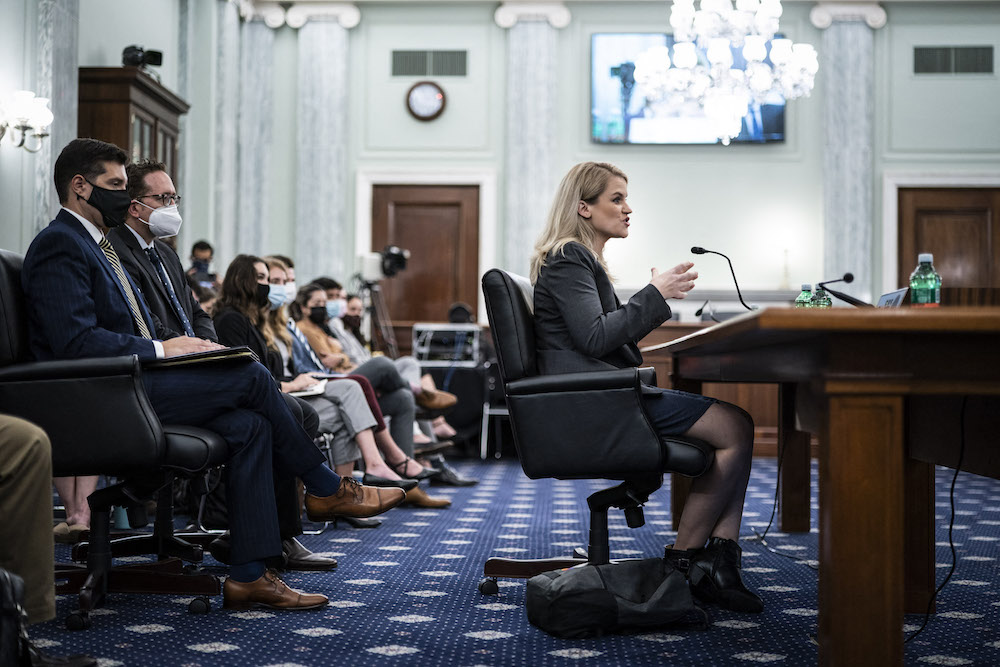
Just this week, former Facebook employee and whistleblower Frances Haugen testified before members of the US Senate, delivering a scathing overview of how the world’s largest social networking site prioritizes profits over public safety.
This is in spite of its own extensive internal research, leaked to US media, which demonstrates the harm that Facebook and its products are causing worldwide to communities, democratic institutions and to children with fragile body image.
Yet, precious little has been done in the Arab world, for instance, to hold Facebook and other social networking platforms to account for the extremist ideas, bigoted views and hate speech that continue to find their way to millions of users across the region despite their supposed policing of content.
“With even just a quick search in Arabic, I found 38 groups or pages currently on Facebook with over 100 followers or likes that feature unmistakable references in their titles to the Protocols of the Elders of Zion, the most infamous example of anti-Jewish disinformation and hate speech in history,” David Weinberg, Washington director for international affairs at the Anti-Defamation League, told Arab News.
“One would think that if Facebook were even casually interested in proactively searching for horrific hate speech that blatantly violates its terms of service and could lead to deadly violence, that these sorts of pages would have been an easy place for them to start.”
Indeed, although Facebook removed millions of posts featuring hate speech from its platforms in 2020, it still has a lot of ground to cover, especially in languages other than English.
“Facebook has not fixed the real problem. Instead, it has created PR stunts. What Haugen said exposed all their wrongdoing,” Mohamad Najem, the Beirut-based executive director of SMEX, a digital rights organization focusing on freedom of expression, online privacy and safety, told Arab News.
“Unfortunately, all these threats are increasing and tech companies are doing the minimum about it.”
Former Facebook employee and whistleblower Frances Haugen testifies during a Senate Committee on Commerce, Science, and Transportation hearing entitled ‘Protecting Kids Online: Testimony from a Facebook Whistleblower’ on Capitol Hill, October 05, 2021 in Washington, DC. (AFP)
Responding to the allegation on Friday, a Facebook spokesperson told Arab News: “We do not tolerate hate speech on our platforms. Which is why we continue to invest heavily in people, systems and technology to find and remove this content as quickly as possible.
“We now have 40,000 people working on safety and security at Facebook and have invested $13 billion into it since 2016. Our technology proactively identifies hate speech in over 40 languages globally, including Arabic.
“Whilst we recognize there is more work to do, we are continuing to make significant improvements to tackle the spread of harmful content.
“As our most recent Community Standards Enforcement Report showed, we’re finding and removing more hate speech on our platforms than ever before: the prevalence of hate speech — the amount of that content people actually see — on Facebook is now 0.05 percent of content viewed and is down by almost 50 percent in the last three quarters.”
Although Facebook has come under particular scrutiny of late, it is not the sole offender. The perceived laxity of moderation on microblogging site Twitter has also caused alarm.
Despite recently updating its policy on hate speech, which states that users must “not promote violence against or directly attack or threaten other people on the basis of race, ethnicity, national origin,” accounts doing just that are still active on the platform.
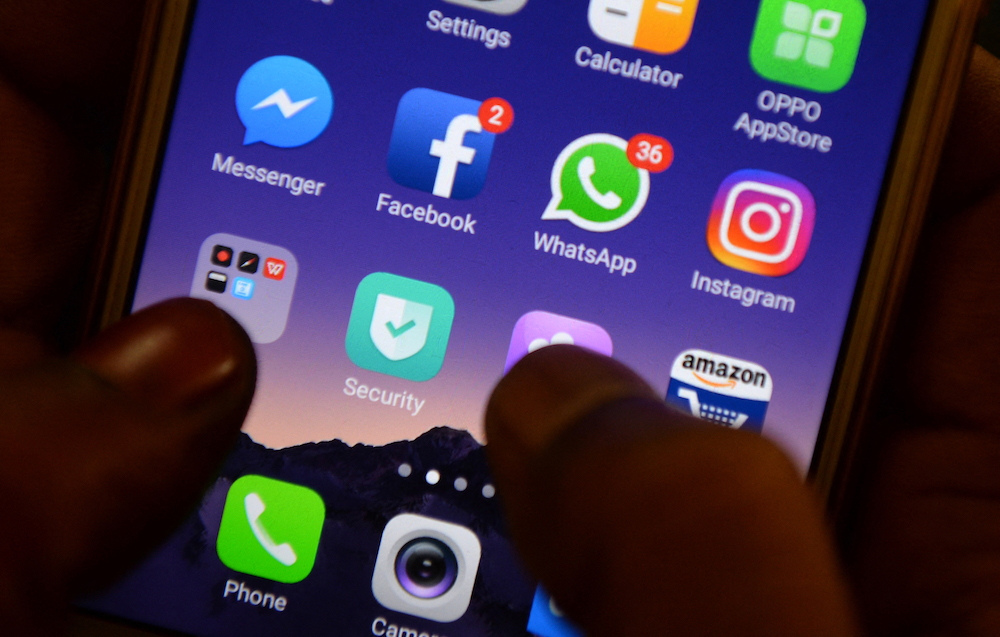
Major social media services including Facebook, Instagram and WhatsApp were hit by a massive outage on October 4, 2021, tracking sites showed, impacting potentially tens of millions of users. (AFP)
“For example, Iran’s supreme leader is permitted to exploit Twitter using a broad array of accounts, including separate dedicated Twitter accounts, for his propaganda, not just in Persian, Arabic and English but also in Urdu, Spanish, French, German, Italian, Russian and Hindi,” Weinberg said.
“Twitter also permits the accounts of major media organs of Iranian-backed violent extremist groups such as Hamas, Hezbollah and Palestinian Islamic Jihad. Even Facebook hasn’t generally been that lax.”
Indeed, accounts in the Arab world, such as those of exiled Egyptian cleric Yusuf Al-Qaradawi and designated terrorist Qais Al-Khazali — both of whom have been featured in Arab News’ “Preachers of Hate” series — remain active and prominent, with the former accumulating 3.2 million followers.
In one of his hate-filled posts, Al-Qaradawi wrote: “Throughout history, God has imposed upon them (the Jews) people who would punish them for their corruption. The last punishment was that of Hitler. This was a divine punishment for them. Next time, God willing, it will be done at the hands of the faithful believers.”
The failure to consistently detect hate speech in languages other than English appears to be a common problem across social networking sites.
As Haugen pointed out in her Senate evidence, Facebook has “documentation that shows how much operational investment there was by different languages, and it showed a consistent pattern of underinvestment in languages that are not English.”
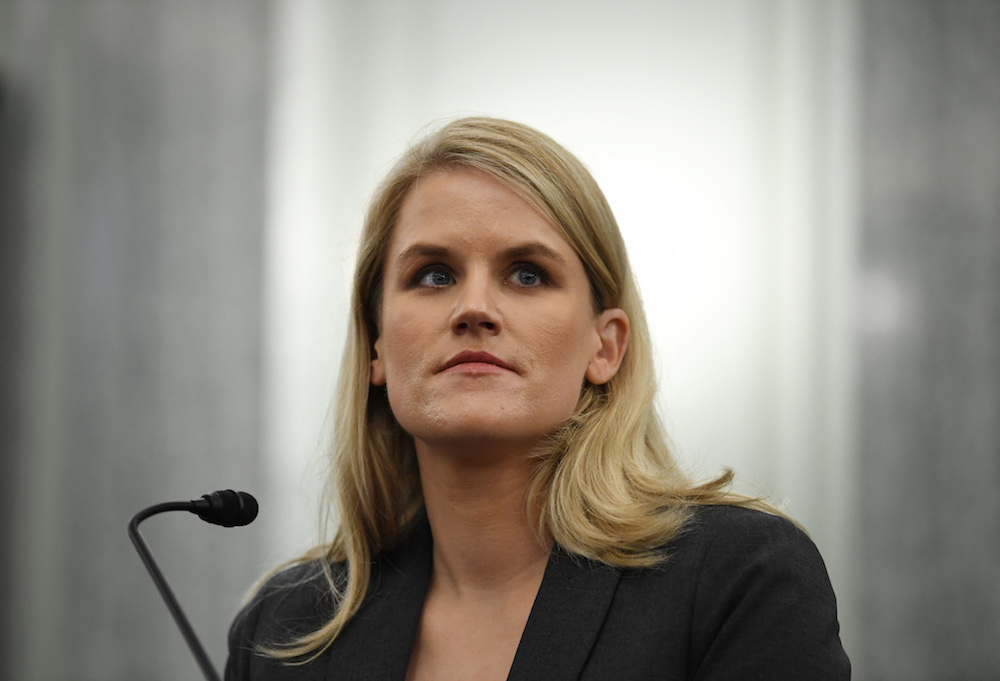
Haugen left Facebook in May and provided internal company documents about Facebook to journalists and others, alleging that Facebook consistently chooses profit over safety. (Getty via AFP)
As a result, extremist groups have been at liberty to exploit this lax approach to content moderation in other languages.
The consensus among experts is that, in the pursuit of profits, social media platforms may have increased social division, inspired hate attacks and created a global trust deficit that has led to an unprecedented blurring of the line between fact and fiction.
“I saw Facebook repeatedly encounter conflicts between its own profits and our safety,” Haugen told senators during her testimony on Tuesday.
“Facebook consistently resolved these conflicts in favor of its own profits. The result has been more division, more harm, more lies, more threats and more combat. In some cases, this dangerous online talk has led to actual violence that harms and even kills people.
“As long as Facebook is operating in the shadows, hiding its research from public scrutiny, it is unaccountable. Until the incentives change, Facebook will not change. Left alone, Facebook will continue to make choices that go against the common good. Our common good.”
The influence of social media companies on public attitudes and trust cannot be overstated. For instance, in 2020, a massive 79 percent of Arab youth obtained their news from social media, compared with just 25 percent in 2015, according to the Arab Youth Survey.
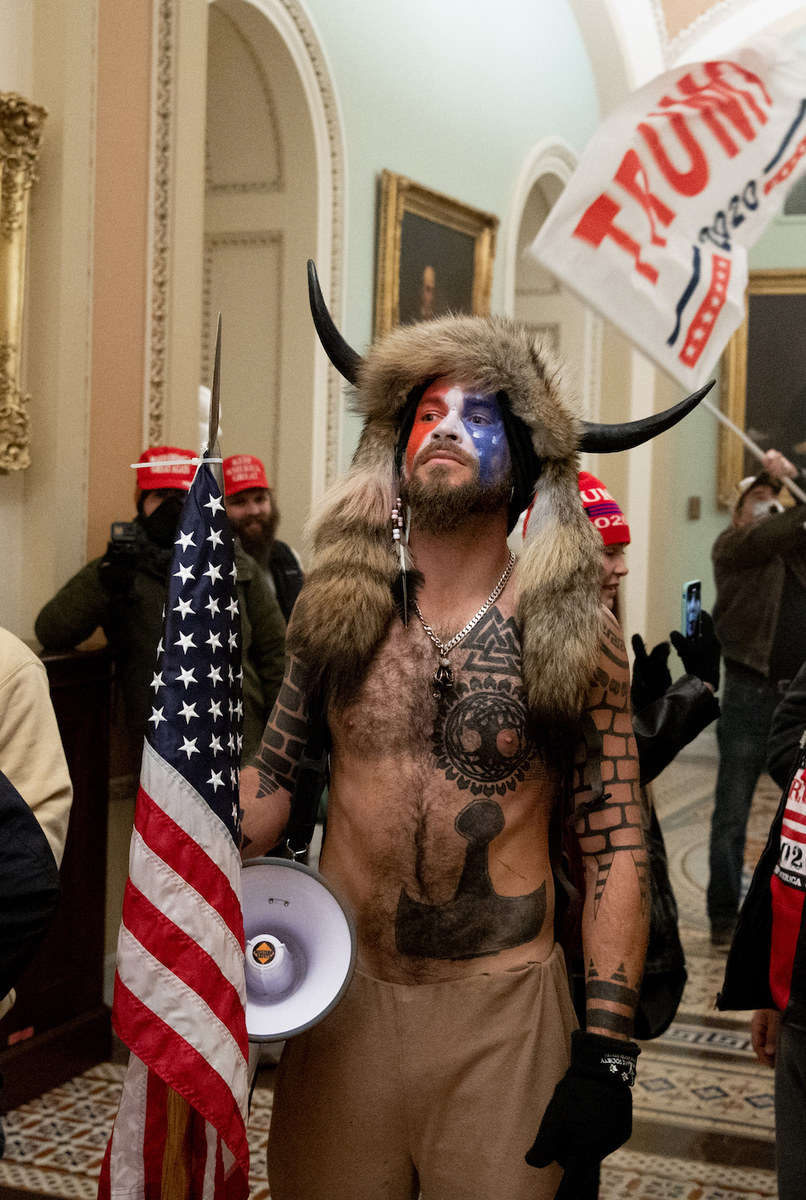
Supporters of US President Donald Trump, including Jake Angeli, a QAnon supporter known for his painted face and horned hat, protest in the US Capitol on January 6, 2021. (AFP/File Photo)
Facebook and other popular Facebook-owned products, such as Instagram and WhatsApp, which experienced an almost six-hour global outage on Monday, have been repeatedly linked to outbreaks of violence, from the incitement of racial hatred in Myanmar against Rohingya Muslims to the storming of the Capitol in Washington by supporters of outgoing President Donald Trump in January this year.
The company’s own research shows it is “easier to inspire people to anger than to other emotions,” Haugen said in a recent CBS News interview for “60 Minutes.”
She added: “Facebook has realized that if they change the algorithm to be safer, people will spend less time on the site, they’ll click on fewer ads, they’ll make less money.”
Many have applauded Haugen’s courage for coming forward and leaking thousands of internal documents that expose the firm’s inner workings — claims that Facebook CEO Mark Zuckerberg has said are “just not true.”
In recent months, the social networking site has been fighting legal battles on multiple fronts. In Australia, the government has taken Facebook to court to settle its status as a publisher, which would make it liable for defamation in relation to content posted by third parties.
Russia, meanwhile, is trying to impose a stringent fine on the social media giant worth 5-10 percent of its annual turnover in response to a slew of alleged legal violations.
Although Facebook removed millions of posts featuring hate speech from its platforms in 2020, it still has a lot of ground to cover. (AFP/File Photo)
Earlier this year, the G7 group of nations, consisting of Canada, France, Germany, Italy, Japan, the UK and the US, signed a tax agreement stipulating that Facebook and other tech giants, including Amazon, must adhere to a global minimum corporate tax of at least 15 percent.
In Facebook’s defense, it must be said that its moderators face a grueling task, navigating the rules and regulations of various governments, combined with the growing sophistication of online extremists.
According to Jacob Berntsson, head of policy and research for Tech Against Terrorism, an initiative launched to fight online extremism while also protecting freedom of speech, terrorist organization have become more adept at using social networking platforms without falling foul of moderators.
“I think to be very clear, Facebook can certainly improve their response in this area, but it is very difficult when, for example, the legal status of the group isn’t particularly clear,” Berntsson told Arab News.
“I think it all goes to show that this is massively difficult, and content moderation on this scale is virtually impossible. So, there are always going to be mistakes. There are always going to be gaps.”
Muslim civil rights group sues Facebook over hate speechFrench court orders Twitter to reveal anti-hate speech effortsOrganization of Islamic Cooperation urges steps against hate speech onlineFacebook accused of promoting hate speech in India