Iraqi farmers feel the heat of extreme climate events

Wed, 2021-11-10 00:45

MOSUL / BOGOTA: Caked in the fine yellow dust kicked up by his tractor-drawn planter, Farman Noori Latif jumps down to survey his work. He has spent the morning sowing wheat seed on his farm near the banks of the Tigris River, just south of Mosul in northern Iraq.

It is late in the season to be sowing wheat, but the 30-year-old has been holding out for a much-needed spell of autumn rain. The earth might still be parched under the baking sun but it is now or never if he wants his crops in the ground before winter sets in.

“Today is November 2 and the weather is hot. It shouldn’t be like this,” Latif told Arab News as he inspected the soil he and his family have farmed for four generations. “We are supposed to have this weather in September, not now.”

Latif is not alone in fighting a losing battle against the elements. The UN Environment Program’s sixth Global Environmental Outlook report, published in 2019, ranked Iraq fifth on the list of countries most vulnerable in terms of water and food availability and extreme temperatures.

All along the banks of the once mighty Tigris River, farmers and fishermen have seen their livelihoods evaporate in recent years, forcing many among the rural population to abandon the land in search of work in the cities.

“We have lost everything due to the lack of rain and the hot weather,” Ameer Khthr Yousif, a 30-year-old farmer and fisherman selling his catch on a Qayyarah roadside, told Arab News.

“We farmers depend on the Tigris River for our agriculture. If the situation continues, everyone here will leave farming to find other sources of income.”

Average temperatures in Iraq have risen by at least 0.7 degrees Celsius over the past century, and extreme heat events are becoming more frequent. According to the World Bank, mean annual temperatures in Iraq are expected to rise by 2 C by 2050, and mean annual rainfall to decrease by 9 percent.

Iraq’s 2020-2021 rainy season was the second-driest in 40 years, according to the UN, leaving the country’s aquifers unreplenished and raising the salinity of the remaining groundwater.

“The groundwater has dried out here,” Latif said. “I have a well that is 30 meters deep without any water in it. All the wells here have dried out. Even if there is water in any of these wells, it will be red in color or salty.”


Hazim Mahamad Ebrahim, 60, a farmer from Hoot Al-Fouaqni, Qayyarah, Mosul. (AN Photo/Kareem Botane)

Soil degradation is causing dust storms to increase in scale and frequency. Between 1951 and 1990, Iraq experienced an average of 24 days a year with dust storms. In 2013, there were 122, according to the UN.

In an op-ed for the Financial Times, published on Oct. 31 to coincide with the start of the COP26 UN climate summit in Glasgow, Iraq’s President Barham Salih said the economic and environmental effects of climate change are “by far the most serious long-term threat” facing the country.

“Very high temperatures are becoming more common, drought more frequent and dust storms more intense,” Salih said. “Desertification affects 39 percent of Iraq’s territory and increased salinization threatens agriculture on 54 percent of our land.”

Neighboring countries are also experiencing more frequent droughts and rising temperatures, leading to regional water disputes. Iraq’s water ministry said this year that water flows from Iran and Turkey had fallen by 50 percent during the summer.

“Dams on the headwaters and tributaries of the historic Tigris and Euphrates Rivers — the lifeblood of our country — have reduced water flow, leading to shortages,” Salih said. “According to Iraq’s Ministry of Water Resources, our country could face a shortfall of as much as 10.8 billion cubic meters of water annually by 2035.”


Farman Noori Latif, 30, a farmer and contractor from the village of Muhssin, Qarach area, Makhmur, Qayyarah, Mosul. (AN Photo/Kareem Botane)

Salih said he is all too aware of the threat climate change poses to a country utterly reliant on oil revenues, whose booming youth population is simmering with pent-up frustration.

“Iraq’s population is projected to double from 40 million people today to 80 million by 2050, just as our income, largely based on oil production, will be drastically reduced as a result of the world abandoning fossil fuels as it moves to sustainable, clean energy,” he said.

“The loss of income may very well result in migration to cities whose infrastructure is even now incapable of supporting the existing population. This migration may well result in extremism and insecurity as young people are unable to find jobs that give them a decent standard of living.”

FASTFACTS

* Average temps. in Iraq have risen by at least 0.7 degrees since 1921.

* Iraq’s 2020-2021 rainy season was the second-driest in 40 years.

* In 2013, Iraq experienced at least 122 days with dust storms.

Mohammed Abdullah Ibrahim, who has farmed his patch of land in Qayyarah for decades, said he has seen dramatic changes in the climate during his lifetime.

“I have been a farmer since the 1970s and I have never seen it this bad before,” the 64-year-old told Arab News.

Water shortages have forced local farmers to abandon many of the water-intensive fruit and vegetable crops once grown here. Among those that still grow, yields have halved, said Ibrahim.

“Before, it was sufficient,” he added. “You could grow enough and make a profit. In the past, we were employed only in farming; we did not need a job or salaries. But things have changed now. We have to find another job to make a living.

“If the situation continues like this, we will be entering a very dark future. The young generation will end up unemployed.”

Ibrahim’s neighbor, Hilal Faraj Mohamoud, has also observed a significant change in the local climate. “The heat wave we had last year, we have never had it like that before,” he told Arab News. “I am 56 years old; I have never experienced heat like that in my life.


Hilal Faraj Mohamoud, 56, a farmer from Hoot Al-Fouaqni, Qayyarah, Mosul. Credit: (AN Photo/Kareem Botane)

“I know many farmers who have left their land and given up on farming. If the situation continues, I am afraid we will all move to the cities and leave farming behind, migrating from the villages because there will be nothing left for us to stay for.”

It is not only arable crop farmers who are struggling in the fierce heat. Sparse pasture, limited fodder and a shortage of fresh water have forced livestock farmers to sell or even cull their animals.

“Our animals have begun dying due to drought and the lack of rain,” Jamal Ali, a 49-year-old shepherd from Makhmur, told Arab News.

“Animals are very expensive these days. We have to buy fodder for our sheep and cows because our land cannot produce enough food for them due to the late rainy season and drought. We had to sell our sheep in order to compensate (for the loss). We have lost 50 percent of our income from animals and farming due to climate change.”

Dehydration has led to serious veterinary health problems among livestock, affecting their reproductive health.

“The changing climate has created many diseases among the animals,” said Ali. “The most common is birth defects. It is all due to the lack of rain and water.”


Rayid Khalaf Al-Wagaa, 51, a farmer and mayor of Hoot Al-Foqani, Qayyarah, Mosul. (AN Photo/Kareem Botane)

Rayid Khalaf Al-Wagaa, mayor of the Qayyarah village of Hoot Al-Foqani, said the federal government in Baghdad has done little to subsidize farming and help prevent climate-induced rural displacement.

“We have lost more than 100,000 hectares of land due to the lack of rain and water. We have fewer animals compared to before, especially sheep,” he said.

“About 50 or 60 farmers have left here so far. We need support from international organizations as we already know that the government has limited capabilities. We hope they can do something for us, otherwise the number of animals and farmers will decline in the coming years.”

Although the Iraqi government has launched a UN-backed National Adaptation Plan to improve the country’s resilience to climate change, few of the benefits have trickled down to sun-scorched farming communities along the Tigris.

Kneeling in the powdery earth to uproot a spindly yellow plant, Latif said Iraq’s farmers urgently need outside help if their way of life is to survive the relentlessly changing weather patterns.

“We have lost our hope in the Iraqi government; we want foreign countries to help us,” he said. “We do not have any other means of making a living. Farming is our only hope and without it I cannot imagine how it will be.”

—————–

Twitter: @kareem_botane / @RobertPEdwards

All along the banks of the once mighty Tigris River, farmers and fishermen have seen their livelihoods evaporate in recent years. (AN Photos/Kareem Botane)
Main category: 

Saudi Arabia’s green oil: Ancient meets modern as the ‘smart farmers’ of Jouf reap a rich olive harvestIraqi farmers fight to save cattle from drought


Jordan’s crown prince meets Egyptian president in Cairo

Tue, 2021-11-09 21:45

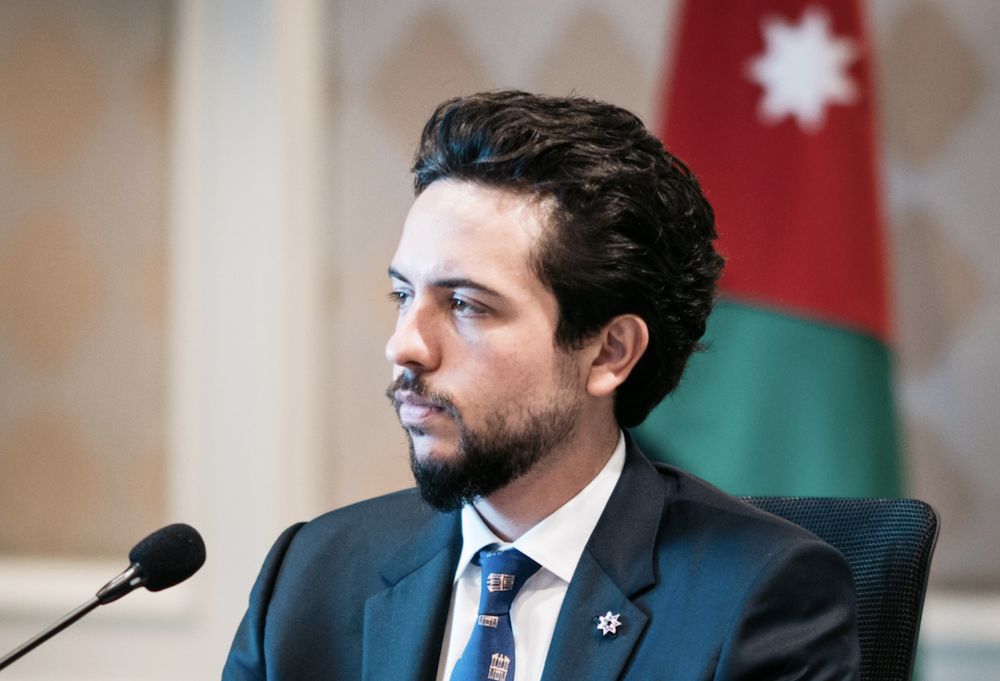
CAIRO: Jordan’s Crown Prince Al-Hussein bin Abdullah and Egyptian President Abdel Fattah El-Sisi discussed strategic ties between the two countries as they met in Cairo on Tuesday.
During the meeting which was held at Al Ittihadiya Palace, President El-Sisi and Prince Al-Hussein discussed the deep-rooted ties between Jordan and Egypt and the importance of advancing cooperation and coordination.
The crown prince conveyed King Abdullah’s greetings to El-Sisi who did the same and also commended the King’s efforts in bolstering Jordanian-Egyptian ties.
The crown prince stressed the importance of partnership between the two countries in vital sectors, noting Jordan’s interest in enhancing economic cooperation, especially on investments in the tourism sector.
He commended Egypt’s progress across a number of sectors, particularly in mega development projects, stressing the need to exchange expertise on micro, small, and medium projects.
The Egyptian president expressed keenness on strengthening cooperation in tourism and development projects, in addition to achieving economic integration.
He also noted that Egypt and Jordan share the same positions on various issues and developments.
A number of Jordanian and Egyptian officials attended the meeting.

Jordan’s Crown Prince Al-Hussein bin Abdullah with Egypt’s President Abdel Fattah El-Sisi during a visit to Cairo where they discussed strategic ties between the two countries on Tuesday. Credit: (Twitter/@RHCJO)
Al-Hussein stressed the importance of partnership between Jordan and Egypt in vital sectors. (Twitter: @RHCJO)
Main category: 

Jordan’s garment sector is top destination for Bangladeshi women workersEgypt to open the world’s largest spinning factory in 2022


Egypt, US hold first strategic dialogue since 2015

Tue, 2021-11-09 20:43

CAIRO: In the countries’ first strategic dialogue since 2015, Egyptian Foreign Minister Sameh Shoukry and US Secretary of State Antony Blinken discussed the Ethiopian Renaissance Dam crisis, the water crisis facing Egypt, and developments in Libya and Syria.

The two ministers also met to discuss advancing bilateral cooperation and strategic relations between the two countries.

“We are committed to friendship with the US, and the partnership between the two countries is important for maintaining peace and stability in the region,” the Egyptian FM said during a joint press conference.

Shoukry praised the American role in supporting his country during the war against terrorism and extremism, noting that Cairo has been able to resume its role as a major player in the region because of the US. 

During the joint press conference, Blinken said Cairo plays a pivotal role in pushing for the peace process and holding elections in Libya.

Blinken said the two countries also share the same concerns about Iran’s practices in the region and the world. The US also encouraged a peaceful solution to the Renaissance Dam issue while taking into account Egypt’s water needs.

Egyptian Foreign Ministry spokesman Ahmed Hafez said Shoukry stressed the need to resume the course of negotiations as soon as possible with the aim of reaching a binding legal agreement on filling and operating the dam to achieve the interests of the three countries involved.

Blinken also talked about the need to remove foreign forces and mercenaries from Libya and praised Cairo’s role in that issue. He stressed the importance of holding the Libyan elections as scheduled, next December.

Hafez said the meeting also dealt with a number of international and regional issues of common interest, including the state of emergency in Sudan, developments in Palestinian and Egypt’s continuous efforts to revive the peace track.

In a previous statement, Shoukry said the strategic dialogue between the two countries would address the most prominent regional and international issues of mutual interest, within the framework of continuing consultations with the American side on issues of joint interest.

The US-Egypt strategic dialogue was established in 1998 during the administration of former US President Bill Clinton. There was a pause from 2009 to 2015 with the beginning of the administration of former US President Barack Obama and the beginning of the Arab uprisings in 2011.

US Secretary of State Antony Blinken (R) speaks as Egyptian Foreign Minister Sameh Shoukry looks on during a US-Egypt strategic dialogue at the State Department in Washington D.C. (AFP)
Main category: 

US shares with Egypt concerns about Iran’s malign practices: BlinkenEgyptian FM heads to Washington for strategic dialogue with US


El-Sisi and Macron discuss Libya

Tue, 2021-11-09 19:39

CAIRO: Egyptian President Abdel Fattah El-Sisi and his French counterpart Emmanuel Macron both stressed the importance of maintaining stability in Libya in order to hold elections on schedule, in addition to the exit of all foreign forces and mercenaries from Libyan territory.

The Egyptian presidency said in a statement that Sisi received a phone call from Macron to discuss the ongoing preparations for the international conference on Libya in Paris later this month.

The statement noted that the two presidents agreed to support the existing political track, leading to the election on its scheduled date at the end of next month, and to put a stop to the illegal foreign interventions that were fueling the crises in the country. 

According to the statement, Macron indicated that France appreciates Egypt’s efforts to resolve the issues in Libya and stressed France’s keenness to cooperate with Egypt on this important file.

The two presidents also exchanged their views on regional and international issues of common interest, including developments in Sudan. They agreed on the importance of addressing the current challenges in Sudan in a way that achieves stability and security while preserving the democratic path of the current political process.

The international community is pinning its hopes on the Libyan presidential and parliamentary elections according to the road map set by the UN in order to bring an end to the chaos that has plagued the country since 2011, after the overthrow of the late President Muammar Qaddafi.

Main category: 

Egypt reiterates call for all foreign forces to leave Libya


UAE foreign minister meets with Bashar Assad in Damascus

Tue, 2021-11-09 19:39

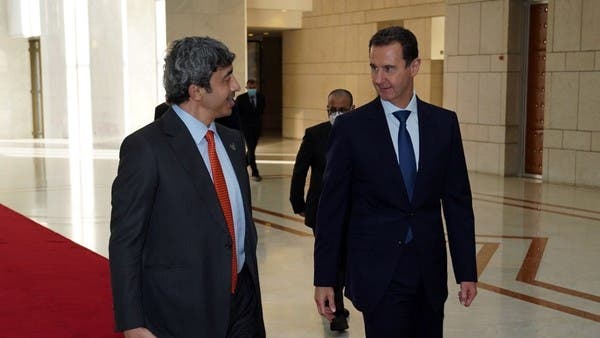
DAMASCUS: The UAE foreign minister met with Syria’s President Bashar Assad in Damascus Tuesday, according to Syrian state media.

Sheikh Abdullah bin Zayed’s visit is the first by a top Emirati official since Syria’s war began a decade ago.

“President Assad received UAE Foreign Minister Abdullah bin Zayed,” along with an accompanying delegation, the official SANA news agency said.

“During the meeting, they discussed bilateral relations between the two brotherly countries and ways to develop cooperation in different sectors that are of common interest,” SANA added.

The UAE broke ties with Syria in February 2012 after protests demanding regime change escalated into an all-out conflict.

However, in December 2018, the UAE reopened its embassy in Damascus and this was followed by the Gulf country calling for Syria to return to the Arab League in March.

Abu Dhabi Crown Prince Sheikh Mohammed bin Zayed also held a phone call with Assad in October.

Following his visit to Damascus, Sheikh Abdullah arrived in Amman on Tuesday evening ahead of a meeting on Wednesday with Jordan’s deputy prime minister and foreign minister Ayman Safadi.

The UAE foreign minister met with Syria’s President Bashar Assad in Damascus Tuesday, according to Syrian state media. (SANA)
Main category: 

Syria’s Bashar Assad cuts tax for low-income workersCaesar Act sends Syria’s Bashar Assad a stark reality check