WHO issues new health alert as omicron virus strain spreads

Sun, 2021-12-19 00:21

CAIRO/BEIRUT: World health chiefs issued a new warning on Saturday over the threat posed by the omicron coronavirus variant, as Egypt recorded its first cases of the strain and Lebanon imposed a curfew on non-vaccinated people.

Omicron has been reported in 89 countries and the number of cases is doubling in one-and-a-half to three days, the World Health Organization said.

The variant is spreading rapidly in countries with high levels of immunity, but it is not known if this is because of its ability to evade immunity, its inherent increased transmissibility or a combination of both, the agency said. “There is still limited data on the clinical severity of omicron,” the WHO said.

“More data is needed to understand the severity profile and how severity is impacted by vaccination and existing immunity. There is still no peer-reviewed evidence of vaccine efficacy for omicron.”

The WHO warned that hospitals in some countries could not cope.

“Hospital admissions in the UK and South Africa continue to rise, and given rapidly increasing case counts, it is possible that many healthcare systems may become quickly overwhelmed.”

In the US, fears are growing in New York of a return to the nightmare of 2020, when the city was the global center of the pandemic. “Omicron happened,” New York Mayor Bill de Blasio said.

“And we got to be honest about the fact that it’s moving very fast and we have to move faster,” he added. In Europe, edgy governments are bringing back restrictions to fight the pandemic, which has killed more than 5 million people since the outbreak emerged in China in December 2019.

Paris canceled its annual New Year fireworks, EU chief Ursula von der Leyen warned that omicron could be the dominant variant in Europe by mid-January, Ireland is ordering bars and restaurants to close at 8 p.m., Denmark is shutting cinemas and other venues and London Mayor Sadiq Khan declared a “major incident” to allow institutions more leeway in tackling the upsurge.

Egypt recorded its first three cases of omicron on Saturday, at the height of the economically vital tourist season. Three Egyptians tested positive on their return from overseas, the Health Ministry said. The tourism sector, which suffered under global lockdowns for the past two years, had just started to recover and was counting on end-of-year visitors.

Lebanon has recorded 60 cases of omicron, but Health Minister Firass Abiad said it was “rapidly spreading … two-and-a-half times faster than the delta variant.”

Security services have imposed a three-week 5 p.m. to 6 a.m. curfew for unvaccinated residents, with fines for those who break it.

A worker prepares vaccine for patients in a GGD vaccination location, in Leiden, Netherlands, on Dec. 18, 2021. (Photo by Marco de Swart / ANP / AFP)
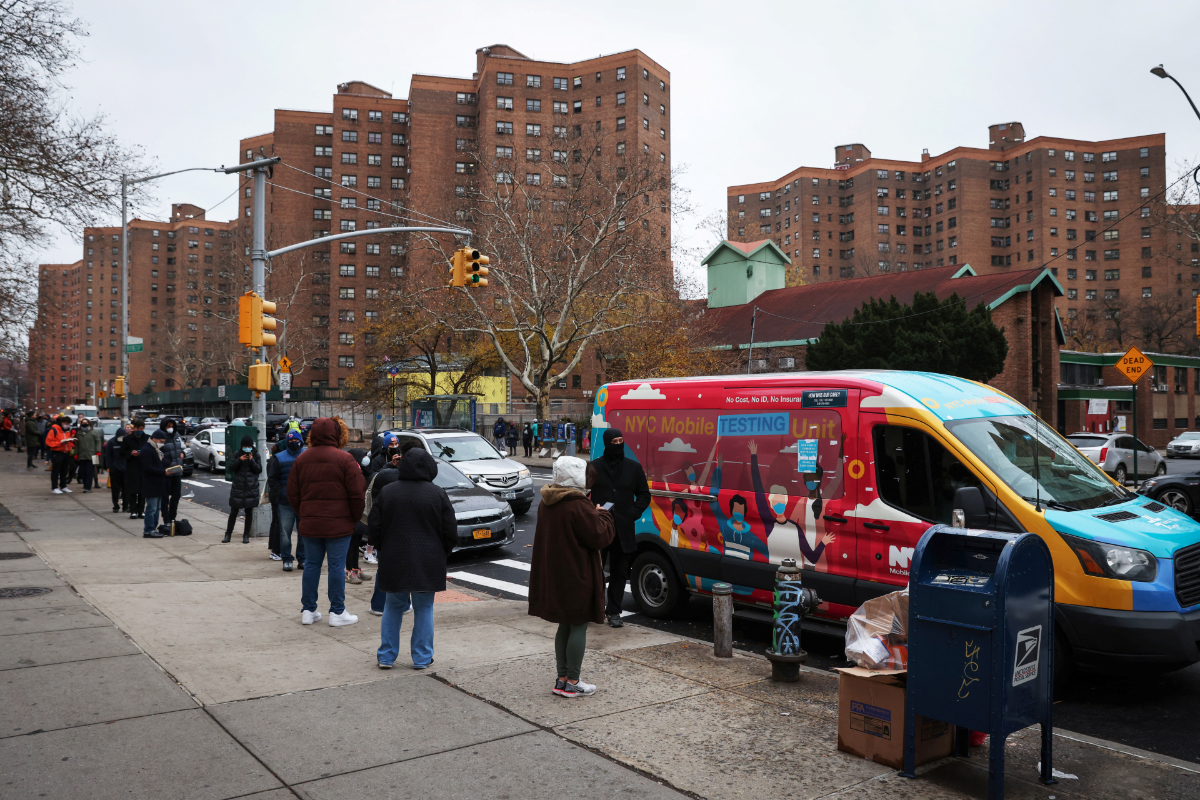
People in the Lower East Side line up on Dec. 18, 2021 at a mobile COVID-19 testing unit as the omicron coronavirus variant continues to spread in Manhattan, New York City. (REUTERS)
Demonstrators march in Barcelona, Spain, on Saturday to oppose the vaccine pass proposal and ongoing government restrictions. (AP Photo/Joan Mateu)
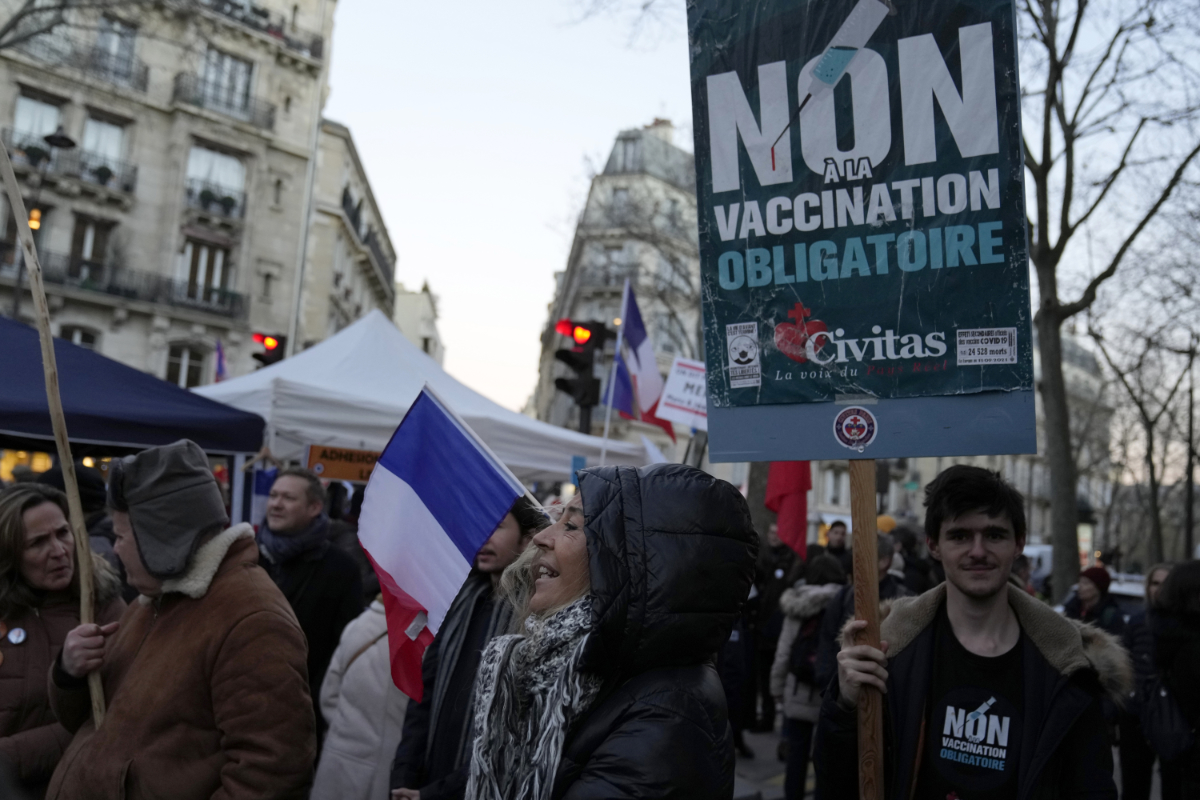
Demonstrators protest against mandatory vaccination rules against COVID-19 in Paris on Saturday, as nations across Europe move to reimpose tougher measures to stem a new wave of infections. (AP)
Main category: 

Emergence of omicron underscores case for global COVID-19 action plan: Experts Europeans reimpose restrictions as omicron sweeps continent


Tear gas fired at opposition supporters in Sudan’s capital

Sun, 2021-12-19 00:57

KHARTOUM: Tear gas was fired at thousands of supporters of Sudan’s opposition Forces for Freedom and Change movement who had gathered in the capital Khartoum on Friday, witnesses said. The source of the tear gas was unclear. The witnesses told Reuters there was no sign of police officers at the scene.
Mass protests erupted following a military coup in October. They have continued following a deal announced on Nov. 21 in which the military reinstated Prime Minister Abdalla Hamdok, who had been under house arrest.
The agreement between Hamdok and the military faces opposition from protesters who previously saw Hamdok as a symbol of resistance to military rule and denounced it as a betrayal.

HIGHLIGHT

Khalid Omar Youssef, minister of Cabinet affairs prior to the coup and prominent opposition figure who was arrested and released after the military took over, was on stage speaking to the crowds when the tear gas was fired.

US Secretary of State Antony Blinken said on Twitter: “Many Sudanese people continue to demand respect for their basic human rights and to voice their enduring aspiration for a democratic Sudan. The US continues to stand with them.”
Khalid Omar Youssef, minister of Cabinet affairs prior to the coup and prominent opposition figure who was arrested and released after the military took over, was on stage speaking to the crowds when the tear gas was fired.
Youssef then tweeted saying that “whether they fire tear gas or bullets on us, they will not silence us … we will defeat the coup and our people will regain their freedom.”
Other leading opposition figures were scheduled to speak. Live footage aired by Sudan’s Congress party following the tear gas firing showed seats haphazardly scattered.

Protesters march during a rally from Khartoum North to Omdurman against military rule following last month's coup, in Khartoum, Sudan. December 13,2021. (REUTERS)
Main category: 
Tags: 

Sudan security forces fire tear gas at anti-coup protestersUN ‘cautiously welcomes’ Sudan accord amid post-coup erosion of trust


Philanthropist covers bills for thousands of poor families in Turkey

Author: 
Sat, 2021-12-18 23:12

ANKARA: Long queues in major cities for cheap bread are not the only sign of the financial pains that Turkish households are experiencing after prices skyrocketed in recent months.

Ilhami Isik, a Kurdish intellectual and writer originally from the southeastern province of Batman, has lent a helping hand to 14,000 families by helping clear around 40,000 bills worth TRY6.1 million ($0.3 million) over the last three years.

“The number of bills keeps growing over years and they come from all over the country, especially from the middle-income and low-income families of Istanbul and southeastern province of Diyarbakir,” Isik told Arab News.

People reach out to him through social media and he shares photos of the bills, requesting philanthropists to come forward and help the poor clear their bills. It is mostly medium-income families and a small number of businessmen who come forward to help.

“Amid rising price of utilities, the bill is not just a bill. It is something that sometimes triggers a divorce, a suicide or causes a child to sleep with an empty stomach. The ability to pay the bill is the main indicator for a family to keep its members alive and healthy for that month,” he said.

Due to the country’s serious economic problems and rising living costs of living in the country, where official inflation rates have reached 21.3 percent, more and more families are calling him for help.  

“Sometimes I’m having trouble to find necessary financial means to pay them, but I’ll keep my project going on. We are receiving at least 30 requests per day. It sometimes reaches 50 bills. Families are tearing apart. Children are facing unbelievable traumas due to poverty. Sometimes a bill that I pay discourages a dad from committing suicide when he sees his child freezing in the house after the electricity or natural gas is cut.”

To some, helping people pay their bills may not sound like a sustainable project because, as the saying goes, if they give a man a fish, they have to feed him for a day, but if they teach a man how to fish, they will feed him for a lifetime.

“But my only concern right now is to keep these people alive,” Isik explains. “Finding them jobs is part of a political mechanism. It is the duty of the public welfare authorities to do that. I just want to make sure that these children keep healthy and happy without being under the stress of financial strains. Sometimes a mother calls me and says that they all slept well the day before because they don’t have to be concerned about their bills. It is my only concern.”

It is mostly women who reach out to Isik, as men will not take the initiative out of shame.

His social responsibility projects began in 2014, when he spontaneously initiated a countrywide campaign dubbed “Let’s Prevent Children From Feeling Cold.” 

The project lasted two years and Isik provided about 84,000 children, including refugees, with new and clean coats. Several well-known Turkish brands sent him truckloads of clothes in the eastern and southeastern provinces.

Sky-high bills have been on the agenda of households for some time. Over the last two years, electricity prices have increased by 47 percent and gas prices by 42 percent. Electricity prices have increased by 21.9 percent so far this year.

Istanbul and Ankara municipalities have launched social solidarity campaigns, such as “Bill Pending,” to help thousands of needy families who are having difficulties in paying their utility bills.

This year, Ankara municipality helped several families to clear their electricity bills. Official sources from the municipality told Arab News that, in 2021, more than 98,000 bills worth TRY4.7 million were paid with contributions from the city’s philanthropists.

Ilhami Isik, a Kurdish intellectual and writer originally from the southeastern province of Batman, has lent a helping hand to 14,000 families. (Twitter: İlhami Işık/@dunya20101)
Main category: 
Tags: 

Saudi philanthropist offers hope to orphans in AfricaMuslim charities receive tens of millions from US philanthropist MacKenzie Scott


Morocco arrests 25 ‘terrorism’ suspects linked to Daesh: security source

Author: 
AFP
ID: 
1639858134875886200
Sat, 2021-12-18 23:13

RABAT: Moroccan security forces arrested 25 people this month on suspicion of supporting Daesh group and planning “terrorist” attacks in the kingdom, a security source told AFP on Saturday.
The arrests took place in several cities on December 8 as part of “ongoing efforts to fight terrorist dangers,” the source said on condition of anonymity.
Some of the suspects have already been referred to the judiciary, the source added.
Moroccan news outlets had reported a nationwide counter-terror operation on December 8 — the largest of its kind in recent years — but official sources had not confirmed the crackdown.
Reports on Saturday said that during the operations, authorities seized weapons including firearms and ammunition, as well as documents on bomb-making and material “glorifying the Daesh group.”
They said investigations revealed the suspects were planning to carry out “specific” terrorist attacks inside Morocco.
Counter-terrorism police said Friday that they had thwarted a suspected Daesh bomb plot and arrested an alleged supporter of the group, in cooperation with US intelligence services.
The security source told AFP the operation had “no connection” to the arrests earlier this month.
On October 6, counter-terrorism police announced the dismantling of a “terror cell” in the northern city of Tangiers and the arrest of five suspects accused of plotting bomb attacks.
Since 2002, Moroccan police say they have dismantled 2,000 “terror cells” and arrested 3,500 people in cases linked to terror, according to figures published in February.

Main category: 

Think tank warns of ‘threat’ of leaving Daesh members in ‘insecure’ Syrian campsA fragile partnership in Iraq tries to prevent Daesh revival


Lebanon imposes curfew for unvaccinated to prevent new holiday outbreak 

Author: 
Sat, 2021-12-18 21:16

BEIRUT: Lebanese security services have imposed a three-week curfew for unvaccinated residents, with fines for those who break it, from 5 p.m. to 6 a.m. until Jan. 9, 2022, amid rising cases across the country. 

The committee that follows up on coronavirus disease preventative measures said it would exclude those “with at least one vaccine dose or a negative PCR test in the last 48 hours and children under 12.”

On Friday, the Ministry of Public Health reported 1,912 new COVID-19 cases, mostly in people between 30 and 39 years old, some of whom had received three vaccine doses. In addition, 14 deaths were recorded.

The ministry said: “We have had 22,168 active cases these last 14 days,” adding only 34 percent of people had received two vaccine doses, with the lowest vaccination rate recorded in the Bekaa region.

Lebanese Red Cross Secretary-General George Kettaneh said that “ambulance teams transport 80 to 100 cases to hospitals every day, while over 1,200 oxygen concentrators have been distributed.”

So far, Lebanon has had 60 cases of the new omicron variant, but Lebanese Health Minister Firass Abiad noted it is “rapidly spreading … two and a half times faster than the delta variant.”

Those who have received three vaccine doses have greater protection against omicron, he added.

Lebanon fears yet another outbreak over the holidays, particularly since the medical sector is exhausted amid shortages in staff, fuel, oxygen, medical supplies and medicines.

Suleiman Haroun, head of the Syndicate of Private Hospital Owners, said: “Hospitals are still able to accommodate patients, but they are of course under a lot of pressure, especially since 80 to 90 percent of COVID-19 beds are occupied.”

Haroun added: “We fear the numbers will rise. The majority of cases currently do not require intensive care, but some patients are staying up to three weeks in the hospital.”

In a bid to avoid an outbreak over the holidays, the committee that follows up on COVID-19 preventative measures imposed a limit of 50 percent capacity at any venue.

In addition, nightclubs, restaurants and hotels will deny entry to those without at least one COVID-19 vaccine dose or a negative PCR test in the past 48 hours.

Meanwhile, UN Secretary-General Antonio Guterres will arrive in Lebanon on Sunday to meet with President Michel Aoun, Parliament Speaker Nabih Berri and Prime Minister Najib Mikati, as well as civil society representatives.

Political observers ruled out the possibility of this affecting the work of the Cabinet, which has been paralyzed since mid-October.

The Canadian Embassy in Lebanon has urged Canadian nationals to “exercise a high degree of caution in Lebanon due to an unpredictable security situation and the risk of terrorist attack.”

The embassy advised people to avoid certain areas, namely the southern suburbs of Beirut, Tripoli, Baalbek-Hermel, all Palestinian camps and areas south of the Litani, “due to the presence of armed groups and the risk of violence from organized crime, kidnappings and threat of terrorist attacks.”

Lebanese security services have imposed a three-week curfew for unvaccinated residents, with fines for those who break it. (Reuters/File Photo)
Main category: 

Jordanian COVID-19 curfews removed from midnightMorocco to extend night curfew to limit COVID-19 surge