Sectarianism is breaking Lebanon, says PM Mikati

Wed, 2021-12-29 01:19

BEIRUT: Officials in Lebanon continue to acquit themselves of all the crises that the Lebanese people are facing, as a result of the economic collapse, political disputes and Hezbollah’s influence on Lebanon’s external decisions.

Following President Michel Aoun’s televised speech to the Lebanese people, where he indirectly criticized Hezbollah and its Shiite ally Parliament Speaker Nabih Berri, Prime Minister Najib Mikati held a press conference on Tuesday.

He said that “interfering in the work of the Cabinet hindered the mission of his salvation government” and that “halting the Cabinet’s session since Oct. 12 constitutes a structural malfunction in the work of the government that cannot be ignored or overlooked.”

Mikati stressed that he does not accept any settlement at the expense of institutions.

“I do not barter the Cabinet’s meetings for any settlement that is not accepted by the Lebanese people and families of the victims of the Beirut port explosion, and the international community.”

He added that he cannot hold anyone responsible for not holding the Cabinet’s sessions “as I am convinced of a disruption in the course of the Beirut port investigation; however, this cannot disrupt the government and stop the reforms.”

Mikati stressed the need to “distance the judiciary from political disputes and maintain its independence to preserve one of the state’s most important pillars,” in response to Hezbollah and the Amal Movement’s insistence on the dismissal of Judge Tarek Bitar from the investigation of the Beirut port explosion.

He said: “When the state stopped acting by the law and became influenced by the sectarian political authority, it started breaking down and lacking the capability to carry out its missions as a body that is trusted to implement policies and strategies.”

Mikati called for a national dialogue to improve Lebanon’s ties with the Arab states, especially in the Gulf. He also urged Lebanese leaders not to interfere in their internal affairs, and called for a return to the “dissociation policy that preserves our home and protects its relations with the international community and the Arab world.”

He said that remediation should be done “within constitutional and legal frameworks,” and stressed the necessity to implement the constitution.

He added that if his resignation is the solution, he will not hesitate to resign if he sees that it will contribute to further damage.

In regard to the president’s team demanding the discharge of Lebanon’s Central Bank Governor Riad Salameh, Mikati said: “We are at a war, and one does not change their officers during a war.”

Political observers said that Aoun’s criticisms of Hezbollah did not bother the party and does not constitute a separation between Hezbollah and Aoun, along with his political team. They also regarded that Aoun’s calls for a national dialogue “will not yield any result under the domination of Hezbollah and its weapons.”

Member of the Democratic Gathering bloc, MP Bilal Abdullah, described the speeches to the Lebanese people as “a waste of time.” However, he told Arab News that Mikati was more realistic in tackling the crises and how to address them.

Abdullah noted that “Mikati emphasized that the internal dispute with Hezbollah could be discussed,” and that “there is a national consensus on Hezbollah as a party to face Israel, but Lebanon cannot tolerate bearing the burdens of what it (the party) is doing abroad.”

Former MP Fadi Karam, the secretary of the Strong Republic bloc, described Aoun’s speech as “the announcement of failure.” He told Arab News that the speech included important headlines such as the defensive strategy, changing the system and demanding administrative and financial decentralization.

Meanwhile, an explosion rocked the outskirts of Janta on Tuesday. The town is located in the east of Baalbak, near the mountainous Syrian border.

The cause of the explosion was unclear, and according to unofficial, unconfirmed information that was not issued by Hezbollah: “What happened is either an Israeli strike, a disassembly of a rocket or detonation of old ammunition in one of the military outposts affiliated with Hezbollah in the area.”

Main category: 

Explosion in outskirts of Lebanon’s Bekaa Valley — al Jadeed TVLebanon’s president delivers veiled criticism of Hezbollah during televised speech

2021 Year in Review: When climate change got real and the world took notice 

Tue, 2021-12-28 22:19

DUBAI: 2021 could go down in history as the that year when climate change made the transition from being mainly the concern of youthful activists to becoming a real and present threat for all of us, and especially for the Middle East.

The climate change agenda accelerated throughout the year, fanned by a background of raging forest fires in, for example, Australia and Turkey, extreme and fatal summer heat on the US Pacific coast, deadly floods in central Europe and South Asia, and rampaging tornadoes in the US Midwest.


Ginny Watts (C) hugs her friend as they help cleaning her destroyed home in Dawson Springs, Kentucky, on Dec. 14, 2021, four days after tornadoes hit the area. (AFP)

Each new climate disaster was received as proof, if any more were needed, of the seriousness of the climate situation; each fresh extreme event chipped away at the convictions of the deniers.

Perhaps no one better illustrates the changing sentiment on climate change better than Mark Carney. A former executive at giant US bank Goldman Sachs and governor of the Bank of England, Carney is now a UN special envoy on finance and climate change.


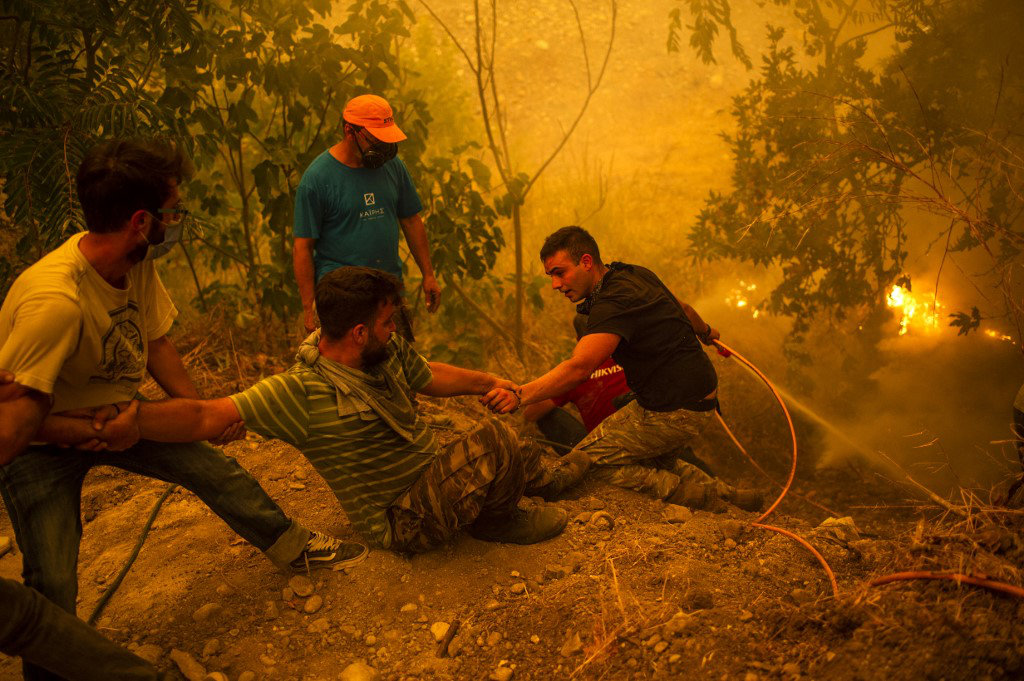
Local residents fight the wildfire in the village of Gouves on Evia (Euboea) island on August 8, 2021. (AFP)

At COP26 in Glasgow in November, he was received as a hero by environmentalists. He declared: “Finance is becoming a window through which ambitious climate action can deliver a sustainable future that people all over the world are demanding.”

And it is not just Carney. Politicians of all persuasions, multi-billion-dollar investment fund executives, and even the bosses and owners of the global oil industry — the producers of the “fossil fuels” the activists love to hate — are increasingly vocal and assertive in their demands that “something” has to be done about global warming.

One key event of 2021 was the publication in August of the latest Intergovernmental Panel on Climate Change report, which — in language verging on the apocalyptic — set the tone for much of the debate for the rest of the year.


“Many of the changes observed in the climate are unprecedented in thousands, if not hundreds of thousands of years, and some of the changes already set in motion — such as continued sea level rise — are irreversible over hundreds to thousands of years,” the report said.

The authors had no doubt as to the reason for these changes.

“Emissions of greenhouse gases from human activities are responsible for approximately 1.1 degrees Celsius of warming since 1850-1900. Averaged over the next 20 years, global temperature is expected to reach or exceed 1.5 degrees Celsius of warming,” it concluded.

The Paris Agreement of 2015 set a goal of “less than 2 degrees Celsius” by 2050 if the planet were to have any chance of avoiding catastrophic warming. Now the experts have said that there was little chance that could be met.

That presents a unique challenge for the hydrocarbon-producing countries of the Arabian Gulf. Oil and gas production has been responsible for the huge advances in economic and lifestyle well-being in the region, but at the same time the abundance of hydrocarbon fuels has led to inefficient use of these fuels.


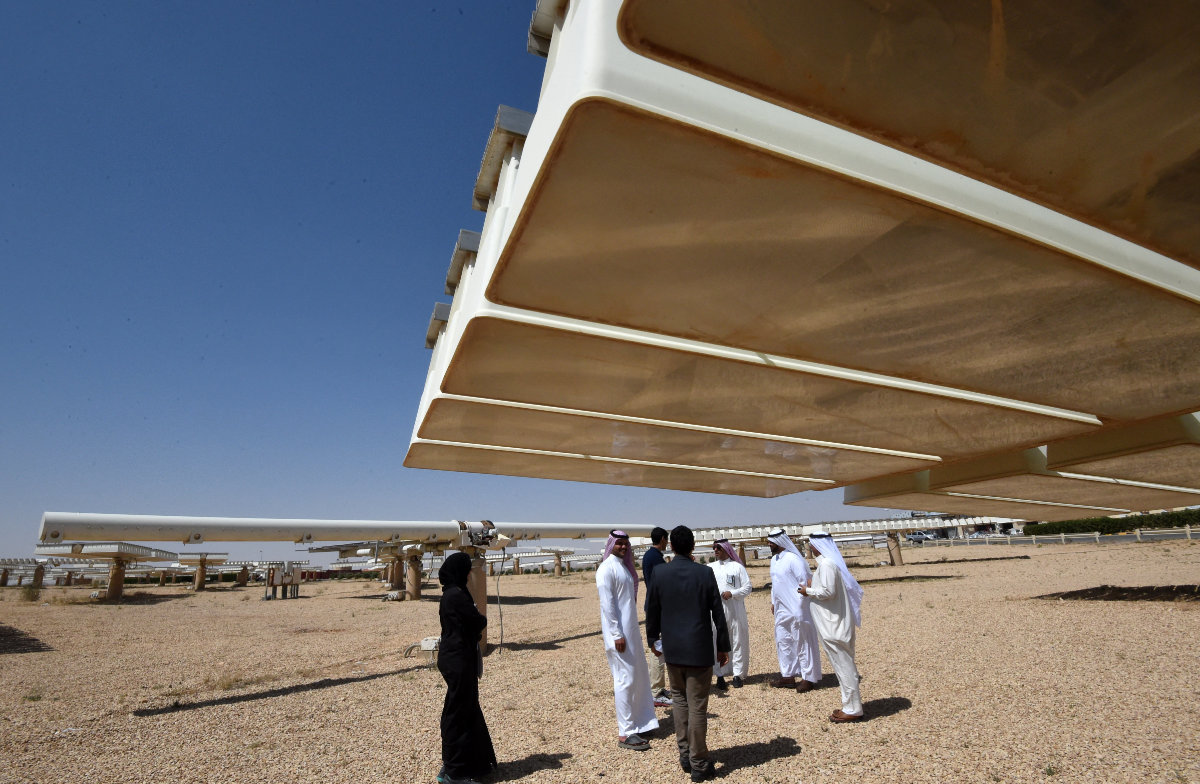
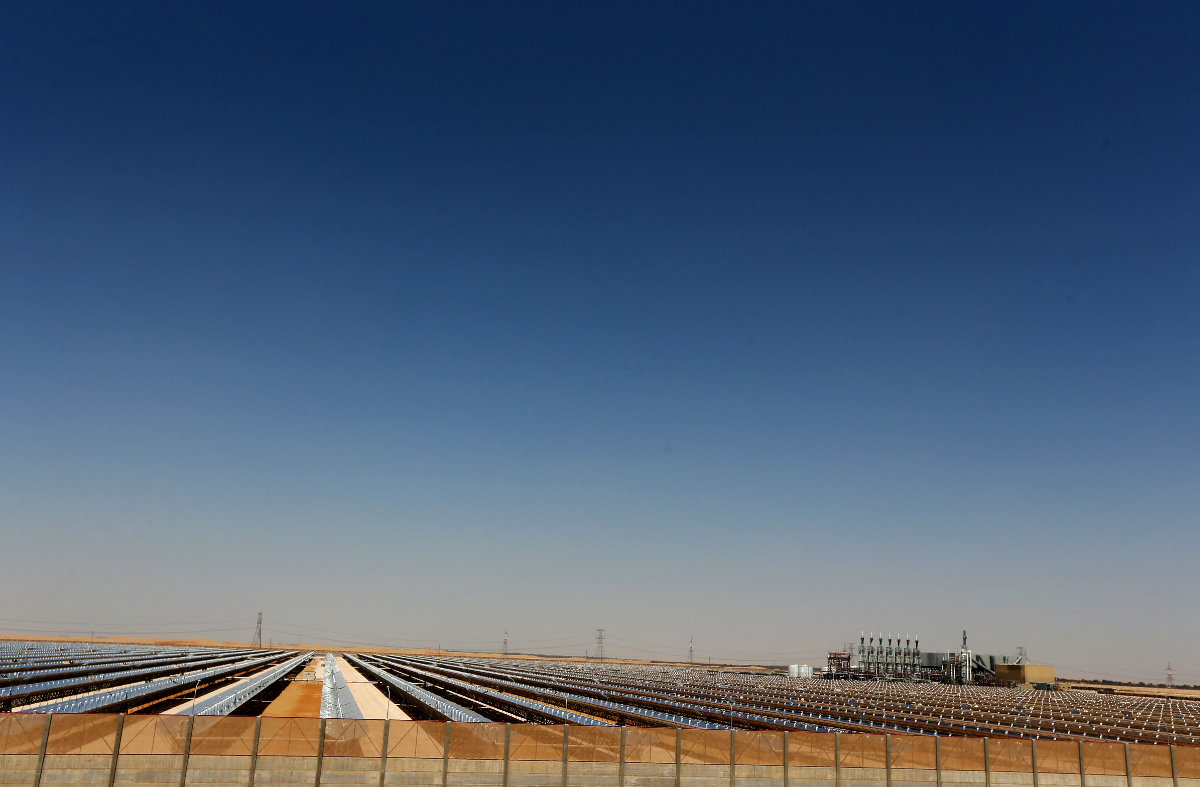
A general view shows the Shams 1, Concentrated Solar power (CSP) plant, in al-Gharibiyah district on the outskirts of Abu Dhabi, UAE. (AFP)

Gulf countries — which in the past had no second thoughts about burning oil to generate electricity — have among the highest per capita carbon footprints in the world.

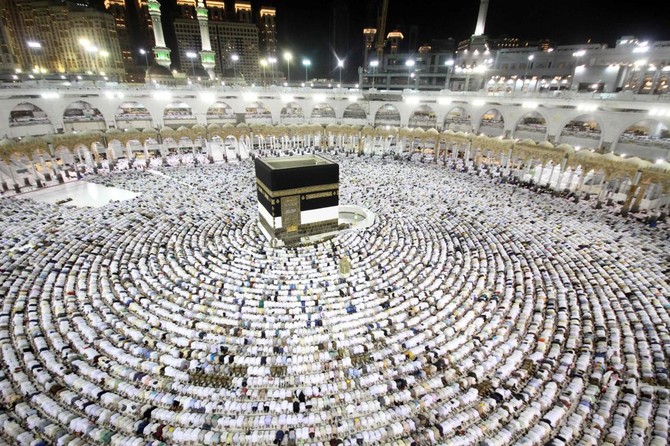
The possible repercussions were highlighted in some new research by the Saudi-based energy think tank Aeon Collective. Global warming in the Gulf could lead to extreme and fatal heatwaves, a jump in atmospheric pollution and threats to public health from previously unknown diseases. It could even threaten the annual Hajj pilgrimage to Makkah, one of the fastest-warming cities in the Kingdom.


An extreme climate change could even threaten the annual Hajj pilgrimage to Makkah, one of the fastest-warming cities in the Kingdom. (SPA file photo)

Fortunately, regional policymakers appear to have developed an enhanced awareness of the specific dangers to the region’s economy and public health from global warming.

For one thing, the Vision 2030 strategy is aimed specifically at reducing Saudi Arabia’s dependence on fossil fuels — alongside similar strategies in the UAE and other GCC states.

But the Kingdom went a significant step further in October with the launch of two major initiatives designed to show that it was playing a leadership role in the global campaign against climate change.


A view of the Saudi capital, Riyadh. (AN file photo)

When Crown Prince Mohammed Bin Salman announced the Saudi Green and Middle East Green Initiatives at a special event in Riyadh, it was a landmark event in the region. Not only did it contain a goal for Saudi Arabia to reach net-zero greenhouse gas emissions by 2060, but it also stepped up the amount of harmful emissions that would be reduced under the nationally determined contributions schedule agreed with the UN and climate bodies.

In addition, the Kingdom pledged to eliminate oil from the domestic power generation cycle completely by 2030, replacing it with cleaner gas and renewables. Multi-billion-dollar investment programs to plant trees in the Kingdom were also launched, among other environmentally sound strategies.


A general view shows the solar plant in Uyayna, north of Riyadh, Saudi Arabia, on March 29, 2018. (AFP)

Prince Abdulaziz Bin Salman, the Kingdom’s energy minister, underlined the seriousness of the campaign against global warming. “It is most daunting challenge that we are faced with. We have, I think, the most humane initiative that we could ever come up with, and we’re willing to enlarge it if everybody wants to enlarge it. I’m sure that people have noticed that we have been repositioning ourselves,” he said at the Future Investment Initiative in Riyadh in October.

These developments in the Middle East set the stage for the decisive climate change event of the year: COP26 in Glasgow, the annual gathering of energy policymakers, experts and activists. Expectations were high that the Glasgow gathering could lead an advance against climate change of comparable significance to the Paris meeting six years earlier.

Two weeks of intense negotiations eventually produced what became know as the Glasgow Climate Pact. This fell short of a commitment to a hard 1.5 degrees Celsius target by 2050 and resisted some of the wilder calls from the extreme environmentalists for an end to fossil fuel investment and production, but had enough for everybody to claim COP26 as a success.

“The Pact charts a course for the world to deliver on the promises made in Paris,” was the verdict of Alok Sharma, the UK president of COP26.

Some were disappointed that there was no commitment to “phasing out” coal as a fuel source, but — with the Glasgow event taking place in the middle of an energy crisis in which every ton of hydrocarbon was needed — the general feeling was that it was good enough, especially in view of the coal-burning necessity in places like India and China.

A few days after the COP26 delegates had departed, a rather different energy forum convened in the UAE capital, Abu Dhabi. ADIPEC is one of the biggest oil and gas gatherings in the world, but is definitely an industry event. There were no parties of Amazonian natives among the delegates there.

However, attendees noted a distinct empathy between COP26 and ADIPEC21. Badar Chaudry, senior vice president for the energy sector at UAE bank Mashreq, said: “There was enough overlap in the agendas and outcomes of both events to reach the conclusion that there is a consensus that climate change is the big issue facing the world today, and that the hydrocarbon industry has recognized that and is stepping up to play its part.”


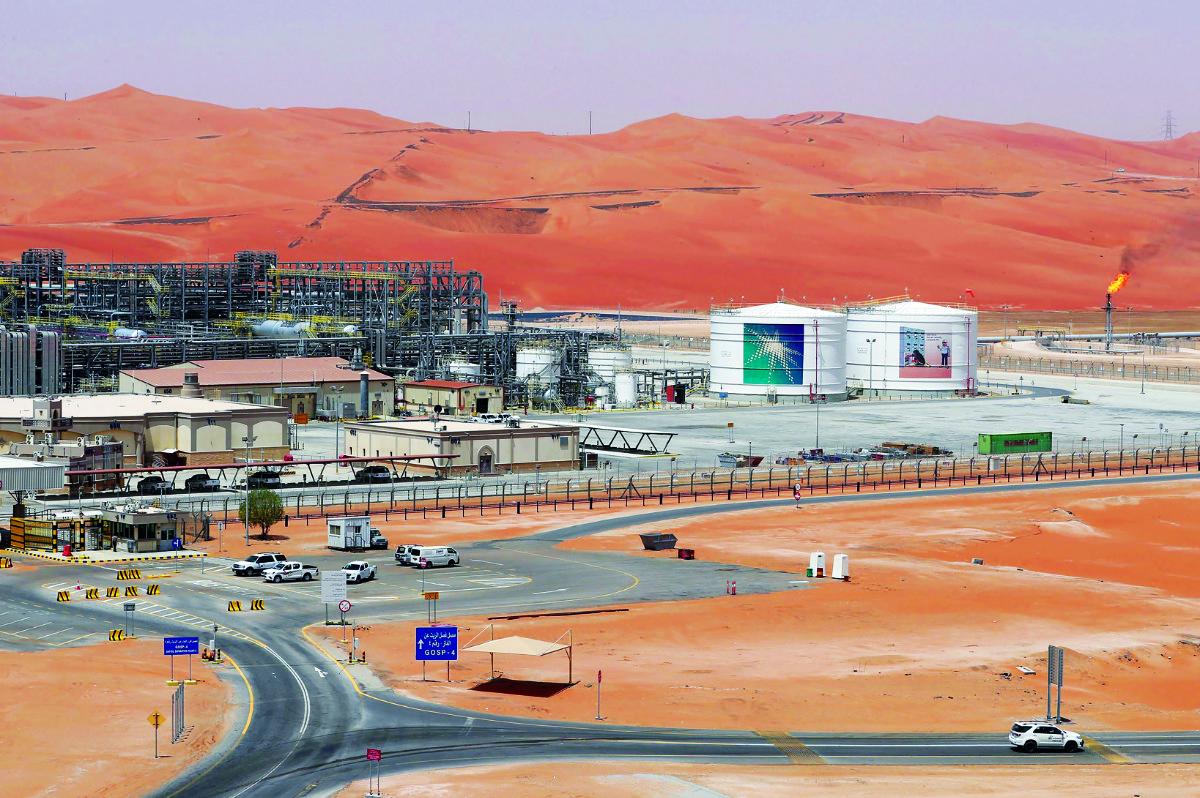
Saudi Aramco’s Shaybah plant in the Eastern Province of Saudi Arabia. (Supplied)

For the Middle East, the climate change challenge gets very real indeed from now on. COP27 will take place next year in Cairo, and COP28 is earmarked for the UAE in 2023.

The two biggest oil producers in the region — Saudi Arabia and the UAE — are set to increase oil production in the years ahead to fuel economic growth and take advantage of their low production costs at a time of rising prices.

How they can square this strategy with the self-declared aim of reducing emissions will be a key focus for the next couple of years.

Main category: 

At UN, a call to recognize climate change causes conflictCircular carbon economy holds promise in battle against global warmingClimate disasters cost the world $170bn in 2021


Iran has not shown enough urgency in nuclear talks: US State Department

Tue, 2021-12-28 22:26

WASHINGTON D.C.: The US State Department on Tuesday said Washington thinks it is too soon to say how substantive any progress in talks to salvage the 2015 Iran nuclear deal in Vienna might have been after the indirect talks resumed on Monday.

State Department spokesman Ned Price told reporters the United States has not yet seen sufficient urgency demonstrated by Iran, adding that Washington needs to see the parties in the talks constructively and steadfastly seek to build on progress.

Deputy Secretary General of the European External Action Service (EEAS) Enrique Mora and Iran's chief nuclear negotiator Ali Bagheri Kani and delegations wait for the start of a meeting of the JCPOA Joint Commission in Vienna. (Reuters)
Main category: 

Israel open to ‘good’ Iran nuclear deal, but wants tougher Vienna termsIran demands ‘cash for oil’ as nuclear talks resume


Rule of law must return to Tunisia, says Italian foreign minister

Tue, 2021-12-28 21:08

ROME: Italy’s foreign minister said Tuesday that his country wanted a “full re-establishment of the rule of law in Tunisia.”

Luigi Di Maio was speaking after a meeting with Tunisian President Kais Saied in Tunis. He also met Prime Minister Najla Bouden and Foreign Minister Othman Jerandi.

He said: “Tunisia is a privileged partner of Italy also thanks to the presence of about 800 Italian companies here. I hope that this partnership, which is important for both countries, can be further strengthened.”

He said his meetings were very fruitful, strengthening a dialogue that had “never been interrupted” with Tunisia. 

“I confirmed that Italy is looking with great interest at the beginning of a concrete path of political and constitutional reforms that will hopefully bring new legislative elections in Tunisia.

“This path has to continue toward the full re-establishment of the rule of law and democratic normality and must be carried out with an inclusive, transparent and substantial dialogue involving all the political and social components of the country, ensuring full respect for rights and promoting stability and economic growth.”

Sources in the Italian Ministry of Foreign Affairs told Arab News that the issue of migrants was covered, especially since the start of political turmoil in Tunisia in July. 

There has been a considerable increase in migrants arriving on Italian soil, mainly landing on the tiny island of Lampedusa, where the reception facility is permanently overbooked.

Luigi Di Maio was speaking after a meeting with Tunisian President Kais Saied in Tunis. (Reuters/File Photo)
Main category: 

Tunisia court sentences ex-president Marzouki to prison in absentiaTunisia to cut subsidies, raise taxes and freeze pay in 2022


Sudan officials say defunct mine collapses, kills 38 people

Tue, 2021-12-28 20:04

CAIRO: Sudanese authorities said at least 38 people were killed Tuesday when a defunct gold mine collapsed in West Kordofan province.
The country’s state-run mining company said in a statement the collapse of the closed, non-functioning mine took place in the village of Fuja 700 kilometers (435 miles) south of the capital of Khartoum. It said there were also injuries without giving a specific tally.
Local media reported that several shafts collapsed at the Darsaya mine, and that besides the dead at least eight injured people were taken to a local hospital.
The mining company posted images on Facebook showing villagers gathering at the site as at least two dredgers worked to find possible survivors and bodies.
Other images showed people preparing traditional graves to bury the dead.
The company said the mine was not functional but local miners returned to work it after security forces guarding the site left the area. It did not say when the mine stopped working.
The Sudanese Mineral Resources Limited Company in its statement called for troops to guard the site to prevent unregulated mining. It also called on local communities to help it resume its mining activities in the area, which were suspended in 2019. It did not elaborate.
Sudan is a major gold producer with numerous mines scattered across the country. In 2020, the East African nation produced 36.6 tons, the second most in the continent, according to official numbers.
The transitional government has begun regulating the industry in the past two years amid allegations of gold smuggling.
Collapses are common in Sudan’s gold mines, where safety standards are not widely in effect.

Main category: 
Tags: 

Saudi Arabia keen on Sudan’s stability and unity: Foreign ministerSudan to see $171m investment funds in 2022