UAE announces 2022-2023 commitments on first day at UN Security Council
Author:
Thu, 2022-01-06 01:48
LONDON: The UAE on Wednesday announced its commitments for its second term on the UN Security Council for the next two years, a day after it formally took up the post as a non-permanent member of the world body.
The UAE’s Stronger United commitments include working toward securing peace, advancing inclusion, building resilience, and spurring innovation, and will guide the UAE’s engagement with the Security Council and UN member states throughout its term, Emirates News Agency (WAM) reported.
The UAE, along with Albania, Brazil, Gabon and Ghana, was elected by the UN General Assembly in June to serve as non-permanent members of the 15-member council for the 2022-2023 term.
“The UAE’s conduct on the UN Security Council will reflect who we are as a country and a people — tolerant, inclusive, and bound by the belief that we are stronger united,” said Lana Nusseibeh, the Emirates’ permanent representative to the UN.
ICYMI: Watch Amb Nusseibeh speak at today’s flag installation ceremony for the newly elected members of the @UN Security Council.
“Diplomacy is about dialogue, seeking out diverse views, and charting a path toward consensus,” she said, adding: “We will seek a convergence of views and a unified council voice so that its decisions are met with the broadest possible support.”
Nusseibeh said she is looking forward to working with the council and the wider UN membership “to build bridges, strengthen multilateralism, and deliver on the council’s mandate.”
The UAE will represent Arab countries at the Security Council and its commitment also includes strengthening cooperation with regional organizations, such as the Arab League and the African Union.
“The UAE has also promised to champion cross-cutting issues on the Security Council, including women, peace and security, climate change, and the use of technology to promote peace (and) will also address a range of other issues including counterterrorism and COVID-19 response and recovery,” the statement said.
During its two-year term, the UAE will serve as president of the Security Council twice, in March and June next year, where it will set the agenda and chair its standing committees.
Egypt, UAE discuss bilateral ties, regional developmentsUN says ‘following with concern’ Houthi seizure of UAE-flagged ship, urges restraint
Yemen condemns Houthi burning of dozens of homes in Hodeidah
Wed, 2022-01-05 21:11
LONDON: The Yemeni government on Wednesday strongly condemned and denounced the burning of dozens of homes by the Houthi militia in several areas of the port city of Hodeidah.
Yemeni Information Minister Moammar Al-Eryani said the Iran-backed group set fire to more than 40 homes in the villages of Markouda — which also houses a displacement camp — Al-Shujaira and Al-Nakhilah in the south of Hodeidah, which is controlled by the Houthi.
“The destruction of civilians’ homes by the terrorist Houthi militia in the villages south of the city of Hodeidah is an extension of its crime of destroying thousands of homes of state leaders, sheikhs, politicians, media professionals and military personnel who reject its coup in the various governorates under its control, and forcibly displacing their families, in flagrant violation of international law,” Al-Eryani said in tweet.
1- We strongly condemn the crime of burning more than (40) houses of citizens in the villages of (Al-Taif, Markoudha, Al-Shujaira, Al-Nakhila) located southern of Hodeidah city. pic.twitter.com/hZf9b7clWa
Amsterdam-based human rights organization Rights Radar condemned the burning of the homes, saying Monday it amounted to a “humanitarian disaster that doubled the suffering of the people of those areas.”
It said fires destroyed 26 houses in the village of Taif, seven in Markouda, five in Al-Shujaira and four in Al-Nakhilah, most of which belonged to displaced citizens who had been fleeing the fighting since the conflict began in 2014.
Rights Radar also said local sources accused members of the Houthi militia of deliberately setting fire to the homes.
“We demand the United Nations and its mission to support the Hodeidah Agreement and human rights organizations clearly and explicitly condemn this heinous terrorist crime,” Al-Eryani said.
He also called on the international community to work on classifying the Houthi militia as a terrorist organization, and to prosecute its leaders in international courts as war criminals.
Yemen army makes new gains in Shabwa provinceSaudi Arabia’s KSrelief distributes over 85 tons of food baskets to alleviate suffering of Yemenis
How Iran’s Ahwazi Arabs, betrayed, fell victim to oppression that continues to this day
Wed, 2022-01-05 22:11
LONDON: In November 1914, Sheikh Khazaal, the last ruler of the autonomous Arab state of Arabistan, could have been forgiven for thinking the troubles of his people were over.
Oil had been discovered on his lands, promising to transform the fortunes of the Ahwazi people, and Britain stood ready to guarantee their right to autonomy. In reality, the troubles of the Ahwazi were just beginning.
Within a decade, Sheikh Khazaal was under arrest in Tehran, the name Arabistan had been wiped from the map, and the Ahwazi Arabs of Iran had fallen victim to a brutal oppression that continues to this day.
For centuries, Arab tribes had ruled a large tract of land in today’s western Iran. Al-Ahwaz, as their descendants know it today, extended north over 600 km along the east bank of the Shatt Al-Arab, and down the entire eastern littoral of the Gulf, as far south as the Strait of Hormuz.
However, the independent status of Arabistan was struck a blow in 1848 by the geopolitical maneuverings of its powerful neighbors. With the Treaty of Erzurum, the Ottoman empire agreed to recognize “the full sovereign rights of the Persian government” to Arabistan. The Arab tribes whose lands were so casually signed away were not consulted.
Within 10 years, however, Sheikh Khazaal’s predecessor, Sheikh Jabir, had found a powerful friend — the British Empire.
Trade in the Gulf was vital for Britain’s interests in India and Sheikh Jabir was seen as a valuable ally, especially after his support for the British during the short Anglo-Persian war of 1856-1857 in which Britain repelled Tehran’s attempts to seize Herat in neighboring Afghanistan.
Keen to maintain Afghanistan as a buffer, the British had backed the emir of Herat’s independence. Now, it seemed, Queen Victoria’s government meant to do the same for the sheikh of Arabistan.
The British opened a vice-consulate at Mohammerah in 1888. By 1897, by which time Sheikh Khazaal had become the ruler of what the British referred to as the Sheikhdom of Mohammerah, imperial Britain was heavily invested in Arabistan.
As a British Foreign Office summary of dealings with Sheikh Khazaal put it, “an essential part of British policy in the Gulf was the establishment of good relations and the conclusion of treaties with the various Arab rulers, and the sheikhs of Mohammerah, controlling territory at the head of the Gulf, thus came very prominently into the general scheme.”
With the might of the British at his back, Sheikh Khazaal appeared to be steering Arabistan toward a bright, independent future.
But, in 1903, the Shah of Iran, Muzaffar Al-Din, formally recognized the lands as his in perpetuity. Then, in 1908, vast reserves of oil were found on the sheikh’s land at Masjid-i-Sulaiman.
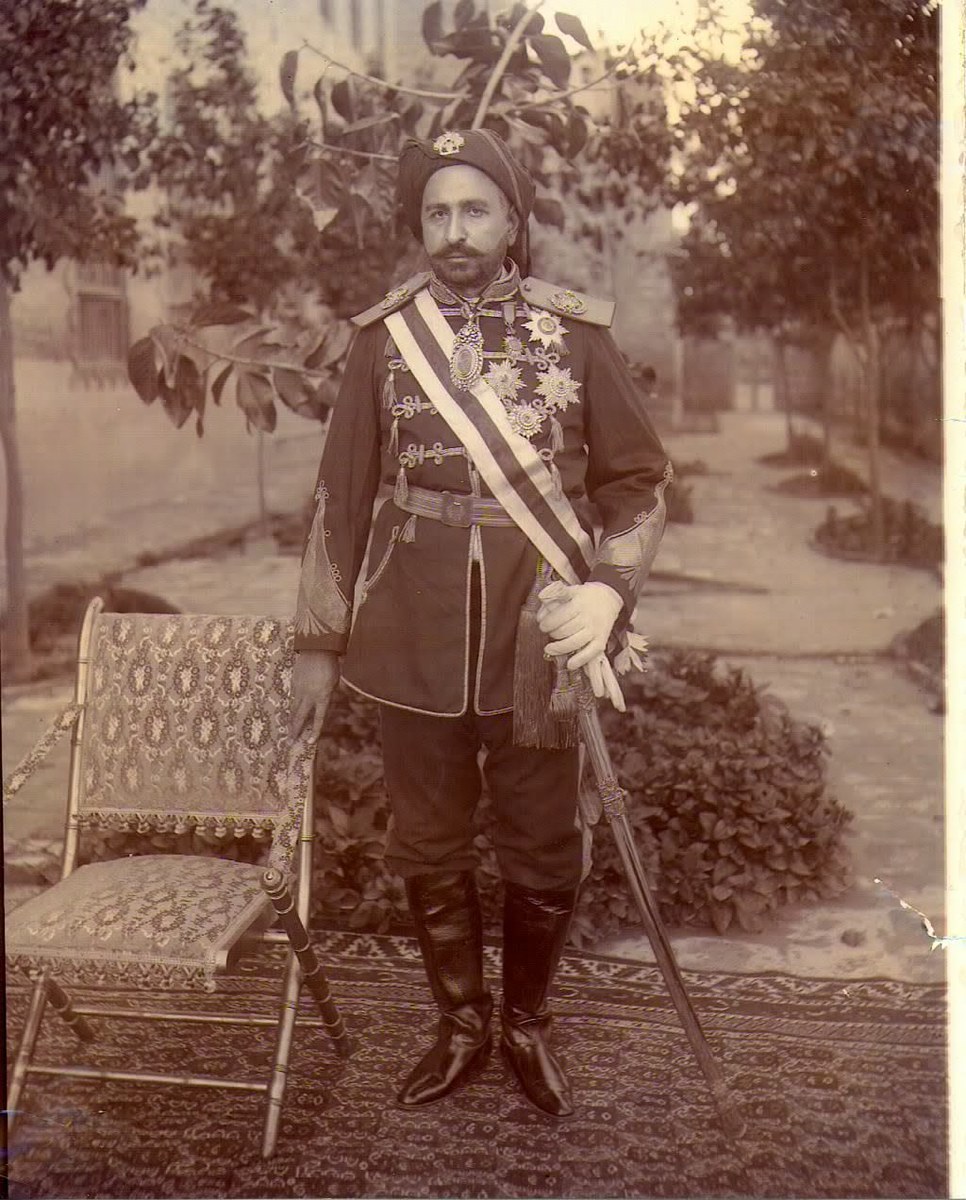
By 1897, by which time Sheikh Khazaal (pictured) had become the ruler of what the British referred to as the Sheikhdom of Mohammerah, imperial Britain was heavily invested in Arabistan. (Supplied)
In 1910, after a minor clash between Arabistan and Ottoman forces on the Shatt Al-Arab, Britain sent a warship to Mohammerah, “to counteract a certain amount of loss of prestige suffered by the sheikh and also to make a demonstration in face of the growth of Turkish ambitions in the Arabian Gulf area.”
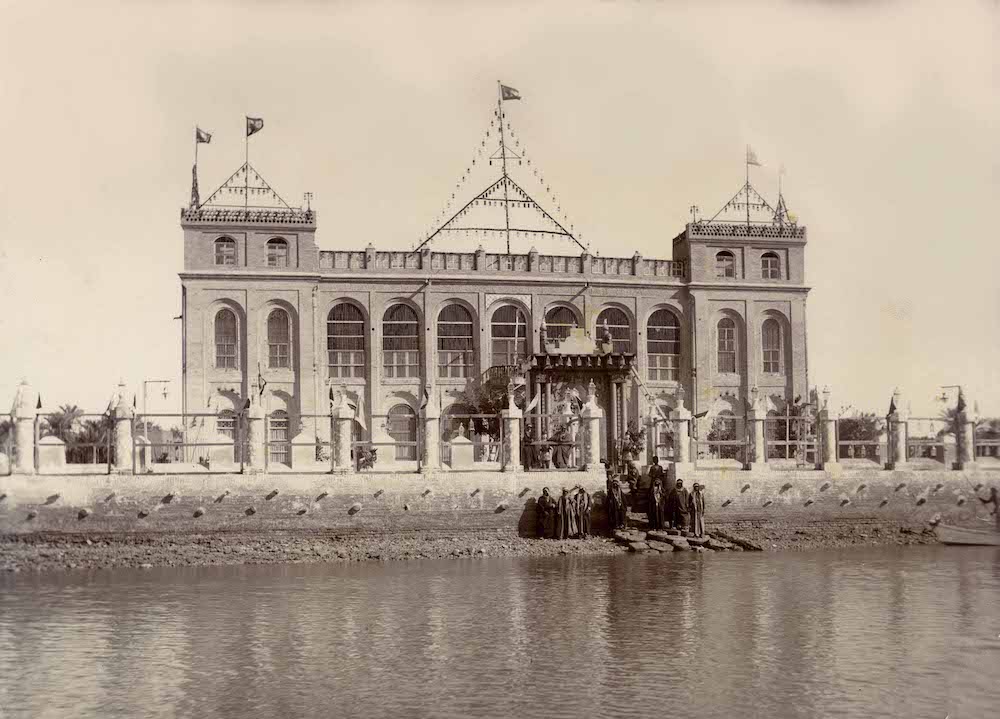
On board was Sir Percy Cox, the British political resident in the Gulf. In a ceremony at the Palace of Fallahiyah on Oct. 15, 1910, he presented the sheikh with reassurances of Britain’s steadfast support, and the insignia and title of a Knight Commander of the Order of the Indian Empire.
In 1914, in a letter from Sir Percy, the sheikh had in his hand what amounted to a pledge by the greatest imperial power of the time to preserve his autonomy and protect Arabistan from the Persian government.
In the letter, dated Nov. 22, 1914, the British envoy wrote that he was now authorized “to assure your excellency personally that whatever change may take place in the form of the government of Persia, His Majesty’s government will be prepared to afford you the support necessary for obtaining a satisfactory solution, both to yourself and to us, in the event of any encroachment by the Persian government on your jurisdiction and recognized rights, or on your property in Persia.”
In fact, all of Britain’s assurances would prove worthless and, just 10 years later, Arabistan’s hopes of independence would be shattered.
The problem was oil. The Arabs had it, the Persians wanted it. And when it came to the crunch, the British, despite all their promises of support, chose to back the Persians.
Britain’s change of heart was triggered by the Russian revolution of 1917, after which it became clear that the Bolsheviks had designs on Persia. In 1921, fearing that the failing Persian Qajar dynasty might side with Moscow, Britain conspired with Reza Khan, the leader of Persia’s Cossack Brigade, to stage a coup.
Reza Khan, as a British report of 1946 would later concede, “was ultimately personally responsible for the sheikh’s complete downfall.”
In 1922, Reza Khan threatened to invade Arabistan, which he now regarded as the Persian province of Khuzestan. His motive, as US historian Chelsi Mueller concluded in her 2020 book “The Origins of the Arab-Iranian Conflict,” was clear.
In a ceremony at the Palace of Fallahiyah on Oct. 15, 1910, he presented the sheikh with reassurances of Britain’s steadfast support, and the insignia and title of a Knight Commander of the Order of the Indian Empire. (Supplied)
“He eyed Arabistan not only because it was the only remaining province that had not yet been penetrated by the authority of central government but also because he had come to appreciate the potential of Arabistan’s oil industry to provide much-needed revenues,” Mueller wrote.
Sheikh Khazaal asked for Britain’s protection, invoking the many assurances he had been given. Instead, he was brushed off, and reminded of his “obligations to the Persian government.”
Time was running out for the Arabs. In a despatch sent to London on Sept. 4, 1922, Sir Percy Loraine, British envoy to Iran, wrote “it would be preferable to deal with a strong central authority rather than with a number of local rulers” in Persia. This, he added, “would involve a loosening of our relations with such local rulers.”
In August 1924, the Persian government informed Sheikh Khazaal that the pledge of autonomy he had won from Muzaffar Al-Din in 1903 was no longer valid. The sheikh appealed to the British for help, but was again rebuffed.
Reza Khan demanded the sheikh’s unconditional surrender. It was, the British concluded, “clear that the old regime had come to an end and that Reza Khan, having established a stranglehold over Khuzestan, would be unlikely ever voluntarily to relinquish it.”
The British government was “now in an embarrassing position” because of “the services which the sheikh had rendered them in the past.” Nevertheless, for fear of Russian incursion in Persia, Britain had now decided firmly to support the central government in Tehran.
The Ahwazi were on their own.
On April 18, 1925, Sheikh Khazaal and his son, Abdul Hamid, were arrested and taken to Tehran, where the last ruler of Arabistan would spend the remaining 11 years of his life under house arrest. The name “Arabistan” was expunged from history and the territories of the Ahwaz finally absorbed into Persian provinces.
Khazaal’s last days were spent in futile negotiations with Tehran, marked, the British noted, by a series of “gross breaches of faith on the part of the central government, which had obviously no intention of carrying out the promises given to the sheikh.”
The Persians, concluded the British, “were obviously merely waiting for the sheikh to die.” That wait ended during the night of May 24, 1936.
In the almost 100 years since the Ahwazi people lost their autonomy, they have experienced persecution and cultural oppression in almost every walk of life. Dams divert water from the Karun and other rivers for the benefit of Persian provinces of Iran, Arabic is banned in schools, while the names of towns and villages have long been Persianized. On world maps, the historic Arab port of Mohammerah became Khorramshahr.
Protests are met with violent repression. Countless citizens working to keep the flame of Arab culture alive have been arrested, disappeared, tortured, executed or gunned down at checkpoints.
Many Ahwazi who sought sanctuary overseas are working to bring the plight of the Ahwazi to the attention of the world. Even in exile, however, they are not safe.
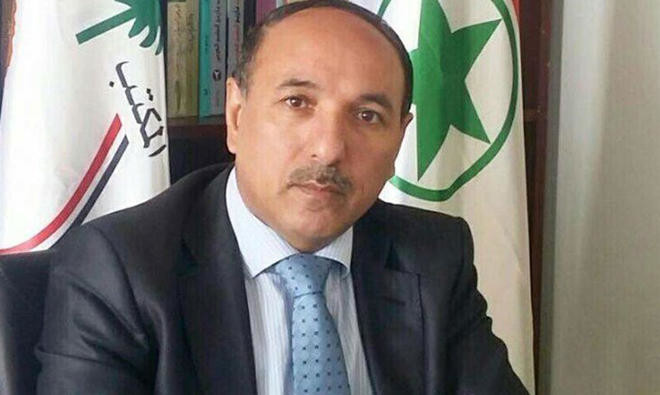
Ahmad Mola Nissi, one of the founders of the Arab Struggle Movement for the Liberation of Ahwaz, fled Iran with his wife and children and sought asylum in the Netherlands in 2005. (Supplied)
In 2005, Ahmad Mola Nissi, one of the founders of the Arab Struggle Movement for the Liberation of Ahwaz, fled Iran with his wife and children and sought asylum in the Netherlands. On Nov. 8, 2017, he was shot dead outside his home in the Hague by an unknown assassin.
In June 2005, Karim Abdian, director of a Virginia-based NGO, the Ahwaz Education and Human Rights Foundation, appealed to the UN Sub-Commission on the Promotion and Protection of Human Rights.
The Ahwazi, he said, had been subjected to “political, cultural, social and economic subjugation, and are treated as second and third-class citizens,” both by the Iranian monarchy in the past and by the current clerical regime. Nevertheless, they still had “faith in the international community’s ability to present a just and a viable solution to resolve this conflict peacefully.”
Sixteen years later, Abdian despairs of seeing any improvement in the position of his people. “I don’t see any way out currently,” he told Arab News, though he dreams of self-determination for the Ahwazi in a federalist Iran.
In the meantime, “as an Ahwazi Arab, you cannot even give your child an Arabic name. So, this nation, which owns the land that currently produces 80 percent of the oil, 65 percent of the gas and 35 percent of the water of Iran, lives in abject poverty.”
Iran must disclose fate and location of hundreds of Ahwazi Arab prisoners: Amnesty InternationalSweden jails man for spying on Ahwazi community for Iran
UN says ‘following with concern’ Houthi seizure of UAE-flagged ship, urges restraint
Wed, 2022-01-05 20:28
NEW YORK: The UN said on Wednesday that it is “following with concern” reports that a UAE-flagged cargo ship had been seized by the Houthi militia.
“While the circumstances around the incident remain unclear, we are following with concern the reports of the seizure by Houthis of a vessel flying the flag of the UAE in what the Houthis have described as ‘Yemeni waters,’’’ the spokesperson for the UN Secretary-General Stephane Dujarric said.
Dujarric called on all countries in the region to exercise restraint and and “refrain from taking any escalatory action.”
He continued: “We reaffirm the need to respect the rights and obligations related to maritime navigation in accordance with international law.”
He also urged all Yemeni parties to engage with the UN’s Yemen envoy Hans Grundberg in order “to advance the political process to reach a comprehensive and negotiated settlement to end the conflict in the country.”
UAE-flagged Rawabi was hijacked off the Yemeni port city of Hodeidah by armed Houthis on Sunday, the Arab coalition said on Monday.
It had been transporting medical equipment from the remote Yemeni island of Socotra in the Arabian Sea to the Saudi port of Jazan, the coalition added.
Houthis suffer fresh blows in Shabwa as government forces capture military base
US-led coalition comes under fire in Iraq and Syria
Wed, 2022-01-05 20:22
BAGHDAD: Bases used by the US-led coalition fighting the Daesh group came under fire Wednesday in Iraq and Syria but without causing any casualties, officials said, the latest of several attacks.
Attacks targeting installations hosting coalition forces have come as Tehran and its allies across the Middle East held emotional commemorations marking the second anniversary on Monday of the assassination of Iranian commander General Qasem Soleimani and his Iraqi lieutenant in a US drone strike at Baghdad airport.
The US said at the time that Soleimani was planning imminent action against US personnel in Iraq, a country long torn between the competing demands of its principal allies Washington and Tehran.
On Wednesday evening, five rockets targeted an air base used by the coalition in western Iraq.
“We observed five rounds… the closest impact was two kilometers (1.2 miles) away,” a coalition official said Wednesday. “No damage, no casualties.”
The rockets landed near the Ain Al-Asad air base in the desert of Al-Anbar province. The same base was targeted on Tuesday, when US-led coalition forces shot down two armed drones.
On Monday, the coalition also shot down two armed drones targeting a compound attached to a US diplomatic base at the airport in Baghdad, the Iraqi capital.
Photos obtained by AFP showed remains of one of the drones with the message “commanders’ revenge operations” written on it.
The January 3, 2020 strike, ordered by then-US president Donald Trump, hit a car in which Soleimani and Abu Mahdi Al-Muhandis were traveling on the edge of the airport.
Five days after his killing, Iran fired missiles at an air base in Iraq housing US troops and another near Irbil in the country’s north.
Since then dozens of rockets and roadside bombs have targeted US security, military and diplomatic sites across Iraq.
Western officials have blamed hard-line pro-Iran factions for the attacks, which have never been claimed.
The Hashed Al-Shaabi — a coalition of former paramilitary groups now integrated into the Iraqi state security apparatus — has repeatedly called for the withdrawal of US troops deployed in Iraq as part of the coalition.
Muhandis was deputy leader of the Hashed at the time of his killing.
Coalition troops switched to a training and advisory role with the end of their combat mission in Iraq early last month.
Also on Wednesday, the coalition said one of its bases in northeast Syria came under fire from Iran-backed groups.
“Coalition forces were targeted this morning by eight rounds of indirect fire at Green Village” base, a statement said.
“The attack did not cause any casualties, but several rounds impacted inside the coalition base and caused minor damage.”
The day before, the forces said they had foiled a rocket attack on the same base, located in a part of war-ravaged Syria under the control of Kurdish forces.
Earlier Wednesday, the Britain-based Syrian Observatory for Human Rights said pro-Iran militia fighters fired shells toward a US base in eastern Syria’s Al-Omar oil field, causing damage but no casualties.
However, the coalition said it hadn’t received reports of new attacks.
Daesh, which established a so-called caliphate across swathes of Syria and Iraq from 2014, was defeated in Iraq in 2017 by national forces and the coalition that has included more than 80 countries.
However, Daesh remnants still carry out attacks against security forces and civilians.