Attacks on Iraq political party’s HQ, Green Zone raise security fears
Sat, 2022-01-15 01:05
BAGHDAD: An explosion from a hand grenade hit the headquarters of Iraqi parliament speaker Mohammed Halbousi’s Taqaddum party in Baghdad early on Friday wounding two guards, police sources said.
The blast caused damage to the building’s doors and windows, police said. No group claimed responsibility and there was no comment from Halbousi or the Iraqi government immediately for the incident.
A similar incident hours later targeted the Baghdad headquarters of the Azm party of another Sunni politician, Khamis Al-Khanjar, police said, but caused only light damage.
There was no claim of responsibility for the second incident.
Iraq’s parliament, newly elected after an Oct. 10 general election in which the populist Shiite cleric Moqtada Al-Sadr was the biggest winner, voted to reinstate Halbousi for his second term as speaker on Sunday.
Shiite parties aligned with Iran and which rival Al-Sadr, opposed the selection of Halbousi.
On Thursday, Iraq’s Federal Supreme Court, the country’s highest tribunal, provisionally suspended Halbousi, after two fellow deputies lodged a complaint claiming his re-election was unconstitutional.
This will affect the work of parliament whose first task is to elect the country’s president, who then must name a prime minister tasked with forming a new government following October elections.
But the court said suspending the speaker should not affect a 30- day deadline to elect Iraq’s new president.
HIGHLIGHT
Iraq’s post-election period has been marred by high tensions, violence and allegations of vote fraud.
Separately, three people including two children were wounded in rocket attacks on Thursday in Baghdad’s Green Zone, with one hitting a school and two smashing into the US Embassy grounds, Iraqi security sources said.
“Three rockets were fired toward the Green Zone,” a high-ranking Iraqi official said, preferring anonymity. “Two of those fell on the grounds of the American Embassy, and the other on a school nearby, injuring a woman, a girl and a young boy.”
In recent months, dozens of rocket assaults or drone bomb attacks have targeted American troops and interests in Iraq.
The attacks are rarely claimed, but are routinely pinned on pro-Iran factions.
These factions in Iraq are calling for the departure of all US forces stationed in the country.
Another security source who did not wish to be identified said on Thursday there were no injuries or damage inside the US Embassy compound.
The embassy is located in the ultra-secure Green Zone of Baghdad, which also houses parliament and other government offices.
The US Embassy condemned the attack in a statement on Facebook, attributing it to “terrorist groups attempting to undermine Iraq’s security, sovereignty, and international relations.”
Three wounded in Iraq rocket attack targeting US embassy in BaghdadIraq takes back 111 Daesh-linked families from Syria
Concern as mental health patients in Lebanon struggle to obtain medications
Author:
Fri, 2022-01-14 23:30
BEIRUT: As the people of Lebanon continue to struggle with the effects of the financial crisis in the country, the political turmoil and the aftermath of the devastating explosion at Beirut’s port, concern is growing about the toll these crises are taking on mental health.
While no accurate statistics are available for the number of people who take sedatives, psychiatrists report that the number of patients visiting their clinics in the past year exceeded 12 a day.
Meanwhile, pharmacists estimate that people wishing to buy psychotropics — drugs that affect a person’s mental state, including antidepressants, anti-anxiety medication and mood stabilizers — constitute 30 to 35 percent of their customers.
According to some medical estimates, one in five people in Lebanon feels anxiety, sadness or depression as a result of the economic and social conditions in the country but medicine and healthcare are not readily available to many.
The Lebanese pound has plummeted in value against the dollar and soaring prices are exhausting incomes and salaries. The Beirut explosion on Aug. 4, 2020, and the armed clashes in the city’s Tayouneh neighborhood last October further fueled the sense hopelessness among many people.
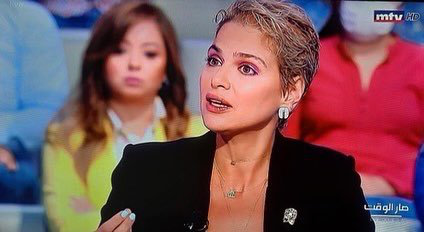
“Since the end of 2019, following the escalating economic and social collapse, the levels of mental disorders rose dramatically,” said Hiba Dandachli, communications director of Embrace, an organization that provides mental health services.
Hiba Dandachli, communications director of Embrace, presenting the case of Lebanon’s mental health patients during a TV talk show. (Twitter photo)
In 2021, she said, 20,000 people called the Embrace Lifeline, more than in any previous year. She said that a high proportion of the callers, mostly young people and teenagers, were suffering from conditions such as anxiety, depression and insomnia as result of the effects of the declining economic and social conditions and unemployment.
“The Lebanese took to the streets in 2019 to express their anger,” Dandachli said. “However, they feel despair due to the escalating crises.
“Without social justice and securing the fundamental right of stability, our services are limited to helping people, not providing solutions. We are sedatives.”
Joelle, 33, who works at an insurance company, said that she sought help from a psychiatrist because she was suffering from anxiety as a result the dire economic situation and the fear of being unable to provide for her the family.
“I started suffocating at night and experiencing panic attacks,” she said. The treatment that was prescribed requires medicine that is either unavailable in pharmacies or very expensive, she added.
A study published in December by the Lebanese American University indicated that “16.17 percent of young people, between 18 and 24 years old, suffer from severe depression since the Aug. 4 explosion, and 40.95 percent of women suffer post-traumatic stress disorder.”
“We mainly witness mood disorder cases at our clinic,” said Dr. Hanaa Azar, a psychiatrist who works with adults and children.
She believes that “between 70 and 80 percent of people in Lebanon take sedatives as a result of sleep disorders, stomach spasm, tachycardia, eczema, phobias, body pains and other physical symptoms that are symptoms of mental disorders.”
She added: “All generations suffer in one way or another from these disorders as a result of insecurity, especially children. As everyone returned to school and work, behavioral and academic disorders have emerged and obsessive-compulsive disorder cases have increased among adults.”
Doctors and psychiatrists are particularly worried about the shortage of medicines, especially since most are no longer subsidized by the state and the rest are only partly subsidized. Only cancer medications are still fully subsidized. Subsidies on drugs for neurological conditions depend on the price of the particular medicine.
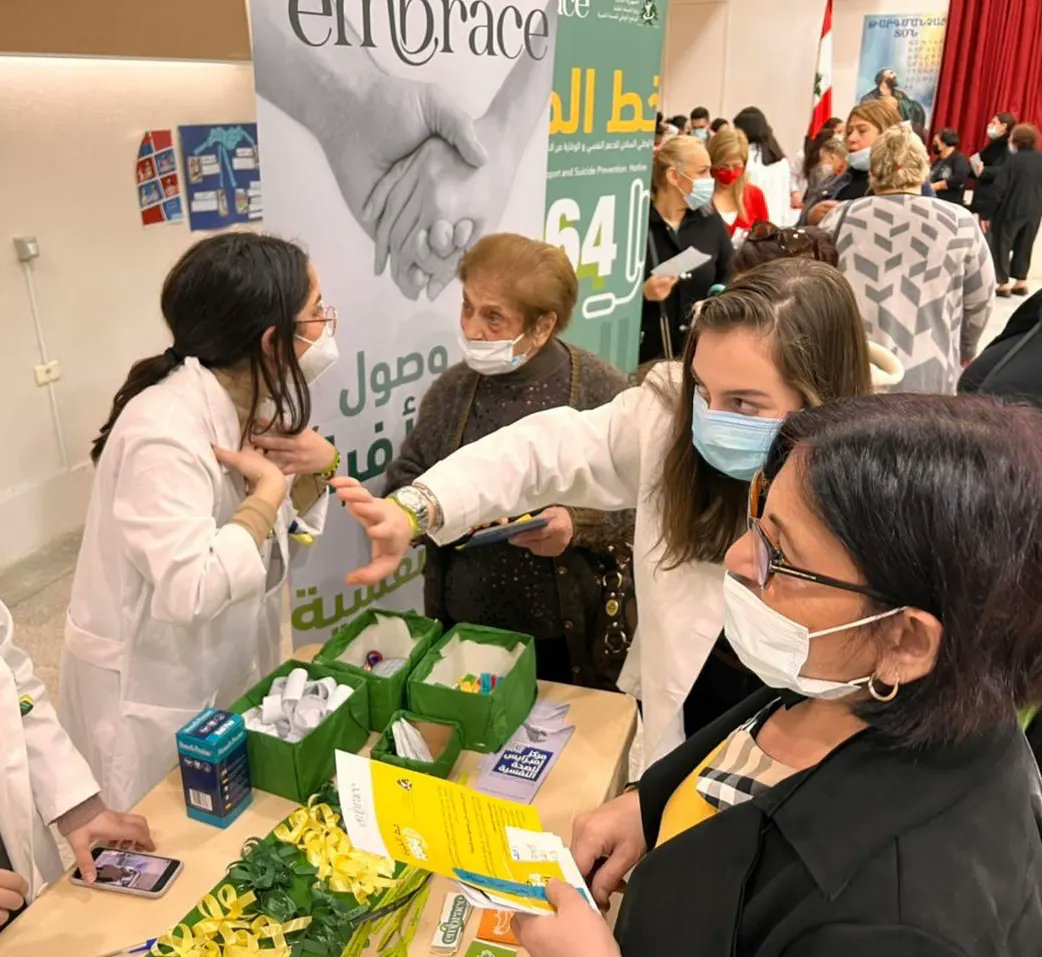
Embrace volunteer health workers providing a lifeline service to residents of Lebanon who are psychologically affected by the worsening economic crisis. (Twitter photo)
“A very large number of Lebanese take a sedative drug, the price of which has risen from 25,000 Lebanese pounds to 420,000 within just two months.” The official exchange rate remains 1,500 pounds to the dollar, but this is unavailable and the currency currently trades on the informal black market at more than 30,000 pounds to the dollar.
Pharmacist Samer Soubra said he cannot understand why there are still medicine shortages even though prices have been increased to take account of the soaring exchange rate.
“Medicine distributors were reluctant to distribute to pharmacies in light of the high exchange rate,” he said. “Today, subsidies have been lifted on many medicines and they are now priced according to the exchange rate on the black market, yet some are still missing, including infant formula.”
Thousands of people in Lebanon resort to obtaining the medicines they need, especially psychotropics, from relatives in other countries or people who bring them from Turkey, Cyprus, Greece and Jordan, or from donations made by Lebanese expatriates in France.
Still, many are going without. “Some people have stopped taking their medication and have experienced health setbacks,” said Azar.
Psychiatrist Dr. Yara Chamoun said that many Lebanese who previously showed no signs of mental disorders have begun to suffer from them amid the economic crisis, especially young people.
“In addition to cases of depression and anxiety, we find cases of alcohol and drug abuse,” she said. “Patients say that they became addicted to them because they help them sleep or forget about the harsh reality.”
Psychiatrists find themselves at an impasse in efforts to treat patients when the required medication is not readily available, Chamoun said.
“Some alternative psychotropics might not work well enough on the patient, while others may be too expensive for them to afford,” she explained.
Amal Moukarzel, a Lebanese expatriate in France, founded Les Amis du Liban de Colombes (Friends of Lebanon in Colombes) with her husband and friends to collect donations of medicines and send them to Lebanon.
“We now send around 120kg of medicines from time to time, obtained from hospitals and sent in cooperation with Middle East Airlines to local associations in Lebanon to be distributed to needy patients,” she said.
Despite the logistical issues she faces, Moukarzel said she insists on sending “more of these much-needed medicines, most of which are for diabetes and blood pressure, as well as psychotropics.”
General Labor Union president warns against ‘certain catastrophe’ in Lebanon amid economic crisesRise of US dollar shakes Lebanese food and fuel security
US has told Lebanon not to fear sanction law over energy supply plans, says PM’s office
Fri, 2022-01-14 23:22
BEIRUT: The US has told Lebanon it should not fear a sanctions law over its plans to receive energy supplies from the region, according to a statement from Prime Minister Najib Mikati’s office on Friday.
US ambassador to Lebanon, Dorothy Shea, handed Mikati a letter from the US Treasury to answer Lebanese authorities’ concerns about regional energy agreements that the US had helped to facilitate with Jordan and Egypt.
The diplomat said: “There will be no fears from the US sanctions law. This message represents forward momentum and an important milestone as we continue to make progress to achieve cleaner and more sustainable energy, to help address the energy crisis.”
Lebanon is grappling with a deep financial crisis and a weak local currency that is piling pressure on the population.
On Friday, the dollar exchange rate on the black market dropped by more than LBP5,000 at once to reach LBP27,500.
Money exchange shops tried to limit their sales of dollars after people rushed to buy or sell them.
The Central Bank issued a circular on Dec. 27 and followed it up with amendments. The circular removed a ceiling related to bank purchases of dollars using the official Sayrafa exchange rate platform.
It allowed depositors and account holders of Lebanese pounds to withdraw their deposits and salaries in dollars based on the rate set by Sayrafa.
The move pumped dollars into the Lebanese market by replacing withdrawals from pounds with fresh dollars.
A new clause was introduced allowing the banks to increase the quota in dollars, by buying dollar bills from the Central Bank at the rate set by Sayrafa using the pounds owned by these banks or their clients with no specific ceiling. This was aimed at meeting the demand for dollar withdrawals.
Financial experts said these measures would reduce the dollar exchange rate on the parallel market as a result of supply and demand and take back the pounds “stashed by citizens in their homes,” bringing down the inflation.
It also allowed the reassessment of the Central Bank’s role in the issue of controlling the dollar exchange rate, the experts added.
This role had recently faded as a result of speculation and the Central Bank’s focus on subsidizing commodities, fuel and medicines, they pointed out.
The main focus should have been on controlling the dollar rate as it was the starting point to control other prices, said the experts.
The crisis of confidence in the banking sector has been escalating since late 2017, leading to a decrease in the flow of capital to Lebanon, while a parallel market became prominent in Sept. 2019. The political authorities at the time did not – and still have not – agreed to approve the introduction of capital controls.
Black market money changers have been flooded with Lebanese pounds. Audio recordings of them expressing their confusion and concern about the latest developments have been shared on social media.
A banking expert told Arab News: “The Central Bank began a test procedure on Dec. 27. People exchanged their salaries at banks from Lebanese pounds to dollars based on the Sayrafa exchange rate.
“Money exchange shops are now left with huge amounts of dollars, for people are no longer willing to buy dollars from them because of the high exchange rate, which led to a decrease in the exchange rate of the dollar on the black market.
“The Central Bank is thus trying to maintain the dollar exchange rate within a certain range. It is possible to say that, with this measure, the Central Bank is restoring its role in the currency market.”
However, the banking expert feared a surge in the dollar exchange rate during the weekend, with banks closing their doors and the attempt of Syrian dealers in the Bekaa to buy dollars from the region’s money changers.
He also expected the exchange rate to drop again at the beginning of the week with the banks resuming their work.
Economist Dr. Louis Hobeika told Arab News: “These are superficial declines, as the political situation is further deteriorating and nothing suggests the emergence of solutions any time soon.
“If this measure is not accompanied by the resumption of the Cabinet’s meetings and the launch of a recovery plan that includes implementing reforms and restoring confidence in the banking sector, these measures will be nothing but unreliable tactics. The issue is not monetary, but political and economic. What the Central Bank is trying to do is fine tuning.”
When asked if the measure may lead to the unification of the dollar exchange rate, which is one of the International Monetary Fund’s demands, Hobeika replied: “I think that the rate of the Sayrafa platform is the most reasonable one in Lebanon.”
But Hobeika said the matter had “nothing to do” with the IMF.
The IMF delegation, which was scheduled to arrive in Lebanon this month, has postponed its visit until February.
Japan will continue supporting Lebanon: HayashiExtortion, kidnappings on rise in crisis-hit Lebanon
Lebanese central bank seeks to strengthen currency after slump
Author:
Reuters
ID:
1642182575152259100
Fri, 2022-01-14 20:51
BEIRUT: Lebanon’s central bank said on Friday it aimed to boost the Lebanese pound’s value by easing restrictions on dollar purchases after the currency hit a record low, fueling fresh protests about rising prices and a collapsing economy.
The pound, which has lost more than 90 percent of its value since Lebanon’s financial crisis erupted in 2019, dropped beyond 33,000 to the dollar, though it had clawed back some ground to around 27,200 by Friday.
Before the crisis, which has driven a significant proportion of residents into poverty, it traded at 1,500 to the dollar.
In response to the sharp decline, the central bank said it was removing a ceiling related to bank purchases of dollars using the official Sayrafa exchange rate platform.
“This initiative aims at curbing the volatility of the exchange market and aims at strengthening the pound’s value against the dollar,” bank Governor Riad Salameh told Reuters,
.”..The operation consists of decreasing the amount of bank notes in Lebanese pounds.”
Salameh also said there had been “signs of manipulation of the prices of the dollar to the pound,” without giving details.
One analyst has described the central bank move as like taking “a Panadol pill to treat a major crisis,” saying the government needed a program of reforms to tackle deep economic problems.
Commercial banks have all but shut their doors to depositors amid a liquidity crunch caused by the economy crumbling under a mountain of state debt.
A new cabinet was formed in September, promising to start fixing the economy and restart talks with the International Monetary Fund, but ministers have not met for three months because of dispute over the conduct of an investigation into a huge explosion in Beirut port in 2020.
Salameh is facing multiple domestic and international investigations into his conduct at the head of the central bank, which he has led for three decades. He denies any wrongdoing.
Riad Salameh: In Lebanon, depositors’ money is still availableLebanon’s Salameh to sue Bloomberg after US denies talk of sanctioning him
UN Security Council condemns Houthi seizure of Rwabee cargo ship
Fri, 2022-01-14 19:49
NEW YORK: The UN Security Council unanimously condemned the Houthi seizure and detention of UAE-flagged vessel Rwabee on Friday.
The cargo ship was seized by the militia in an Iranian-backed and planned operation from the Yemeni port of Hodeidah, the Coalition to Support Legitimacy in Yemen said.
In a statement drafted by the UK, Security Council members demanded the immediate release of the vessel and its crew, urging the Houthis to ensure the crew’s wellbeing and safety until their release.
They also called for a quick resolution to the issue and underscored “the importance of freedom of navigation in the Gulf of Aden and Red Sea, in line with international law.”
The council memebers also urged all parties to “stop the escalation of the situation in Yemen,” and to cooperate constructively with the UN Special Envoy toward the resumption of talks to resolve the crisis.