US envoy says Houthis should learn from their losses in Yemen and negotiate peace

Wed, 2022-02-09 01:41

LONDON: Yemen is in a “state of escalatory military action” and the Houthi militia must see that their recent losses indicate “there is no military solution and the only pathway forward is dialogue,” according to Tim Lenderking, the US special envoy for Yemen.
The Houthi offensive on the Yemeni province of Marib, including repeated attacks on civilian areas and against camps for internally displaced persons, “has been the primary obstacle to peace efforts,” he said.
Lenderking was speaking during a virtual discussion organized by the US Institute of Peace, in cooperation with the UN Development Program, to examine the latter’s recent report titled Assessing the Impact of War in Yemen: Pathways for Recovery.
The Yemeni civil war, which began in 2014, is considered one of the world’s worst humanitarian and developmental crises. The report predicts that, should the conflict continue through 2030, 1.3 million people will die as a result.

The Houthis’ Marib offensive, launched last February in an attempt to take control of one of the last remaining strongholds of the internationally-backed government, has sparked widespread international condemnation as the energy-rich province had been the largest safe haven for displaced people who have fled the fighting since the conflict began.
Lenderking said the US is deeply concerned with the growing number of civilian casualties in Yemen, and called on all parties to ensure civilians are protected according to the provisions of international humanitarian law.
“Let me be clear, when we speak of protection of civilians in the region we also include the tens of thousands of US citizens living in the Gulf, whose safety is the top US national security priority,” he added.
This was a reference to the near-daily cross-border attacks by the Iran-backed Houthi militia in Yemen on targets in Saudi Arabia and, more recently, the UAE.

Lenderking said this also includes the local Yemeni staff employed by the US in Sanaa that the Houthis detained when they seized control of the former US embassy compound in the capital, “whose safe release we remain committed to.”
The envoy said his country’s diplomatic efforts have translated into two important building blocks for peace in Yemen. The first is a “growing international consensus on the need for a cease-fire and a political solution,” and the second is “momentum around a more inclusive peace process that takes into account diverse views across Yemen” to end the fighting.
Lenderking said he is hopeful that peace in the country remains possible but a durable Yemeni-led solution is required to end the conflict and address the humanitarian crisis. This year would bring new opportunities, he added.

Khalida Bouzar, UN assistant secretary-general, UNDP assistant administrator and regional director of the UNDP Bureau of Arab States, said the report confirms that if the war in Yemen continues until 2030, the effect on people’s lives will be even more disastrous and the recovery costs more enormous.
“The economic gain of peace is enormous,” she said. “However, peace alone is not enough, so it needs to be accompanied by a holistic and people-centered recovery approach, cutting across the humanitarian development spectrum and also ensuring national ownership, leadership of the Yemeni people and the commitment of the international community.”
The report predicts that deaths from indirect causes — such as lack of access to food, water, sanitation, health care and other basic services — amounted to 60 percent of annual deaths in Yemen in 2021, and this will increase to 75 percent by 2030. It said that a child below the age of five died every nine minutes last year, and that this rate will increase to every five minutes, with additional effects on gross domestic product, poverty and malnutrition in the future.

Auke Lootsma, the resident representative of UNDP Yemen, said despite the fact that billions of dollars have been spent on food assistance to the country, it has not been able to make a dent in the food security situation in the past five years.
“From the UN’s perspective, we have realized that if we want to make a difference in Yemen right now, we need to change our tactic and approach and really do more,” he said.

A Yemeni pro-government fighter fires at positions of the Iran-backed Houthi militia as they inch closer to the loyalists’ last northern bastion, the strategic city of Marib. (File/AFPTV/AFP)
Main category: 

Yemen army seizes parts of Haradh city from HouthisUS military commander praises UAE’s ‘effective’ air defense system against Houthi attacks



With elections delayed again, Libya’s endless transition angers its people

Author: 
Wed, 2022-02-09 00:11

TRIPOLI: As Libya’s political institutions pushed ahead with plans to again extend a transitional period and delay any elections, Libyans across the country were filled with weariness, cynicism and anger.

Libya was meant to hold presidential and parliamentary elections in December, but arguments between factions and bodies of state over how they should take place meant the process collapsed days before the vote.

The parliament voted this week to approve a “roadmap” in which it will choose a new interim government, work with another institution, the High State Council, to redraft a temporary constitution and push elections back until next year.

“Unfortunately after a year there will be no elections. The transitional periods will continue in Libya and we, the people, are only manipulated,” said Saad Mohammed, 35, in Benghazi in eastern Libya.

Nearly 3 million Libyans registered to vote in the December elections, a number that analysts said pointed to a clear national desire to choose their leaders.

“How many times will we postpone? We’ve been going for years and we’ve been postponing. And all we see is postponement, postponement, postponement,” said Mohamed Gharyani, speaking on a street in Tripoli. Across the country in Benghazi, Khaled Ali, 46, agreed that politicians were merely trying to stay in power as long as possible. “There will be no elections for a year and a half,” he said.

Eleven years of chaos, violence and division since the 2011 NATO-backed uprising against Muammar Qaddafi have left Libya with a series of political institutions that were originally meant to be temporary, but that have stuck around for years.

December’s elections were meant to resolve this “crisis of legitimacy,” as it has become known, by replacing all Libya’s institutions with ones recently chosen by voters.

“Everything the parliament and the High State Council are doing is to procrastinate in order to stay in power,” said Asma Fituri, a teacher, in a Tripoli market.

The HSC was formed from members of an interim parliament that was elected in 2012, but which refused to recognize elections to replace it two years later. A 2015 political agreement meant to end the civil war recognized the HSC as an official institution with consultative powers.

The current parliament, the House of Representatives, was elected in 2014. While it did not have a set term, it was supposed to oversee a short transition to a new constitution that would be written by another body elected that year, but which was never completed.

Meanwhile, the latest Tripoli administration, the Government of National Unity, was installed last year as part of a UN-backed roadmap with a mandate to oversee the run-up to elections.

Its leaders were chosen by the 75 members of the Libyan Political Dialogue Forum who were themselves picked by the UN to represent the main factional and regional groups. The LPDF roadmap said the GNU’s mandate would run until elections on Dec. 24, 2021, but did not say what would happen if they did not take place.

Main category: 

Libyan parliament interviews prime minister candidatesSecurity council extends Libya mission till April 30


Door reopens to candidates after Iraq president vote fails

Author: 
Wed, 2022-02-09 00:06

BAGHDAD: Iraq’s parliament announced on Tuesday the reopening of registration for presidential candidates, a day after it called off a session to vote in a new head of state.

One of the two frontrunners, former longtime Foreign Minister Hoshyar Zebari, was “temporarily” suspended by a court, citing years-old corruption accusations after a complaint was filed against him.

His eligibility for the post is being reviewed, with his party announcing it is sticking with his candidacy and that a verdict is expected within days.

Iraq’s political timeline for electing a head of state and forming a government, in the wake of last year’s general election, has been derailed amid political infighting.

Monday’s voting session was not held due to the lack of a quorum after several key political blocs and parties announced boycotts — against the backdrop of competing claims to a parliamentary majority.

The office of Parliament Speaker Mohamed Al-Halbussi announced on Tuesday the “reopening of registration for candidates for the post of president of the republic from Wednesday, February 9 and for a period of three days.”

But a date has yet to be announced for a new voting session in parliament.

Only 58 MPs attended Monday’s session — well below the quorum of two-thirds of the 329-seat chamber.

The largest political bloc led by firebrand Shiite cleric Moqtada Sadr, as well as the allied Sovereignty Coalition led by Halbussi and the Kurdistan Democratic Party — from which Zebari hails — all announced boycotts ahead of the session.

Legal expert Ali Al-Tamimi denounced Tuesday’s announcement as “unconstitutional,” noting that the legal deadline set to elect a president “cannot be broken, except by a decision from the Federal Court or an amendment of the law.”

Zebari was tipped as one of two frontrunners, out of a total of 25, for the presidency. The other is incumbent President Barham Saleh of the KDP’s rival party, the Patriotic Union of Kurdistan.

In response to his suspension, the head of the KDP’s parliamentary bloc, Vyan Sabri, told the state news agency INA on Tuesday: “Mr. Zebari is still our sole candidate.”

She denounced the “malicious complaint” leading to his suspension, affirming that his case “will be decided in the next two days.”

Main category: 

Chaos in Iraq over vote for presidentIraqi court suspends Zebari’s presidential bid -state news agency


Abbas loyalists win top jobs at embattled PLO

Author: 
Tue, 2022-02-08 01:45

RAMALLAH, Palestinian Territories: The Palestine Liberation Organization named loyalists of Mahmud Abbas to top leadership posts on Monday, with Hussein Al-Sheikh appointed to the organization’s executive committee.
But no decision was made on naming a new PLO secretary general and chief negotiator with Israel, two key posts held by Saeb Erekat, who died in 2020 after contracting coronavirus.
At the end of the rare two-day meeting of the PLO’s central committee, officials said the roles would be filled at a later date.
Ahead of the meeting, analysts had said the 86-year-old Abbas, the PLO’s chairman, was seeking to elevate Sheikh, perhaps to position him as a favored successor to take charge as president of the Palestinian Authority.
Mohamed Mustafa, another Abbas supporter who chairs the Palestinian Investment Fund, was selected to take the executive committee seat vacated by Hanan Ashrawi, who resigned in 2020.
Abbas loyalist Rawhi Fattouh was elected chair of the Palestinian National Council — the PLO’s parliament in exile.
Analysts have said that support for the PLO, an organization founded in 1964 and charged with leading the battle for statehood against Israel, was growing increasingly unpopular among Palestinian people, amid frustration over its failures to hold open elections for key positions.
Addressing PLO executives on Sunday, Abbas pledged commitment to reform, calling it a “continuous process.”
But as the meeting started Sunday demonstrations calling for Abbas’s resignation were held in Ramallah and in Gaza, which is ruled by Hamas Islamists.
Hamas is not part of the PLO, and has boycotted the organization over its decision to negotiate with Israel.

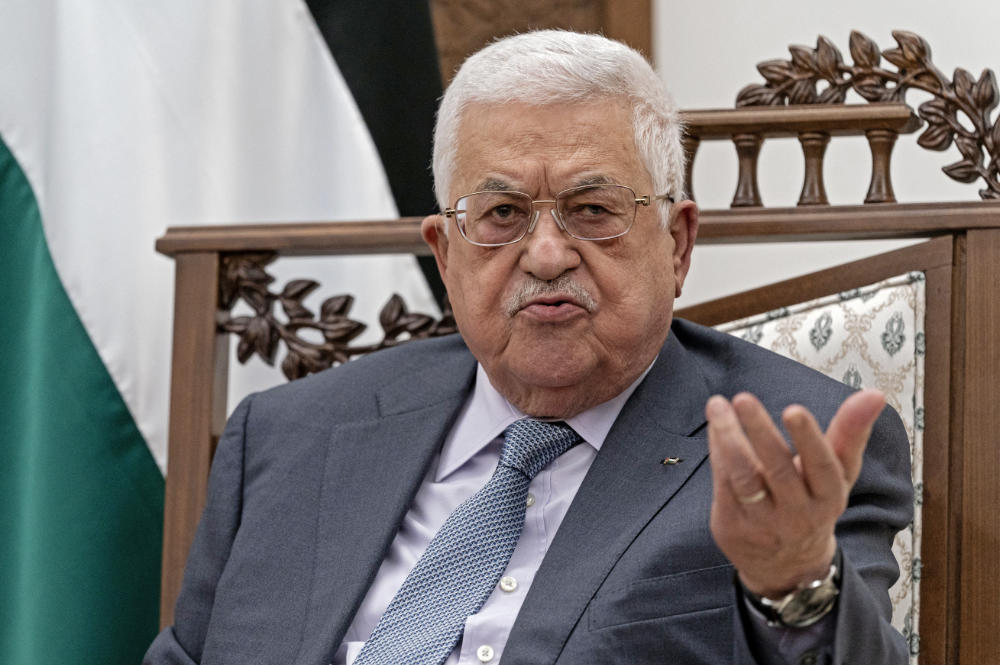
In this file photo taken on May 25, 2021, Palestinian president Mahmud Abbas gives a joint statement with the US secretary of state, at the Palestinian Authority (PA) headquarters in the West Bank city of Ramallah. (AFP)
Main category: 
Tags: 

Palestine Central Council holds controversial meeting in RamallahWorld Food Programme launches nutrition campaign in Palestine


Abduction ordeal of 6-year-old Fawaz Qetaifan prompts pushback against cruelty and lawlessness in war-torn Syria

Author: 
Nadia Al-Faour
ID: 
1644273996746258300
Tue, 2022-02-08 01:46

DUBAI: Fawaz Qetaifan, a six-year-old Syrian boy who was kidnapped on his way to school in Daraa four months ago, could be returned to his parents in the coming hours or days after his family raised the ransom to secure his release, sources have told Arab News.
“It seems that the issue will be resolved within the next 48 hours as the money has been raised,” Rami Abdulrahman, founder of the UK-based Syrian Observatory for Human Rights told Arab News.
“We do not know who kidnapped him for sure. Kidnappings have been increasing in all areas of Syria.”
The abduction of Fawaz captured the world’s attention in recent days after graphic video footage surfaced on social media showing the boy, stripped to his underwear, being savagely beaten by his kidnappers.
In the shocking images, the boy can be heard crying: “For Allah’s sake stop hitting me.”


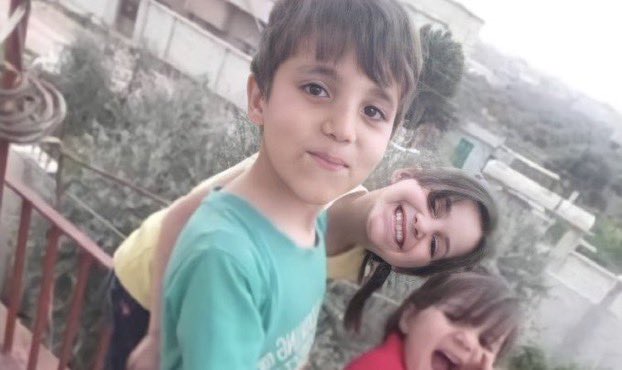
The boy has not been seen in person since but his story became widely known across Syria. (Supplied)

His cries for mercy touched a nerve with people throughout the Arab world and beyond, especially in Morocco, where this week a desperate struggle to save a five-year-old boy named Rayan Aourram from the bottom of a well ended in tragedy.
For a moment, Rayan’s ordeal placed renewed focus, importance and value on the life of a child, drawing reactions from hundreds of thousands of well-wishers hoping for his survival. Fawaz is now widely seen as “Syria’s Rayan,” with calls on social media for him to be rescued from a “different type of hole.”
Fawaz’s ordeal began in November as he walked to school with his sister in their home village of Itmaa in Daraa, southern Syria, and two motorbikes pulled up alongside them. According to witnesses, a female passenger pointed at Fawaz and three men grabbed him before speeding away with their captive.
The boy has not been seen in person since but his story became widely known across Syria owing to a series of chilling videos his kidnappers have used to extort ransom money from his family.


The failure of the Syrian authorities to track down the kidnappers means many more children could be at risk of similar ordeals. (AFP)

The abductors contacted Fawaz’s parents on WhatsApp before switching to Telegram, which allows the sender to remain untraceable. They initially demanded a ransom of 500 million Syrian pounds ($200,000) for the safe return of their child but reduced the sum to 400 million. The brutality in the videos sent by the kidnappers has gradually grown worse.
“This will be the state of the boy every day,” the kidnappers said in a message accompanying the video of Fawaz being beaten.
Fawaz’s uncle told local media that the captors had threatened to torture the child unless the ransom is paid. He added that they said they would cut off one of the boy’s fingers each day until the family pays up.
The family reportedly cobbled together much of the ransom by selling their land and anything else they had of value. The rest was crowdfunded in the past few days by the Qetaifan tribe.
Abdulhakim Al-Qetaifan, a Syrian actor who is from the same tribe, recently posted a video on Facebook in which he talked about the child’s plight.
“We thank everyone who has extended their love and aid to help free (Fawaz) from these beasts,” he said. “We have decided to collect the money. If we are not able to, we will reach out, but we thank everyone who has offered.”
Even if Fawaz is returned safely to his family, the payment of the ransom and the failure of the Syrian authorities to track down the kidnappers means many more children could be at risk of similar ordeals.


A 2020 report titled Daraa: Child Kidnappings Haunt Locals, documented 31 abductions of children between January and August that year. (AFP/File)

Even in a war-torn country so inured to cruelty and lawlessness in recent years, scenes of a young child begging for his life as his adult captors ruthlessly beat him have stirred a collective pushback against the country’s seemingly never-ending social decay.
Syria has become one of the most lawless places on earth. Extortion, kidnapping, blood feuds and revenge killings are rampant — and often occur with impunity.
“I worry about my children,” Hassan, a resident of Daraa who did not want to give his full name, told Arab News. “I bought a gun and I sleep near it every night.
“I am in a constant state of worry because I cannot accompany my girls to school. I dread to think what these beasts would do to my girls, who are 7 and 12. This country has turned into a lawless land; it is kill or be killed. It is a struggle for safety and survival every day.”
A 2020 report by Syrians For Truth and Justice, titled Daraa: Child Kidnappings Haunt Locals, documented 31 abductions of children between January and August that year. Like Fawaz, many of the victims were taken on their way to school. Others were playing outdoors. As in the case of the abduction of Fawaz, the report mentioned a woman accompanying the kidnappers.
It also found that many of the kidnappings happened near government security checkpoints, giving rise to suspicions that the army or security personnel were somehow complicit. Moreover, when families reported the kidnappings to authorities, no action was taken. Some of the children mentioned in the report were rescued but others, as young as 10 years old, are still missing.


Extortion, kidnapping, blood feuds and revenge killings are rampant in Syria — and often occur with impunity. (AFP/File)

“Kidnapping cases have been happening throughout the Syrian war,” Bassam Al-Ahmad, the co-founder and CEO of Syrians For Truth and Justice, told Arab News.
“Daraa has witnessed a lot of cases. Abductors came from all factions, rebels, mercenaries and regime thugs. The kidnappings continued to happen despite the areas falling under Russian and governmental control.”
Under Syrian law, kidnappings are classified as “crimes against freedom and honor.” The penal code states that if a kidnapper abducts a minor, he can be imprisoned for between six months and three years. If a ransom is demanded, the perpetrators can face up to 20 years in jail. If the child is murdered or sexually abused, the death penalty can be imposed.
Such cases rarely reach a courtroom, however. And with multiple armed factions roaming the country — be they pro-government, opposition or extremist elements — it is almost impossible to know who to turn to for help if a family member is abducted.
A decade of war, a crumbling economy and a complete breakdown in trust have left the population facing living conditions that continue to deteriorate. Food prices have skyrocketed beyond the means of many to pay, and job opportunities are scarce or nonexistent. Against this backdrop, kidnapping for ransom has become a lucrative alternative.
“People have resorted to such ways to make money,” Al-Ahmad told Arab News. “We are talking about a country with no laws, a country with hungry people. The abductors coming from all sides is actually the norm.
“While the Syrian government is technically the one responsible for people’s safety and implementing the law, it is difficult to expect any results with everything going at the moment.”

Main category: